Baked Chicken Pesto Recipe With Creamy Orzo
This baked chicken pesto recipe combines juicy basil-coated chicken, creamy orzo, tomatoes, and spinach in one pan for an easy Mediterranean dinner.
What to Expect from This Baked Chicken Pesto Orzo
This is a complete one-pan dinner built around two contrasting textures: tender pesto-coated chicken and creamy, starch-thickened orzo. The broth hydrates the pasta as it bakes, while tomatoes, spinach, lemon, and basil keep the rich pesto flavor bright.
- The covered bake cooks the orzo evenly without requiring a separate pot of pasta.
- A short uncovered finish melts the optional cheese and concentrates the sauce.
- The ideal consistency is moist and spoonable, not soupy and not dry.
Why the Key Ingredients Work
Standard dry orzo is the structural ingredient: it absorbs seasoned broth and releases starch that creates a creamy sauce without depending on heavy cream. Pesto brings basil, garlic, oil, nuts, and cheese in one concentrated ingredient, while low-sodium broth leaves room to control the final seasoning.
- Evenly thick chicken cutlets cook more predictably than whole, bulky breasts.
- Cherry tomatoes add acidity and moisture; spinach contributes color and freshness when added near the end.
- Mozzarella provides a mild melted topping, while Parmesan adds salty depth and helps the orzo thicken.
- Lemon juice, zest, and fresh basil are finishing ingredients that restore brightness after baking.
Ingredients
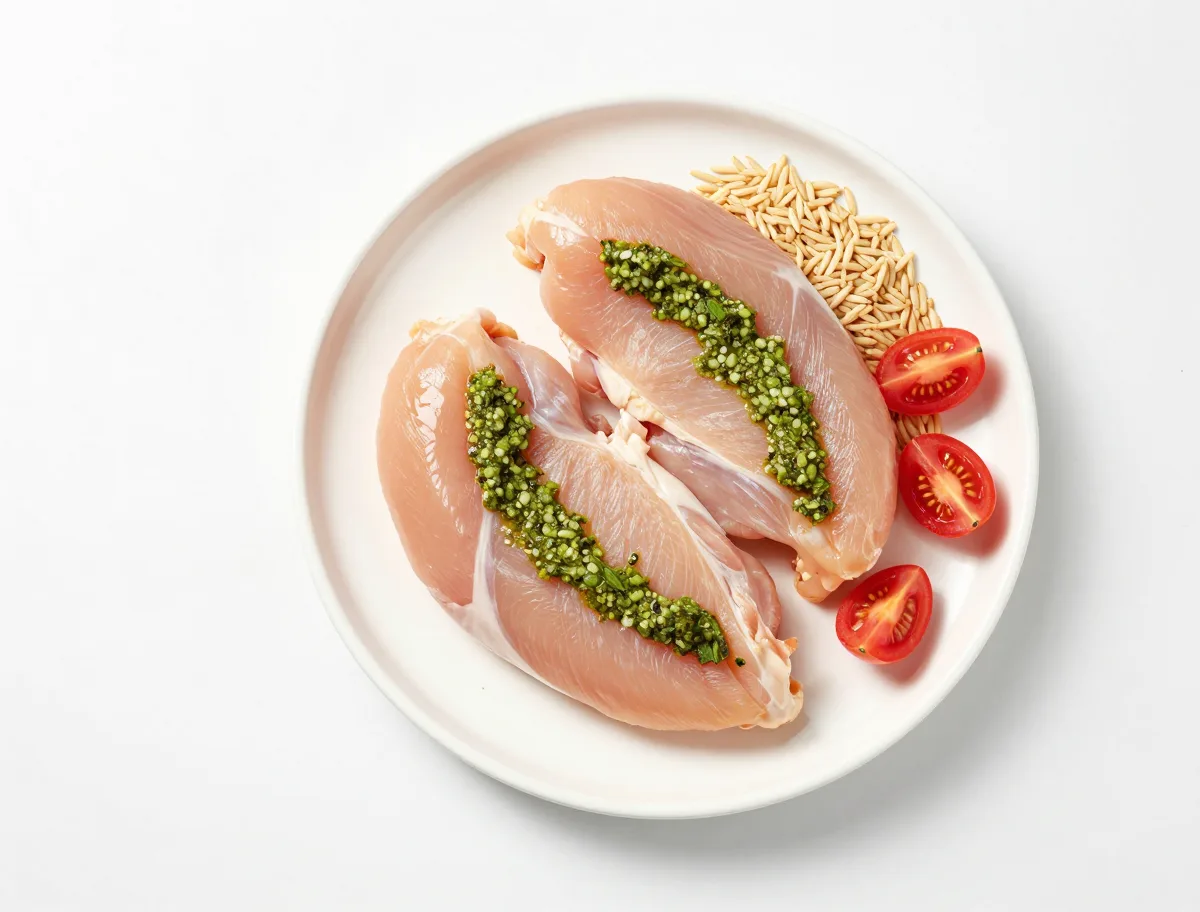
- 1 1/2 pounds boneless, skinless chicken breasts, sliced horizontally into 4 evenly thick cutlets
- 1 teaspoon kosher salt, divided
- 1/2 teaspoon freshly ground black pepper, divided
- 2 tablespoons extra-virgin olive oil, divided
- 1/2 medium yellow onion, finely chopped
- 3 cloves garlic, finely chopped
- 1 1/2 cups dry orzo
- 3 1/4 cups low-sodium chicken broth, warmed
- 1/2 cup basil pesto, divided
- 1 cup cherry tomatoes, halved
- 2 packed cups baby spinach
- 4 ounces low-moisture mozzarella, shredded (optional)
- 1/4 cup finely grated Parmesan (optional)
- 1 teaspoon finely grated lemon zest
- 1 tablespoon fresh lemon juice
- 1/4 cup fresh basil leaves, torn (optional)
The Technique for Juicy Chicken and Creamy Orzo
The most important preparation step is making the chicken pieces similar in thickness. Slice large breasts horizontally into cutlets, or gently pound them between sheets of plastic wrap. Stir the orzo mixture well before adding the chicken so no dry pasta collects in corners or remains above the liquid.
- Keep the chicken in one layer and avoid crowding the dish.
- Seal the foil tightly during the first bake to retain steam.
- Add spinach and cheese only after checking that the chicken is safe and the orzo is tender.
- Rest the casserole before serving so the pasta can absorb the last of the loose liquid.
Instructions
- Heat the oven and season the chicken: Heat the oven to 400°F (200°C). Pat the chicken dry. If the breasts are not evenly thick, slice them into cutlets as directed so each piece cooks at the same rate. Season both sides with 1/2 teaspoon of the salt and 1/4 teaspoon of the pepper.
- Build the orzo base: In a 9-by-13-inch baking dish, combine the onion, garlic, orzo, warmed broth, 1/4 cup of the pesto, tomatoes, the remaining 1/2 teaspoon salt, and the remaining 1/4 teaspoon pepper. Stir thoroughly so the orzo is spread evenly and mostly submerged.
- Coat and arrange the chicken: Rub the chicken with 1 tablespoon of the olive oil and the remaining 1/4 cup pesto. Arrange the cutlets in a single layer over the orzo, leaving a little space between pieces where possible. Drizzle the remaining 1 tablespoon olive oil over the exposed tomatoes and orzo.
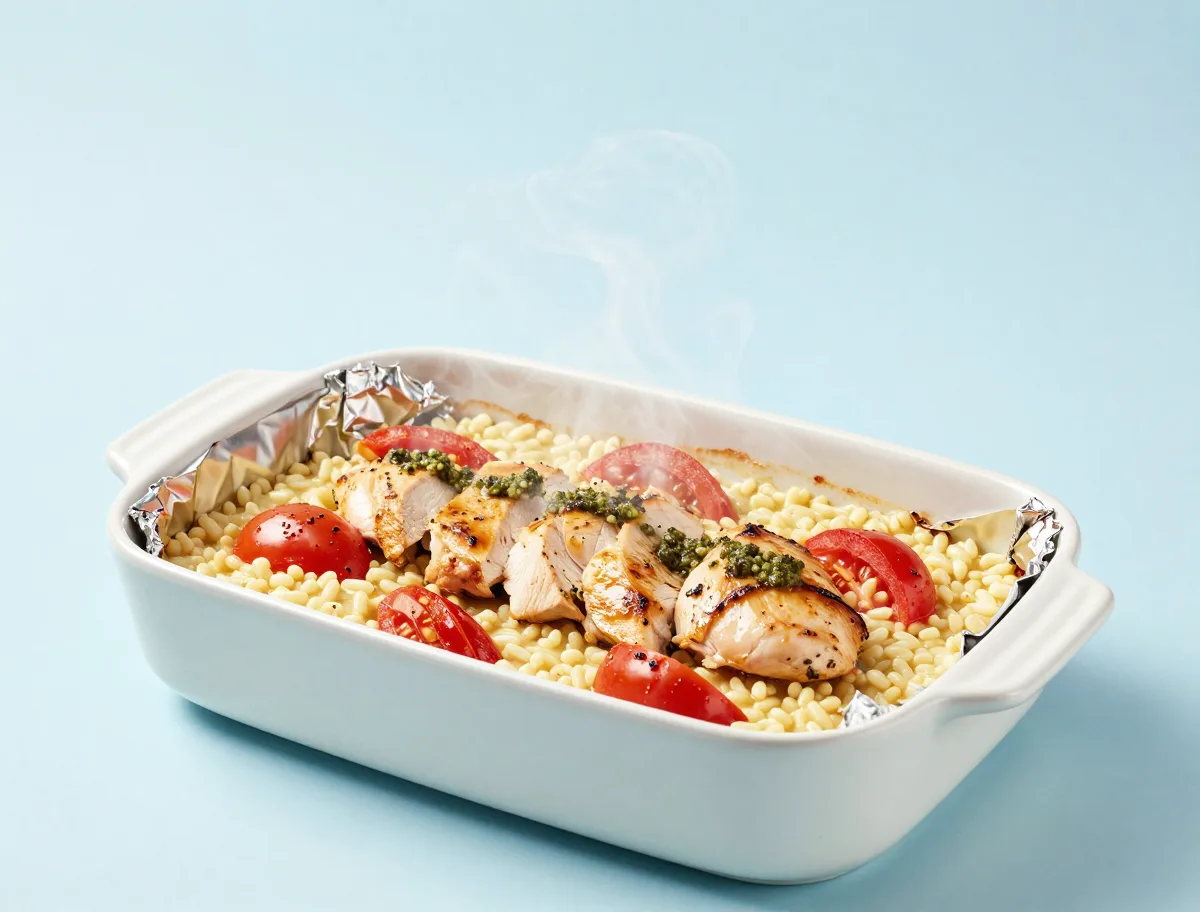
- Bake covered: Cover the dish tightly with foil and bake for 22 to 25 minutes. The foil should seal the edges well; trapped steam is needed to cook the orzo.
- Check the chicken and orzo: Remove the foil carefully. Test the thickest chicken cutlet with an instant-read thermometer; it should be at least 165°F (74°C). Taste a grain of orzo from the center. If the chicken is done but the orzo is still firm, transfer the chicken to a plate, stir the orzo, cover again, and bake with a splash of additional hot broth until tender.
- Add the greens and cheese: When the orzo is tender and the chicken has reached 165°F, tuck the spinach into the hot orzo around the chicken. Sprinkle the mozzarella and Parmesan over the chicken and orzo, if using. Return the uncovered dish to the oven for 5 to 8 minutes, until the spinach is wilted and the cheese is melted and lightly golden.
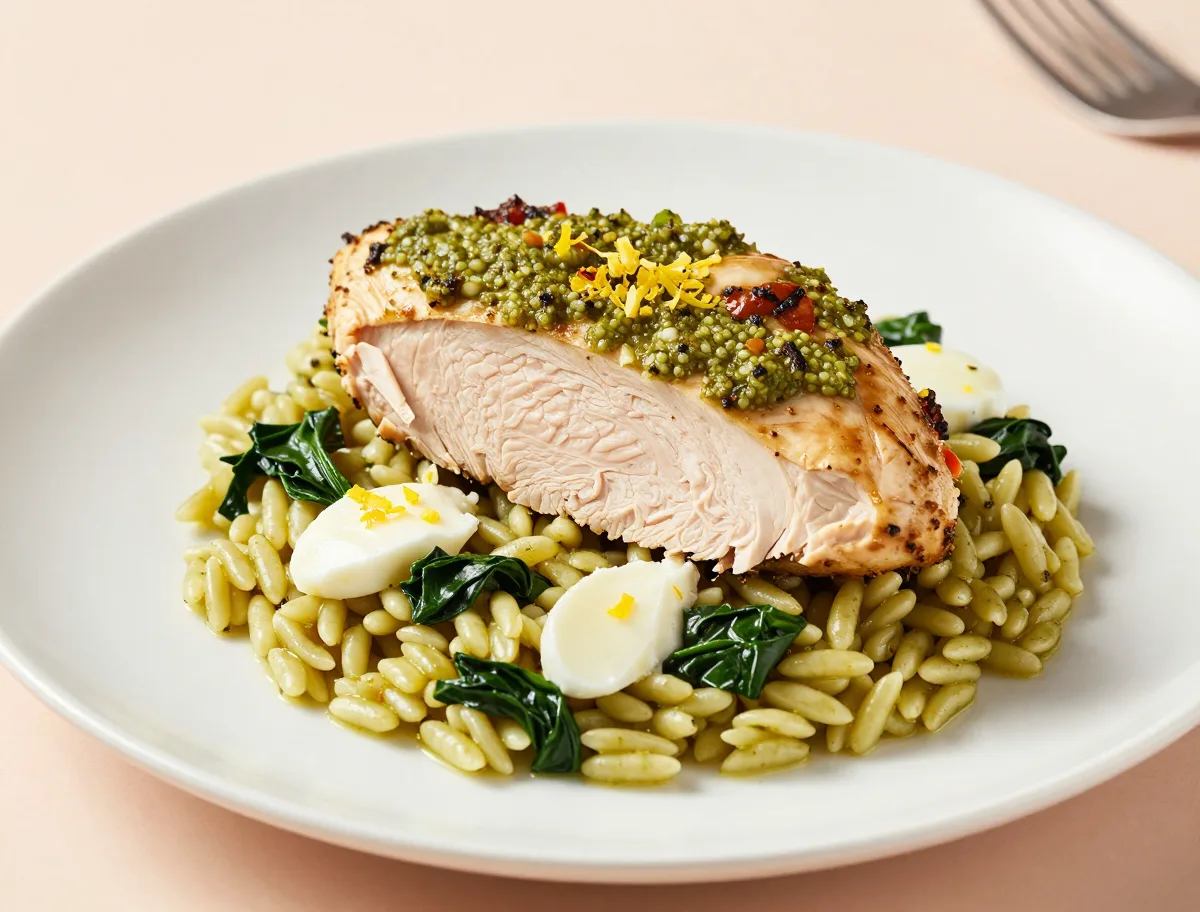
- Rest and finish: Let the bake rest for 5 minutes. Stir the lemon zest and lemon juice into the orzo, taking care not to disturb the chicken too much. Finish with the torn basil and serve hot. The orzo should be creamy and spoonable, with a little moisture remaining to absorb during the rest.
How to Tell When the Chicken and Orzo Are Done
Use the thermometer as the final authority for the chicken, not the clock or the color of the pesto. Insert it into the thickest part of the largest cutlet without touching the dish. Every piece must reach 165°F (74°C).
- The thickest chicken cutlet reaches 165°F (74°C) when measured in the center.
- The orzo is tender with a slight bite and no chalky center.
- The finished orzo is creamy and spoonable rather than soupy or completely dry.
- The spinach is wilted and the optional cheese is melted with light browning.
- A 5-minute rest thickens the sauce without making it stiff.
- Tender orzo has no hard, chalky center and should retain just a slight bite.
- A small amount of liquid around the pasta is desirable before resting; a completely dry pan may mean it has gone too far.
- The chicken should feel firm but still yield slightly when pressed.
- After resting, the sauce should cling to the orzo while remaining loose enough to spoon.
The Variables That Change the Bake
Orzo needs both liquid and steam. A tightly covered dish limits evaporation, making the broth available for the pasta instead of allowing it to disappear from the surface. Once the orzo is hydrated, uncovering briefly reduces excess moisture and develops a lightly browned finish.
- Chicken thickness affects cooking time more than total weight does.
- A broad 9-by-13-inch dish allows the pasta to spread into a relatively even layer.
- Cold broth, a loose foil seal, or exposed orzo can extend the cooking time.
- Watery vegetables can loosen the final sauce, while dense vegetables may need early cooking or smaller cuts.
- Browning should be treated as the final step; early broiling can scorch pesto and cheese before the chicken is safe.
Common Chicken Orzo Bake Problems and Fixes
Most problems with a one-pan chicken orzo bake come from uneven chicken, lost steam, or judging doneness by time alone. Make corrections with the chicken’s temperature in mind so that fixing the pasta does not overcook the meat.
- Dry chicken: Check cutlets early and remove them temporarily if the orzo needs more time. Thin breast pieces are especially vulnerable to overbaking.
- Firm orzo: Add hot broth a few tablespoons at a time, stir, cover tightly, and continue baking. Exposed grains or poorly sealed foil are common causes.
- Loose orzo: Let the dish rest first. If it remains watery, uncover and bake briefly, watching the chicken closely.
- Scorched pesto or cheese: Move the dish away from the top heating element and shield darkening areas with foil.
- Clumped pasta: Spread the orzo across the base and give the broth mixture one thorough stir before arranging the chicken.
Easy Substitutions for Pesto Chicken Orzo
The recipe is most dependable with thawed boneless chicken and standard wheat orzo, but several substitutions work when their different cooking behavior is understood.
- Boneless thighs are the most forgiving swap for breast cutlets; expect a somewhat longer bake and still verify 165°F.
- Chicken tenderloins can be used, but begin checking them early because they are often thinner.
- Homemade pesto is optional. Store-bought refrigerated or shelf-stable pesto is suitable, though salt, oil, and thickness vary by brand.
- Use feta or goat cheese for a tangier finish, or a dairy-free pesto and dairy-free cheese if needed; melting and sauce consistency may differ.
- For gluten-free cooking, use a labeled gluten-free orzo-style pasta and follow its package-specific hydration behavior. Cauliflower rice and zucchini do not make a direct orzo substitute because they do not absorb broth or release starch in the same way.
Ways to Vary This Mediterranean Chicken Orzo Bake
Keep the dish recognizable by retaining the pesto, chicken, and baked-orzo foundation. Change the vegetables or finishing cheese rather than adding a separate sauce or replacing the starch without changing the method.
- Add halved roasted red peppers with the tomatoes for a sweeter variation.
- Replace some of the spinach with peas, adding frozen peas during the final uncovered stage.
- Use bite-size green beans in place of some of the tomatoes; dense vegetables may benefit from a brief pre-cook.
- Top with mozzarella for a caprese-style finish, or use feta for sharper Mediterranean character.
- Add a pinch of red pepper flakes with the garlic if a gentle heat is desired.
- A low-carbohydrate version requires a separate method using zucchini or cauliflower and will not have the creamy, starch-thickened texture of this orzo bake.
What to Serve with Chicken Pesto Orzo
Because the dish already includes protein, pasta, vegetables, and sauce, it stands well on its own. Serve it after the brief rest while the orzo is still creamy, with the lemon and basil finish distributed through the pan.
- Pair it with a crisp green salad dressed with lemon or a light vinaigrette.
- Steamed green beans or roasted asparagus add a fresh vegetable contrast without another heavy starch.
- Pass lemon wedges, cracked black pepper, or a small spoonful of extra pesto at the table.
- If serving bread, choose a modest portion for catching the sauce rather than adding rice or potatoes.
How to Store, Freeze and Reheat Baked Chicken Orzo
The orzo continues absorbing liquid as it cools, so leftovers become thicker than the freshly baked dish. Cool them promptly in shallow containers, then reintroduce moisture gently during reheating.
- Refrigerate leftovers within 2 hours of cooking, or within 1 hour if the surrounding temperature is above 90°F (32°C).
- Use refrigerated leftovers within 3 to 4 days.
- Reheat covered in the microwave or a moderate oven with a splash of broth or water, stirring the orzo where possible. The center should reach 165°F (74°C).
- Freeze individual portions if necessary, but expect softer pasta and a sauce that may separate slightly after thawing.
- For advance preparation, measure and chop ingredients separately rather than combining dry orzo with broth overnight.
Baked Chicken Pesto Recipe FAQ
These answers address the timing, ingredient, and preparation questions most likely to affect the finished one-pan meal.
Can I use store-bought pesto?
Yes. Refrigerated or jarred pesto is the practical choice for this recipe. Since brands differ in saltiness and thickness, taste the broth mixture before adding extra salt; very thick pesto can be loosened with a spoonful of broth.
Should I butterfly or pound chicken breasts?
Slice large breasts horizontally into cutlets, or pound them gently to an even thickness of about 1/2 to 3/4 inch. Uniform pieces finish more evenly and are less likely to leave one cutlet dry while another is still undercooked.
How long does the chicken orzo bake take?
The cutlets usually need 22 to 25 minutes covered, followed by 5 to 8 minutes uncovered with the cheese. Treat those times as a guide: thickness, starting temperature, pan depth, and foil seal all matter. Verify that the thickest chicken reaches 165°F (74°C).
Can I use chicken thighs instead?
Yes. Boneless, skinless thighs are a forgiving substitute and may take a few extra minutes. Arrange them in a single layer and check the thickest piece with a thermometer rather than relying on the breast-cutlet timing.
Can I bake the dish with frozen chicken?
Thawing first is strongly preferred. Frozen poultry may cook safely if it reaches 165°F, but it takes longer and can leave the orzo overcooked before the chicken is ready. Never thaw chicken on the counter.
Can I assemble it the night before?
Do not combine the dry orzo and broth overnight because the pasta can absorb unevenly before baking. Prepare and refrigerate the chopped ingredients separately, then assemble the dish shortly before baking.
How do I keep the chicken from drying out?
Use evenly thick cutlets, keep the dish covered during the hydration stage, begin checking the chicken early, and remove it if it reaches 165°F before the orzo is tender. Avoid leaving finished chicken uncovered in the oven while the pasta reduces.
Can I make this gluten-free or low-carb?
For gluten-free cooking, use a labeled gluten-free orzo-style pasta and expect to adjust the broth and timing according to that product. A low-carb version needs a separate vegetable-based method; zucchini or cauliflower will not produce the same creamy orzo texture.
Food-Safety Notes for Oven-Baked Chicken Orzo
Handle the raw chicken separately from the vegetables, herbs, and serving utensils. Wash hands and sanitize cutting boards, knives, and surfaces after poultry preparation. A short resting period improves the orzo’s texture but does not replace the required temperature check.
- Cook every chicken piece to a minimum internal temperature of 165°F (74°C), measured in the thickest portion without touching the dish or bone. See the USDA safe cooking temperature guidance for poultry temperature recommendations.
- Thaw poultry in the refrigerator, in cold water inside a leakproof package, or in the microwave followed by immediate cooking.
- Do not leave raw or cooked chicken at room temperature for more than 2 hours, or more than 1 hour when the temperature is above 90°F (32°C).
- Refrigerate leftovers promptly in shallow containers and reheat them to 165°F (74°C) throughout. Federal safe minimum internal temperature guidance also supports using a thermometer for poultry and reheated leftovers.
Recipe Notes
- Refrigerated or jarred store-bought pesto works well; because pesto and Parmesan vary in saltiness, taste the orzo mixture before adding any extra salt.
- Boneless, skinless chicken thighs can replace the breast cutlets. They are more forgiving but may need several additional minutes; use 165°F as the endpoint.
- For the best texture, assemble and bake the dish the same day. Chopping the onion, halving the tomatoes, and measuring the ingredients can be done ahead, but do not soak the dry orzo overnight.
- If the cheese browns before the chicken or orzo is ready, cover the browned areas loosely with foil.
- Thaw chicken in the refrigerator, in cold water in a leakproof package, or in the microwave immediately before cooking. Frozen chicken is not recommended for this one-pan timing because the orzo may overcook first.