Boneless Chicken Thigh and Rice Recipes: One-Pan Dinner
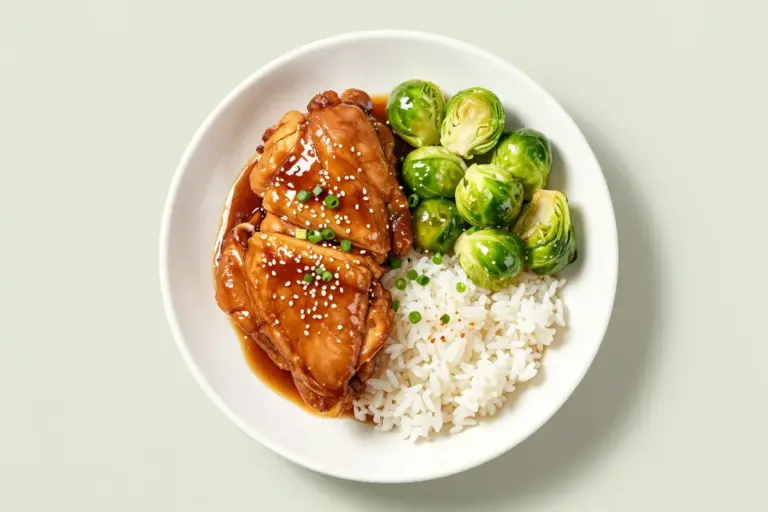
This boneless chicken thigh and rice recipe pairs paprika-seasoned, juicy chicken with fluffy garlic-herb rice in one skillet for an easy, satisfying weeknight dinner.
What to Expect from This One-Pan Chicken and Rice Dinner
This is a skillet-style chicken and rice meal, not chicken served alongside separately cooked rice. The thighs are browned first, then finish gently over rice that absorbs the broth, aromatics, and savory browned flavor from the pan.
- Long-grain white rice gives the dish a fluffy, pilaf-like texture.
- Boneless skinless chicken thighs stay succulent when they are removed as soon as they reach the safe temperature.
- The chicken is browned on the outside, but the covered finish is designed for tenderness rather than a crisp crust.
Why the Ingredients Work
Each component has a job in this compact formulation. The rice provides the structure, while broth and aromatics make it flavorful enough to serve as the main accompaniment rather than a plain starch.
- Long-grain white rice absorbs the measured broth while keeping its grains relatively separate.
- Low-sodium broth provides a savory foundation without making the final salt level difficult to control.
- Onion and garlic create sweetness and depth beneath the rice; butter and olive oil help carry those flavors and encourage light rice toasting.
- Paprika, thyme, black pepper, lemon, and parsley give the dish a familiar herb-and-garlic profile with a fresh finish.
- Trim only obvious pockets of excess fat from the thighs so the rice gains flavor without becoming greasy.
- 1 1/2 pounds boneless, skinless chicken thighs, trimmed of excess fat and patted dry
- 1 1/4 teaspoons kosher salt, divided
- 1 teaspoon sweet paprika
- 1/2 teaspoon black pepper, divided
- 2 tablespoons olive oil, divided
- 1 tablespoon unsalted butter
- 1 medium yellow onion, finely diced
- 3 cloves garlic, finely chopped
- 1 1/2 cups long-grain white rice
- 3 cups low-sodium chicken broth, warmed
- 1 teaspoon dried thyme
- 1 teaspoon fresh lemon juice
- 2 tablespoons flat-leaf parsley, chopped
The Technique for Juicy Thighs and Fluffy Rice
The order of operations matters. Browning the chicken separately develops flavor without leaving the boneless pieces in the pan long enough to dry while the rice cooks.
- Pat the chicken dry before seasoning; surface moisture will cause steaming instead of browning.
- Use a wide, heavy pan and leave space between pieces. Crowded chicken will not form a useful browned layer.
- Toast the rice briefly in the aromatic fat, but stop as soon as the grains look glossy; aggressive browning can scorch the pan.
- Once the broth is added, bring it to a simmer before covering. Maintain only a gentle simmer over low heat.
- Avoid lifting the lid or stirring the rice during the main cooking period, since both actions release steam and disturb hydration.
- Season the chicken:
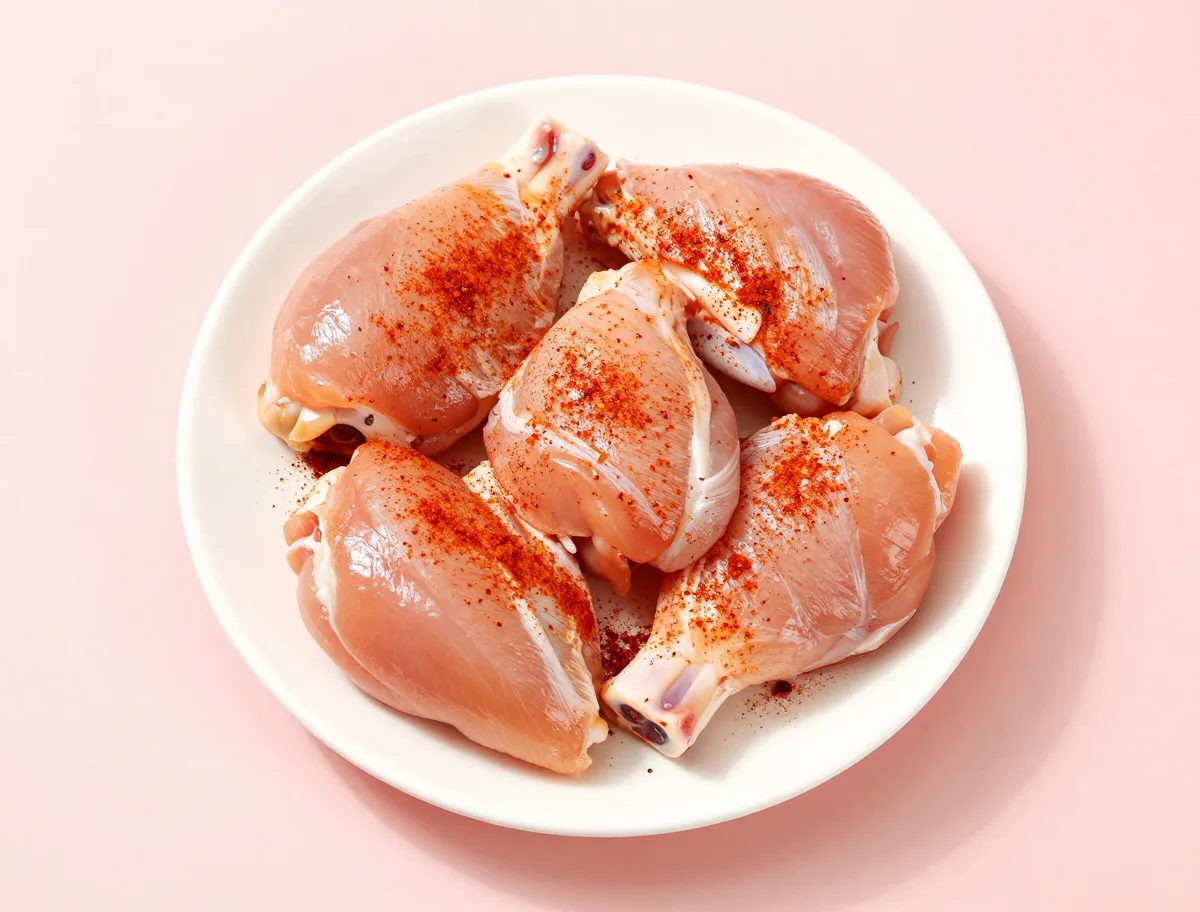
In a small bowl, combine the paprika, 1 teaspoon of the salt, and 1/4 teaspoon of the pepper. Coat the chicken thighs evenly with the seasoning.
- Brown the thighs: Heat 1 tablespoon of the olive oil in a 12-inch heavy, lidded skillet over medium-high heat. Arrange the chicken in a single layer without crowding; work in two batches if needed. Cook until deeply golden on the first side, 3 to 4 minutes, then turn and cook for 2 minutes more. The chicken need not be cooked through. Transfer it to a plate.
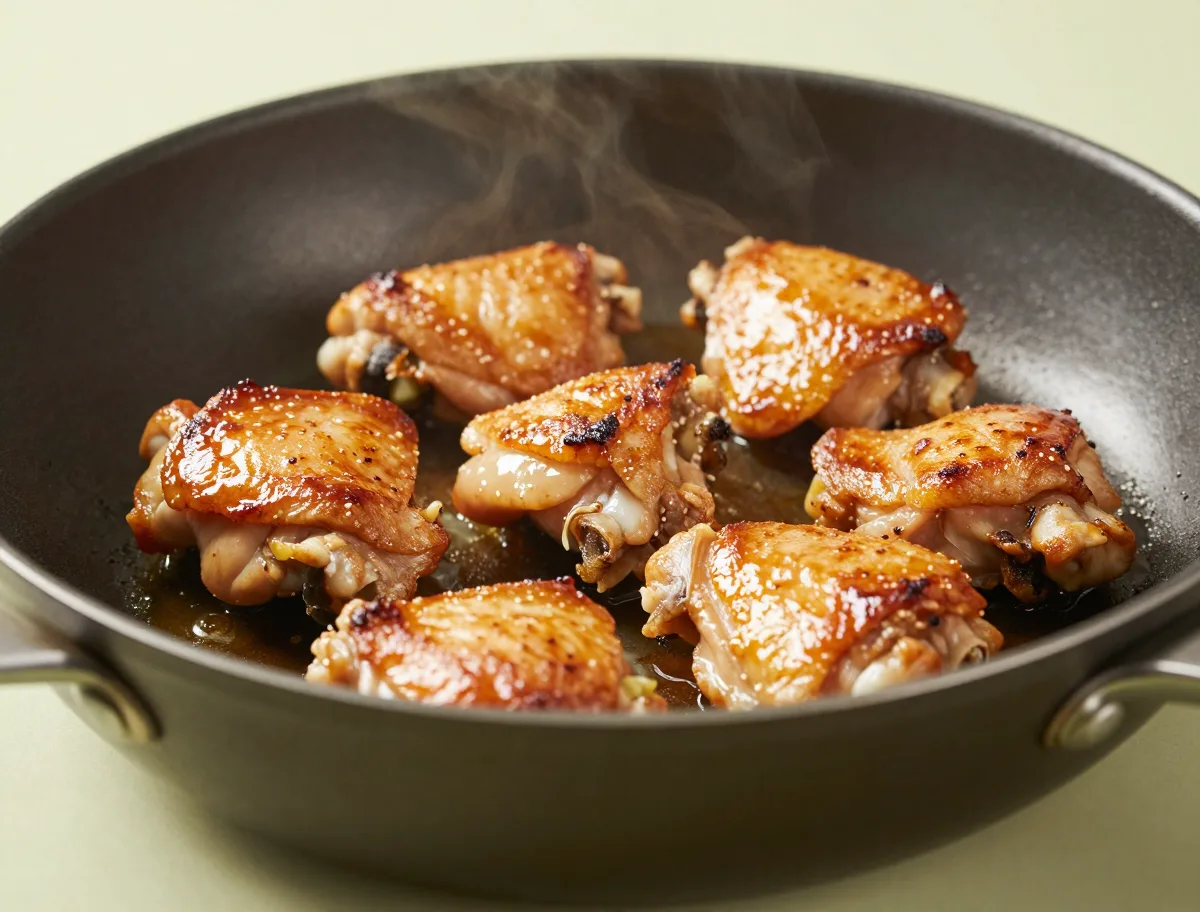
- Build the rice base: Reduce the heat to medium and add the remaining 1 tablespoon olive oil and the butter. Add the onion and cook, stirring occasionally, until softened, about 4 minutes. Stir in the garlic and cook for 30 seconds. Add the rice, thyme, remaining 1/4 teaspoon salt, and remaining 1/4 teaspoon pepper. Stir for 1 minute, coating the grains in the fat.
- Simmer the chicken and rice: Pour in the warm broth and scrape up any browned bits from the bottom of the skillet. Bring the liquid to a gentle simmer. Nestle the chicken, browned side up, into the rice, along with any juices from the plate. Cover tightly, reduce the heat to low, and cook until the rice is tender and the chicken reaches 165°F in its thickest part, about 18 to 22 minutes. Keep the lid closed during cooking so the steam remains in the pan.
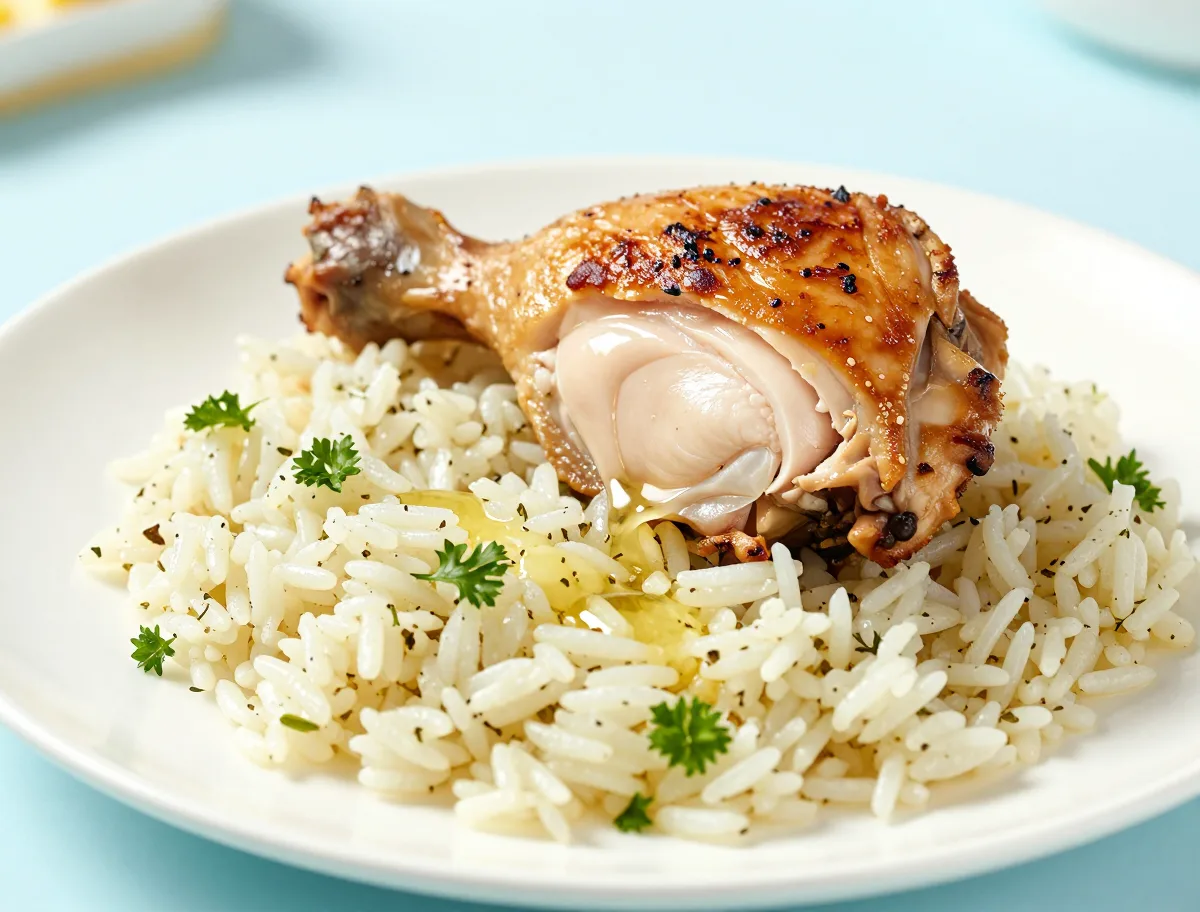
- Rest and finish: Remove the skillet from the heat. If the rice is tender and looks slightly moist, leave it covered for 10 minutes; if there is visible excess liquid, rest it uncovered for 5 minutes, then cover for the remaining 5 minutes. Drizzle the lemon juice over the rice, scatter with parsley, and fluff the rice gently with a fork before serving.
How to Tell When the Chicken and Rice Are Done
Time is a useful guide, but the pan’s physical cues are more dependable. Check the rice and the chicken separately because they do not always finish at exactly the same moment.
- Test a few grains from the center of the pan. They should be tender all the way through, not firm or floury in the middle.
- Look for absorbed broth rather than a pool of liquid around the rice.
- Measure the thickest chicken thigh with an instant-read thermometer; it must reach 165°F/73.9°C.
- If the rice is almost done, the covered rest can complete its hydration. If it is still clearly crunchy, it needs more hot liquid and cooking.
- The rice may look slightly wetter immediately after the heat is turned off; resting helps redistribute that moisture.
- The rice should be tender through the center, with no chalky or crunchy core, and the broth should be absorbed.
- The chicken should be opaque in the center and register at least 165°F/73.9°C in the thickest portion.
- The finished rice should be moist and flavorful but not soupy; the grains should remain mostly distinct.
- A short rest allows residual steam to finish hydrating the rice and helps the grains separate when fluffed.
The Variables That Make One-Pan Rice Reliable
Rice needs a controlled supply of liquid and steam, while boneless chicken cooks comparatively quickly. A tight lid, measured broth, and low heat synchronize those two requirements as closely as possible.
- The stated broth amount is calibrated for 1 1/2 cups of long-grain white rice in a tightly covered, 12-inch skillet; a loose lid or unusually wide pan may increase evaporation.
- The chicken’s juices add flavor and a small amount of moisture, but they are too variable to replace measured broth.
- A violent boil can evaporate liquid too quickly and encourage scorching. The correct simmer should show small, steady bubbles.
- Toasting rice improves flavor and helps the grains remain separate, but it does not compensate for too much or too little liquid.
- Added vegetables contribute water and occupy space, so moderate quantities are preferable unless the recipe is reformulated.
For additional guidance on rice varieties, hydration, pilaf technique, cookware, storage, and reheating, consult USA Rice’s cooking rice guidance.
Common Boneless Chicken Thighs and Rice Mistakes
Most problems with skillet chicken and rice come from lost steam, mismatched rice, or heat that is too aggressive. Small corrections can rescue undercooked rice, but burned or substantially mushy rice cannot be restored.
- Crunchy rice: Add 2 to 4 tablespoons hot broth or water, cover tightly, and continue over low heat. Repeated lid lifting is a common cause.
- Mushy rice: Do not add more liquid. If the grains are cooked but the pan is wet, uncover briefly to let surface moisture evaporate.
- Scorched rice: Turn off the heat and do not scrape the bottom into the dish. Move the unburned portion to another pan if it remains suitable.
- Dry chicken: Remove individual thighs as soon as they reach 165°F rather than holding them in the pan while the rice catches up.
- Uneven cooking: Trim very thick pieces or gently flatten them so the thighs are closer in size before searing.
Ingredient Substitutions and Rice Choices
The recipe is deliberately built around long-grain white rice because it offers the most predictable timing in a one-pan format. Other ingredients can work, but they may change the liquid requirement, cooking time, or final texture.
- Jasmine or basmati rice may be used, but follow the package’s liquid guidance and begin checking earlier because aroma and absorption vary by brand.
- Brown rice needs substantially longer cooking and more liquid; cooking it directly with these thighs will likely overcook the chicken.
- Bone-in thighs require a longer cooking schedule and may finish after the rice, so they are not an equal-timing substitution.
- Water can replace broth, though the rice will have a simpler flavor. If using salted broth, taste the finished rice before adding any extra salt.
- Chicken breast can replace the thighs, but it is leaner; use similarly sized pieces and remove them promptly at 165°F.
Flavor Variations That Still Work in One Pan
Keep the defining structure intact—seasoned chicken, aromatic rice, and a single covered cooking vessel—while changing the seasoning direction. Additions that significantly alter the liquid, such as tomatoes, cream, wine, or coconut milk, require a new formulation.
- For a lemon-herb version, increase the lemon at the finish and add extra parsley; do not add substantial lemon juice to the cooking broth, which can change the rice’s texture.
- For smoky paprika chicken and rice, replace part of the sweet paprika with smoked paprika and add a pinch of cayenne if desired.
- For a vegetable variation, sauté up to 1 cup of diced carrots, bell pepper, or mushrooms with the onion. Add no extra broth unless the pan is unusually dry.
- Stir in up to 1 cup of frozen peas during the final 5 minutes, or add a handful of baby spinach after cooking and cover for 2 minutes.
- Mild curry powder can replace the paprika and thyme for a different direction, while keeping the broth and rice method unchanged.
How to Store, Freeze, and Reheat Chicken and Rice
Cooked rice needs prompt cooling as well as ordinary leftover care. Divide the meal into shallow containers rather than leaving it to cool slowly in the hot skillet.
- Refrigerate leftovers within 2 hours of cooking, or within 1 hour if the room is above 90°F/32°C.
- Cool in shallow, airtight containers and use within 3 to 4 days; a more conservative 3-day window is best for quality.
- Freeze cooled portions in airtight containers for best quality within 2 to 6 months. The rice may be slightly firmer after thawing.
- Reheat covered in the microwave or in a skillet with a splash of water or broth. Stir once or twice and heat until the center reaches 165°F/73.9°C.
- Discard portions that were left at room temperature beyond the recommended limit; reheating does not reliably make mishandled rice safe.
Boneless Chicken Thighs and Rice Recipe FAQ
These answers address the practical choices that most affect the outcome: rice selection, searing, cooking method, doneness, vegetables, and leftover handling.
Can I use boneless chicken thighs instead of bone-in thighs?
Yes. Boneless thighs are the intended cut here and cook faster than bone-in pieces. Use thighs of similar thickness and check them early so they do not remain in the pan longer than necessary.
Do I need to sear the chicken first?
Searing is optional for safety but worthwhile for flavor. It creates browned fond that seasons the rice and gives the chicken a more developed exterior.
What type of rice works best?
Regular long-grain white rice is the most predictable choice for this recipe. Jasmine and basmati can work with package-informed adjustments, while brown, wild, arborio, and instant rice need different methods.
Should I cook the rice on the stovetop or in the oven?
The covered stovetop method is fastest and gives direct control over the simmer. A covered oven finish can work in an oven-safe Dutch oven, but evaporation and timing will differ, so use a tight lid and check both components rather than relying on the stated stovetop time.
How do I keep the chicken juicy while the rice cooks?
Brown it only partially, keep the pan covered, and monitor the thickest piece. If a thigh reaches 165°F before the rice is tender, remove it temporarily and return it for the final moments.
How do I know when the rice is done and the liquid has been absorbed?
Taste a grain from the center. It should be tender without a hard core, and the pan should not contain loose broth. A brief rest helps if the rice is nearly tender and only slightly moist.
What internal temperature should the chicken reach?
The thickest part of every chicken thigh should reach at least 165°F/73.9°C. Check away from the pan and bone area, if present.
Can vegetables be added to the same pan?
Yes, in moderate amounts. Sauté firm vegetables such as carrots, peppers, or mushrooms with the onion; add peas or spinach near the end so they do not release too much water into the rice.
What seasoning profile fits this dish best?
Paprika, garlic, thyme, black pepper, lemon, and parsley create a mild American herb-and-garlic profile. You can shift toward smoky paprika, lemon-herb, or mild curry without changing the basic one-pan structure.
How should leftovers be stored and reheated?
Cool the chicken and rice promptly in shallow containers, refrigerate them for 3 to 4 days, and reheat covered with a small splash of water or broth until the center reaches 165°F/73.9°C.
Chicken and Rice Food-Safety Essentials
Raw poultry and cooked rice each require careful handling. Use a thermometer for the chicken, keep raw-meat tools separate from ready-to-eat foods, and cool leftovers promptly rather than leaving them in the warm skillet.
- Cook the thickest chicken thigh to a minimum of 165°F/73.9°C; color alone is not a reliable safety test.
- Wash hands, knives, cutting boards, and counters after they contact raw chicken, and do not return cooked chicken to a surface that held it raw.
- Refrigerate the finished dish within 2 hours, or within 1 hour in temperatures above 90°F/32°C.
- Cooked rice can support Bacillus cereus growth if held warm or at room temperature too long. Prompt cooling is more important than trying to rescue questionable leftovers.
- Reheat refrigerated or frozen portions to 165°F/73.9°C throughout before eating.
For authoritative poultry temperature guidance, review the USDA safe cooking temperature guidance.