Easy Caesar Chicken Bake Recipe with Parmesan
This easy Caesar chicken bake recipe combines evenly cooked chicken breasts with creamy Caesar dressing, Parmesan, melty mozzarella, and an optional buttery crouton topping for a richly savory one-dish dinner.
What Makes This a Caesar Chicken Bake?
This is a straightforward one-dish bake of whole chicken breasts rather than a pasta-heavy casserole or shredded-chicken filling. Creamy Caesar dressing coats the chicken, Parmesan supplies the signature salty, umami-rich finish, and mozzarella plus an optional crouton layer create a browned surface with either melt or crunch.
- Expect tangy, garlicky, savory flavor from the dressing rather than from a separate sauce.
- The chicken should be coated and moist, not submerged in a thin pool of liquid.
- Croutons are optional: they reinforce the Caesar-salad connection but are not required for the dish to work.
Why the Ingredients Work
The recipe is intentionally built around a few ingredients with distinct jobs. Chicken breast provides a mild canvas, while creamy Caesar dressing brings fat, acidity, garlic, seasoning, and savory depth in one step. Parmesan is the flavor anchor; mozzarella is used in a smaller role to make the top supple and melty.
- Evenly thick chicken is more important than choosing especially large breasts, because it prevents the thin portions from drying before the centers are cooked.
- Freshly grated Parmesan blends into the dressing and browns more naturally than a coarse, dry cheese product.
- Butter helps crushed croutons brown evenly. Without some added fat, crumbs can remain pale and dusty.
- Because Caesar dressing, Parmesan, and seasoned croutons may all be salty, taste the dressing before adding any extra salt.
Ingredients
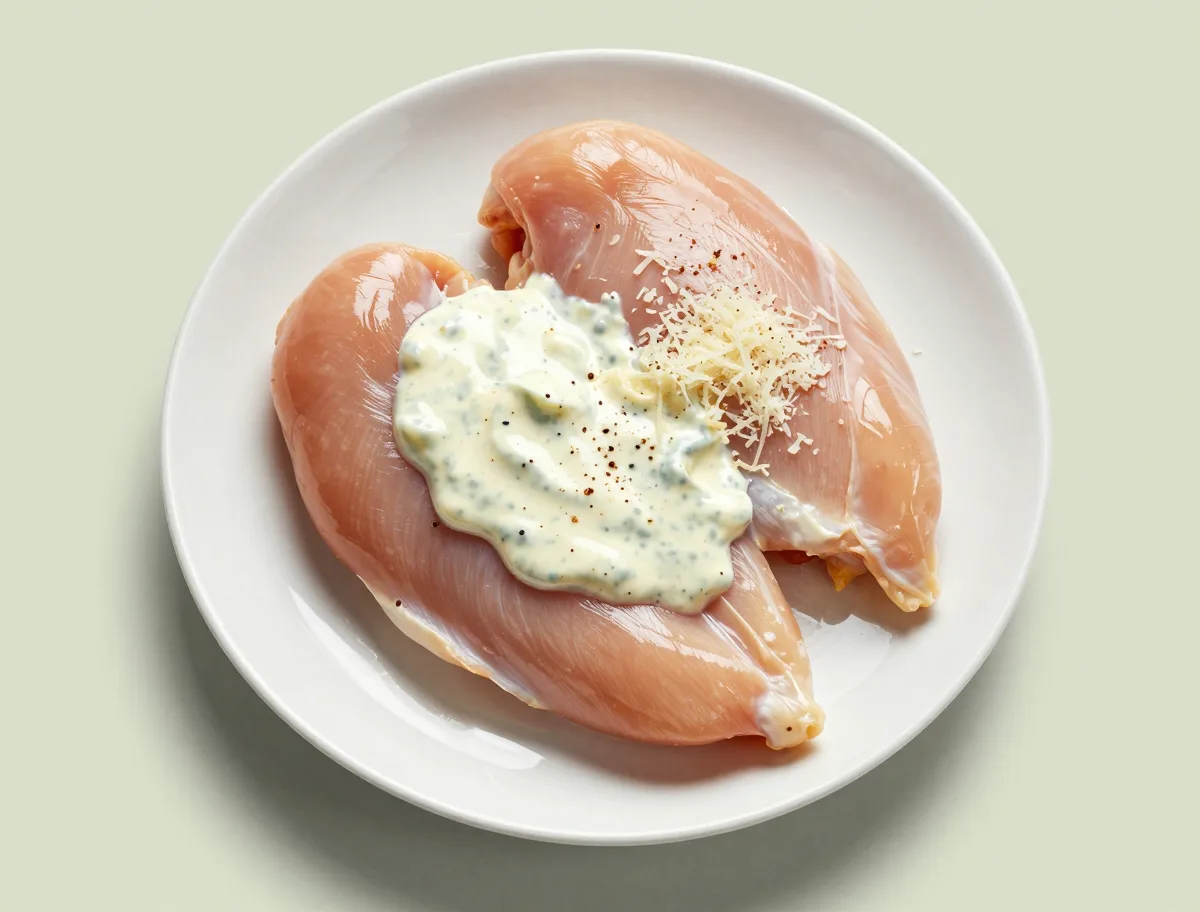
- 2 pounds boneless, skinless chicken breasts, trimmed and pounded or sliced to an even 1/2- to 3/4-inch thickness
- 1 cup creamy Caesar dressing, divided
- 1/2 cup Parmesan cheese, finely grated
- 1/2 cup low-moisture mozzarella, shredded
- 1 cup plain or Caesar-seasoned croutons, coarsely crushed (optional)
- 1 tablespoon unsalted butter, melted (optional)
- 1/2 teaspoon garlic powder
- 1/4 teaspoon freshly ground black pepper, plus more for finishing if desired
- 1 teaspoon lemon zest, finely grated (optional)
- 2 tablespoons flat-leaf parsley, finely chopped (optional)
The Key Technique for Evenly Baked Chicken
The most useful preparation step is evening the chicken before it goes into the dish. A breast with one thick end and one thin end cannot finish uniformly. Pounding or butterflying creates a predictable thickness, while a single snug layer lets the dressing coat each piece without trapping excessive liquid.
- Pat the chicken dry before seasoning so the dressing adheres instead of sliding off.
- Use the foil-covered first stage to protect the surface, then uncover after adding the cheese and crumbs for browning.
- Add the crunchy topping only for the final stage; putting it in from the beginning gives it too much time to soften or burn.
- Broiling is a finishing tool, not a substitute for baking the chicken through.
Instructions
- Heat the oven: Heat the oven to 375°F (190°C). Lightly grease a 9-by-13-inch baking dish. Pat the chicken dry. If the breasts are thick or uneven, butterfly them or pound them between sheets of parchment until all pieces are a similar thickness.
- Season and arrange the chicken: Season both sides of the chicken with the garlic powder and black pepper. Spread 1/2 cup of the Caesar dressing across the bottom of the baking dish. Arrange the chicken in a single, snug layer without overlapping, then spread the remaining 1/2 cup dressing over the tops.
- Bake the chicken gently: Cover the dish tightly with foil and bake for 15 minutes. The covering protects the lean chicken while it begins cooking; the top will be finished uncovered so it can brown.
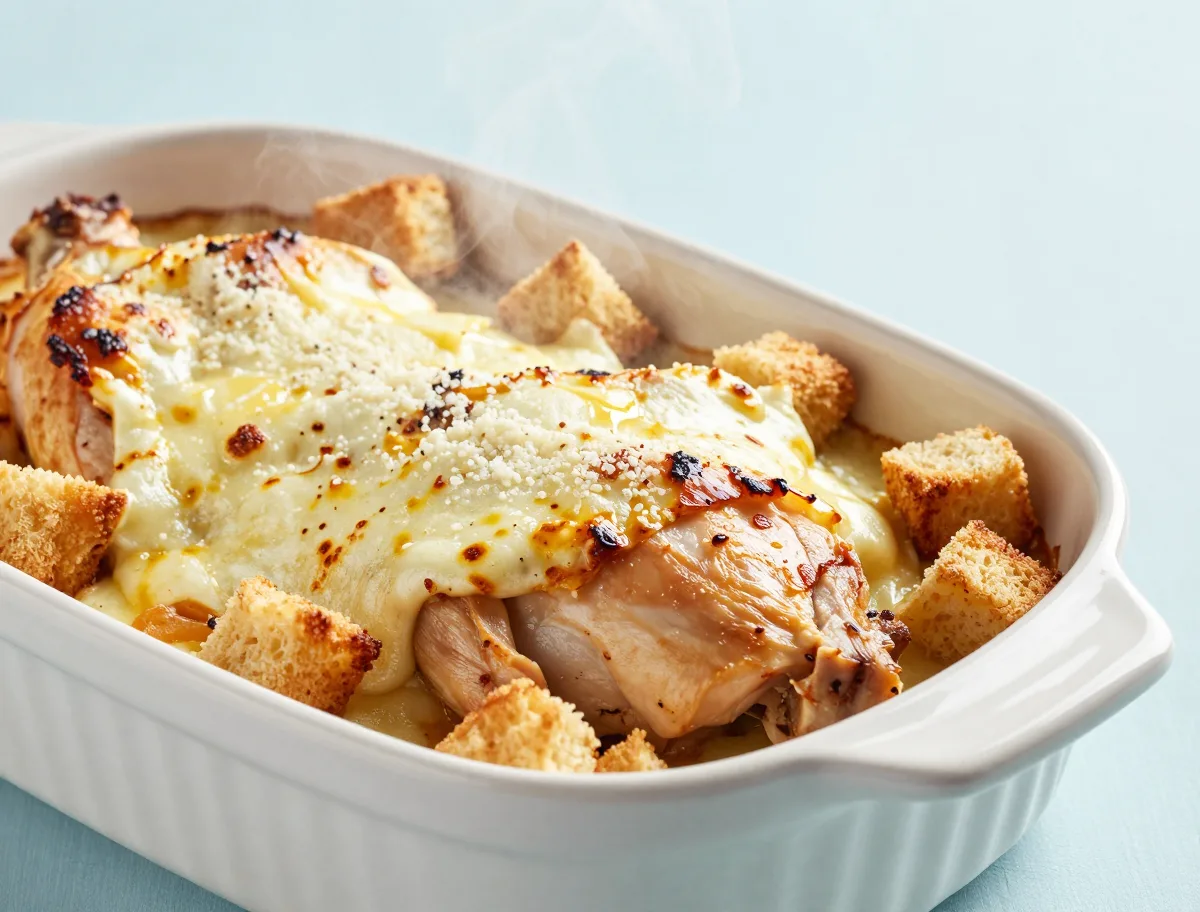
- Add the cheese and crunchy topping: Remove the foil. Sprinkle the Parmesan and mozzarella evenly over the chicken. If using the crouton topping, toss the crushed croutons with the melted butter and scatter them over the cheese. Return the dish to the oven, uncovered, and bake until the cheese is melted and the thickest chicken breast reaches 165°F (74°C), usually 8 to 13 minutes more.
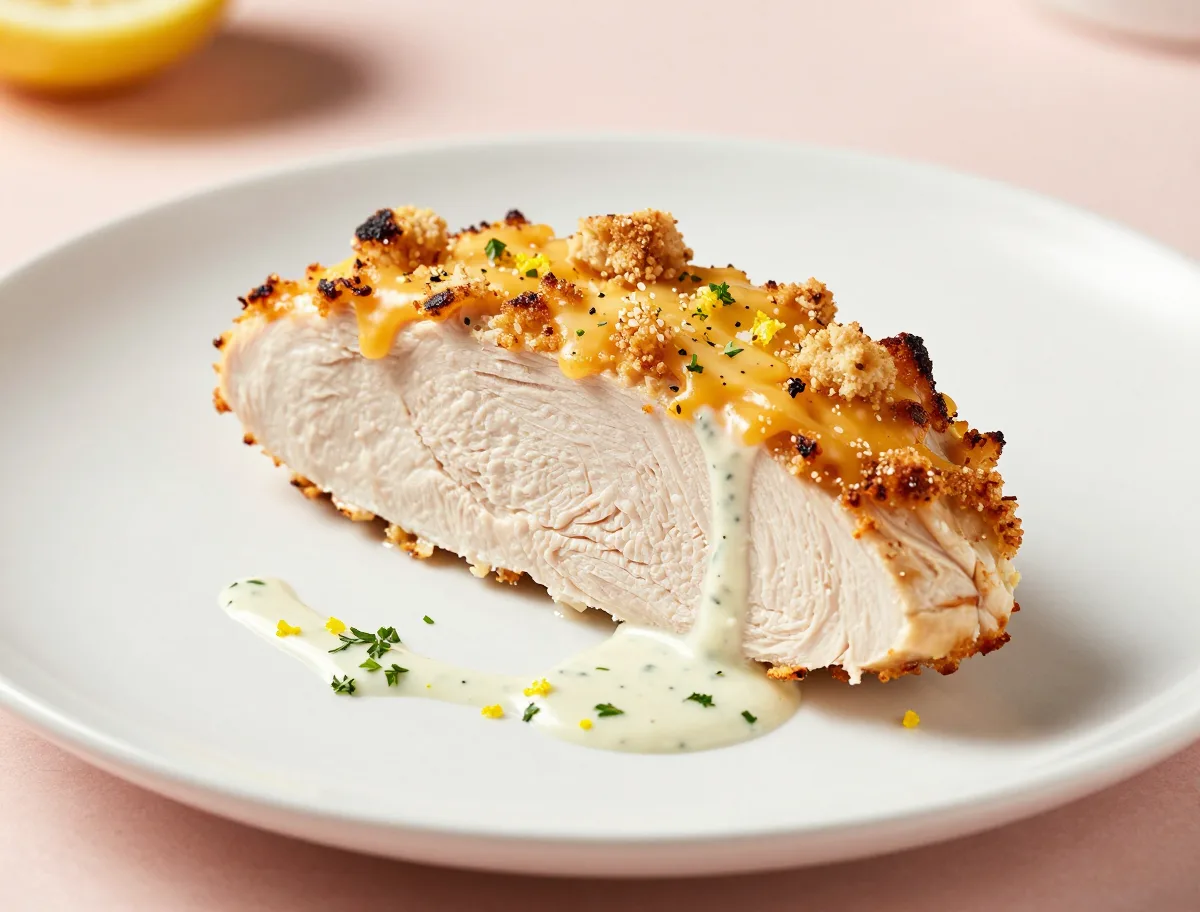
- Brown and finish: For a more deeply golden top, switch the oven to broil and broil for 30 to 90 seconds, watching continuously. Remove the dish as soon as the topping is browned. Rest for 5 minutes, then finish with the lemon zest and parsley before serving.
How to Tell When Caesar Chicken Is Done
A browned top is appealing, but it does not prove that the chicken is safe or tender. Check the thickest section of the largest breast with an instant-read thermometer, inserting the probe from the side if necessary so it reaches the center without touching the pan.
- Remove the bake only when the chicken reaches 165°F (74°C).
- The sauce should remain creamy and cling to the chicken; a little bubbling at the edges is normal.
- A brief rest allows the hot dressing to settle and helps keep the cheese and crumbs in place.
- Color and clear juices are secondary observations and should never replace a temperature check.
The Variables That Control the Result
Chicken thickness is the main factor controlling bake time. The dish itself also matters: an overcrowded pan holds more moisture and can leave the topping soft, while a very broad dish exposes more sauce to evaporation. Covering and uncovering deliberately balances moisture retention with browning.
- Half-inch chicken pieces may finish near the short end of the range; pieces closer to three-quarters inch can take several minutes longer.
- A thick dressing clings to the meat, while a thin dressing is more likely to run into the pan and look watery.
- Higher heat is not automatically better: it can brown the topping before the center of a thick breast is cooked.
- Use the thermometer to adjust for oven variation, pan material, starting temperature, and chicken size.
Common Caesar Chicken Bake Mistakes
Most disappointing results come from a mismatch between chicken thickness, pan arrangement, and time rather than from the ingredient combination itself. The safest correction is to standardize the chicken and check it early; once breast meat is substantially overcooked, additional sauce cannot restore its original texture.
- Dry chicken: the pieces were uneven or baked past 165°F. Flatten thick areas and begin checking several minutes early.
- Watery sauce: too much dressing, a very thin dressing, crowded chicken, or excess moisture from the meat can all contribute. Use enough to coat, not flood.
- Burned cheese or crumbs: the topping was exposed too early or broiled too long. Shield it with foil and return to ordinary baking heat.
- Pale crumbs: they lacked fat or direct heat. Toss them with butter and expose them during the uncovered finish.
- Overly salty flavor: Caesar dressing, Parmesan, and seasoned croutons compound quickly. Avoid automatic additional salt.
Easy Substitutions
The closest substitute for bottled dressing is a homemade Caesar dressing that is thick and fully emulsified. A thin vinaigrette will not provide the same creamy coating. Cheese and topping changes are straightforward, but each shifts the final texture or salt level.
- Thin-cut chicken breasts can replace pounded breasts with nearly the same method and timing; check them early.
- Boneless, skinless thighs are more forgiving but take the dish in a richer, darker direction and require their own temperature check.
- Replace part of the Parmesan with Pecorino Romano for a sharper result, using less additional salt because Pecorino is saltier.
- Provolone can stand in for mozzarella and gives a more pronounced savory flavor.
- Panko, plain breadcrumbs, crushed crackers, or crushed croutons can replace one another in the topping; seasonings and crispness will vary.
Variations That Keep It Caesar
The recipe has room for textural changes without losing its identity. A Parmesan-only top is more intensely savory, while mozzarella or provolone makes the surface softer and stretchier. A lemon-and-herb finish adds contrast after baking without turning the dish into a separate casserole.
- For extra Caesar character, use crushed Caesar croutons rather than plain crumbs.
- Omit the crouton topping for a simple creamy, cheesy baked chicken.
- Choose provolone for a slightly sharper cheese finish or mozzarella for a milder, stretchier one.
- Keep substantial additions such as pasta, rice, or a large quantity of vegetables out of the base bake; they change the moisture balance and require a casserole-style adaptation.
- Fresh romaine, if served alongside, should be added after baking so it stays crisp.
What to Serve with Caesar Chicken
This is a rich main course, so a fresh or lightly seasoned accompaniment creates the best balance. Serve each portion with a small spoonful of the cohesive pan sauce, then use lemon or parsley to brighten the creamy, salty flavors.
- Pair it with roasted broccoli, green beans, asparagus, or another simply cooked green vegetable.
- A crisp green salad with a light dressing provides freshness without duplicating the rich baked topping.
- Rice, roasted potatoes, or crusty bread are useful optional starches for absorbing the pan juices.
- Avoid automatically adding more Caesar dressing or Parmesan at the table; both can make the finished dish overly salty.
How to Store, Freeze and Reheat Caesar Chicken
For best texture, serve the bake soon after cooking, especially when using croutons. Refrigerate leftovers in shallow, airtight containers within two hours and use them within three to four days. Store any reserved crunchy topping separately if possible.
- To make ahead, assemble the raw dish, cover it, and refrigerate it until baking. Bake directly from the refrigerator and allow extra time, checking the center with a thermometer.
- Reheat covered in a 325°F oven or in the microwave until the chicken reaches 165°F. Uncover briefly at the end if the top needs refreshing.
- A fresh scattering of buttered crumbs or chopped parsley restores more texture than prolonged reheating.
- Freezing is safe when the food is packaged and held at 0°F or below, but the dressing may separate and the croutons will soften. Freeze without the crunchy topping when possible, and treat two to six months as a quality guideline.
For additional storage guidance, consult the FoodSafety.gov Cold Food Storage Chart.
Food Safety for Baked Chicken
Handle the raw chicken as a separate ingredient from the finished meal. Wash hands, boards, utensils, and any surfaces that contact the raw poultry before handling the cheese, garnish, or serving pieces. The decisive safety check is 165°F (74°C) in the thickest part of the chicken.
- Do not rely on browning, bubbling dressing, or clear juices to determine doneness.
- Refrigerate cooked chicken within two hours, or within one hour when the surrounding temperature is above 90°F, and keep it at 40°F or below.
- Raw chicken can generally be refrigerated for one to two days before cooking.
- Reheated leftovers and casseroles should also reach 165°F (74°C).
- Food held continuously at 0°F or below remains safe for an extended period, although creamy sauce and crunchy toppings lose quality over time.
See the USDA safe cooking temperature guidance for poultry and reheated dishes.