Cheesy Chicken Crescent Roll Recipe with Creamy Filling
This cheesy chicken crescent roll recipe wraps tender shredded chicken, cream cheese, and cheddar in refrigerated crescent dough for an easy oven-baked dinner with a golden, flaky crust.
What Makes These Cheesy Chicken Crescent Rolls Work
These chicken stuffed crescent rolls are individual baked pockets, not chicken served beside pastry. The filling should be creamy and savory but firm enough to mound, while the dough becomes puffed, golden, and fully baked around it.
- The main recipe uses a dry sheet-pan bake for more distinct flaky edges and bottoms.
- A successful roll has tender shredded chicken, melted cheese, and a sealed crescent exterior.
- A short rest after baking helps the creamy filling settle before serving.
Why the Chicken, Cream Cheese, and Cheddar Matter
Shredded chicken distributes evenly through the small crescent pockets, making every bite easier to portion than large chunks would be. Cream cheese supplies body and adhesion, while cheddar contributes sharper flavor and a reliable melt. Garlic, onion, pepper, and a restrained amount of salt keep the rich filling from tasting flat.
- Patting the chicken dry helps prevent watery filling and soggy pastry.
- Softened cream cheese blends smoothly and avoids lumps that can tear the dough.
- A moderately moist melting cheese is preferable to a very dry, aged cheese, which may melt unevenly.
- 1 1/2 cups cooked shredded chicken, finely shredded and patted dry
- 3 ounces cream cheese, softened
- 1/2 cup sharp cheddar cheese, finely shredded
- 1/2 teaspoon garlic powder
- 1/4 teaspoon onion powder
- 1/4 teaspoon black pepper
- 1/8 teaspoon fine salt, use less if the chicken is already well salted
- 1 package refrigerated crescent-roll dough, 8-count package, kept chilled until needed
- 1 large egg, beaten with 1 teaspoon water
How to Assemble Chicken Crescent Rolls Without Leaks
The most important assembly decision is restraint: use a modest mound of filling and leave a clean margin around the dough. Roll each triangle from the wide end toward the point, tuck the sides inward, close any perforations, and place the finished roll seam-side down.
- Work promptly once the dough is opened so it stays cold and manageable.
- Use equal portions rather than filling by eye; about 2 level tablespoons per triangle is the practical limit for this package size.
- If the dough becomes soft or greasy, chill the unfilled triangles briefly instead of stretching them thinner.
- Bake on a parchment-lined sheet with space between rolls so dry oven heat can brown the sides.
- Heat the oven. Heat the oven to 375°F (190°C). Line a baking sheet with parchment paper.
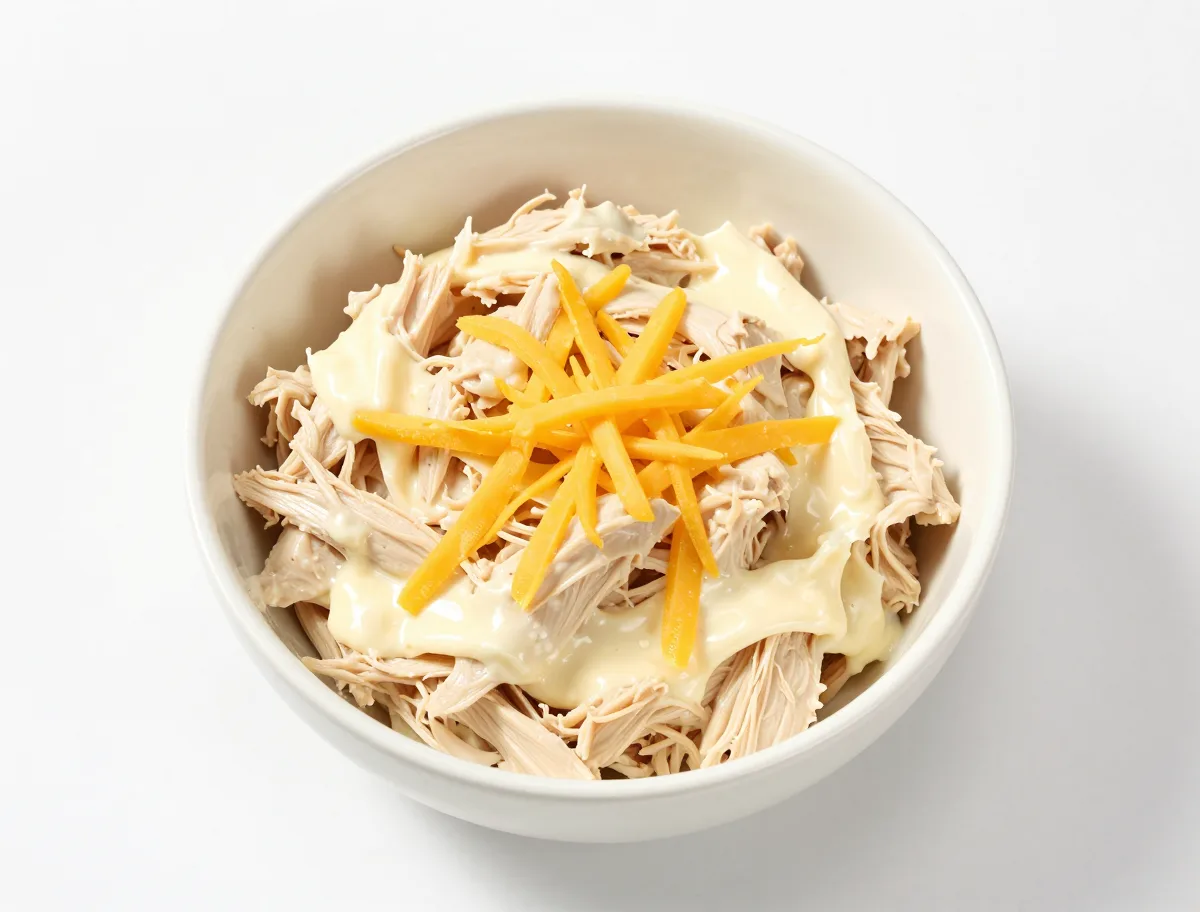
- Make the chicken filling. In a medium bowl, stir the softened cream cheese until smooth. Add the shredded chicken, cheddar, garlic powder, onion powder, pepper, and salt. Mix until evenly combined and the mixture holds together when pressed. If the chicken is warm, let the filling cool until lukewarm before assembling.
- Portion the filling. Divide the filling into 8 equal portions. Each portion should be about 2 level tablespoons, or just enough to sit on the wide end of a dough triangle while leaving a clean border around it.
- Fill and seal the crescents. Unroll the cold crescent dough and separate it into 8 triangles, pressing any torn perforations closed. Place one portion of filling at the wide end of each triangle. Fold the side edges slightly inward, then roll from the wide end toward the point. Pinch any visible cracks closed and arrange the rolls seam-side down on the prepared sheet, leaving space between them.
- Brush and bake. Brush the tops lightly with the beaten egg mixture. Bake on the middle rack for 18 to 22 minutes, until the rolls are puffed, deeply golden, and firm at the seams. If the tops brown before the dough feels fully set, tent the sheet loosely with foil and continue baking.
- Rest and serve. Let the rolls rest on the baking sheet for 5 minutes before serving. The filling should be hot and the cheese melted; serve warm.
How to Tell When the Crescent Rolls Are Done
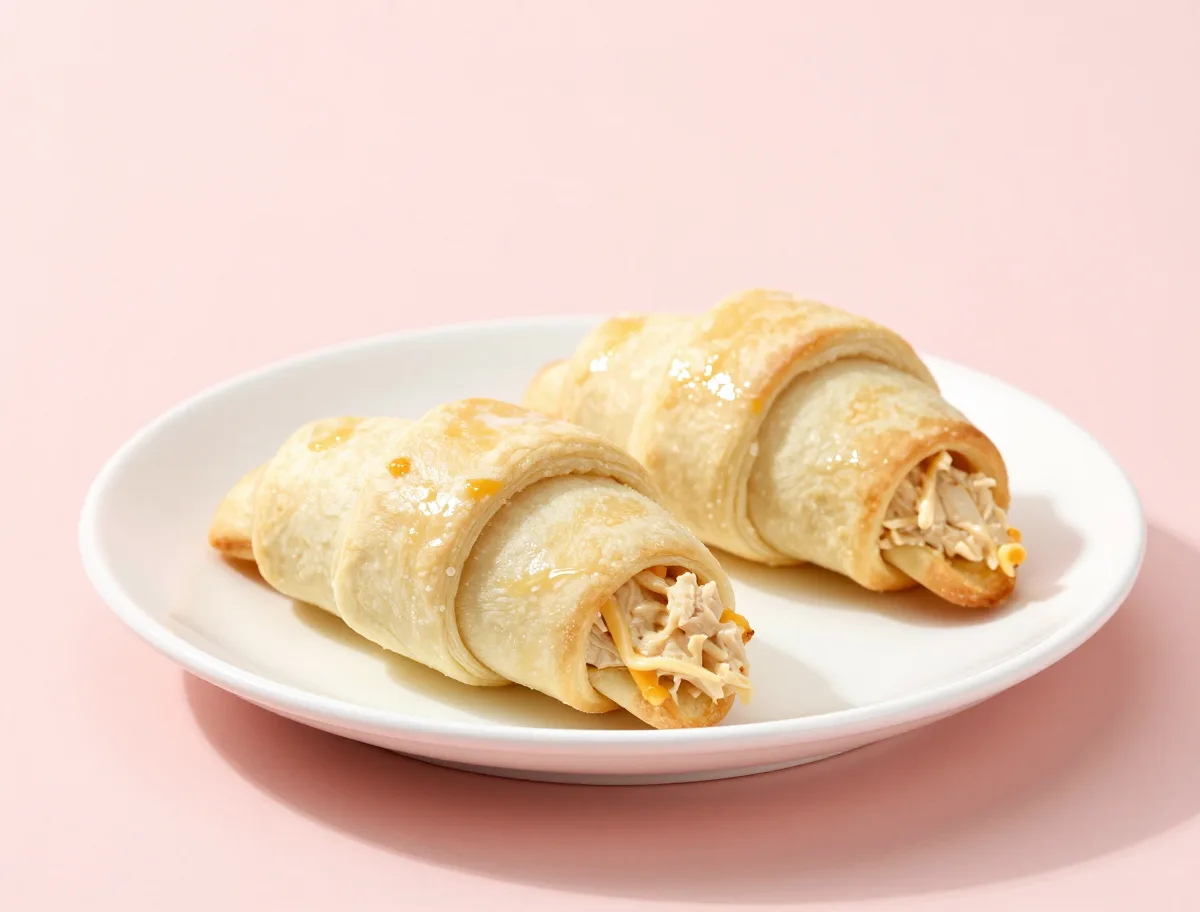
Color alone is not enough for filled pastry. Look for puffed dough that is golden at the tops and edges, firm at the seams, and no longer damp-looking in the folds. The filling should be hot and the cheese melted, not merely warm near the surface.
- A baked-dough aroma and a firm exterior are useful confirmation alongside the golden color.
- Check the thickest roll if the pan is crowded or the filling went in cold.
- Resting for 5 minutes makes the rolls easier to lift and reduces filling runoff.
- The crescent dough is puffed and evenly golden rather than pale or translucent.
- The seams are firm and the rolls lift without collapsing.
- The filling is hot, cohesive, and melted at the center.
- If checking with a thermometer, the thickest center should reach 165°F (74°C).
The Moisture and Heat Factors That Control the Result
Crescent dough needs time to set before moisture from the chicken and cheese can migrate into its layers. A thick filling, a fully preheated oven, and moderate portions give the pastry structure before steam can force its way through a seam.
- Wet chicken, raw vegetables, or excess dairy can delay browning and soften the bottoms.
- Overfilling creates internal pressure as the cheese melts and steam expands, making cracks more likely.
- A hot oven sets the dough efficiently; a low oven may leave the interior doughy before the exterior colors.
- Freshly shredded cheddar generally melts more smoothly than a large quantity of very aged cheese.
Common Chicken Crescent Roll Problems and Fixes
Most problems begin before the pan reaches the oven. Keep the filling thick, avoid stretching the dough beyond its natural size, and seal every weak point before baking.
- Leaking filling: reduce the portion, keep it away from the edges, pinch cracks closed, and place the seam underneath.
- Soggy bottoms: blot wet chicken, drain any additions, avoid holding assembled rolls for a long time, and bake on the middle rack in a fully heated oven.
- Doughy centers: continue baking until the folds feel firm; tent loosely with foil if the tops are already dark.
- Dry chicken: use thigh or rotisserie meat, or rely on the cream cheese binder rather than reheating the filling for an extended time.
- Greasy filling: use less fatty chicken or bacon-style additions and avoid adding extra cream or butter.
Easy Substitutions for Chicken Crescent Rolls
The recipe tolerates practical swaps as long as the replacement filling remains cooked, reasonably dry, cohesive, and easy to seal. Small changes affect flavor and moisture, so adjust the texture before opening the dough.
- Use Monterey Jack, Colby Jack, mozzarella, or a cheddar blend in place of cheddar; milder cheeses may need a little more seasoning.
- Neufchâtel can replace some or all of the cream cheese, though the filling may be slightly less rich.
- Thick sour cream or plain Greek yogurt can replace part of the cream cheese, but do not substitute them in equal volume for all of it or the filling may loosen.
- Crescent dough sheets can replace perforated triangles; cut the sheet into 8 triangles and seal the edges well.
- For a soup-free sauced version, use a thick, spoon-coating homemade white sauce flavored with chicken broth rather than a thin broth.
Bacon, Ranch, Garlic, and Vegetable Variations
These variations keep chicken, cheese, and crescent dough at the center of the dish. Add-ins should be finely chopped and dry enough that the filling still holds its shape on a spoon.
- Bacon-cheddar: fold in a small amount of cooked, drained, finely crumbled bacon and reduce added salt.
- Ranch chicken: add ranch seasoning in place of some of the garlic and onion seasoning, tasting before adding salt.
- Garlic-herb: add a little dried Italian seasoning or chopped chives for a more aromatic filling.
- Broccoli or spinach: cook thoroughly, chop finely, and squeeze or drain very well before mixing.
- Casserole-style: arrange the assembled rolls close together over a thin layer of thick cream-of-chicken sauce and bake uncovered. The sauce will make the bottoms softer and the dish more spoonable than the sheet-pan version.
What to Serve with Cheesy Chicken Crescent Rolls
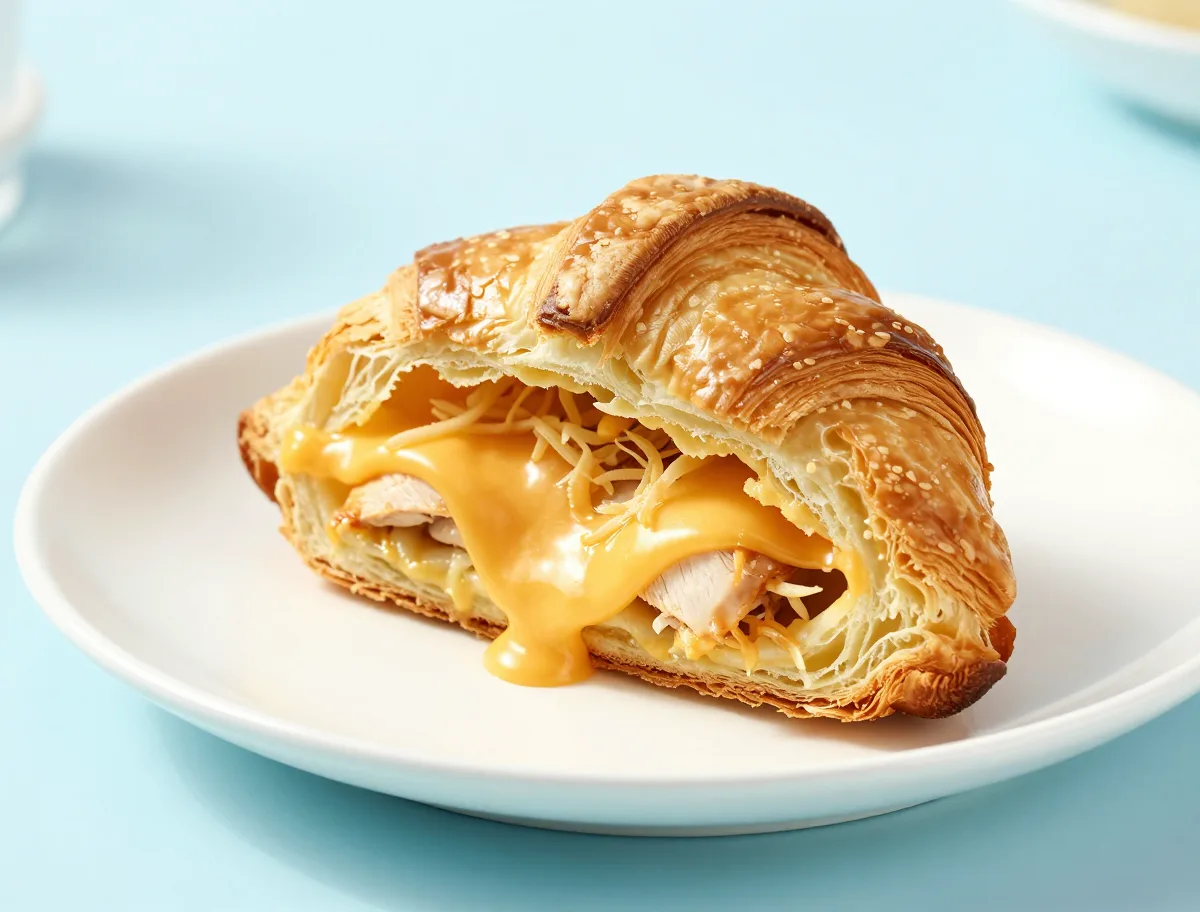
Serve the rolls warm after their brief rest, when the cheese is still soft and the pastry retains its best texture. Because the rolls already provide protein, starch, and richness, fresh or lightly dressed sides work especially well.
- Pair with a green salad, lemony slaw, steamed green beans, or roasted vegetables.
- Broccoli or peas make an easy family-style vegetable side.
- Finish with chopped parsley, scallions, or black pepper for freshness.
- For an appetizer presentation, serve one roll per person with a small amount of dipping sauce rather than soaking the pastry.
How to Store, Freeze, and Reheat Chicken Crescent Rolls
The filling can be prepared ahead, but the pastry is best when assembled close to baking. Refrigerate baked leftovers promptly and reheat them gently so the center becomes hot without unnecessarily drying the chicken.
- Refrigerate prepared filling in a covered container for up to 24 hours before assembly.
- Unbaked assembled rolls may be covered and refrigerated for several hours the same day, though longer holding can soften the dough.
- Cool baked leftovers promptly, refrigerate within 2 hours, and use within 3 to 4 days.
- Reheat in a 350°F oven or toaster oven until the center reaches 165°F; microwaving is faster but makes the pastry softer.
- Freezing is possible, but thawing can make crescent dough denser or softer. For best quality, freeze the cooked chicken or filling separately and assemble fresh.
Cheesy Chicken Crescent Roll Recipe FAQ
These practical answers cover the chicken, cheese, filling amount, baking format, and preparation choices that most affect the finished rolls.
Does the chicken need to be cooked before filling the crescent rolls?
Yes. Use fully cooked shredded chicken, such as rotisserie, poached, roasted, or leftover chicken. Pat it dry and let it cool to lukewarm before mixing.
How much filling should go in each crescent?
For an 8-count package, use about 2 level tablespoons per triangle. The mound should sit on the wide end without touching the edges, leaving room to seal the dough.
Can I use rotisserie chicken?
Yes. Remove bones and unwanted skin, shred the meat finely, and blot away excess grease. Rotisserie chicken may already be salty, so taste the filling before adding extra salt.
Should I bake the rolls on a sheet pan or in a casserole dish?
Use a sheet pan for more distinct flaky, browned rolls. Use a casserole dish with thick sauce underneath for a softer, creamier chicken crescent roll bake.
Can I use mozzarella instead of cheddar?
Yes. Mozzarella gives a milder flavor and stretchier melt. Monterey Jack, Colby Jack, or a cheddar-Monterey Jack blend are also good choices.
Why did my cheese filling leak out?
The usual causes are too much filling, a wet or hot filling, stretched dough, or an unsealed perforation. Reduce the portion, cool the mixture, pinch cracks closed, and bake the rolls seam-side down.
Can I assemble these chicken crescent rolls ahead of time?
Prepare the filling up to a day ahead, but assemble the rolls as close to baking as practical. If assembled in advance, refrigerate them covered for only several hours to limit dough softening.
Can I turn this into a chicken crescent roll casserole?
Yes. Put a shallow layer of thick cream-of-chicken sauce in a baking dish, arrange the rolls close together, and bake uncovered until the dough is golden and the sauce bubbles. Expect softer bottoms than with the sheet-pan method.
Food Safety for Chicken Crescent Rolls
Use properly cooked and chilled poultry, and do not rely on bubbling cheese or browned pastry alone to judge safety. The center of a stuffed roll can remain cooler than its crust.
- Cook poultry to 165°F (74°C) in the thickest portion before shredding it for the recipe.
- Keep chicken and dairy refrigerated at 40°F (4°C) or below until preparation.
- Refrigerate cooked filling and leftovers within 2 hours, or within 1 hour when the surrounding temperature is above 90°F (32°C).
- Reheat leftovers until the center reaches 165°F (74°C).
- Discard leftovers held beyond 3 to 4 refrigerated days or left at room temperature too long.
For official poultry and reheating temperature guidance, see the USDA safe cooking temperature chart.