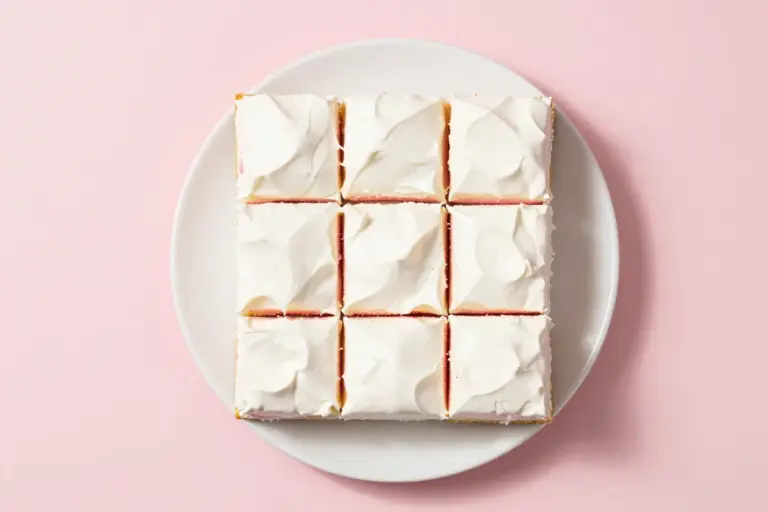
Lemon Crunch Cake Recipe with a Crisp Sugar Topping
This lemon crunch cake recipe makes a tender, moist sponge scented with fresh zest and finished with a crisp lemon sugar topping that crackles as you slice it.
What Makes This a Lemon Crunch Cake?
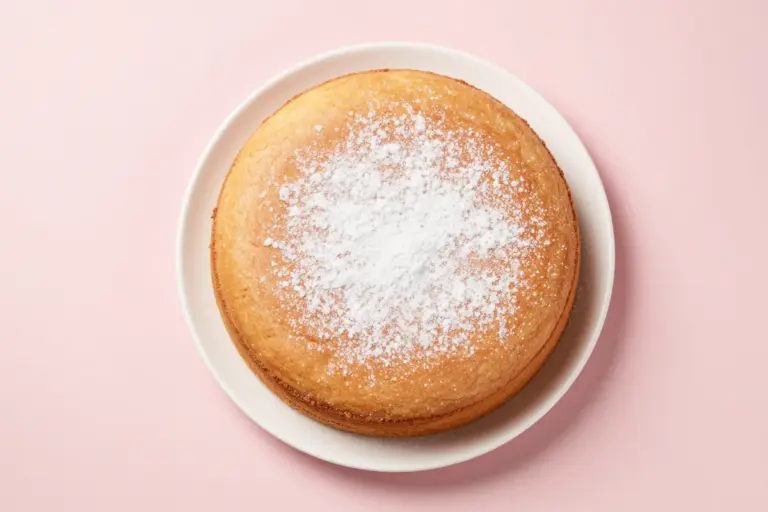
This is a simple British-style lemon sponge: tender and moist inside, with fresh zest in the batter and a thin lemon-sugar crust on top. The topping is applied after baking while the cake is warm, so some lemon juice sinks into the upper crumb while undissolved sugar remains at the surface and sets into a delicate crunch.
- The crumb should be soft and moist, not wet or pudding-like.
- The topping should feel crystalline or lightly crackly rather than smooth and frosted.
- It sits close to lemon drizzle cake; the practical distinction here is the emphasis on retained sugar crystals and audible crunch. For a related British warm-cake lemon-and-sugar finish, compare this Mary Berry lemon drizzle traybake.
Why the Key Ingredients Matter
Fresh lemon zest supplies the cake’s most persistent citrus aroma, while lemon juice gives the topping brightness and helps it moisten the upper crumb. Butter adds flavor and tenderness, and creaming it with sugar provides useful air for lift. Eggs create structure and richness, while milk keeps the sponge supple without making the batter overly heavy.
- All-purpose flour gives the cake enough structure to support the moist topping.
- Baking powder provides dependable lift without requiring an acidic batter.
- Granulated sugar in the topping is intentionally separate from the sugar in the sponge; its crystals are what create the crunch.
- Room-temperature butter, eggs, and milk blend more evenly and reduce the chance of a broken batter.
Ingredients
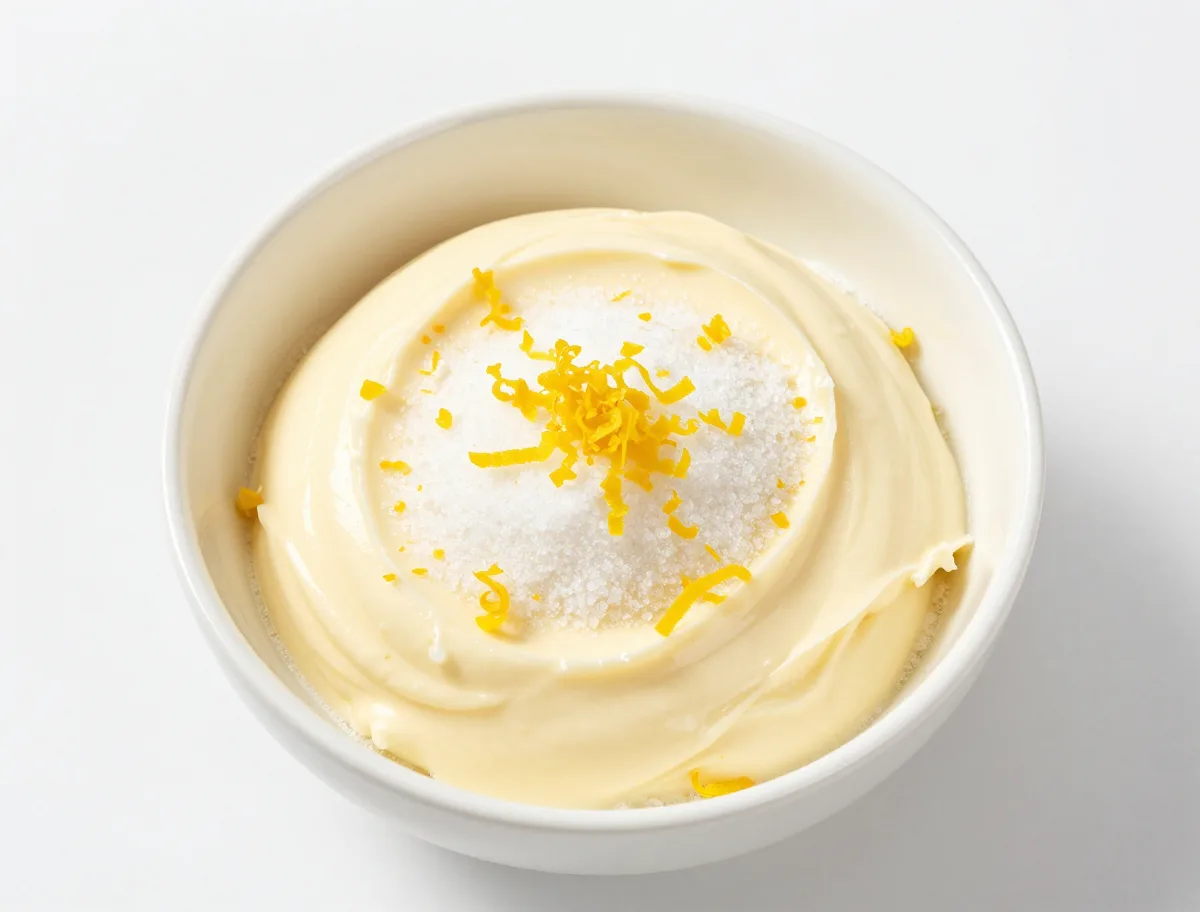
- 1 1/2 cups all-purpose flour, spooned into cups and leveled
- 2 teaspoons baking powder
- 1/4 teaspoon fine salt
- 3/4 cup unsalted butter, softened
- 3/4 cup granulated sugar
- 2 large eggs, at room temperature
- Finely grated zest of 2 lemons, preferably from unwaxed lemons
- 1 teaspoon vanilla extract
- 1/2 cup whole milk, at room temperature
- 1/2 cup granulated sugar, for the topping
- 3 tablespoons fresh lemon juice, strained of seeds
The Technique Behind a Tender, Crunchy-Topped Cake
The important technique is restraint. Cream the butter and sugar until light, incorporate the eggs gradually, and stop mixing as soon as the flour disappears. Once the cake is baked, give it a short rest before topping: it should still be warm enough to accept some juice, but firm enough that the liquid does not run straight through.
- Use shallow, evenly spaced holes so the topping moistens the surface rather than draining into the center.
- Stir the lemon juice and sugar immediately before using, and keep the mixture gritty.
- Spread the topping evenly instead of concentrating it in the middle.
- Allow the cake to cool completely before slicing so both crumb and sugar crust can set.
Instructions
- Prepare the pan and oven: Heat the oven to 350°F (175°C). Grease an 8-inch square cake pan and line the base and two sides with parchment, leaving a little overhang for lifting the cooled cake.
- Combine the dry ingredients: Whisk the flour, baking powder, and salt together in a medium bowl. Set aside.
- Build the lemon batter: Beat the softened butter, 3/4 cup sugar, and lemon zest on medium speed for 2 to 3 minutes, until paler and creamy. Beat in the eggs one at a time, scraping the bowl as needed, then mix in the vanilla. The mixture may look slightly curdled; it will come together with the flour.
- Finish the batter: Add the flour mixture in three additions, alternating with the milk in two additions. Mix on low speed only until the last traces of flour disappear. Scrape the batter into the prepared pan and smooth the surface.
- Bake the cake: Bake on the center rack for 32 to 38 minutes, rotating the pan once if your oven browns unevenly. The cake is ready when golden at the edges, lightly springy in the center, and a skewer inserted in the deepest part comes out clean or with a few moist crumbs.
- Make the crunchy topping: While the cake bakes, stir the topping sugar and lemon juice together in a small bowl. Leave the mixture visibly gritty rather than waiting for the sugar to dissolve completely.
- Add the lemon sugar: Let the baked cake stand in its pan for 8 to 10 minutes, until warm but no longer piping hot. Lightly prick the surface all over with a skewer, making shallow holes rather than tunnels. Spoon the gritty lemon sugar evenly over the top, nudging it toward the edges without pressing it into the crumb.
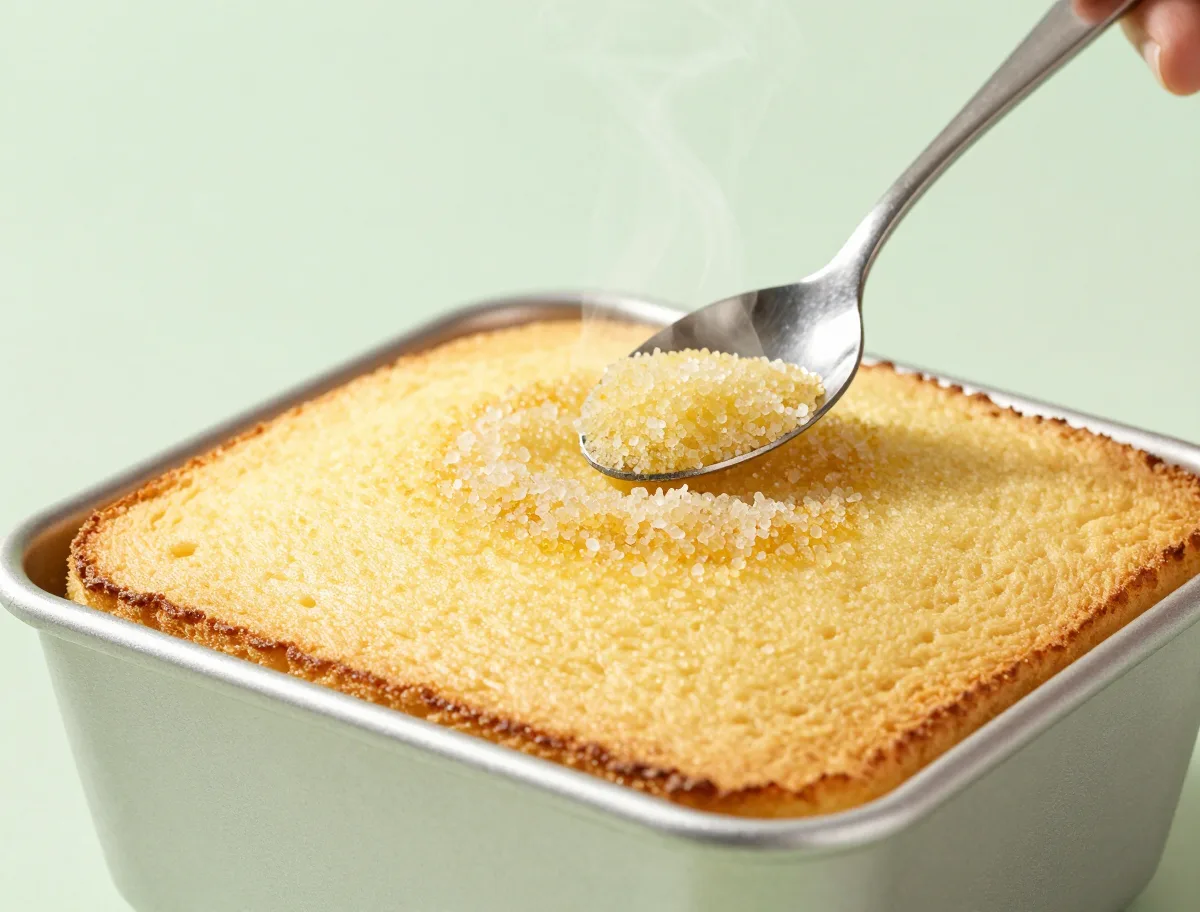
- Cool and slice: Leave the cake uncovered in the pan until completely cool, about 35 minutes. Lift it out using the parchment, then cut with a sharp knife. The topping will firm and become more crystalline as it cools.
How to Tell When the Cake Is Done
A moist cake is not the same as an underbaked cake. Look for a risen, golden surface and a center that springs back gently when pressed. A skewer should show a few moist crumbs at most, never liquid batter. The lemon sugar may still appear soft immediately after application; its crackly texture develops as moisture redistributes and the cake cools.
- Begin checking near the early end of the baking range because dark pans and hot ovens can finish the cake quickly.
- A slight pull-away at the edges is helpful confirmation, but a large collapse or liquid-looking center indicates underbaking.
- Use a sharp knife after full cooling for clean slices that do not drag through the crumb.
Doneness cues
- The surface is evenly golden and no longer shiny in the center.
- The middle springs back gently when pressed.
- A skewer comes out clean or with a few moist crumbs, but no wet batter.
- The edges may pull slightly away from the pan.
- The sugar topping looks loose when first applied and becomes crisp or crackly as the cake cools.
How the Moist Cake and Crisp Top Work Together
The recipe separates two jobs for sugar. Sugar mixed into the batter attracts moisture and helps keep the crumb tender; sugar added afterward partially dissolves in lemon juice and then recrystallizes as moisture moves away from the surface. That balance is why the cake can be soft inside while the top remains lightly crisp.
- Butter coats flour particles and limits gluten formation, while creaming incorporates air that expands in the oven.
- Baking powder supplies the batter’s lift; the post-bake lemon juice does not replace a leavener.
- More topping liquid does not automatically mean a better cake. Excess juice or deep holes can produce a soggy surface and reduce the sugar left to crystallize.
- Coarser granulated sugar gives a more pronounced crunch than very fine sugar or confectioners’ sugar.
Common Lemon Crunch Cake Problems and Solutions
Most problems come from moisture or timing rather than from the lemon flavor itself. Weigh the flour, use the specified pan, and judge the cake by its center as well as its edges. Once the topping has been saturated with too much juice, it cannot be made fully crisp again, so prevention matters.
- Dry cake: Too much flour or too much oven time is the usual cause. Measure flour carefully and remove the cake when the skewer has moist crumbs rather than waiting for it to be bone-dry.
- Dense or rubbery cake: The batter was probably mixed too long after the flour was added. Mix only until smooth, and check that the baking powder is fresh.
- Sunken center: This usually indicates underbaking, excess liquid, or opening the oven too early. Keep the oven closed until the cake is well risen and nearly set.
- Weak lemon flavor: Juice alone is not enough. Use finely grated fresh zest and avoid including bitter pith.
- Soft topping: Too much juice, a piping-hot cake, deep holes, dissolved sugar, or sealing the cake while warm can all reduce the crunch. Cool it uncovered and keep the topping gritty.
- Overbrowned top: Loosely cover the cake with foil and continue baking until the center is properly set.
Useful Ingredient Substitutions
This sponge is flexible, but substitutions change its texture and flavor. Unsalted butter can be replaced by an equal weight of soft baking margarine for a softer, less buttery result. Fresh zest and juice should remain in the recipe even if you add a small amount of lemon extract for extra aroma.
- Whole milk can be replaced with an equal amount of plain, pourable yogurt thinned with a little water if needed; expect a slightly tangier, somewhat denser crumb.
- Buttermilk can replace the milk, but do not automatically add baking soda. The recipe is formulated around baking powder, and extra soda can make the cake taste alkaline or brown too quickly.
- Neutral oil can replace part of the butter for a moist crumb, but the cake will lose some buttery flavor and creamed aeration; mix the oil with the sugar rather than trying to cream it.
- Self-raising flour is possible only if the added baking powder is recalculated or omitted according to the flour’s label.
- A cake mix can be used as a shortcut with this lemon-sugar finish, but its batter and sweetness are different from this scratch formula.
Small Variations That Keep the Crunch
The defining elements should remain a single-pan lemon sponge and a visible lemon-sugar crust. Within that boundary, the recipe can be adapted without turning it into a frosted celebration cake.
- For a finer, more delicate crust, use caster sugar in the topping; for a more obvious crunch, use ordinary granulated sugar.
- Rub a teaspoon of the cake’s lemon zest into the topping sugar before adding the juice for extra aroma without adding much liquid.
- Add 1 tablespoon of poppy seeds to the dry ingredients for a subtle texture contrast.
- Bake the batter in a greased 2-pound loaf tin or a 9-inch round pan, but expect a longer bake for a loaf and begin checking based on the center’s doneness rather than the square-pan timing.
- A thin glaze may be drizzled over individual servings, but a wet glaze applied over the whole cake will soften or conceal the crunchy top.
How to Serve Lemon Crunch Cake
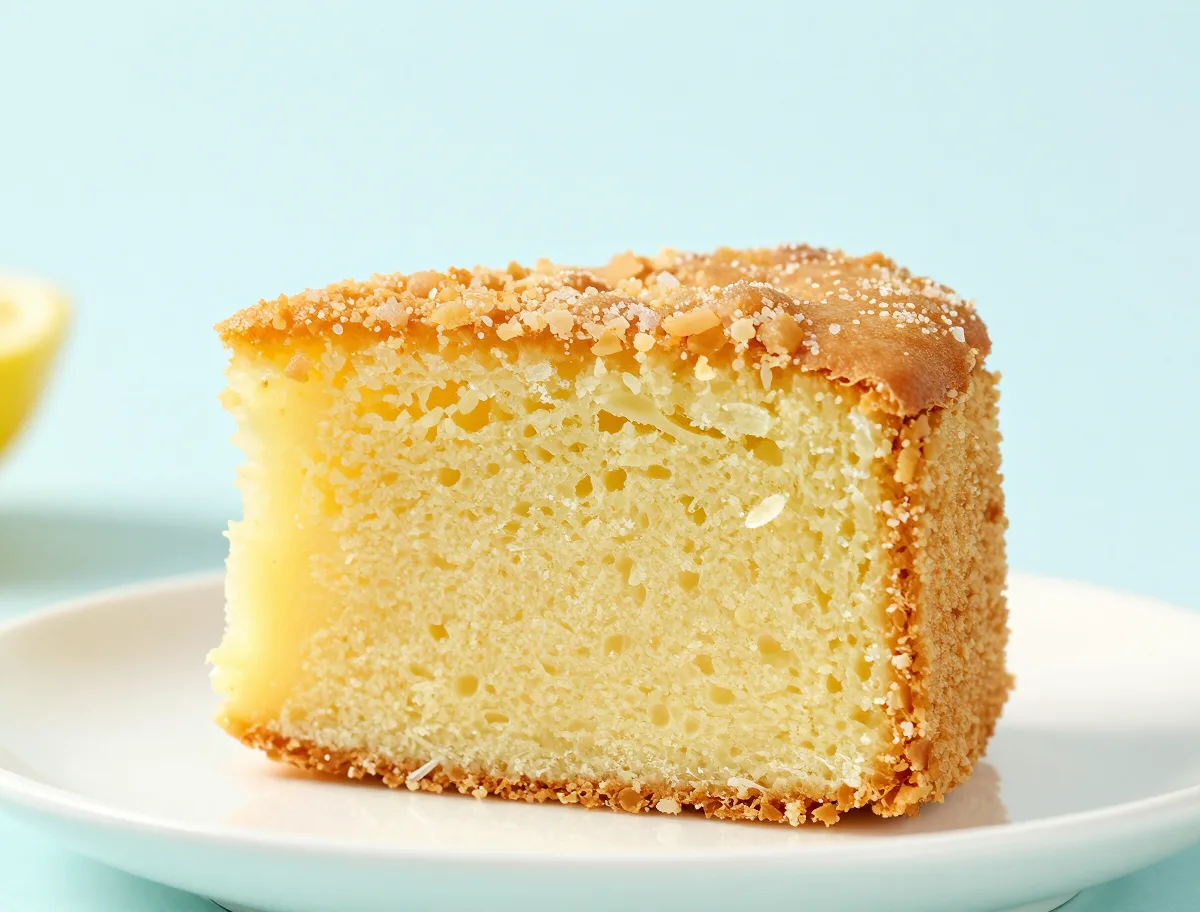
Serve the cake cool or at room temperature, when the sugar crust is firm and the lemon aroma is most pronounced. Plain slices show the intended contrast best. For a more dessert-like presentation, add accompaniments at the last moment so they do not soften the crust.
- Pair slices with black tea, coffee, or lightly sweetened tea.
- Serve with softly whipped cream, plain Greek yogurt, or a few fresh berries.
- If using a glaze or sauce, spoon it onto individual portions rather than coating the entire cake ahead of time.
- A brief warming can soften the crumb, but it will also make the topping less crisp.
How to Store, Freeze and Thaw the Cake
Cool the cake completely before storing it in an airtight container at cool room temperature. This preserves the sponge for about 3 to 4 days, although the sugar crust will gradually soften as moisture migrates through the cake. Plain cake does not normally need refrigeration; refrigerate only if you add a perishable cream, custard, or dairy-based topping.
- For make-ahead baking, freeze the cooled cake tightly wrapped, ideally without any additional wet decoration, for up to 1 month for best quality.
- Thaw the cake while still wrapped or enclosed to limit condensation on the sugar crust.
- Bring refrigerated or thawed cake back toward room temperature before serving for a softer crumb and fuller lemon flavor.
- Reheating is optional and not recommended when preserving maximum crunch.
Lemon Crunch Cake Questions, Answered
The topping is the detail that makes this recipe different in practice: it is a lemon-sugar finish designed to leave a thin layer of crystals on the surface, rather than a fully smooth icing.
What makes this different from lemon drizzle cake?
The names overlap in British baking, and many recipes use the same general method. This version emphasizes a gritty granulated-sugar crust that remains perceptibly crunchy, while some lemon drizzle cakes focus more on soaking the crumb with syrup or covering it with a smooth glaze.
Should the topping go on before or after baking?
Add it after baking, once the cake has rested for about 8 to 10 minutes. The cake should be warm but not piping hot. That allows a little juice to enter the upper crumb while leaving enough sugar at the surface to crystallize.
How crunchy should the topping be?
Expect a thin, slightly crystalline or crackly layer rather than a hard brittle shell. It is softest when warm and firms as the cake cools. Humidity and airtight storage will gradually reduce the crunch.
Can I use bottled lemon juice?
You can use it for the topping if necessary, but fresh juice has a cleaner flavor. Fresh zest is especially important because it supplies the aromatic lemon character that juice alone cannot provide.
Why did my topping dissolve or turn soggy?
The common causes are too much juice, sugar that was stirred until smooth, deep holes, application while the cake was extremely hot, or storing the cake before it cooled. Keep the mixture gritty, prick lightly, and cool the finished cake uncovered.
Can I use another pan?
Yes, but pan depth changes the baking time and the balance of soft crumb to crunchy surface. A loaf tin generally needs longer baking, while a shallow traybake may finish sooner. Use the visual and skewer cues rather than transferring the square-pan timing exactly.
How do I keep the sponge moist instead of dry?
Measure the flour accurately, use room-temperature ingredients, avoid overmixing after adding flour, and begin checking before the end of the baking range. Remove the cake when the center is set and the tester shows a few moist crumbs.