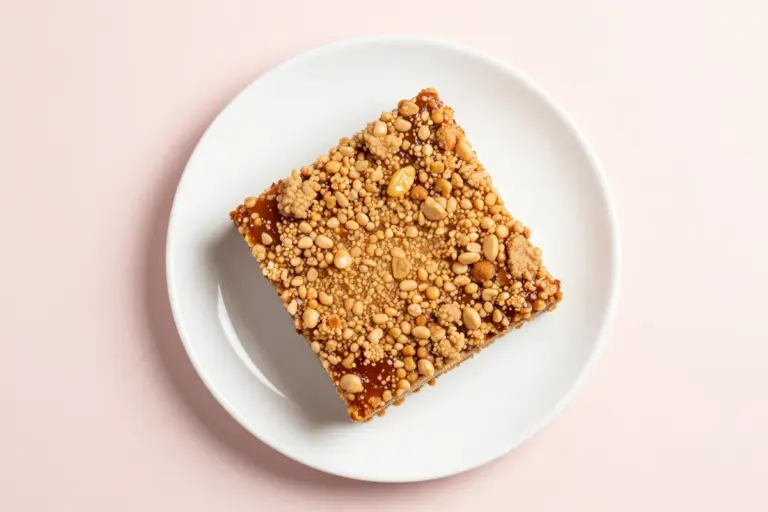
Recipe for Heath Bar Cake: Chocolate Toffee Poke Cake
This easy recipe for Heath Bar cake turns a tender chocolate sheet cake into a chilled poke cake with sweetened condensed milk, caramel, Cool Whip, and crunchy crushed Heath bars.
What to Expect from This Heath Bar Poke Cake
This is the classic chilled 9×13-inch format: a chocolate sheet cake pierced while warm, soaked with sweetened condensed milk and caramel, then finished with a cool whipped topping and chocolate-covered toffee. The result should be tender and gooey in the pockets without being wet throughout.
- The chocolate cake provides structure and enough open crumb to absorb the filling.
- Caramel and condensed milk create the signature rich, sticky interior.
- Chilling makes the cake easier to cut and keeps the topping firm.
- Freshly added Heath bar pieces provide the most satisfying contrast to the soft cake.
Why These Ingredients Work
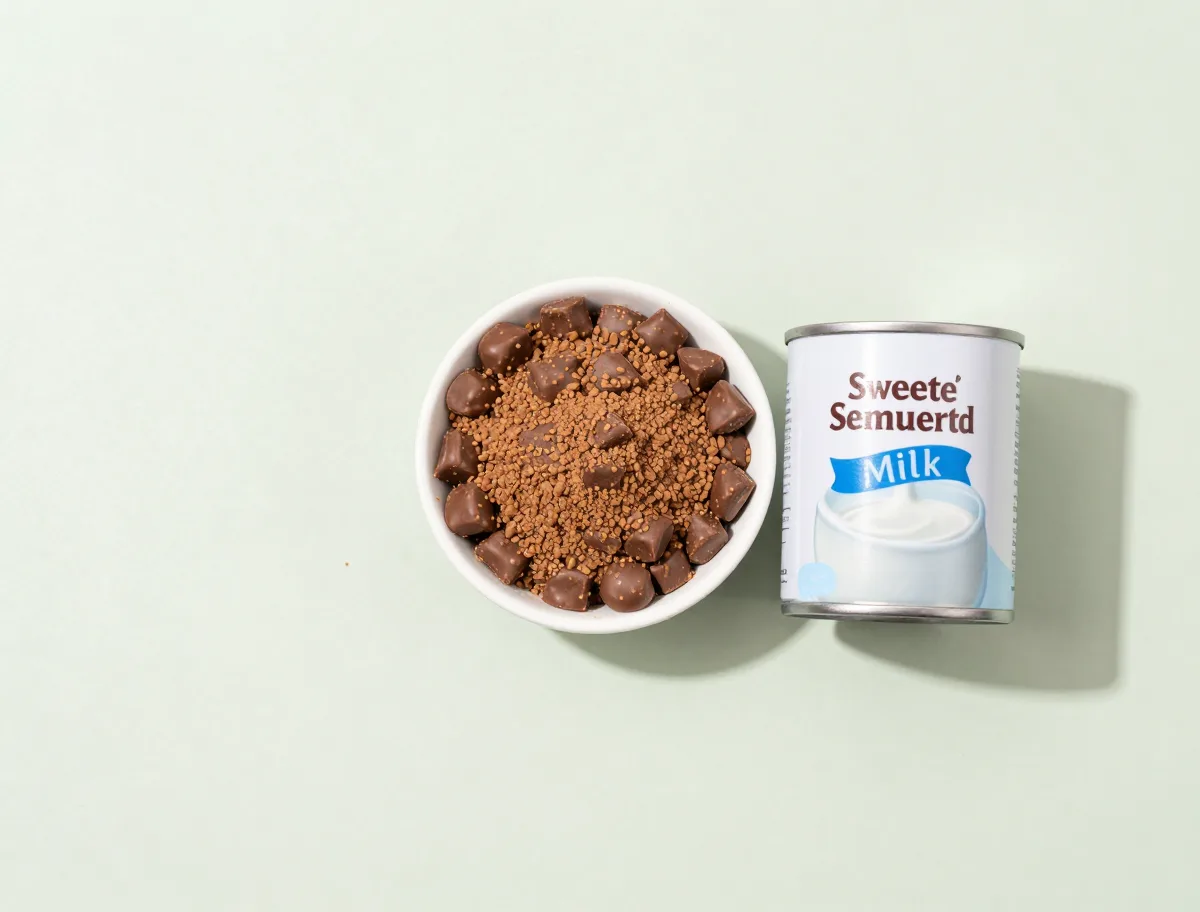
A boxed devil’s-food mix is used here for a dependable, moderately porous crumb that accepts the soak evenly. Sweetened condensed milk contributes both concentrated dairy richness and sweetness, while pourable caramel adds flavor without requiring a separate candy-making step. The whipped topping supplies a cool, airy finish, and Heath bars bring chocolate, buttery toffee, and almond crunch.
- Use sweetened condensed milk, not evaporated milk; they are not interchangeable in this recipe.
- Choose a caramel sauce that pours easily. Very thick caramel tends to remain on the surface.
- Thawed whipped topping is especially practical for an overnight or potluck cake.
- The candy is divided so some pieces can remain crisp on the finished dessert.
- 1 box devil’s food cake mix (15.25-ounce box)
- 3 large eggs
- 1/2 cup neutral vegetable oil
- 1 cup water
- 1 can sweetened condensed milk (14-ounce can)
- 3/4 cup pourable caramel ice-cream topping, plus more for serving if desired
- 8 ounces frozen whipped topping, thawed
- 4 bars Heath bars, finely chopped; reserve about one-quarter for the final garnish
How to Make Heath Bar Cake Successfully
The important sequence is bake, briefly cool, poke, soak, cool completely, top, and chill. The cake should be warm enough to absorb the filling but stable enough that the holes do not tear the crumb. Make a loose, even grid rather than a few deep channels, and distribute both liquids gradually over the entire surface.
- Begin poking after the cake has rested for several minutes, not while it is fragile and piping hot.
- Aim the condensed milk and caramel toward the holes, but let them spread naturally rather than flooding one section.
- Wait until the cake is fully cool before adding whipped topping.
- Add the final candy garnish after chilling for better texture.
- Prepare the pan and oven: Heat the oven to 350°F (175°C). Lightly grease a 9×13-inch metal baking pan.
- Mix the chocolate cake: In a large bowl, whisk the cake mix, eggs, oil, and water just until the batter is smooth and no dry streaks remain. Do not overmix.
- Bake until set: Spread the batter evenly in the prepared pan. Bake for 30 to 34 minutes at 350°F (175°C), until the center springs back lightly and a tester inserted into the cake comes out without wet batter. Cool in the pan for 8 to 10 minutes.
- Add the poke-cake filling: Using the handle of a wooden spoon or a large straw, make evenly spaced holes about 1 inch apart across the cake.
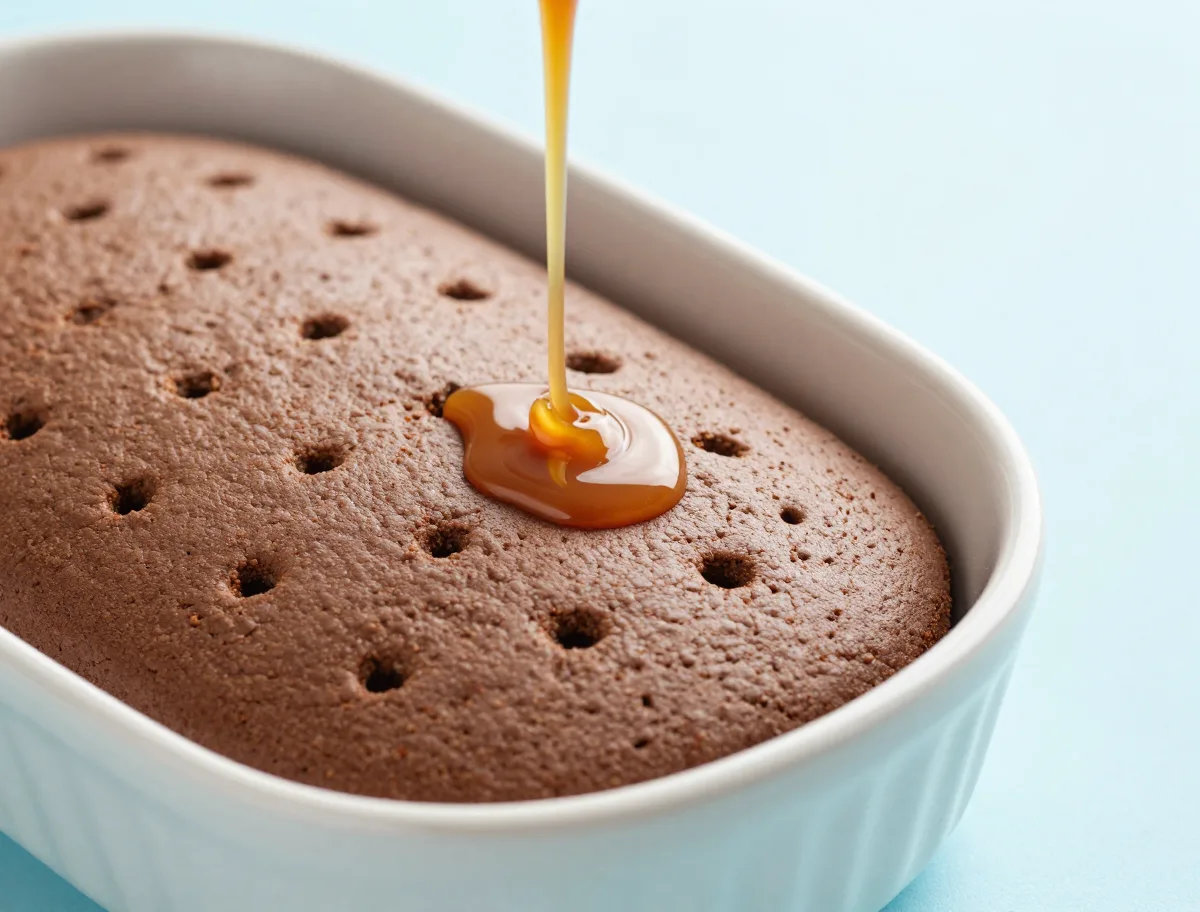
Do not repeatedly pierce to the bottom of the pan. Slowly spoon the sweetened condensed milk over the surface, directing it toward the holes. Follow with the caramel topping, adding it in two or three passes and pausing briefly if liquid begins to collect on the surface.
- Cool and top the cake: Let the soaked cake cool completely in the pan, about 30 minutes. Spread the thawed whipped topping evenly over the top, then scatter about three-quarters of the chopped Heath bars over it.
- Chill and finish: Cover the pan and refrigerate for at least 4 hours, preferably overnight, at about 40°F (4°C). Sprinkle with the reserved Heath bar pieces just before cutting and serving.
How to Tell When the Cake Is Done
Check the base cake before adding any filling. The edges should look set, the center should respond with a light spring, and a tester should not carry raw batter. After soaking and chilling, the ideal cake has a yielding crumb, visible caramel-rich pockets, and enough structure to hold a clean slice.
- A tester used after soaking can hit condensed milk or caramel, so judge doneness before the filling is added.
- A little surface gloss immediately after soaking is normal; standing liquid that remains after chilling is not.
- The whipped topping should stay aerated and sit securely on the cooled cake.
- Some candy softening during storage is expected, especially where pieces touch the topping.
For additional practical guidance on visual, tactile, and tester-based cake doneness cues, see King Arthur Baking’s guide to telling when cake is done baking.
The Variables That Control Moisture and Crunch
Poke cake depends on matching the amount of liquid to the crumb’s ability to absorb it. Warm cake accepts viscous filling more readily than cold cake, while evenly distributed holes shorten the distance the liquid must travel. Refrigeration firms the topping and slows movement of the filling, but moisture will gradually soften exposed toffee.
- A moderately open cake crumb absorbs more evenly than a dense, brownie-like base.
- Staged pouring gives the crumb time to take up the filling and lets you stop before pooling develops.
- Keeping caramel and condensed milk beneath the whipped topping helps preserve the topping’s foam.
- Late-added candy stays crunchier because it has less contact time with moisture.
Common Heath Bar Cake Mistakes and Fixes
Most problems come from the base cake, the amount of soak, or the timing of the topping. A little care while baking and pouring prevents the cake from becoming soggy or the whipped layer from sliding.
- Soggy or pooled cake: The filling may have been poured too quickly, the holes may be too deep, or the cake may be underbaked. Chill it and assess the texture, but severely saturated cake cannot be fully repaired.
- Dry patches: Make the holes more evenly spaced and distribute the liquids across the whole surface instead of concentrating them in the center.
- Torn crumb: Let the cake cool a few more minutes and use a lighter touch with the poking tool.
- Runny topping: The cake was probably still warm. Remove it from the refrigerator only after the topping has firmed.
- Soft toffee: Reserve more candy for serving; once toffee has absorbed moisture, its crunch cannot be restored.
Heath Bar Cake Substitutions
The recipe is flexible, but substitutions change the balance of chocolate, caramel, nuts, sweetness, or holding time. Keep the cake, caramel or condensed-milk soak, creamy topping, and toffee element together so the dessert remains recognizably a Heath Bar cake.
- Skor or another chocolate-covered butter-toffee bar can replace Heath bars. Check the label because almond content varies.
- Plain chocolate-covered toffee pieces preserve the flavor profile but may produce smaller, less distinct pieces.
- Stabilized whipped cream can replace whipped topping. Plain whipped cream is less dependable for an overnight dessert.
- A cooled, pourable homemade caramel may replace jarred caramel; add it gradually because thickness varies.
- A scratch chocolate sheet cake can replace the mix, but a dense base may need less filling. Add the soak in stages and stop if liquid remains on the surface.
- Evaporated milk is not a direct substitute for sweetened condensed milk.
Simple Variations That Still Feel Like Heath Bar Cake
The most useful variations change convenience or emphasis without abandoning the dessert’s defining combination of chocolate cake, caramel-rich filling, creamy topping, and toffee. The poke-cake method is the best choice when a moist, chilled sheet cake is the goal.
- For a more caramel-forward cake, use a slightly darker caramel sauce and keep the chocolate cake relatively restrained.
- For a chocolate-forward version, drizzle a small amount of cooled hot fudge over the topping just before serving; this adds sweetness and should not replace the caramel soak.
- Use a scratch chocolate cake when you want more control over cocoa flavor and sweetness, adjusting the soak to suit its density.
- A plain frosted sheet cake with candy on top is a valid variation, but it is not the same as a poke cake because it lacks the absorbed filling.
How to Serve Heath Bar Cake
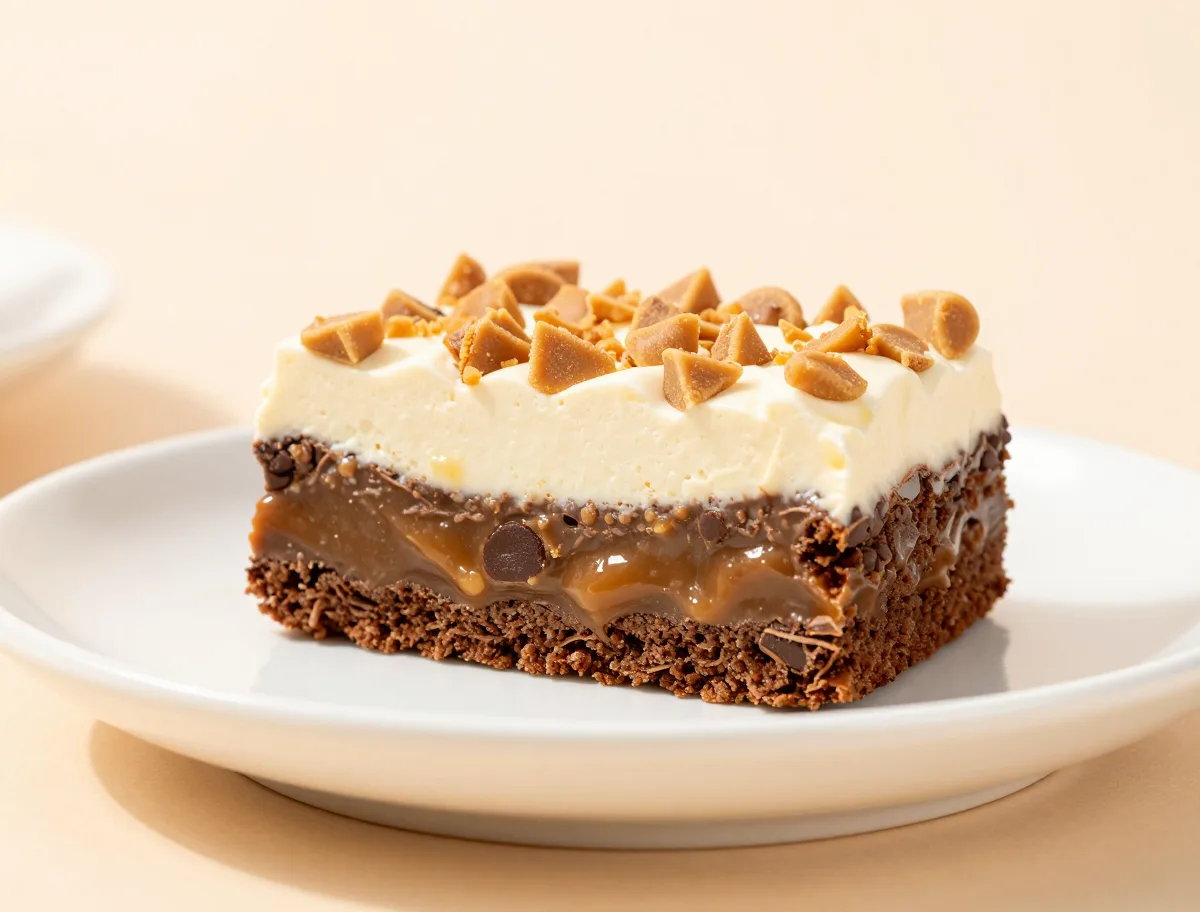
Serve this cake cold, directly from the refrigerator, after the filling and topping have had time to set. If desired, let individual portions stand briefly in a cool room so the crumb softens slightly, but do not leave the assembled cake out for an extended period.
- Finish each piece with reserved Heath bar crumbs and a restrained caramel drizzle.
- Coffee, espresso, or unsweetened black tea balances the cake’s sweetness.
- Vanilla ice cream is an optional accompaniment for a more indulgent dessert.
- For transport, keep the covered pan in an insulated cooler with cold packs.
How to Store This Make-Ahead Heath Bar Cake
This dessert is well suited to making a day ahead. Cover the assembled cake and refrigerate it; overnight chilling improves sliceability and allows the filling to settle into the crumb. For the best crunch, add a fresh portion of the reserved candy just before serving.
- Store the cake covered in the refrigerator at 40°F or below for up to 3 to 4 days; quality is usually best during the first 2 days.
- Refrigerate leftovers promptly after serving. The whipped topping and dairy-rich filling make this a perishable dessert.
- Freezing is possible as a backup, preferably without the final candy garnish, but thawing can affect the crumb, caramel, topping, and toffee texture.
- Thaw a frozen cake in the refrigerator and serve chilled. Do not reheat it.
Heath Bar Cake FAQs
These practical answers address the most common questions about the cake’s format, topping, moisture, candy, and make-ahead timing.
Is this a cake-mix Heath Bar cake or a from-scratch recipe?
This is a cake-mix version designed for consistent results and a porous crumb. A scratch chocolate sheet cake can be substituted, but its density may require less soak.
Does Heath Bar cake have to be a poke cake?
No, but the chilled 9×13-inch poke format is the most recognizable version. The holes are what distribute the condensed milk and caramel through the cake.
Can I use Cool Whip instead of homemade whipped cream?
Yes. Thawed Cool Whip-style topping is the primary choice here because it holds well for make-ahead service. Stabilized whipped cream is a suitable fresher-tasting alternative.
How gooey should the cake be?
It should be moist with caramel-rich pockets, but it should still hold a cut edge. Persistent liquid on the surface or a collapsing center means the cake has received too much soak or was not fully baked.
Can I refrigerate the cake overnight?
Yes. Overnight chilling is convenient and generally improves the set. Toffee pieces soften over time, so add reserved candy just before serving when crunch matters.
What can replace Heath bars?
Use Skor, another chocolate-covered butter-toffee bar, or plain toffee bits. Flavor, chocolate coating, almond content, and particle size may differ, so check labels for allergens.
Can I use evaporated milk instead of condensed milk?
No. Evaporated milk is unsweetened and much thinner. It is not a one-for-one replacement for sweetened condensed milk in this cake.
Food-Safety Guidance for Chilled Heath Bar Cake
Although the cake base is baked, the assembled dessert contains perishable dairy-based topping and sweetened condensed milk. Keep it cold during storage, transport, and serving, and do not use appearance or smell alone to judge whether it is safe.
- Refrigerate the assembled cake at 40°F or below.
- Do not leave it at room temperature for more than 2 hours, or more than 1 hour when the temperature is above 90°F.
- Use a cooler with cold packs for transport or outdoor serving.
- Discard the cake if it has remained above safe temperatures beyond those limits.
For official information about refrigeration, the two-hour rule, hot-weather handling, and safe storage, follow FDA safe food-handling guidance.