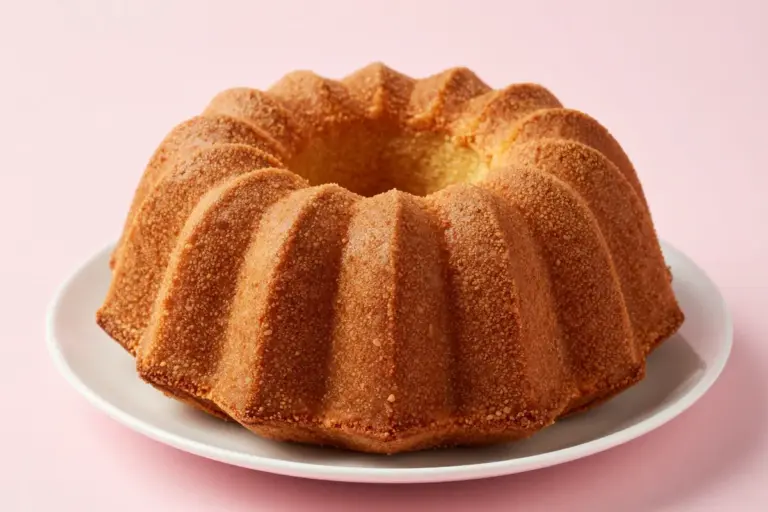
Lemon Custard Cake Recipe
This recipe lemon custard cake creates three tender textures from one thin batter: a moist base, creamy lemon custard center, and softly sponge-like top, finished with powdered sugar.
What Makes This Lemon Custard Cake Different
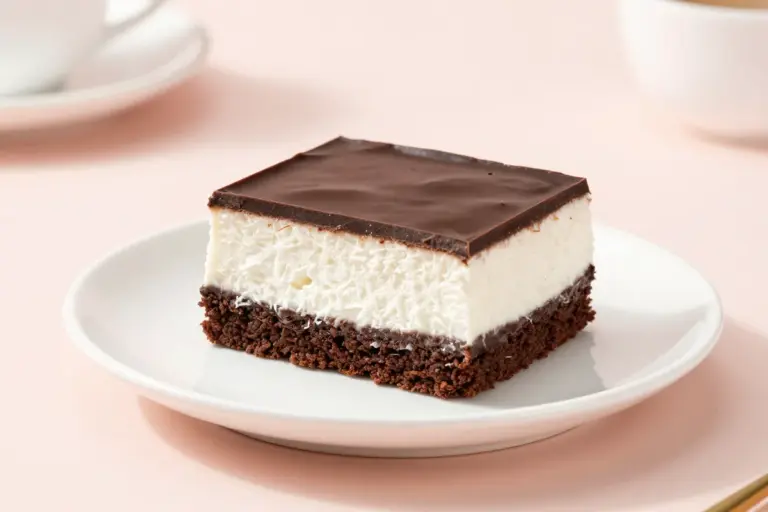
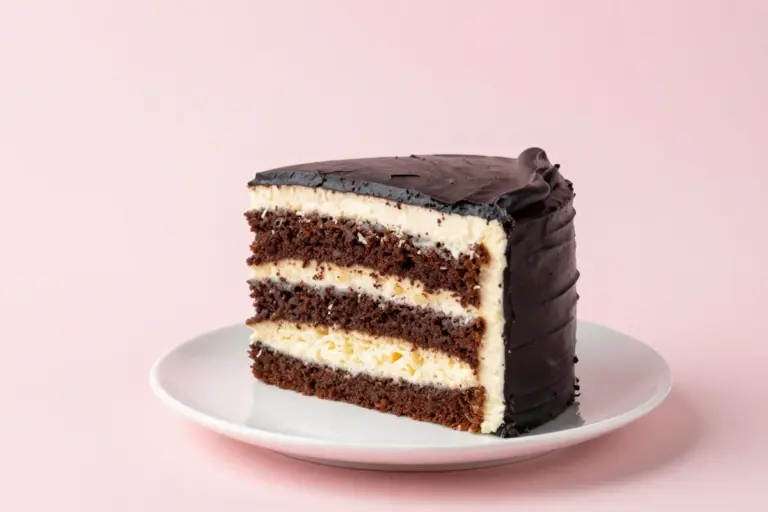
Unlike a conventional lemon sponge with an even crumb or a cake filled with pastry cream, this lemon magic cake is made from one thin batter. During baking, it naturally settles and sets into a moist lower layer, a creamy custard center, and a light, tender top.
- Expect a bright sweet-tart lemon flavor from both zest and juice.
- The layers may be distinct or softly blended depending on the pan, oven, and folding technique.
- The cake should be lightly golden on top and creamy inside, not uniformly fluffy.
- A little settling as it cools is normal; a deeply sunken or liquid center indicates a problem.
Why the Ingredients Matter
The unusual texture depends on balance rather than a chemical leavener. Eggs provide the setting power and the whipped foam for the upper layer, while milk creates the loose custard base. A modest amount of flour gives the cake enough structure without turning it into an ordinary sponge.
- Lemon zest supplies concentrated aromatic oils; juice adds acidity and direct tartness. Increasing zest is a better way to intensify lemon flavor than adding much more juice.
- Sugar sweetens and tenderizes while slowing the eggs from setting too quickly.
- Butter contributes richness and a supple mouthfeel; it should be cooled before it meets the eggs.
- Whole milk gives the fullest result, while 2% milk is a workable lighter option.
- All-purpose flour and granulated sugar provide the most predictable structure for this high-liquid batter.
Ingredients
- 4 large eggs, separated, at room temperature
- 1 1/4 cups granulated sugar, divided
- 8 tablespoons unsalted butter, melted and cooled until warm, not hot
- 3/4 cup all-purpose flour, weighed or spooned and leveled
- 2 1/2 cups whole milk, lukewarm
- 1/4 cup fresh lemon juice, strained of seeds
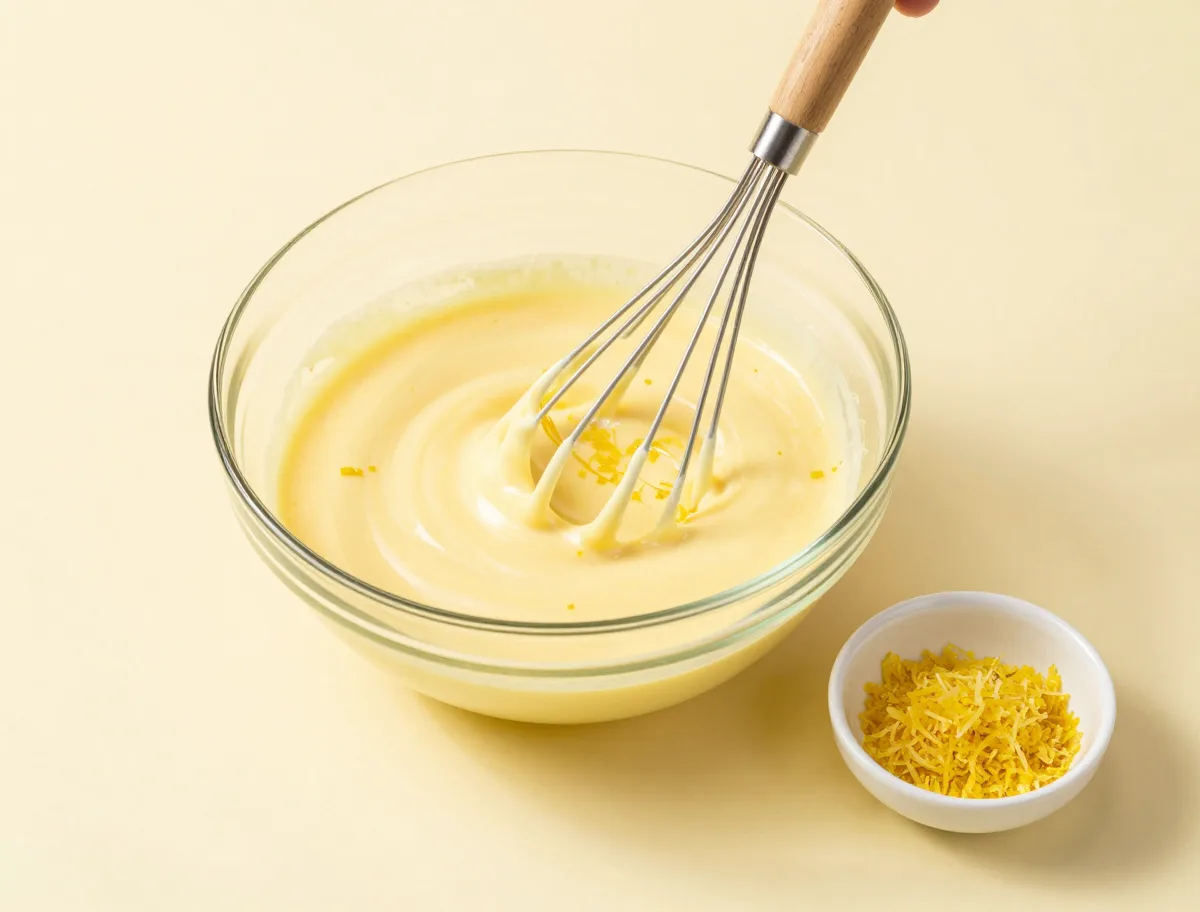
- 2 tablespoons finely grated lemon zest, from about 2 lemons
- 2 teaspoons vanilla extract
- 1/4 teaspoon fine salt
- 1/4 teaspoon cream of tartar
- As needed powdered sugar, for serving
How to Make the Lemon Custard Cake Successfully
The essential technique is controlled aeration. The yolk mixture should be smooth and fully blended before the whipped whites are added, but the whites must be folded gently enough to preserve a density difference between the airy top and the liquid portion below.
- Separate the eggs carefully; even a small amount of yolk can weaken the whites.
- Use lukewarm milk and warm, cooled butter so the mixture stays fluid without partially cooking the eggs.
- Fold in the whites in three additions. Scrape from the bottom and turn the batter rather than stirring vigorously.
- Stop folding when the mixture is evenly distributed but still shows a few small white streaks.
- Bake in the specified 8-inch square pan. A wider pan makes a thinner cake and shortens the baking time, while a deeper pan needs more time.
Instructions
- Prepare the pan and oven: Heat the oven to 325°F (165°C). Line the bottom and sides of an 8-inch square baking pan with parchment, leaving enough overhang to lift the cooled cake. Lightly grease the parchment.
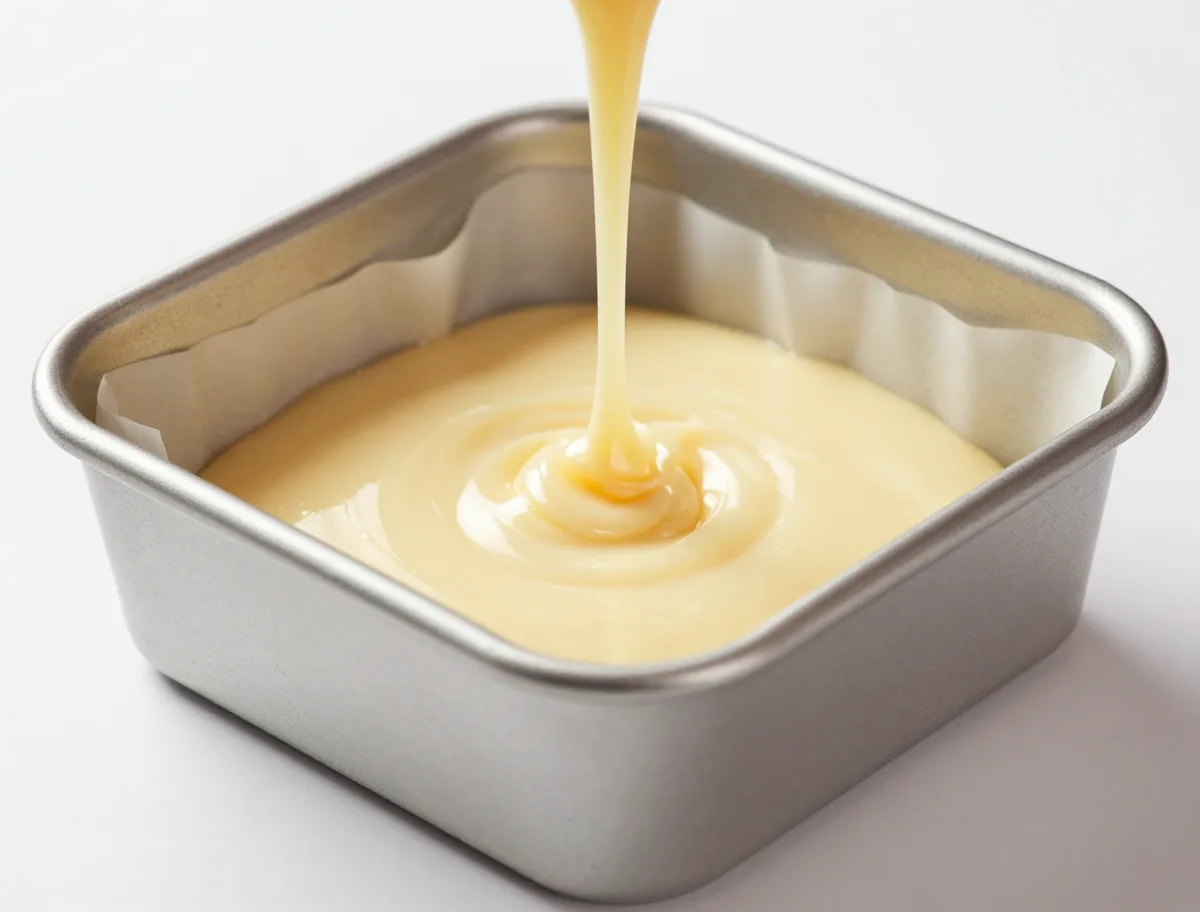
- Make the lemon yolk batter: Whisk the egg yolks with 1 cup of the sugar and the salt until smooth and slightly lighter. Whisk in the melted butter, lemon zest, lemon juice, and vanilla. Add the flour and whisk just until no dry pockets remain. Gradually whisk in the lukewarm milk until the batter is fluid and lump-free. It will look much thinner than ordinary cake batter.
- Whip the egg whites: In a clean, grease-free bowl, beat the egg whites on medium speed until foamy. Add the cream of tartar, increase the speed to medium-high, and gradually beat in the remaining 1/4 cup sugar. Continue until the whites form firm, glossy peaks that hold their shape.
- Fold the foam into the batter: Fold one-third of the whipped whites into the lemon batter to lighten it. Fold in the remaining whites in two additions, using broad, gentle strokes. Stop when the foam is distributed but a few small white streaks remain; do not beat the mixture smooth.
- Bake: Pour the batter into the prepared pan and bake for 50 to 60 minutes, rotating the pan once after 35 minutes if your oven has hot spots. The top should be lightly golden and dry-looking, the edges should be set, and the center should move with a small, cohesive wobble rather than slosh. If the top browns early, loosely cover it with foil. For a food-safety check, the center should reach 160°F (71°C) when measured carefully with an instant-read thermometer.
- Cool and chill: Set the pan on a rack and cool the cake completely in the pan, about 1 1/2 hours. Cover and refrigerate for at least 1 hour, preferably several hours or overnight, so the custard firms and the layers become easier to slice.
- Slice and serve: Lift the cake from the pan using the parchment, loosen the sides if needed, and cut it into squares with a sharp knife. Wipe the knife between cuts for cleaner layers. Dust with powdered sugar immediately before serving.
How to Tell When Lemon Custard Cake Is Done
This cake cannot be judged exactly like a standard sponge. The center is meant to remain creamy, so the best result combines visual cues, gentle movement, and cooling time rather than relying on a completely dry toothpick.
- When gently shaken, the center should tremble slightly as one cohesive area, not ripple like liquid.
- The surface should be dry-looking and lightly golden, with firm edges.
- A tester should come out without liquid batter, although it may show a moist custard trace.
- The cake may seem too soft immediately from the oven; cooling and chilling finish the setting process.
- For the firmest, neatest squares, chill completely before cutting.
Doneness Cues
- The top is lightly golden and feels set rather than wet.
- The edges are firm while the center has only a slight, unified wobble.
- There is no visible liquid batter in the center; a moist custardy smear is acceptable.
- The cake becomes considerably firmer and more sliceable after complete cooling and chilling.
- A thermometer inserted into the center should read 160°F (71°C) for the egg-based custard.
Why One Batter Forms Cake and Custard Layers
The cake’s layers come from the interaction of liquid, flour, egg proteins, and whipped egg-white foam. As the batter heats gradually, the lower portion thickens and sets while the foam remains concentrated near the top. The moderate oven is important because rapid, intense heat can tighten the eggs before the creamy center develops.
- Milk and sugar dilute the egg proteins and help them set gradually rather than turning firm and rubbery.
- Flour hydrates and contributes structure to the bottom and upper cake portions.
- The amount and distribution of air in the folded whites influence how pronounced the top layer becomes.
- Pan depth changes heat penetration: a deeper batter generally requires longer baking.
- Excessive lemon juice adds water as well as acidity, so use the measured amount and rely on zest for extra aroma.
For additional culinary context on the structure, cooling method, and serving approach of a self-separating custard cake, see this culinary reference.
Common Lemon Custard Cake Mistakes
Most problems occur before the cake enters the oven or when it is removed too soon. Accurate measuring, a stable egg-white foam, and patience during cooling matter more here than making the batter look like conventional cake batter.
- A dense cake with little top layer usually results from contaminated or under-whipped whites, or from folding too aggressively.
- Large white pockets and uneven wet areas indicate insufficient folding. Fold until the foam is distributed, but do not continue until perfectly smooth.
- A sloshing center means the cake needs more baking time, the pan is too deep, or the oven is running cool. Verify the oven and continue baking while shielding an already-brown top.
- A dry, eggy, grainy, or rubbery center usually means excessive heat or overbaking; chilling cannot reverse that texture.
- A broken bottom layer is often caused by cutting warm or removing the cake from an unlined pan. Cool it fully and use the parchment sling.
- A modest reduction in height is normal. A dramatic collapse suggests underbaking, excessive aeration, or abrupt cooling.
Practical Ingredient Substitutions
A few substitutions are reasonable, but this cake is sensitive to changes in liquid, flour, and sugar because those ingredients control both separation and custard setting.
- Use 2% milk in place of whole milk for a slightly lighter cake.
- Salted butter can replace unsalted butter if the added salt is reduced or omitted.
- Orange or lime zest and juice can replace the lemon, but the flavor and acidity will change.
- Neutral unsweetened dairy-free milk may work, though its protein, fat, and solids can produce a different set. Soy or almond beverages are not guaranteed one-to-one equivalents.
- Keep all-purpose flour and granulated sugar for the most reliable texture. Gluten-free flour blends, whole-wheat flour, liquid sweeteners, and major sugar reductions require separate testing.
How to Serve Lemon Custard Cake
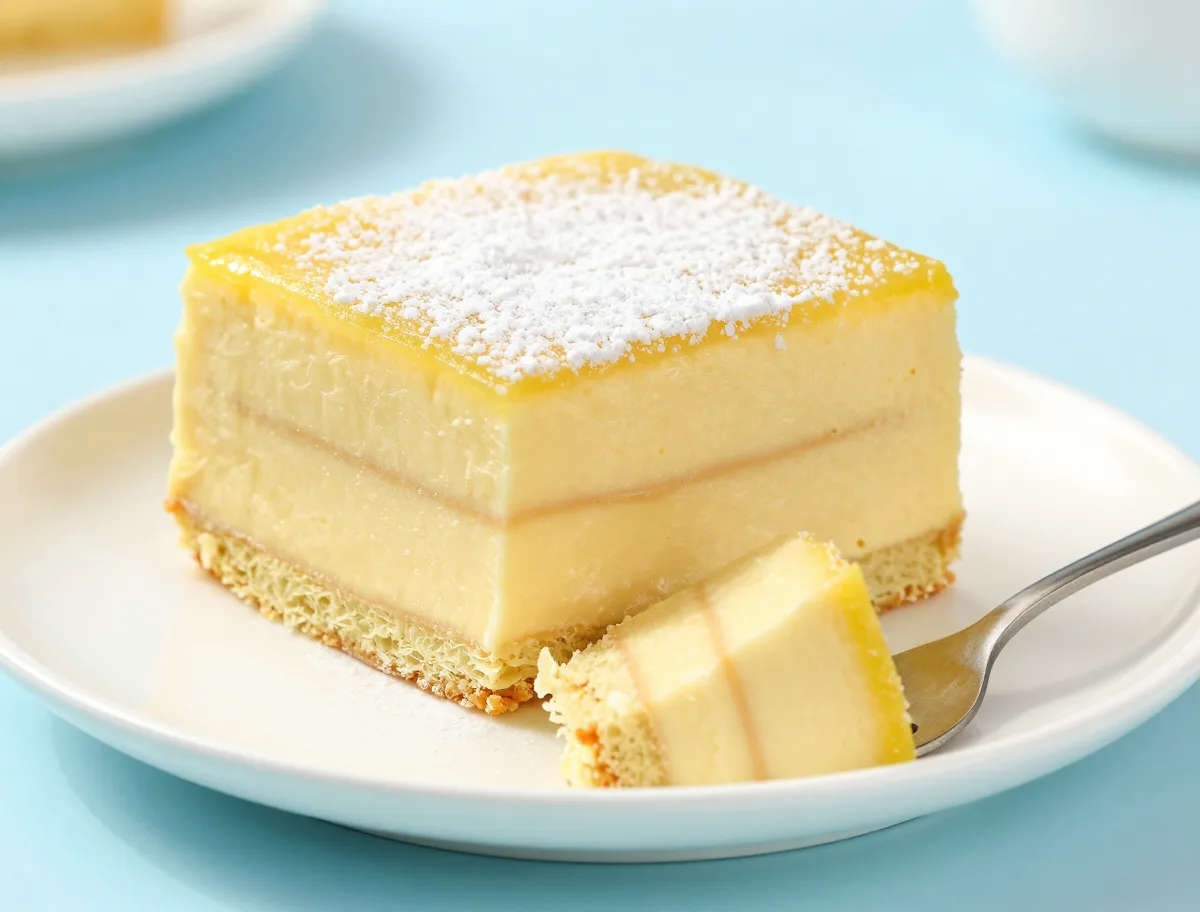
Chilling gives the cake its cleanest layers and firmest custard, while a short rest at room temperature makes the texture softer and the lemon aroma more expressive. Dust each portion just before serving so the finish stays bright and dry.
- Serve chilled for tidy squares with a clearly defined custard layer.
- Let refrigerated portions stand briefly at room temperature for a softer, creamier bite, while observing the two-hour room-temperature limit.
- Add fresh berries at the last moment so their moisture does not soften the top.
- A small spoonful of lightly sweetened whipped cream is enough; heavy frosting would obscure the layers.
- A little lemon curd can be served alongside for extra intensity, but the cake is already distinctly lemony.
How to Store, Make Ahead, and Reheat the Cake
This is an egg-and-milk custard dessert, so refrigeration is part of both its storage and its final texture. The cake is particularly well suited to making one day ahead: overnight chilling firms the center and improves sliceability.
- Cool the cake completely, cover it tightly, and refrigerate it at 40°F (4°C) or below.
- Use refrigerated cake within 3 to 4 days for the best quality.
- Freezing is not the preferred method because thawed custard can weep and become less smooth, even though some recipes report acceptable results.
- Reheating is unnecessary. If a portion must be warmed, heat it very gently and briefly; aggressive reheating can make the custard grainy.
- Store berries, whipped cream, and powdered sugar separately until serving.
Food-Safety Notes for This Egg Custard Cake
Although the top resembles cake, the interior contains a substantial baked custard and should be handled as a perishable egg-and-dairy dessert. Do not treat it as shelf-stable cake after baking.
- Bake until the center is set enough to show no liquid slosh and, when checked accurately, reaches 160°F (71°C), the USDA consumer target for egg dishes and custards.
- Cool the cake promptly, then refrigerate it covered at 40°F (4°C) or below.
- Do not leave it at room temperature for more than 2 hours, or more than 1 hour when the temperature is above 90°F (32°C).
- For pregnant people, young children, older adults, or immunocompromised diners, pasteurized eggs or pasteurized egg products are a prudent option when compatible with the recipe.
- Discard the cake if it has been held warm beyond the recommended time or develops an off odor, unusual liquid separation, or other signs of spoilage.
For the egg-custard temperature, refrigeration, cooling, and room-temperature handling recommendations, consult USDA safe cooking temperature and food-safety guidance.