Yum Yum Cake Recipe: Old-Fashioned Pineapple Pecan Cake
This old-fashioned yum yum cake recipe makes a moist pineapple sheet cake from scratch, finished with a warm, pourable coconut-pecan topping for an easy 9-by-13-inch potluck dessert.
Which Yum Yum Cake Is This?
This is the recognizable Southern-style pineapple Yum Yum Cake: a single 9-by-13-inch sheet cake made with crushed pineapple and finished with a warm coconut-pecan topping. The crumb should be moist, tender, and slightly chewy, while the topping remains textured and partly sinks into the warm surface.
- It is made from scratch rather than with cake mix.
- The topping is cooked separately and poured over the cake while warm.
- It is different from chilled pudding-and-cream-cheese versions, whipped-topping cakes, raisin cakes, and chocolate cakes that also use the Yum Yum name.
Why the Pineapple, Coconut, and Pecans Matter
Crushed pineapple supplies both fruit flavor and the moisture that gives this cake its characteristic close, tender crumb. The eggs help the moist batter set, while self-rising flour provides the main structure and built-in leavening. A small amount of baking soda supports browning and lift in the acidic pineapple mixture.
- Undrained canned pineapple keeps the cake especially moist and distributes fruit evenly through the batter.
- Evaporated milk gives the topping more body than ordinary milk because it is concentrated.
- Coconut adds chew and helps the topping thicken; pecans provide the expected buttery crunch and Southern character.
Ingredients
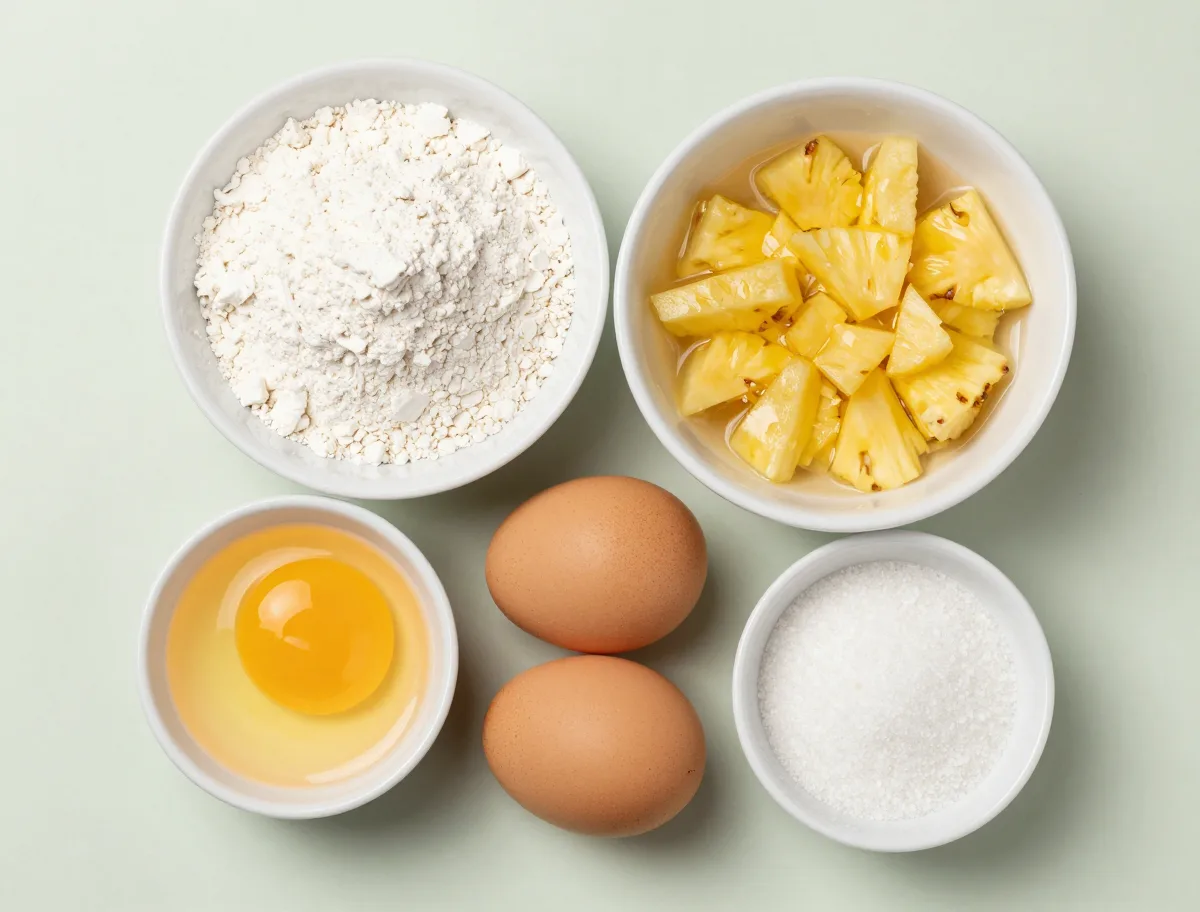
- 2 cups self-rising flour
- 1 1/2 cups granulated sugar
- 1 teaspoon baking soda
- 3 large eggs, lightly beaten
- 1 20-ounce can crushed pineapple, undrained
- 1 teaspoon vanilla extract
- 1/2 cup unsalted butter, cut into pieces
- 1 cup granulated sugar
- 2/3 cup evaporated milk
- 1 cup sweetened shredded coconut
- 1 cup pecans, finely chopped
- 1 teaspoon vanilla extract
How to Make This Pineapple Sheet Cake Successfully
The batter needs only a brief stir after the flour is moistened. Overmixing can make the crumb tougher, so stop as soon as the ingredients are evenly combined. Spread the batter level in the pan; even thickness is important because a shallow sheet cake can develop dry edges before the center is set.
- Use the pineapple exactly as specified, including its juice.
- Start the topping near the end of baking so it is hot when the cake emerges.
- Pour and spread the topping promptly while both the cake and glaze are warm.
Instructions
- Prepare the pan and oven: Heat the oven to 350°F (175°C). Lightly grease a 9-by-13-inch baking pan that is at least 2 inches deep.
- Make the batter: In a large bowl, whisk together the self-rising flour, 1 1/2 cups of sugar, and baking soda. Add the beaten eggs, undrained crushed pineapple, and 1 teaspoon of vanilla. Stir just until no dry streaks remain; do not beat the batter.
- Bake the cake: Spread the batter evenly in the prepared pan. Bake for 34 to 42 minutes, rotating the pan once if your oven browns unevenly. Begin checking at 34 minutes. The cake is ready when the center springs back lightly, the edges are golden and just beginning to pull from the pan, and a tester inserted in the center shows moist crumbs rather than wet batter.
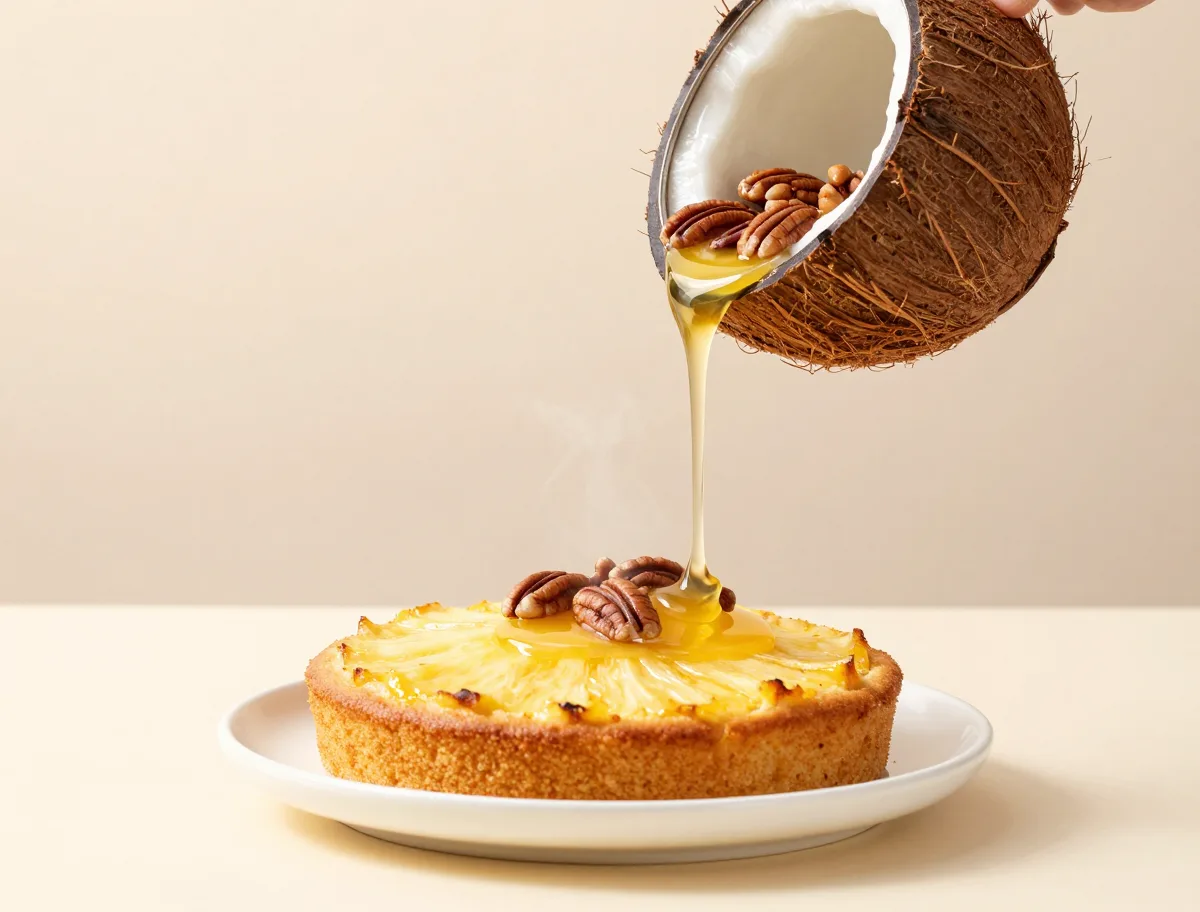
- Cook the coconut-pecan topping: During the last 8 minutes of baking, place the butter, 1 cup of sugar, and evaporated milk in a small saucepan. Cook over medium heat, stirring frequently, until the butter melts, the sugar dissolves, and the mixture bubbles evenly. Continue bubbling for about 2 minutes; it should look glossy and cohesive but still be easy to pour. Remove from the heat and stir in the coconut, pecans, and remaining teaspoon of vanilla.
- Glaze the warm cake: As soon as the cake comes from the oven, let it stand for 3 to 5 minutes. Pour the warm topping over the surface and spread it gently to the edges. If desired, make a few shallow, evenly spaced holes with a skewer before glazing so a small amount of topping can seep into the crumb.
- Set and serve: Let the glazed cake cool in the pan for at least 15 minutes, until the topping is no longer fluid. Serve warm or at cool room temperature. For cleaner slices, cool completely before cutting.
How to Tell When Yum Yum Cake Is Done
Begin checking the cake before the end of the suggested baking window because pineapple moisture, pan material, and oven calibration all affect timing. Do not wait for an absolutely dry tester; a few moist crumbs are the better endpoint for this cake.
- A wet streak on the tester means the center needs more time.
- A lightly springy center and golden edges indicate that the structure has set.
- If the center is firm and the tester shows moist crumbs, remove the cake promptly to protect its moisture.
Recipe doneness cues:
- The center springs back gently when pressed.
- A cake tester inserted in the center comes out with a few moist crumbs, not liquid batter.
- The surface is lightly golden and the edges are firm and beginning to separate from the pan.
- The topping is glossy and pourable when removed from the heat, then thickens as it cools.
The Variables That Change the Bake
Pineapple juice is part of the formula, not waste liquid. Retaining it increases hydration and may extend the bake; draining it changes the cake to a more concentrated, quicker-baking version. Pan depth matters just as much: moving the batter to a smaller or deeper vessel can leave the middle underdone while the edges overcook.
- Keep the 9-by-13-inch pan for the stated timing and thickness.
- Self-rising flour already contains baking powder and salt, so it is not equivalent to plain flour by volume alone.
- The topping thickens as water evaporates during cooking and as the sugar-and-butter mixture cools; remove it while it is still fluid.
Common Yum Yum Cake Problems and Fixes
Most problems with this cake come from excess moisture, an incorrect pan, overbaking, or allowing the topping to cool before it reaches the cake. The symptom usually points to the adjustment needed next time.
- Dense or wet center: Confirm that the pineapple was not unusually large or liquid-heavy, use the specified pan, and verify that the oven is fully preheated. Bake until the center tester shows moist crumbs rather than batter.
- Dry edges: The cake likely stayed in the oven too long or the batter was spread unevenly. Check early and level the batter before baking.
- Topping too thick: It was cooked too long or cooled before spreading. Rewarm it gently with a small splash of evaporated milk.
- Topping too thin: Cook the butter, sugar, and milk mixture until it visibly bubbles and the sugar has dissolved. Avoid aggressively boiling after adding the coconut and pecans.
- Soapy or bitter flavor: Too much baking soda or an incorrect flour substitution can overwhelm the pineapple and sugar.
Practical Substitutions
The cake is flexible, but substitutions change the texture or concentration of the topping. Canned crushed pineapple is the most predictable choice because its moisture and particle size are consistent.
- For self-rising flour, use 2 cups all-purpose flour plus 3 teaspoons baking powder and 1/2 teaspoon salt. The baking soda in this recipe remains separate; do not add extra baking soda.
- Walnuts can replace pecans in equal measure for a slightly more assertive, less buttery flavor.
- Omit the pecans for a nut-free topping; it will be softer and less crunchy. Toasted pumpkin seeds can add texture if desired.
- Half-and-half or whole milk can replace evaporated milk, but the topping will be thinner and may require a little more cooking.
- Fresh pineapple is less reliable than canned. If used, crush it finely and measure it with its juice, understanding that moisture and sweetness may vary.
Variations That Still Belong to This Cake
Small changes such as butter versus margarine, pecans versus walnuts, or a few shallow holes for extra absorption preserve the identity of this pineapple sheet cake. Larger changes create a different dessert rather than a variation on this formula.
- A less sweet topping can be made by reducing its sugar modestly, although it will set somewhat differently.
- A nut-free version remains recognizable if the coconut topping is retained.
- Pudding, cream cheese, whipped topping, cake mix, raisins, chocolate, or multiple chilled layers belong to other Yum Yum Cake traditions and are not part of this warm-glazed recipe.
How to Serve Southern Yum Yum Cake
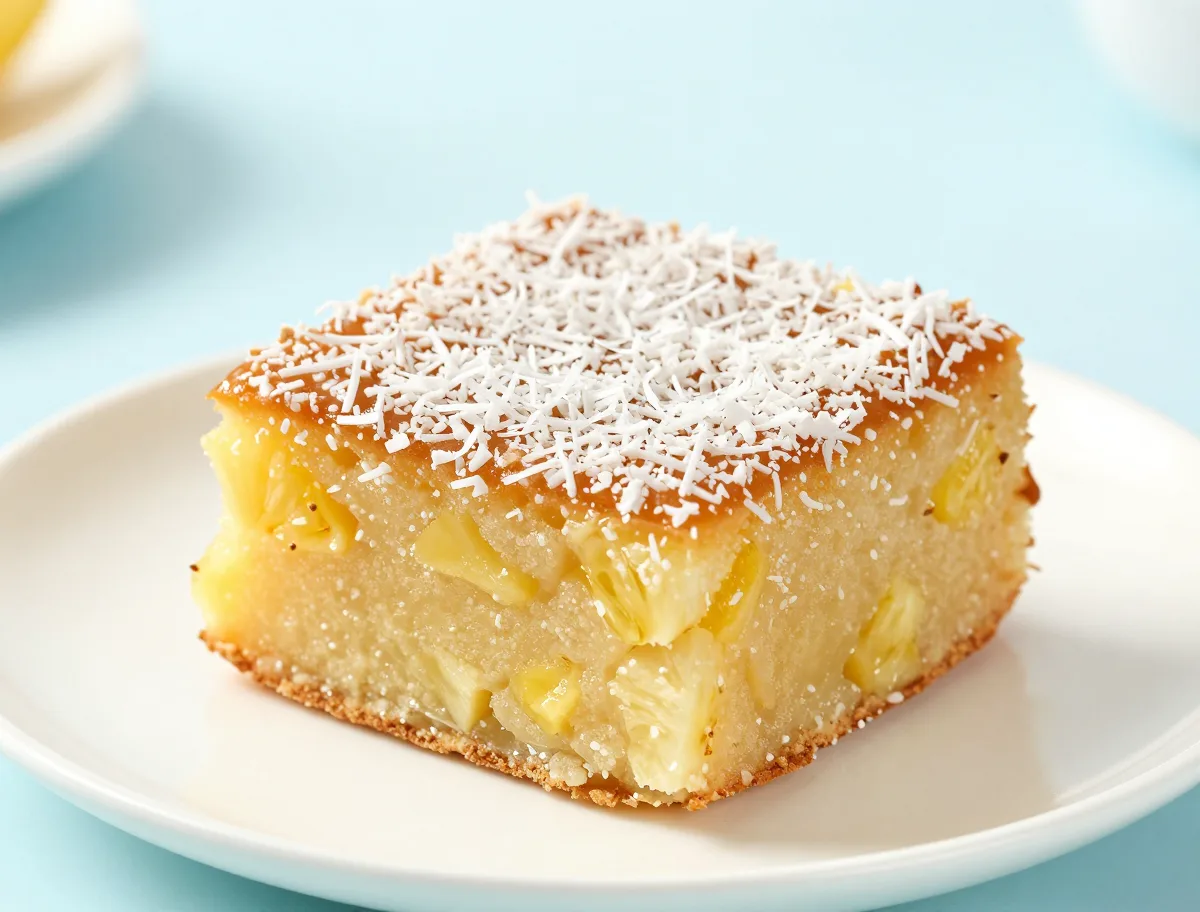
Let the glazed cake stand until the topping has settled before slicing. It is most characteristic when served warm or at cool room temperature, when the topping is soft and the pineapple flavor is prominent. Chilling produces firmer, cleaner slices and a chewier texture.
- Cut directly from the pan into 16 squares for a potluck or buffet.
- Serve with black coffee, unsweetened tea, or plain milk to balance the sweet topping.
- If serving chilled cake, let individual pieces stand briefly before eating for a softer crumb.
How to Store, Freeze, and Reheat Yum Yum Cake
Because the topping contains evaporated milk, treat the finished cake as a perishable dessert. Cover and refrigerate it within 2 hours of preparation or service, or within 1 hour in temperatures above 90°F. Refrigeration firms both the crumb and topping but does not harm the cake’s flavor. Follow FDA food-storage guidance for safe handling of milk-containing leftovers.
- Make the cake up to 1 day ahead, cover it once cool, and refrigerate. Let pieces stand briefly at room temperature before serving.
- For best freezer quality, freeze the cooled cake without its topping, tightly wrapped and preferably portioned. Thaw it in the refrigerator and prepare fresh topping when possible.
- Topped slices can also be frozen airtight, though the coconut may soften and the glaze may lose some gloss.
- Warm individual portions gently for a few seconds at a time. Excessive reheating can melt or separate the topping.
For additional practical advice on wrapping, freezing, thawing, and serving cake, see King Arthur Baking’s cake-storage guidance.
Yum Yum Cake Recipe FAQs
These are the practical decisions most likely to affect the result, especially the choice of pineapple, pan, and topping temperature.
Should the crushed pineapple be drained?
Not for this recipe. Use the pineapple and its juice together. Draining it will reduce moisture and shorten the bake, so it should be treated as a different formulation rather than a direct swap.
Can I use a smaller pan?
A 9-by-13-inch pan is strongly preferred. A smaller or deeper pan makes the cake thicker and increases the risk of an underdone center. If you change pans, expect a different baking time and rely on the center doneness cues.
When should the coconut-pecan topping go on?
Pour it over the cake while the cake is hot or distinctly warm, after only a few minutes of resting. This allows some topping to absorb before the mixture sets.
Can I use all-purpose flour instead of self-rising flour?
Yes. Replace the 2 cups of self-rising flour with 2 cups all-purpose flour, 3 teaspoons baking powder, and 1/2 teaspoon salt. Keep the recipe’s baking soda amount unchanged and do not add additional soda.
Why is my topping runny?
It may not have reached a sustained bubble, or it may contain a thinner milk substitution. Return the butter-sugar-milk mixture to gentle heat until cohesive and bubbling, then apply it promptly.
Does Yum Yum Cake need to be refrigerated?
Yes, refrigerate the covered cake within the standard 2-hour limit because the topping contains milk. Refrigerate within 1 hour when the ambient temperature is above 90°F.
The Southern Tradition Behind Yum Yum Cake
The pineapple sheet-cake version is widely associated with Southern home baking, community cookbooks, and practical pantry ingredients such as canned fruit, self-rising flour, evaporated milk, coconut, and pecans. Those associations describe a recognizable regional tradition rather than a single provable original recipe.
- The name is used for several unrelated cakes in different regions and eras.
- The warm coconut-pecan topping and pineapple sheet-cake structure are the clearest markers of this particular version.
- There is no reliable basis for assigning one definitive inventor, state, or family origin to every cake called Yum Yum Cake.