Peanut Butter Jelly Cake Recipe
This peanut butter jelly cake recipe makes a tender 9-by-13-inch snack cake with ribbons of strawberry jam or grape jelly and a creamy peanut butter frosting.
What This Peanut Butter and Jelly Cake Is Like
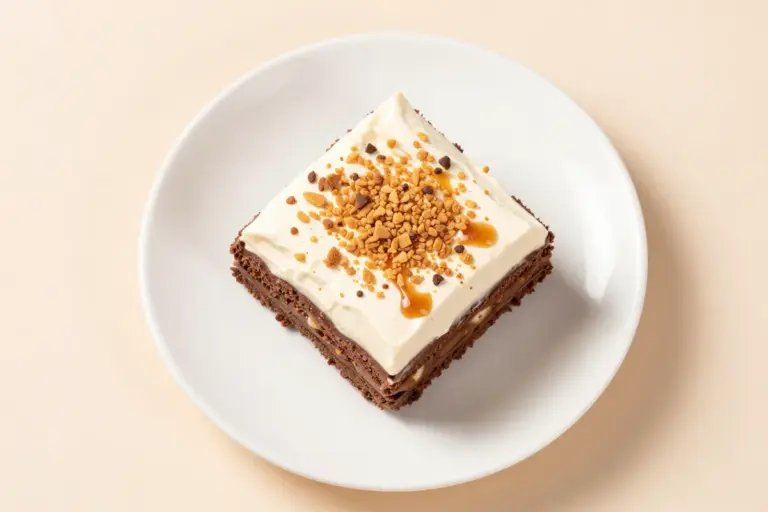
This recipe is an approachable 9-by-13-inch snack cake: soft peanut-butter cake, visible fruit ribbons, and a thin layer of peanut butter frosting. It is easier to serve than a layer cake while still giving each slice a recognizable PB&J cross-section.
- The crumb should be tender and moist, but sturdy enough to cut cleanly.
- The jam or jelly is swirled in controlled ribbons so it remains distinct instead of turning the batter uniformly sweet.
- The frosting reinforces the peanut flavor while the fruit remains bright and noticeable.
Why the Key Ingredients Matter
Peanut butter supplies both fat and peanut solids, so the batter needs enough buttermilk, eggs, and flour to stay tender without becoming heavy. Butter contributes flavor and helps aerate the batter during mixing, while sugar softens the crumb as well as sweetening it.
- Stabilized creamy peanut butter keeps the fat and solids evenly distributed.
- Buttermilk provides the liquid needed to hydrate the flour and helps balance the baking soda.
- Baking powder supplies dependable lift; the small amount of baking soda works with the buttermilk.
- Thick jam or jelly creates a visible fruit accent without adding a large wet pocket to the cake.
Ingredients
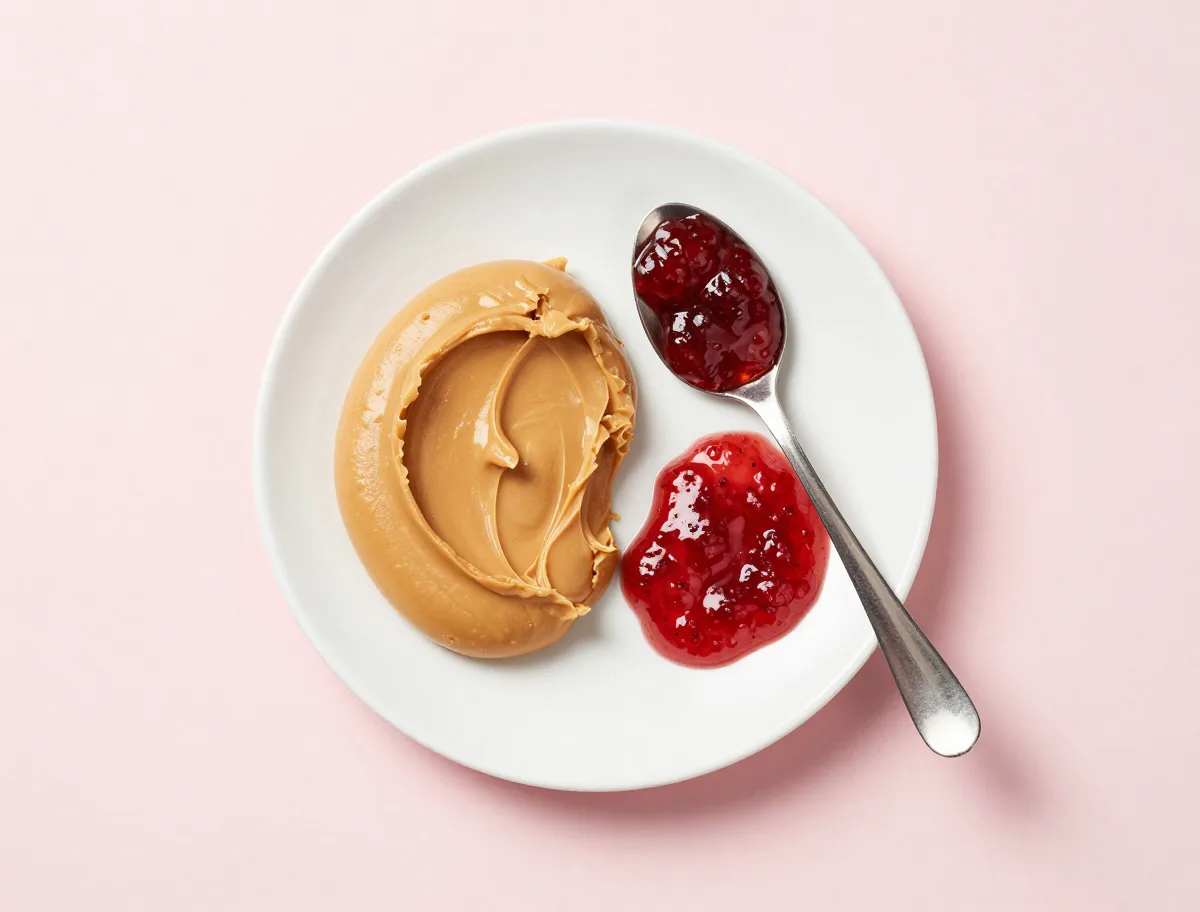
- 2 1/2 cups all-purpose flour, spooned and leveled
- 2 teaspoons baking powder
- 1/2 teaspoon baking soda
- 1/2 teaspoon fine salt, divided
- 1/2 cup unsalted butter, softened, divided
- 3/4 cup creamy stabilized peanut butter, divided
- 1 1/4 cups granulated sugar
- 3 large eggs, at room temperature
- 2 teaspoons vanilla extract, divided
- 1 cup buttermilk, at room temperature
- 3/4 cup thick strawberry jam or grape jelly, divided
- 2 cups confectioners’ sugar, sifted
- 2 tablespoons whole milk, plus more if needed
The Technique for Even Cake and Defined Jam Ribbons
Room-temperature ingredients help the butter, peanut butter, eggs, and buttermilk form a smooth batter. Add the flour mixture and buttermilk in alternating stages, scraping the bowl once or twice; this keeps the batter cohesive without encouraging excess gluten.
- Spread the batter level before adding the fruit so the jam does not collect in one deep area.
- Keep jam away from the pan edge, where it can stick and darken.
- Use only a few deliberate knife strokes. Over-swirling erases the fruit pattern.
- Wait until the cake is completely cool before frosting or the topping may melt and slide.
Instructions
- Prepare the pan and oven: Heat the oven to 350°F (175°C). Grease a 9-by-13-inch metal baking pan, line the bottom with parchment, and lightly grease the parchment. Let the butter, eggs, buttermilk, and peanut butter come to room temperature.
- Combine the dry ingredients: Whisk the flour, baking powder, baking soda, and 1/4 teaspoon of the salt in a medium bowl.
- Build the batter: Using an electric mixer, beat 1/2 cup of the softened butter, 1/2 cup of the peanut butter, and the granulated sugar on medium speed until lighter and creamy, about 2 minutes. Beat in the eggs one at a time, then beat in 1 teaspoon of the vanilla. Scrape the bowl. Add the dry ingredients in three additions, alternating with the buttermilk in two additions, mixing on low just until each addition disappears. Do not overmix.
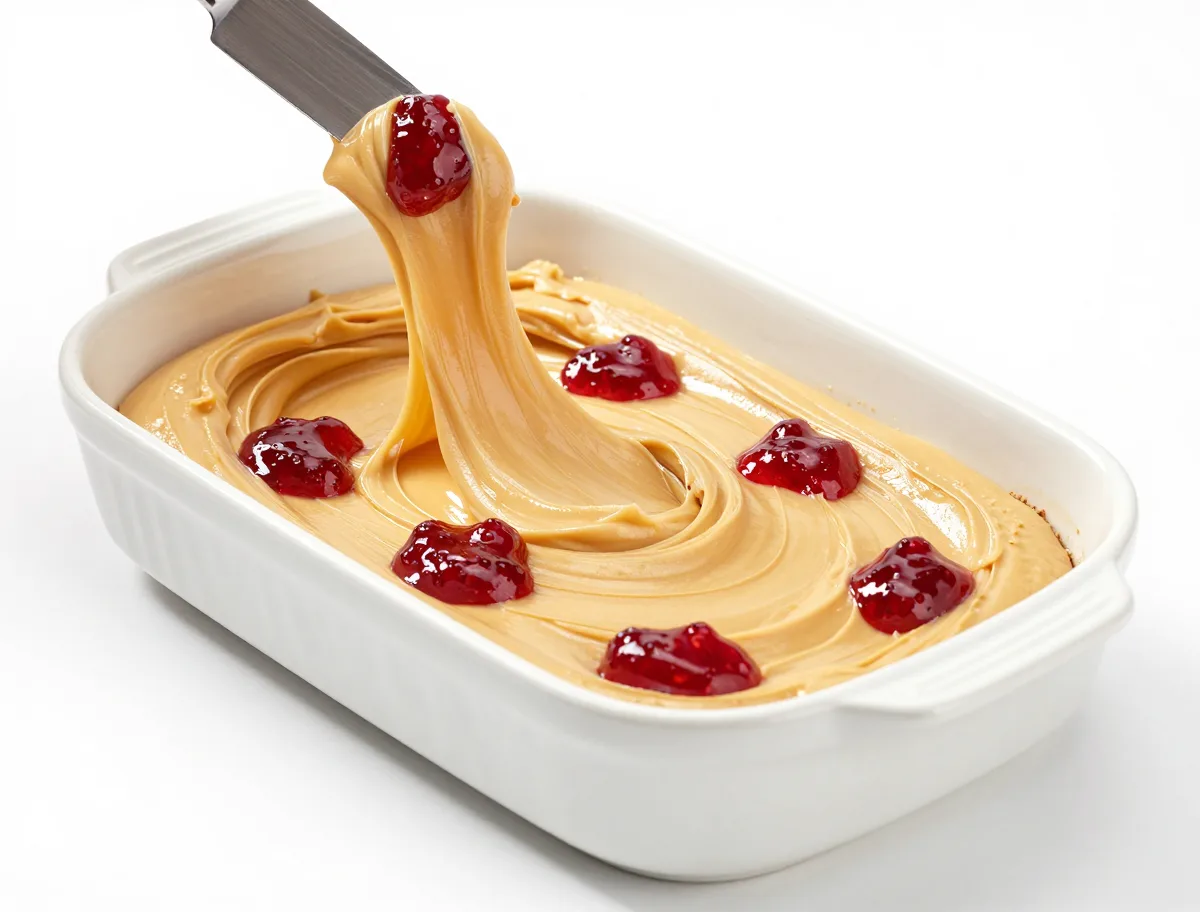
- Add the jam ribbons: Spread the batter evenly in the prepared pan. Spoon 1/2 cup of the jam or jelly in small dollops over the surface, keeping the dollops away from the edge. Drag a thin knife through the batter in 8 to 10 loose passes to create ribbons; stop before the fruit is blended in.
- Bake the cake: Bake on the center rack for 34 to 40 minutes, rotating once if your oven browns unevenly. The top should look set, the center should spring back lightly, and the edges should begin to pull from the pan. A tester inserted into a plain area should show moist crumbs, not wet batter; avoid testing directly through a jam ribbon.
- Cool completely: Cool the cake in the pan for 15 minutes, then use the parchment to lift it onto a rack. Cool completely, about 45 minutes more, before frosting.
- Make the peanut butter frosting: Beat the remaining 1/4 cup softened butter and 1/4 cup peanut butter until smooth. Add the confectioners’ sugar, the remaining 1 teaspoon vanilla, and the remaining 1/4 teaspoon salt. Beat on low until combined, then on medium while gradually adding the milk. Beat until creamy and spreadable, 2 to 3 minutes. Add a few drops more milk only if needed.
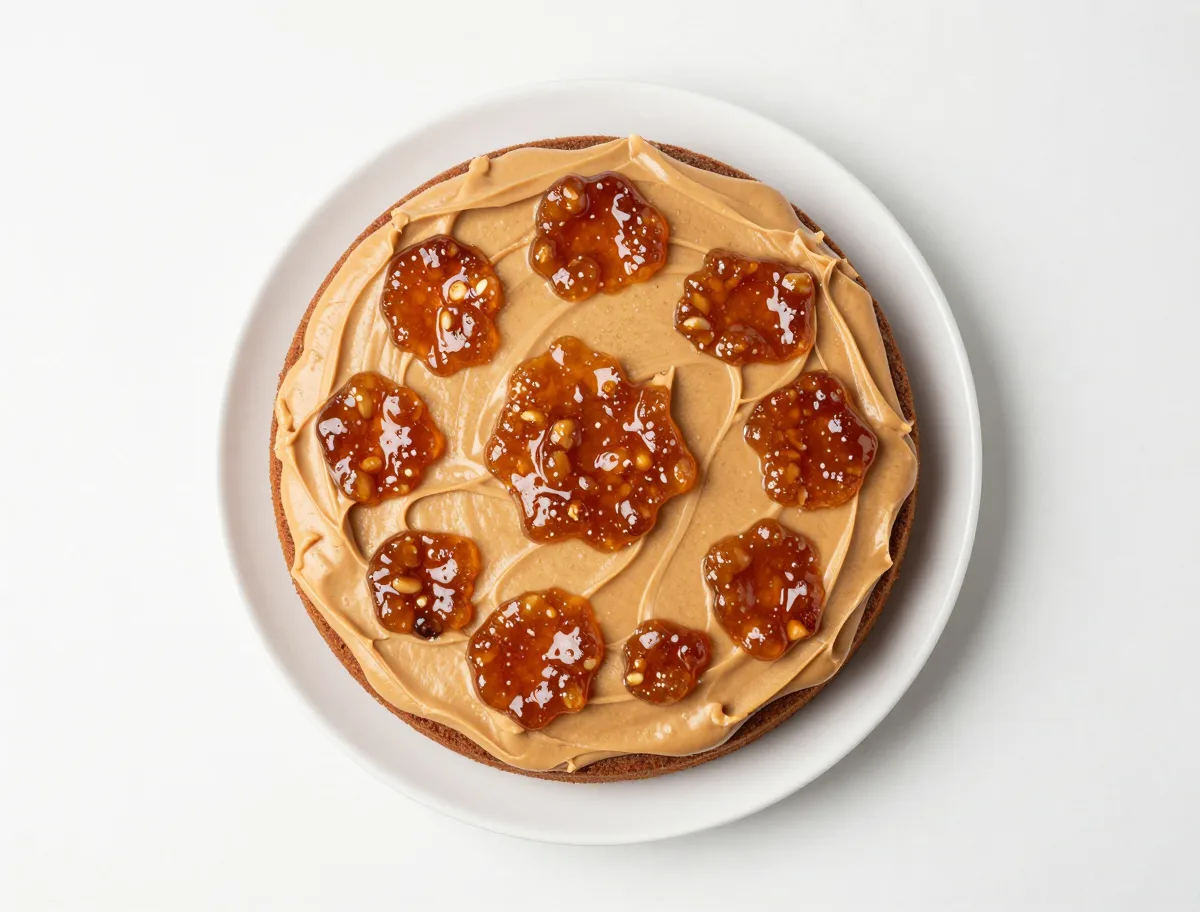
- Finish and serve: Spread the frosting over the cooled cake. Warm the remaining 2 tablespoons jam or jelly for 5 to 10 seconds in the microwave, or until fluid but not hot. Drizzle it lightly over the frosting. Rest for 10 minutes, then cut with a sharp knife, wiping the blade between slices.
How to Tell When the Cake Is Done
Begin checking near the early end of the baking range because pan material and oven calibration affect timing. The most reliable judgment combines appearance, spring-back, and a tester placed in an area without jam. For additional guidance, see how to tell when cake is done.
- A baked cake has a set, matte-looking top and lightly browned edges.
- The center should spring back rather than ripple or feel liquid beneath the surface.
- A tester may pick up jam and look wet even when the surrounding crumb is baked, so test two plain spots.
- Allow the cake to cool before evaluating its final softness; the crumb continues to settle as it cools.
Doneness Cues
- The top is set and mostly matte rather than glossy.
- The center springs back gently when pressed.
- The edges just begin to pull away from the pan.
- A tester inserted into a non-jam area comes out with moist crumbs but no wet batter.
- The cake should be fully cool before frosting; warmth can make the frosting slide.
The Variables That Keep PB&J Cake Tender
Peanut butter makes a cake richer but also increases its solids and reduces the amount of free water available to the flour. The formula offsets that effect with buttermilk and eggs, while moderate sugar and butter tenderize without leaving the structure too weak.
- A thick preserve stays closer to the surface; a very fluid jelly can migrate more easily through batter.
- Small, distributed fruit deposits bake more reliably than one heavy pool, which can leave a gummy patch.
- Accurate flour measurement matters: too much flour produces a dry, dense cake, while too little weakens the crumb.
- A stable batter must retain the air created during creaming; overmixing after the flour is added can make the cake less tender.
Common Peanut Butter Jelly Cake Problems
Most failures come from ingredient imbalance, excessive mixing, too much fluid preserve, or judging the cake by time alone. The following fixes address the likely cause rather than masking a structural problem.
- Dry cake: Spoon and level the flour, measure the buttermilk accurately, and remove the cake when the tester shows moist crumbs rather than waiting for it to become completely dry.
- Dense or greasy cake: Make sure natural peanut butter is fully stirred, use room-temperature ingredients, and add the liquid gradually.
- Sunken or gummy fruit: Use less runny preserve, make smaller dollops, and avoid concentrating fruit in the center.
- Collapsed center: The cake was likely underbaked or disturbed while its structure was still fragile. Bake until the center springs back and the tester shows no wet batter.
- Sticking: Line the pan with parchment and keep the jam away from the sides.
- Loose frosting: Cool the cake completely and chill the frosting briefly if the room is warm. If it is too thick, add milk a few drops at a time.
Ingredient Substitutions for PB&J Cake
The default ingredients are selected for dependable texture, but several swaps work when their effects are understood. Peanut butter is the least interchangeable component because brands vary substantially in oil separation and sweetness.
- Natural peanut butter can be used only after thorough stirring. The finished batter may be slightly less uniform than one made with stabilized peanut butter.
- Crunchy peanut butter works in the cake for added texture, but it produces a less smooth frosting.
- Use strawberry jam, strawberry preserves, raspberry jam, or grape jelly. Choose a thick preserve for the swirl; loosen only a small amount when making a drizzle.
- For a dairy adjustment, plain milk can replace buttermilk if mixed with 2 teaspoons lemon juice or vinegar and rested for 5 minutes before use.
- A gluten-free flour blend or egg replacement is not a guaranteed one-to-one conversion here; use a blend and replacer specifically formulated for cakes and expect texture changes.
Ways to Vary the Cake Without Losing the PB&J Flavor
The easiest variation is to change the preserve, not the cake structure. Strawberry creates a thicker, brighter fruit layer, while grape gives a smoother, more nostalgic sandwich profile.
- For a more pronounced fruit finish, reserve the jam drizzle and apply it in a few narrow lines over the frosting.
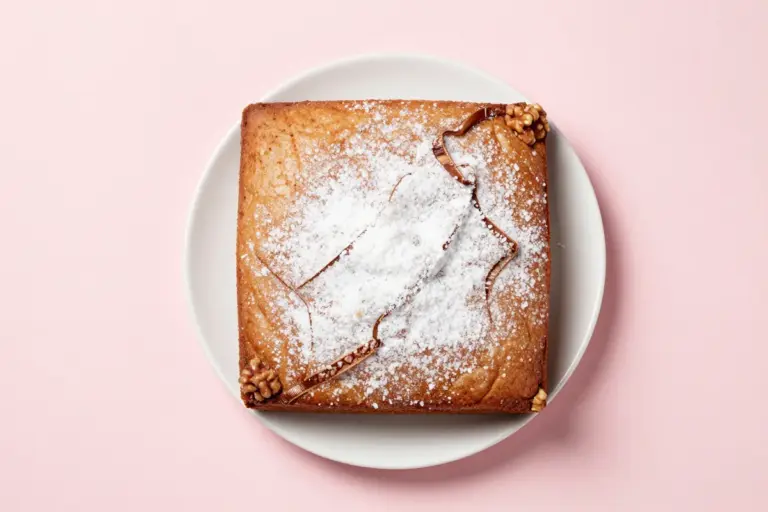
- For a rustic snack cake, skip the frosting and dust the cooled cake lightly with confectioners’ sugar; serve with a spoonful of jam.
- To make a two-layer version, divide the batter between two greased 8-inch round pans and begin checking earlier. Cool completely, spread a thin frosting border around one layer, fill the center with jam, and stack before frosting.
- A poke-cake adaptation is possible after baking, but the jelly must be loosened and used sparingly so the crumb does not become saturated.
How to Serve Peanut Butter and Jelly Cake
Serve the cake cool or at room temperature, when the peanut aroma is more pronounced and the crumb feels soft. A clean knife wiped between cuts keeps the jam ribbons and frosting distinct on the plate.
- Pair slices with cold milk, unsweetened coffee, or black tea.
- Add a small scattering of chopped roasted peanuts for crunch, if desired.
- Keep additional sauces restrained; the frosting and fruit already provide a sweet finish.
- If refrigerated, let slices stand briefly before serving so the butter-based cake does not seem firm or muted.
How to Store, Freeze and Reheat the Cake
For best texture, keep the cake airtight and avoid unnecessary refrigeration when the frosting is shelf-stable. Cakes containing cream cheese frosting, whipped cream, custard, or another perishable component require refrigeration rather than room-temperature storage. For authoritative refrigerator and freezer guidance, consult the FoodSafety.gov cold food storage chart.
- A covered cake with shelf-stable peanut butter frosting keeps well at cool room temperature for up to 2 days; refrigerate it if the room is hot.
- Refrigerated cake is best used within 3 to 4 days and should be brought toward room temperature before serving.
- Freeze unfrosted cake, tightly wrapped, for up to 2 months for best quality. Thaw it while wrapped in the refrigerator, then frost once fully thawed.
- Individual frosted slices may be frozen airtight, though the jam boundary and frosting may soften slightly after thawing.
- Do not reheat the whole cake. If desired, warm a plain slice very briefly at low power, since heat can melt the frosting and make the jam run.
- Perishable versions should be refrigerated within 2 hours, or within 1 hour when the temperature is above 90°F, and kept at 40°F or below.
Peanut Butter and Jelly Cake FAQs
These answers cover the practical choices that most affect the cake’s flavor, texture, appearance, and storage.
What kind of cake does this recipe make?
It makes a 9-by-13-inch peanut butter snack cake with a swirled fruit component and peanut butter frosting. It is easier than assembling a layer cake and cuts into generous squares.
Should I use strawberry jam or grape jelly?
Either works. Strawberry jam is usually thicker and creates a more visible ribbon, while grape jelly is smoother and gives the clearest classic PB&J flavor. If the jelly is very loose, use smaller dollops.
Can I use natural peanut butter?
Yes, but stir it thoroughly until the oil and solids are completely blended before measuring. Natural peanut butter varies by brand, so the batter or frosting may be softer or less uniform.
Why did my jam sink or disappear?
The preserve may have been too fluid, used in large pools, or over-swirled. Use a thick preserve, distribute it in small dollops, and make only a few shallow knife strokes.
Can I use crunchy peanut butter?
Yes. It adds peanut pieces to the cake and frosting, but the frosting will not be perfectly smooth and may be harder to spread in a thin, even layer.
How long should the cake cool before frosting?
Allow about 60 minutes total: 15 minutes in the pan, followed by roughly 45 minutes on a rack. The cake must feel completely cool in the center before frosting.
Can I bake this in another pan?
Yes, but the baking time will change with batter depth. Two 8-inch round pans make a layer-style cake and should be checked earlier; do not transfer the 9-by-13-inch timing unchanged.
How can I make the cake less sweet?
Use a tart strawberry jam, apply a thinner layer of frosting, and omit or minimize the final jam drizzle. Do not substantially reduce the sugar in the batter, since it also affects tenderness and structure.
Can I make the cake ahead?
Bake and cool it a day ahead, then wrap it airtight. Frost it the day you plan to serve it, or assemble it earlier and store it according to the frosting’s refrigeration needs.
Why is my frosting too thick or too loose?
Add milk a few drops at a time if it is too thick. If it is loose, chill it for 10 to 15 minutes and beat again; a warm cake or warm kitchen can also make the frosting slide.