Carrot Cake Syrup Recipe for Coffee and Lattes
This carrot cake syrup recipe combines unsweetened carrot juice, brown sugar, cinnamon, ginger, nutmeg, and vanilla into a smooth, glossy syrup for coffee, lattes, pancakes, and desserts.
What Carrot Cake Syrup Should Taste and Feel Like
This is a concentrated, pourable syrup inspired by the flavor of carrot cake—not a thick frosting sauce and not simply sweetened carrot juice. The finished syrup should be amber-orange to brown, glossy, smoothly strained, and fluid enough to mix into hot or iced drinks.
- Brown sugar provides the baked, molasses-like sweetness.
- Carrot gives the syrup its color and recognizable flavor.
- Cinnamon, ginger, nutmeg, and vanilla create the familiar cake-spice profile.
- The syrup should remain thinner than caramel so it disperses easily in coffee and milk.
Why These Ingredients Work
Unsweetened carrot juice is the most efficient base for a clear, strongly flavored beverage syrup because it supplies carrot flavor without the fibrous solids of blended vegetables. Brown sugar anchors the recipe with molasses depth, while a small amount of granulated sugar keeps the flavor from becoming overly heavy.
- The cinnamon stick gives warm spice with less sediment than adding more ground cinnamon.
- Ginger adds brightness and gentle heat; nutmeg supplies the rounded, cake-like finish.
- Vanilla is added off the heat so its aroma remains pronounced.
- A little salt sharpens the sweetness and keeps the spices from tasting flat.
Ingredients
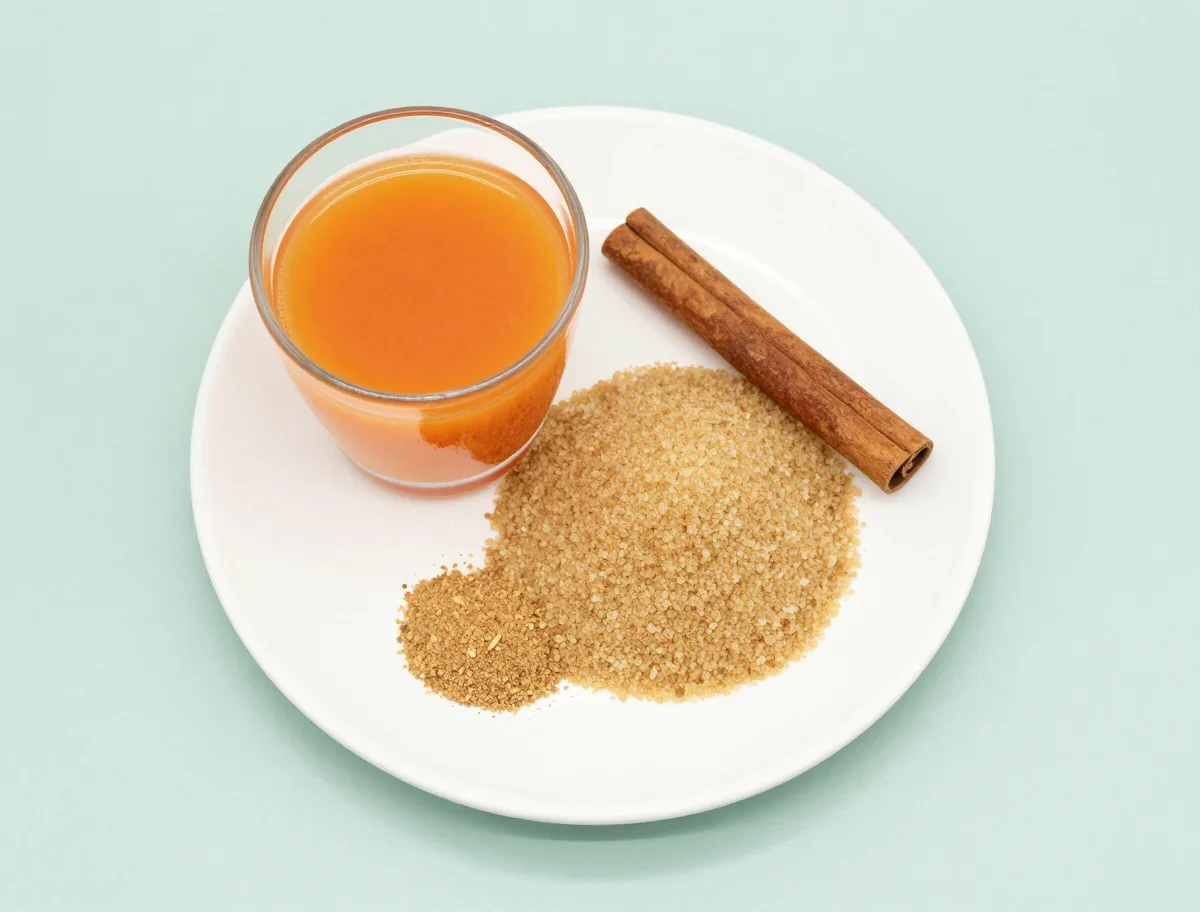
- 2 cups unsweetened carrot juice, use a product with carrots as the only ingredient, if possible
- 1 cup light brown sugar, packed
- 1/4 cup granulated sugar
- 1 cinnamon stick cinnamon
- 1/2 teaspoon ground ginger
- 1/4 teaspoon ground nutmeg
- 1/8 teaspoon fine sea salt
- 1 teaspoon pure vanilla extract
Equipment
- 2-quart saucepan
- Wooden spoon or heatproof spatula
- Fine-mesh strainer
- Heatproof measuring jug
- Clean glass jar or food-safe bottle
How to Make Carrot Cake Syrup Successfully
The important sequence is to dissolve the sugars completely before reducing the liquid. Once the mixture is smooth, use a gentle simmer rather than a hard boil; this extracts the spices without scorching the sugar or making the flavor harsh.
- Use a wider saucepan if you want the reduction to happen more quickly, but begin checking early.
- Keep the syrup uncovered while reducing so excess water can evaporate.
- Add vanilla after removing the pan from heat.
- Strain while the syrup is warm, when it passes through the sieve most easily.
Instructions
- Combine the syrup base. Pour the carrot juice into a 2-quart saucepan. Add the brown sugar, granulated sugar, cinnamon stick, ginger, nutmeg, and salt. Stir before heating to distribute the spices. 2 minutes
- Dissolve the sugars. Set the saucepan over medium heat and stir frequently until both sugars have completely dissolved and the liquid looks uniform. Do not let the mixture boil vigorously. 5 minutes
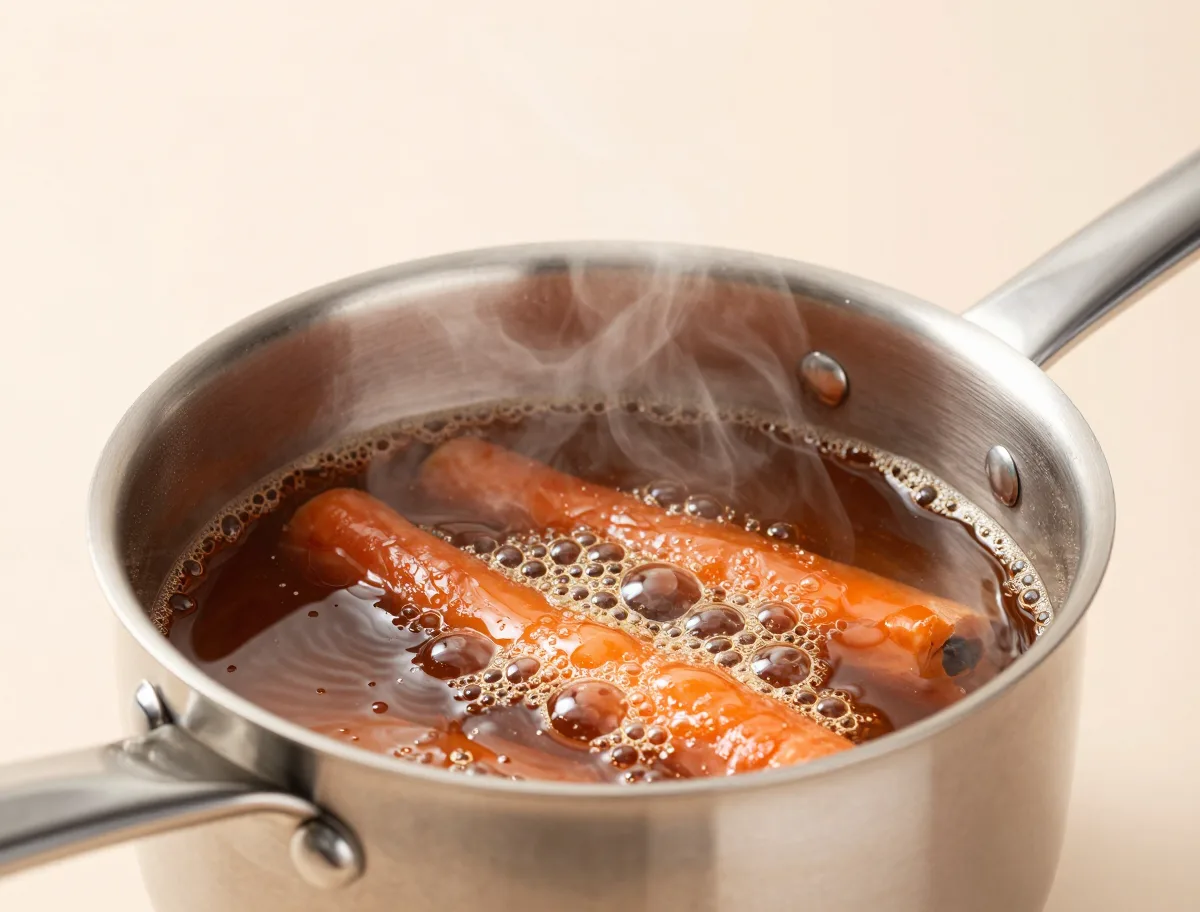
- Simmer and reduce. Lower the heat to maintain a gentle simmer. Cook uncovered, stirring occasionally, until the syrup has reduced to about 1 1/2 cups and lightly coats the back of a spoon while still flowing freely. This usually takes 10 to 15 minutes, depending on the saucepan.
- Finish the flavor. Remove the saucepan from the heat and let the syrup stand for 5 minutes with the cinnamon stick still in the pan. Stir in the vanilla extract. 5 minutes
- Strain and cool. Pour the warm syrup through a fine-mesh strainer into a clean heatproof jar or bottle, removing the cinnamon stick and spice particles. Cool uncovered briefly, then seal and refrigerate within two hours of cooking. 30 minutes
How to Tell When the Syrup Is Done
Do not wait for the hot syrup to look as thick as you want it in the refrigerator. It will gain body as it cools. The best stopping point is a light coating on the back of a spoon, followed by a clean, fluid pour from the strainer.
- Stop reducing when the syrup flows in a thin ribbon rather than dropping in heavy blobs.
- A syrup that is difficult to pour once cold was reduced too far for coffee use.
- Visible fibers or spice grit indicate that the syrup needs a second pass through fine mesh or cheesecloth.
- Color alone is not a reliable doneness test because carrot juice and brown sugar vary.
Doneness Cues
- The sugars are fully dissolved before reduction begins.
- The aroma is sweet, warm, and cake-like rather than raw or sharply spiced.
- The reduced syrup lightly coats a spoon but runs off easily.
- The strained syrup is glossy and pourable; it should not resemble caramel.
- It will thicken slightly as it cools and again in the refrigerator.
The Cooking Variables That Control Thickness
Syrup body comes primarily from dissolved sugar and the water removed during simmering. Carrot juice also contains its own sugars and solids, so two brands can produce different results from the same recipe. Moderate reduction is intentional: concentrating the syrup too aggressively increases stickiness and the chance of crystallization.
- Complete sugar dissolution helps prevent a gritty texture later.
- A hard boil evaporates liquid rapidly and can over-concentrate the syrup before the spices have mellowed.
- Pan width, burner strength, and starting volume all affect cooking time.
- Clean cookware and utensils reduce the chance of sugar crystals forming around the edges.
Common Carrot Cake Syrup Problems and Fixes
Most problems are easy to diagnose once the syrup has been strained and cooled. Correct texture gently rather than extending a vigorous boil, which can intensify bitterness and push the syrup past the beverage-friendly stage.
- Too thin: Simmer it gently in a wide saucepan for a few additional minutes, then cool a spoonful before judging again.
- Too thick or sticky: Rewarm it over low heat and stir in a small amount of carrot juice until pourable.
- Weak flavor: Use a more concentrated unsweetened carrot juice or reduce the next batch slightly longer; adding excessive spice can make the flavor less cake-like.
- Cloudy or gritty: Strain again through fine mesh or cheesecloth. Ground spices and carrot pulp are the usual causes.
- Burnt or bitter: Do not try to hide a scorched batch with extra sugar or spice; the cooked flavor will remain.
Carrot Juice and Ingredient Substitutions
Carrot juice gives the smoothest and most predictable result, but a fresh-carrot infusion is possible when packaged juice is unavailable. It is not a one-to-one swap: chopped carrots need added water, longer extraction, and thorough straining, and the final flavor may be lighter.
- Light and dark brown sugar are interchangeable; dark brown sugar creates a deeper molasses note.
- Replacing some or all of the brown sugar with granulated sugar produces a paler, cleaner-tasting syrup.
- Maple syrup or coconut sugar can be used as flavor variations, but they change the identity and may alter the reduction time.
- Ground spices can replace whole spices, though they create more sediment.
- The syrup is dairy-free as written; use dairy or plant-based milk only when serving.
Carrot Cake Syrup Variations
Optional accents can make the syrup brighter or more dessert-like while preserving its carrot-cake identity. Keep additions restrained so the syrup still works with coffee rather than tasting like a separate spiced sauce.
- Add a strip of orange zest during simmering for a fresh citrus note, removing it before straining.
- Replace part of the brown sugar with maple syrup for a maple-carrot-cake variation; expect a more pronounced maple flavor.
- Infuse with a few pecan or walnut pieces, then strain carefully. Nuts are optional and introduce allergens.
- Add a tiny pinch of ground clove for extra warmth, but use very little because it can dominate the other spices.
- Do not add cream cheese, butter, or frosting to the stored syrup; use those as serving toppings instead.
How to Use Carrot Cake Syrup
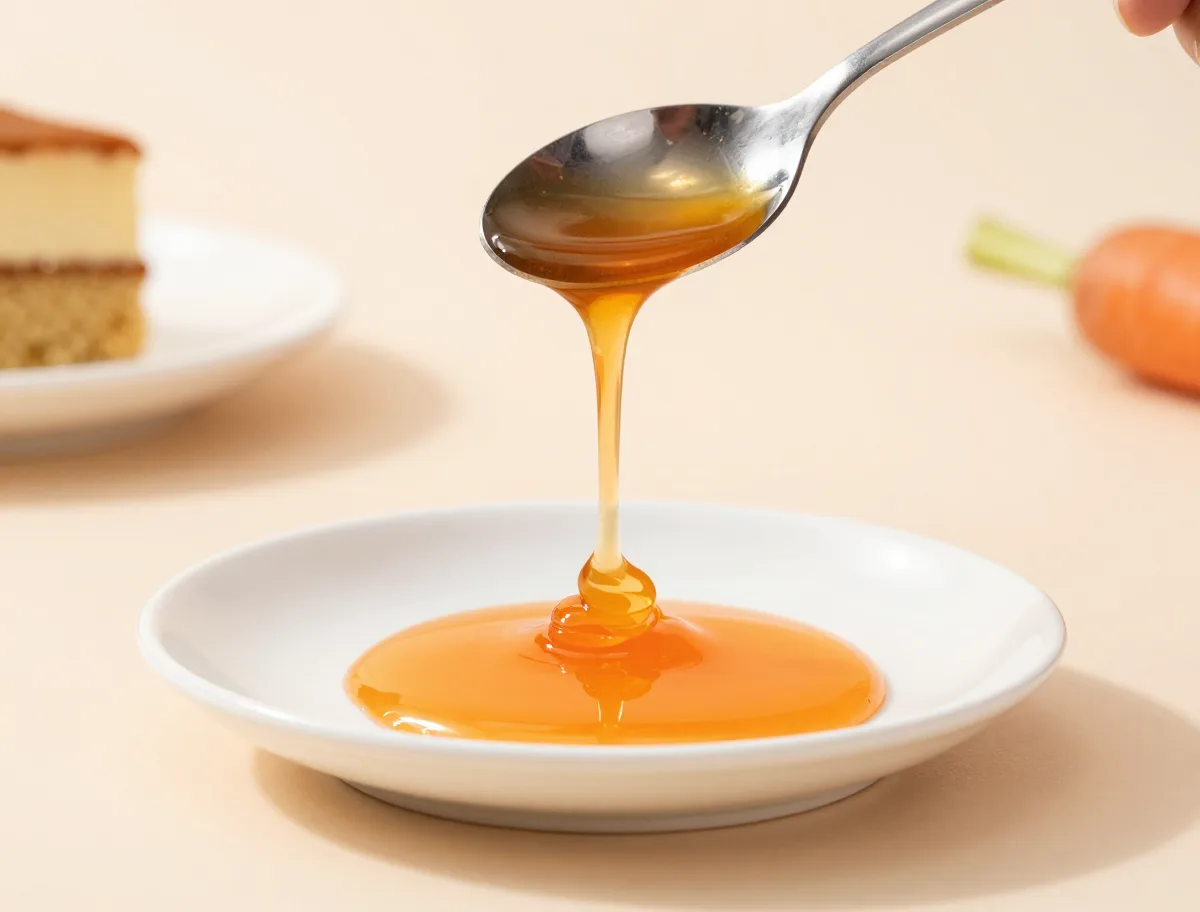
Stir the syrup into hot espresso, brewed coffee, cappuccino, or a latte, or mix it with cold coffee and milk for an iced version. Start with 1 tablespoon per drink and add more only after tasting, since the syrup is both sweet and concentrated.
- For a carrot cake latte, combine the syrup with espresso and steamed milk, then finish with foam and a little grated nutmeg.
- For iced coffee, stir the syrup into the coffee before adding ice so it disperses evenly.
- Drizzle chilled syrup over pancakes, waffles, oatmeal, yogurt, ice cream, cheesecake, or plain cake.
- A spoonful of cream-cheese-style foam, whipped cream, toasted pecans, or orange zest can reinforce the dessert effect.
How to Store, Freeze, and Reheat Carrot Cake Syrup
Because the syrup contains carrot juice, treat it as a perishable homemade preparation rather than a pantry-stable simple syrup. Transfer it to a clean, covered jar or bottle, cool it promptly, and refrigerate it at 40°F/4°C or below.
- Use the refrigerated syrup within 3 to 4 days for conservative home storage.
- Freeze it in tablespoon- or two-tablespoon portions if you will not use it within that window.
- Thaw frozen syrup in the refrigerator, then loosen it over low heat or with gentle stirring.
- Avoid repeated warming and cooling cycles, and discard any syrup with mold, gas, fermentation, or an off odor.
For additional official guidance on prompt refrigeration and safe leftover handling, consult FoodSafety.gov’s guidance on leftovers.
Carrot Cake Syrup FAQs
These answers cover the most useful formulation, serving, and storage questions for a homemade carrot cake coffee syrup.
Is this syrup mainly for coffee and lattes?
It is formulated first as a beverage syrup, but its pourable texture also makes it useful over pancakes, waffles, oatmeal, yogurt, ice cream, cheesecake, and plain cake.
Can I use fresh carrots instead of carrot juice?
Yes, but not in an equal-volume substitution. Simmer chopped carrots with water to extract their flavor, then strain very thoroughly. The result will usually be less clear and less predictable than the juice-based version.
Which spices are essential for the carrot cake flavor?
Cinnamon, ginger, and nutmeg form the core combination. Vanilla rounds the aroma, while clove, orange, maple, and nuts are optional accents.
How much syrup should I add to a latte?
Begin with 1 tablespoon for an 8- to 12-ounce coffee or latte. Add more according to the drink size, coffee bitterness, milk choice, and desired sweetness.
Does the syrup need to be strained?
Yes, especially for drinks. Straining removes the cinnamon, spice particles, and any carrot solids that could settle or create a gritty texture.
Can I make it without refined sugar?
You can replace the sugars with maple syrup or coconut sugar, but the result will have a different flavor, color, and potentially different thickness. It should still be refrigerated and should not be assumed to keep longer.
Why did my syrup become too thick in the refrigerator?
It was likely reduced too far or started with a sweeter, more concentrated carrot juice. Warm it gently and stir in a small splash of carrot juice until it reaches a pourable consistency.
Food Safety for Homemade Carrot Syrup
The cooked syrup contains a perishable vegetable ingredient and has not been formulated or tested for room-temperature preservation. Refrigeration, clean handling, and a conservative storage window are essential; sugar and simmering alone do not make it shelf-stable.
- Refrigerate the syrup within 2 hours of cooking, or within 1 hour when the ambient temperature is above 90°F/32°C.
- Use a clean, sealed container and keep the refrigerator at 40°F/4°C or below.
- A shallow container or small bottle helps the syrup cool more quickly than a deep saucepan.
- Do not store this homemade syrup at room temperature or attempt pantry canning without a tested preservation process.
- Discard it if you see mold, bubbling, fermentation, unusual gas, or other spoilage; do not taste questionable syrup.
See the FDA’s food-storage guidance for additional information about prompt refrigeration, covered storage, and refrigerator temperature.