Baked Chicken With Mayonnaise Recipe and Spinach
This baked chicken with mayonnaise recipe produces tender, juicy chicken breasts beneath a savory garlic-Parmesan mayonnaise topping and tender spinach, with golden edges from an uncovered bake.
What to Expect from This Creamy Spinach Chicken Bake
This is an American-style one-pan spinach chicken dinner built around a thin mayonnaise coating rather than a breaded crust. The mayonnaise carries garlic, mustard, cheese, and herbs across the chicken while helping the surface stay rich and moist as it bakes.
- The chicken should be juicy and fully cooked, not soft or underdone at the center.
- The spinach layer should be tender and creamy, never watery.
- Parmesan and panko create golden, lightly crisp areas; the topping is not intended to become a hard fried crust.
Why the Mayonnaise, Spinach, and Cheese Work Together
Mayonnaise is the structural ingredient in this baked chicken with mayonnaise recipe. Its emulsion clings to the meat, distributes seasoning, and contributes fat for a rounded flavor. It also gives the topping a creamy base that sets in the oven instead of tasting like a plain condiment.
- Spinach adds freshness and color but must be drained well because it releases considerable moisture.
- Parmesan supplies salt, umami, and dependable browning; mozzarella adds a softer melt and gentle stretch.
- Dijon and lemon sharpen the rich topping, while garlic, paprika, and Italian seasoning keep the mild chicken from tasting flat.
- Panko is deliberately limited so the surface gains texture without turning the dish into a breaded cutlet.
- 1 1/2 pounds boneless, skinless chicken breasts, 4 pieces, trimmed
- 1 tablespoon olive oil, divided
- 5 ounces fresh baby spinach
- 1/2 cup regular mayonnaise
- 1/3 cup finely grated Parmesan cheese, divided
- 1/2 cup low-moisture mozzarella cheese, shredded
- 1/3 cup panko breadcrumbs
- 1 teaspoon Dijon mustard
- 1 teaspoon garlic powder
- 1/2 teaspoon paprika
- 1/2 teaspoon dried Italian seasoning
- 3/4 teaspoon kosher salt, divided
- 1/4 teaspoon black pepper
- 1 teaspoon lemon juice
- 2 tablespoons fresh parsley, chopped, for serving (optional)
The Key Techniques for Tender, Juicy Baked Chicken
Even thickness matters more than the exact weight of each breast. A thick center takes much longer to cook than its thin edges, so gently pounding or butterflying the meat prevents the outside from drying while you wait for the center to reach a safe temperature.
- Pat the chicken dry before seasoning; a damp surface weakens adhesion and encourages steaming.
- Wilt fresh spinach briefly and press out liquid before it meets the mayonnaise mixture.
- Keep the chicken in one layer with space between pieces when possible.
- Bake uncovered so moisture can escape and the cheese and crumbs can color. Use foil only if the surface browns too quickly.
- Heat the oven. Heat the oven to 425°F (220°C). Lightly grease a shallow 9-by-13-inch baking dish with 1 teaspoon of the olive oil.
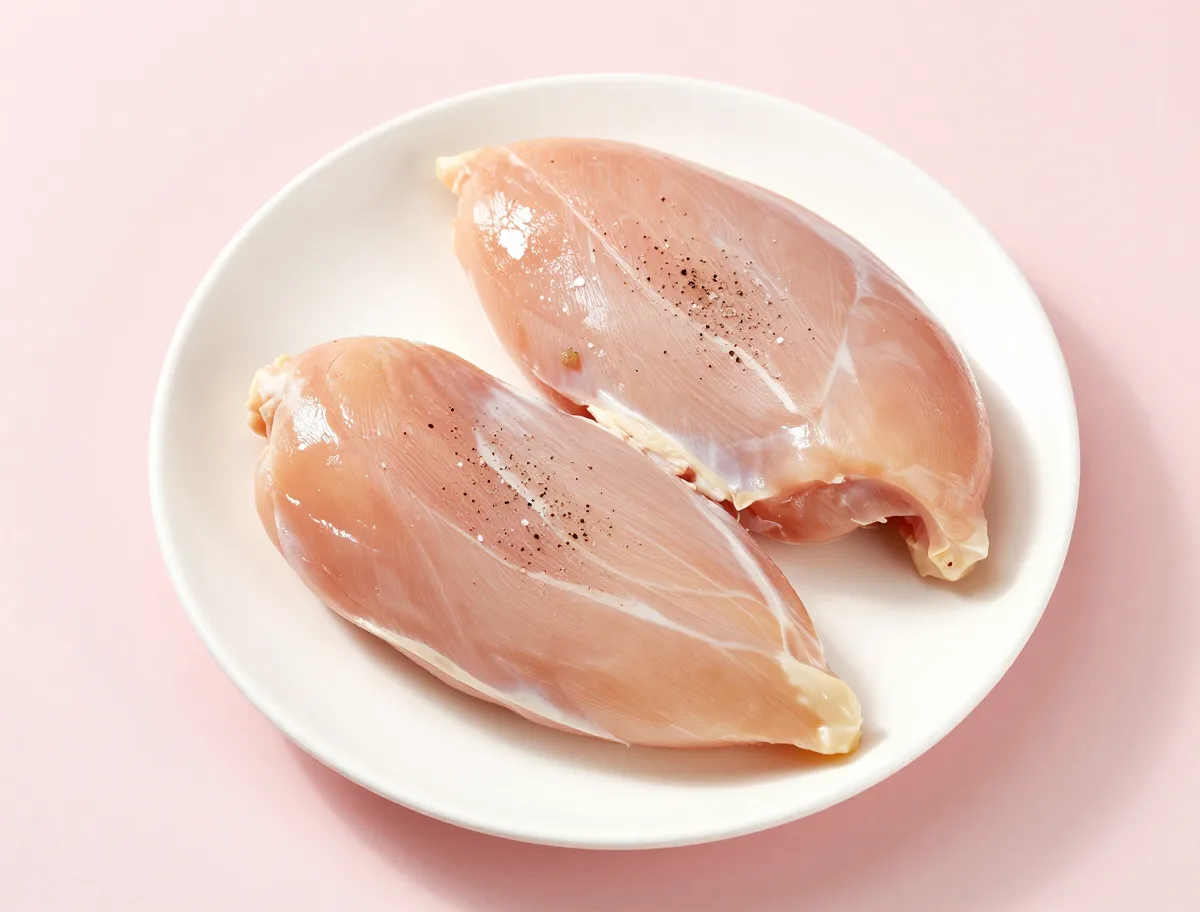
- Even the chicken. Pat the chicken dry. If the breasts are thicker than about 1 inch, place them between sheets of plastic wrap and gently pound or butterfly them until they are an even 3/4-inch thickness. Season both sides with 1/2 teaspoon of the salt and the black pepper.
- Wilt and drain the spinach. Warm the remaining 2 teaspoons olive oil in a large skillet over medium heat. Add the spinach and the remaining 1/4 teaspoon salt; cook just until wilted, about 2 minutes. Transfer the spinach to a fine-mesh sieve or clean towel and press firmly to remove excess liquid. Let it cool briefly.
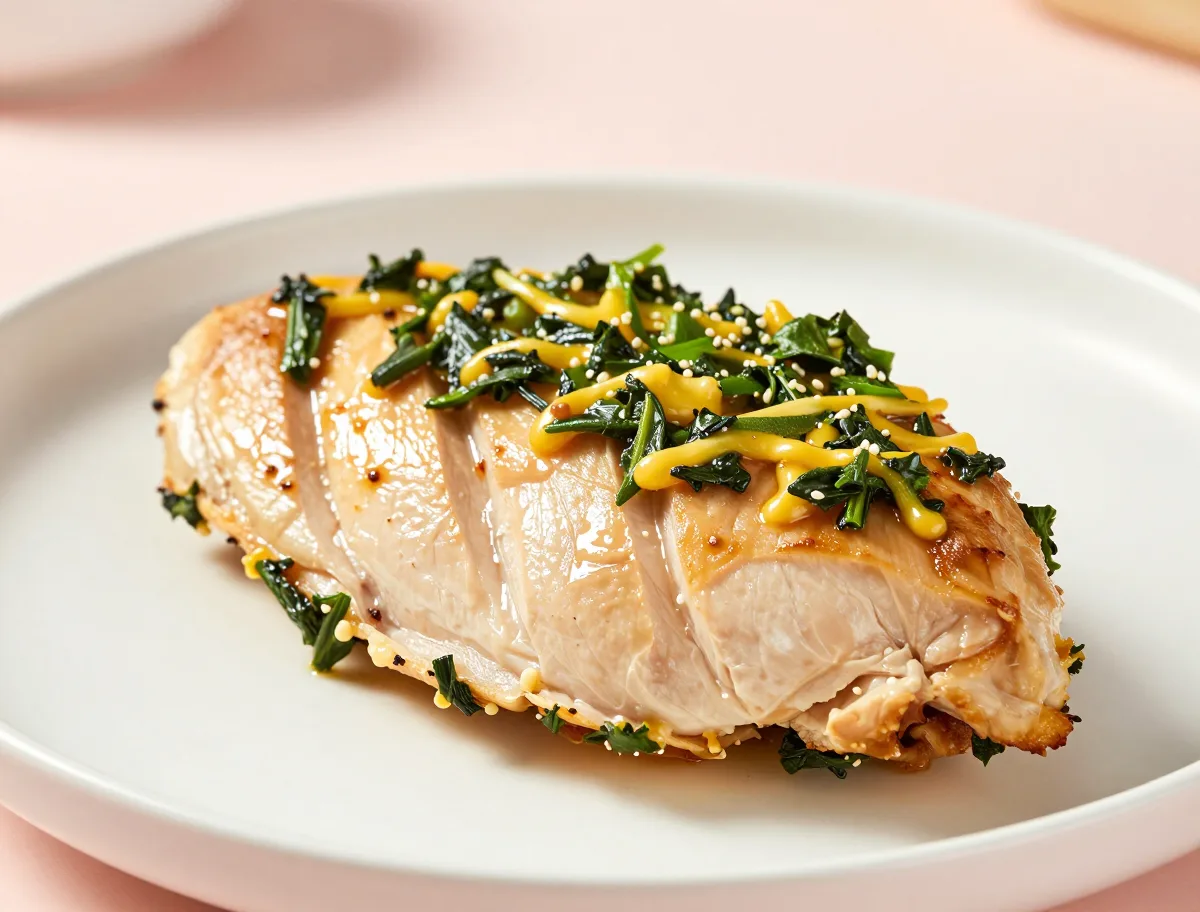
- Make the mayonnaise topping. In a bowl, stir together the mayonnaise, Dijon mustard, garlic powder, paprika, Italian seasoning, lemon juice, 2 tablespoons of the Parmesan, and the cooled spinach. The mixture should be thick enough to mound lightly rather than run.
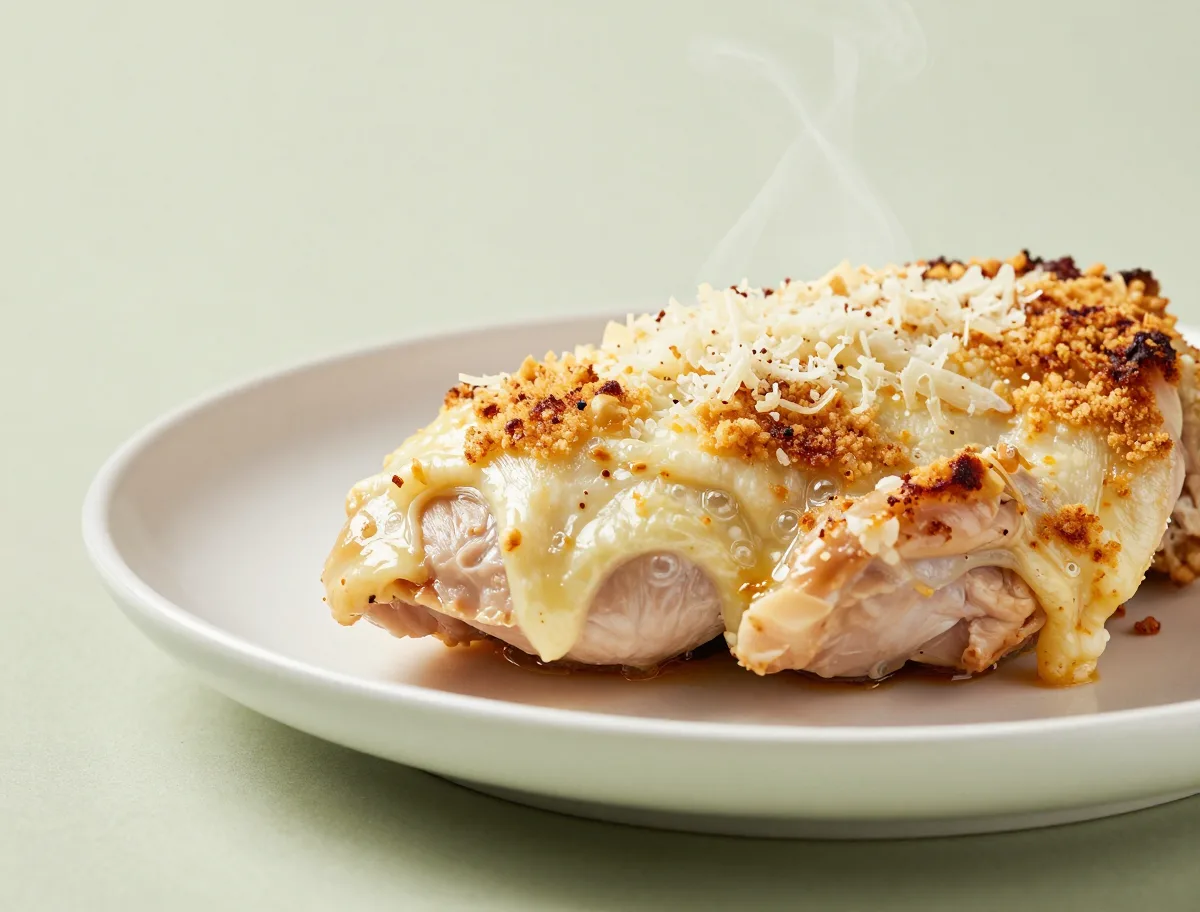
- Assemble the chicken. Arrange the chicken in the prepared dish in a single layer, leaving a little space between pieces. Spread the spinach-mayonnaise mixture over each breast in a thin, even layer. Sprinkle with the mozzarella, remaining Parmesan, and panko.
- Bake until done. Bake uncovered for 18 to 25 minutes, depending on the thickness of the chicken. Begin checking at 18 minutes. The topping should be set with golden patches, but the thermometer is decisive: insert it into the thickest part of the largest breast and cook until it registers 165°F (74°C).
- Rest and serve. If the chicken is cooked but the topping is pale, broil it briefly while watching continuously. If the topping darkens before the chicken is done, loosely tent the dish with foil and continue baking. Rest the chicken for 5 minutes, then finish with the parsley if using.
How to Tell When the Chicken Is Done
The thermometer reading is the reliable doneness test for chicken breast with spinach. Insert an instant-read thermometer horizontally into the thickest center of the largest piece, avoiding the baking dish. The chicken must reach 165°F (74°C); browning of the topping alone does not indicate a safe center.
- Finished chicken feels firm but not rigid, and the interior is opaque.
- The topping should look set, with golden spots around the Parmesan and panko.
- A five-minute rest lets the topping settle and makes the portions easier to lift.
- If the topping is dark before the chicken is at temperature, tent loosely with foil and keep baking.
The Variables That Control Moisture and Browning
Chicken thickness controls the cooking time, while surface moisture controls browning. Mayonnaise helps coat and protect the surface, but it does not form an airtight seal or make overcooking impossible. A thin topping, drained spinach, and uncovered heat create the best balance between a moist center and a golden top.
- A moderately hot oven shortens the time the lean breast spends drying out while giving the topping a chance to brown.
- Crowding traps steam, so pieces touching one another will brown less effectively.
- Mozzarella makes the top softer because it retains more moisture; Parmesan and panko provide drier, more readily browned surfaces.
- Broiling changes color rapidly and should be used only at the end, with continuous attention.
Common Baked Chicken with Mayonnaise Mistakes
Most problems with this dish begin before it goes into the oven. Correcting moisture and thickness during preparation is more effective than trying to rescue a watery or overcooked bake afterward.
- Dry chicken: The breasts were too thin or baked past 165°F. Even the meat first and begin checking early.
- Watery spinach chicken casserole: The spinach was not pressed dry, or the pan was crowded. Drain spinach aggressively and bake in a shallow, uncovered dish.
- Pale topping: Excess moisture or an overly thick mayonnaise layer can delay browning. If the chicken is already safe, broil briefly.
- Soggy breadcrumbs: Too much liquid reached the surface. Use a thin panko layer and avoid covering the dish.
- Uneven cooking: Unequal breast thickness is usually responsible. Flatten thick pieces before seasoning.
Ingredient Substitutions for Spinach Chicken
The recipe accommodates several substitutions, but each one changes the topping’s richness, moisture, or browning. For the closest result, preserve the mayonnaise-based structure and adjust expectations rather than treating every swap as identical.
- Light mayonnaise can replace regular mayonnaise, though the topping may be less rich and less deeply golden.
- Vegan mayonnaise is the most direct egg-free and dairy-free option. Check its label and expect brand-to-brand differences in setting and browning.
- Boneless, skinless thighs are more forgiving than breasts but usually need additional baking time; verify every piece with a thermometer.
- Frozen chopped spinach is convenient after thawing and squeezing. Greek yogurt or sour cream can be used in another version, but they create a tangier, less oily topping.
- Use a dairy-free cheese blend in place of Parmesan and mozzarella if needed. Gluten-free panko or crushed gluten-free crackers can replace standard panko, with some variation in salt and crunch.
Easy Variations on This Cheesy Spinach Chicken
Focused changes can shift the flavor without losing the identity of the dish: chicken, spinach, mayonnaise, and an oven-baked topping remain the through line.
- For garlic-Parmesan chicken, add a small amount of minced fresh garlic to the mayonnaise mixture and keep the Parmesan-forward balance.
- For a softer, stretchier mozzarella spinach chicken, use more mozzarella and less panko; expect less surface browning.
- For an herb variation, replace part of the dried Italian seasoning with chopped parsley or another tender fresh herb added after baking.
- For extra crunch, toss the panko with a little of the listed olive oil before sprinkling it over the cheese.
- Adding pasta, rice, or a substantial cream sauce turns this into a different casserole and requires a new moisture and timing plan.
What to Serve with Creamy Spinach Chicken
The baked chicken is rich enough to benefit from fresh, acidic, or simply cooked accompaniments. Serve it after the short rest while the topping is still warm and stable.
- Pair it with a green salad dressed with vinaigrette for crispness and acidity.
- Steamed green beans, asparagus, or roasted vegetables make an easy low-effort side.
- Rice, quinoa, potatoes, or crusty bread are useful when you want a more substantial meal and have pan juices to absorb.
- A little lemon juice or chopped parsley at the table brightens the mayonnaise and cheese without adding another sauce.
How to Store, Freeze, and Reheat Baked Spinach Chicken
Cool leftovers promptly and store them in shallow, covered containers. Refrigerate within two hours and use within three to four days. The dish can be frozen, but spinach may soften and the mayonnaise-based topping may separate slightly, so the reheated surface will not be as fresh or crisp.
- For best quality, refrigerate assembled ingredients only briefly before baking rather than freezing the uncooked dish.
- Freeze cooked portions in airtight packaging for longer storage; label them and use them within roughly two to six months for best quality.
- Thaw frozen portions in the refrigerator, then reheat covered in a 325°F (165°C) oven until the center reaches 165°F (74°C).
- Warm only the portions needed. Uncover during the final few minutes if you want to refresh the topping, though it will remain softer than freshly baked.
Baked Chicken with Mayonnaise FAQ
These practical answers address thickness, timing, substitutions, browning, and safe handling so the recipe can be adapted without relying on an unreliable fixed cooking time.
What type of chicken works best?
Boneless, skinless chicken breasts work especially well when trimmed and made an even 3/4-inch thick. Boneless, skinless thighs are a juicier, more forgiving alternative but may take longer.
Can I use very thick chicken breasts?
Yes. Butterfly or gently pound them to an even thickness first. Otherwise the thin portions may dry out before the thickest center reaches 165°F (74°C).
Can I use frozen chicken?
For this assembled recipe, thaw it in the refrigerator first so it can be evenly seasoned and coated. Cooking from frozen requires substantially more time and does not produce a dependable fixed schedule; use a thermometer in the thickest point.
Does the mayonnaise taste raw after baking?
When spread thinly and baked uncovered, the mayonnaise cooks into a savory, creamy coating and should not taste like a raw condiment. A very thick layer can remain pale, loose, or greasy.
Why is my topping not browning?
Wet spinach, a crowded dish, excess mayonnaise, or covered baking can keep the surface pale. Once the chicken has reached 165°F (74°C), use a short, closely watched broil for color.
Can I use light or dairy-free mayonnaise?
Yes, though light mayonnaise may produce a thinner, less rich coating and vegan mayonnaise can brown differently. Use a dairy-free cheese if the finished dish must also be dairy-free.
Should I cover the chicken while it bakes?
No. Bake it uncovered to encourage the topping to set and brown. If the surface becomes dark while the chicken is still below 165°F (74°C), loosely tent it with foil.
Can I use frozen spinach instead of fresh?
Yes. Thaw it completely and squeeze it very dry before adding it to the mayonnaise mixture. Frozen spinach is denser and releases more liquid if it is not pressed well.
How long should the chicken bake?
Even 3/4-inch breasts generally take about 18 to 25 minutes at 425°F (220°C), but thickness, starting temperature, pan material, and oven accuracy all matter. Begin checking early and remove the chicken only when the thickest part reaches 165°F (74°C).
Does the chicken need to rest?
Rest it for about five minutes after baking. Resting helps the topping settle and improves serving, but it does not replace cooking the chicken to 165°F (74°C).
Food Safety for Oven-Baked Chicken
Keep raw chicken and its juices away from the spinach, cheese, and other ready-to-eat ingredients until assembly is complete. Wash hands, boards, utensils, and work surfaces after handling the raw poultry, and use a clean utensil for serving.
- Cook every chicken piece to a minimum internal temperature of 165°F (74°C), measured in the thickest part with a food thermometer.
- Do not use surface browning, clear juices, or the absence of pinkness as the safety test.
- Thaw chicken only in the refrigerator, in cold water, or in a microwave. Never thaw it on the counter; poultry thawed in cold water or a microwave should be cooked immediately.
- Refrigerate leftovers within two hours, or within one hour when the ambient temperature is above 90°F (32°C). Reheat leftovers to 165°F (74°C) throughout.
For authoritative information, follow USDA safe cooking temperature guidance for poultry and reheated leftovers. The USDA poultry handling guidance also covers safe preparation, storage, and reheating practices.