Buffalo Chicken Dip Recipe with Cottage Cheese
This baked buffalo chicken dip recipe with cottage cheese blends into a smooth, creamy base, then combines with tender shredded chicken and melted cheese for a high-protein game-day appetizer.
What to Expect from This Cottage Cheese Buffalo Chicken Dip
This is a hot, scoopable buffalo chicken dip with a smooth blended cottage-cheese base rather than noticeable curds. It should taste tangy, savory, cheesy, and distinctly buffalo-forward, with tender chicken throughout and a melted topping.
- The dip may look slightly loose straight from the oven; a five-minute rest helps it set.
- Gentle bubbling at the edges is preferable to aggressive boiling, which can make the dairy separate.
- The recipe is cream-cheese-free; cottage cheese and Greek yogurt provide the creamy base.
Why the Ingredients Work
Blended cottage cheese supplies body, tang, and protein while Greek yogurt adds additional dairy solids and a clean acidity. Buffalo sauce brings the characteristic vinegar heat, and ranch dressing rounds out the flavor without requiring a separate seasoning packet.
- Full-fat or 2% cottage cheese gives a richer mouthfeel than fat-free varieties and is less likely to seem chalky.
- Sharp cheddar contributes flavor; Monterey Jack melts smoothly and helps the dip stay cohesive.
- Pre-cooked chicken should be reasonably dry. Wet chicken or excess sauce can thin the finished dip.
- Taste before salting because buffalo sauce, ranch dressing, and cheese vary considerably in saltiness.
Ingredients
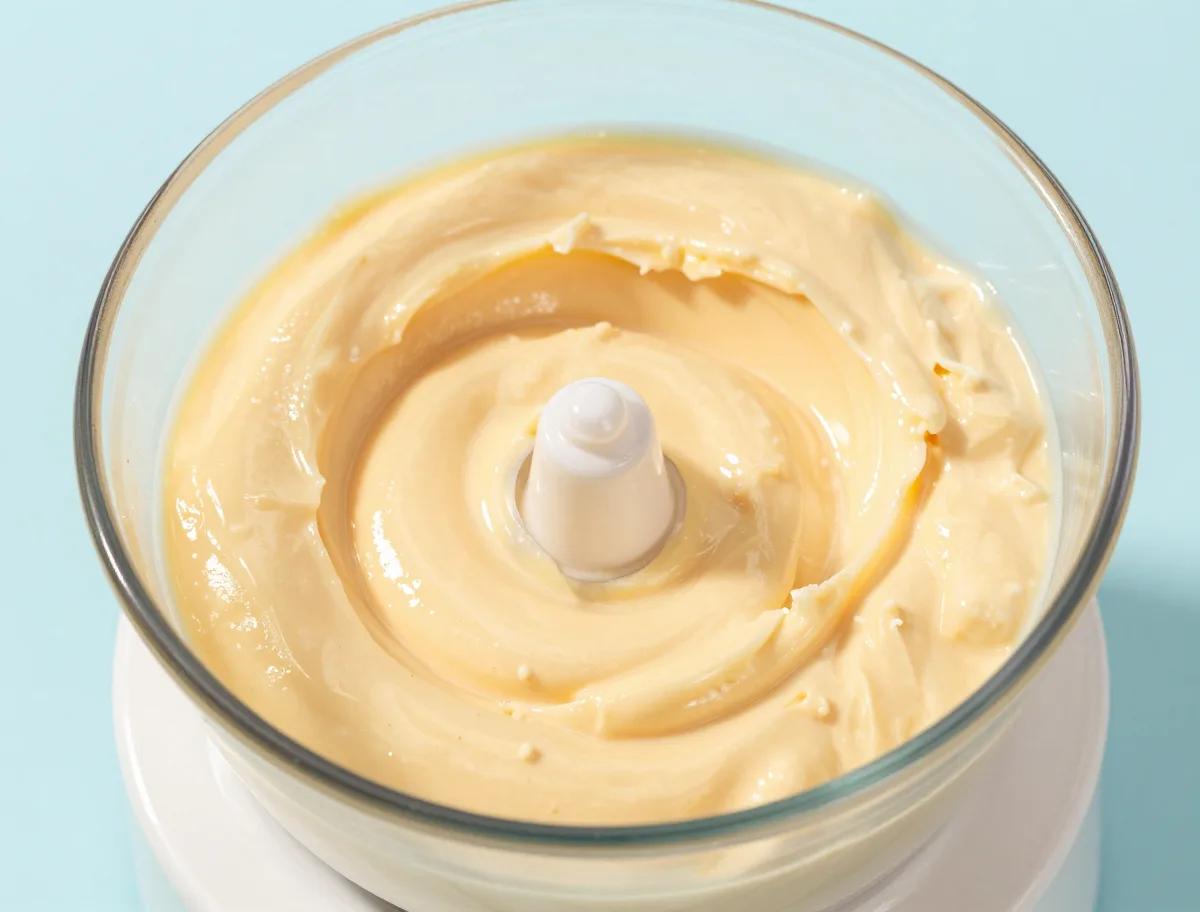
- 16 ounces cottage cheese, 2% or full-fat; drain any liquid pooled on the surface
- 1/2 cup plain Greek yogurt, unsweetened
- 1/2 cup buffalo wing sauce, use less for a milder dip
- 2 tablespoons ranch dressing
- 1 teaspoon garlic powder
- 1/2 teaspoon onion powder
- 1/4 teaspoon black pepper
- 3 cups cooked chicken, shredded into bite-size strands or finely chopped; excess moisture removed
- 1/2 cup shredded sharp cheddar cheese, divided
- 1/2 cup shredded Monterey Jack cheese, divided
- 2 tablespoons green onions, thinly sliced
- 1/4 cup blue cheese crumbles, for serving; optional
The Key Technique for a Smooth, Creamy Dip
Blend the cottage cheese mixture completely before adding the chicken. This order matters: the dairy base needs high-speed processing to become smooth, while the chicken should be folded in by hand so it remains recognizable rather than turning pasty.
- Drain only the liquid sitting on the cottage cheese; do not press it completely dry.
- Use a vessel that allows the blender blade to circulate. Scrape the sides and blend again if curds remain.
- A shallow baking dish heats the center more evenly and gives the cheese enough surface area to melt.
Instructions
- Prepare the oven and dish: Heat the oven to 375°F (190°C). Lightly coat an 8-inch square or similarly sized shallow oven-safe baking dish with cooking spray or a thin film of oil.
- Blend the cottage cheese base: Add the cottage cheese, Greek yogurt, buffalo sauce, ranch dressing, garlic powder, onion powder, and black pepper to a food processor or blender. Process for 60 to 90 seconds, scraping down the sides once, until glossy and completely smooth with no obvious curds.
- Fold in the chicken and cheese: Transfer the blended mixture to a bowl. Fold in the chicken and half of the cheddar and Monterey Jack, keeping the chicken strands intact. Taste the mixture before adding salt; the buffalo sauce, ranch dressing, and cheese may already provide enough seasoning.
- Fill and top the dish: Spread the mixture evenly in the prepared dish. Sprinkle the remaining cheddar and Monterey Jack over the surface.
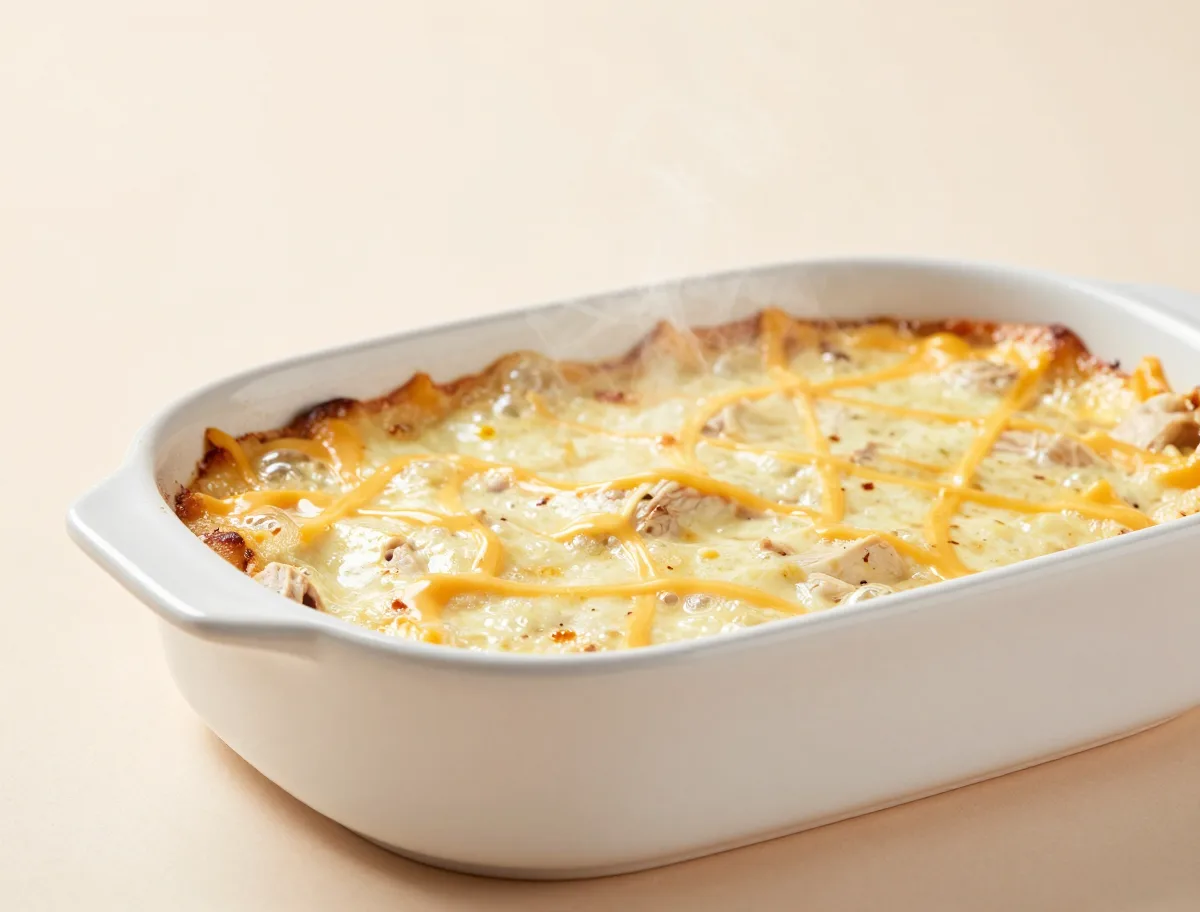
- Bake until bubbling: Bake uncovered for 20 to 25 minutes, until the cheese is fully melted and the dip is gently bubbling around the edges. Do not wait for vigorous boiling or deep browning across the entire surface.
- Rest and garnish: Let the dip rest for 5 minutes so it can thicken slightly. Scatter the green onions and, if using, blue cheese crumbles over the top. Serve warm.

How to Tell When the Dip Is Ready
Before baking, the sauce should look smooth and pourable but thick enough to coat a spoon. In the oven, look for melted cheese and gentle edge bubbling rather than a violently boiling center.
- The center should be hot and creamy, not watery or aggressively bubbling.
- The topping does not need to be deeply browned; prolonged baking can dry the chicken and release whey.
- Resting the dip briefly improves scoopability and keeps the first serving from seeming runny.
Doneness Cues
- The blended base is uniform and glossy, with no visible cottage-cheese curds.
- The cheese topping is fully melted.
- Small bubbles appear around the edges while the center remains creamy rather than boiling.
- After a five-minute rest, the dip clings to a sturdy chip but is still easy to scoop.
How to Keep the Dairy Base Creamy
Cottage cheese contains water and milk proteins, so both moisture balance and heat control affect the result. Blending distributes the curds and liquid into a uniform base, while moderate baking heats the dip without forcing the proteins to contract and release more whey.
- Buffalo sauce is both seasoning and liquid; increasing it can loosen the dip as well as increase heat and acidity.
- More heat is not a shortcut to better browning. Excessive oven time can cause watery separation or a greasy surface.
- Melting cheese provides structure, but too much cheese or very dry chicken can make the dip dense after cooling.
Excessive heat can cause milk-based mixtures to separate, so stop baking when the center is hot and the edges are gently bubbling. For additional food-science context, see this explanation of how excessive heat affects milk-based mixtures.
Common Buffalo Chicken Dip Problems and Fixes
Most texture problems come from skipping the blending step, starting with wet ingredients, or leaving the dip in a hot oven too long. Small adjustments are more effective than trying to correct the mixture with large amounts of dry ingredients.
- Visible curds: Blend the cottage cheese mixture longer and scrape the container. Baking will not reliably smooth large curds.
- Watery dip: Check for wet chicken or excess sauce. Stir in a little additional shredded cheese, then let the dip rest before making further changes.
- Greasy or split surface: The dip was likely overheated. Stir it gently while hot if the separation is minor, and stop baking as soon as the center is hot.
- Too thick or chalky: Lower-fat dairy, dry chicken, or overbaking may be responsible. Loosen gradually with a spoonful of Greek yogurt or buffalo sauce.
- Too spicy or salty: Fold in plain Greek yogurt a tablespoon at a time, tasting after each addition.
Useful Ingredient Substitutions
The recipe is adaptable, but substitutions change the balance of moisture, richness, and flavor. Keep the cottage cheese blended even when changing the other dairy components.
- Low-fat cottage cheese can be used, although the dip may be leaner and firmer. Fat-free cottage cheese is the least forgiving and may need extra Greek yogurt.
- A small amount of softened cream cheese can replace some of the Greek yogurt for a richer, more traditional texture; the result will no longer be cream-cheese-free.
- Sour cream can replace the Greek yogurt in equal volume, though it contributes less protein.
- Rotisserie, poached, roasted, or leftover baked chicken all work if fully cooked, shredded, and not wet.
- Replace some or all of the Monterey Jack with mozzarella for more stretch, or use all cheddar for a sharper flavor.
Ranch, Blue Cheese and Heat Variations
These variations keep the essential structure intact: buffalo-seasoned chicken in a creamy dairy base with melted cheese. Change one flavor direction at a time so the dip does not become overly salty or muddled.
- For a mild version, use a mild buffalo sauce and reduce the amount slightly, replacing the difference with Greek yogurt.
- For extra heat, use a hotter buffalo sauce or add a small amount more, but adjust gradually because brands differ widely.
- For a blue-cheese-forward version, omit the ranch dressing and use the blue cheese crumbles as a topping.
- For a ranch-forward version, keep the ranch dressing and skip the blue cheese.
- Finely chopped chicken creates a more uniform dip; larger shreds provide a more pronounced chicken texture.
What to Serve with Buffalo Chicken Dip
Serve the dip warm, after its short resting period, with dippers sturdy enough to carry a thick, cheesy scoop. Crisp vegetables provide welcome freshness against the spicy, rich filling.
- Classic pairings include celery sticks, carrot sticks, tortilla chips, sturdy crackers, and pretzels.
- For lower-carbohydrate options, use bell pepper strips, cucumber, cauliflower, or additional celery.
- Green onions add freshness, while blue cheese provides a sharper finish.
- For gluten-free service, choose certified gluten-free chips or crackers and verify the labels on packaged sauces and seasonings.
How to Make Ahead, Store and Reheat the Dip
For the best texture, assemble the dip up to 24 hours ahead, cover it, and refrigerate it until baking time. Because the mixture starts cold, expect the center to need additional time in the oven; use bubbling and temperature rather than the original timing alone.
- Refrigerate leftovers promptly in a shallow, covered container and use them within 3 to 4 days when held at 40°F or below.
- Reheat covered in a moderate oven or in short microwave intervals, stirring when practical, until the center reaches 165°F.
- Freezing is possible, but thawed dairy-based dips may become watery, greasy, or slightly grainy. Thaw overnight in the refrigerator and stir gently during reheating.
- If refrigerated dip tightens too much, loosen it with a small amount of Greek yogurt, milk, ranch dressing, or buffalo sauce, recognizing that each changes the flavor.
Cottage Cheese Buffalo Chicken Dip FAQ
These answers address the most common questions about smoothness, substitutions, heat level, and advance preparation.
Does cottage cheese need to be blended?
Blend it if you want a smooth dip without obvious curds. Process the cottage cheese with the other base ingredients until glossy and uniform before adding chicken.
Can cottage cheese completely replace cream cheese?
Yes. This recipe uses cottage cheese and Greek yogurt without cream cheese. The result is lighter and more tang-forward than an all-cream-cheese dip, while still becoming creamy when blended thoroughly.
Can I use rotisserie chicken?
Yes. Remove the skin and bones, shred or chop the meat, and drain excess juices before measuring. Because rotisserie chicken is often seasoned and salty, taste the assembled mixture before adding any extra seasoning.
How can I make the dip less spicy?
Use a mild buffalo sauce and begin with 1/3 cup. Replace the omitted sauce with Greek yogurt so the dip does not become too thick.
Should I use ranch or blue cheese?
Either works. Ranch gives a milder, creamy flavor, while blue cheese creates a sharper wing-style profile. Using both is possible, but add them sparingly because both can increase salt and intensity.
Can I assemble it the day before?
Yes. Cover and refrigerate the unbaked dip for up to about 24 hours, then bake until the center is hot and the edges are gently bubbling. A chilled dish will take longer than the stated bake time.
Food-Safety Notes for Chicken Dip
This dip contains cooked poultry and dairy, so temperature control matters before, during, and after serving. Begin with properly cooked chicken and clean utensils and surfaces that have not contacted raw poultry.
- Refrigerate the assembled or cooked dip within 2 hours, or within 1 hour when the surrounding temperature is above 90°F.
- Keep refrigerated food at 40°F or below.
- Reheat leftovers or chilled make-ahead dip to 165°F in the center, measured with a food thermometer.
- For a home party, keep the dip at 140°F or above during extended serving and replace small portions rather than repeatedly adding fresh dip to an old, lukewarm portion.
- Discard dip with an uncertain storage history; smell and appearance are not reliable safety tests.
For authoritative information about refrigeration, hot holding, and reheating leftovers, review the USDA safe cooking temperature guidance.
- For rotisserie chicken, remove the skin and bones, then shred the meat and drain any excess juices before measuring.
- For a milder dip, start with 1/3 cup buffalo sauce and replace the missing volume with additional Greek yogurt.
- A brief broil can brown the cheese, but watch closely because the topping can darken before the center is hot.
- Serve with celery, carrots, bell peppers, tortilla chips, sturdy crackers, pretzels, or toasted bread. Use certified gluten-free dippers and check packaged ingredient labels if needed.