Funeral Cake Recipe: Texas Chocolate Sheet Cake
This funeral cake recipe is a thin, moist Texas chocolate sheet cake covered with warm, fudgy chocolate icing and toasted pecans. It makes a generous, easy-to-share dessert for potlucks, church suppers, and community gatherings.
What Is Texas Funeral Cake?
In this context, funeral cake is the regional name most often used for a Texas-style chocolate sheet cake: a broad, relatively thin cocoa cake covered with warm boiled chocolate icing. The crumb should be tender and moist, with a soft, brownie-like richness rather than the dense chew of a brownie.
- A shallow pan creates the characteristic thin cake and large number of portions.
- Warm chocolate icing is the defining finish; buttercream is not a like-for-like substitute.
- Pecans are the traditional topping, although walnuts or no nuts are also established choices.
Why the Ingredients Matter
Natural cocoa supplies the cake’s chocolate flavor, while buttermilk contributes both moisture and the acidity needed to work with baking soda. Butter gives the cake and icing their characteristic richness, and eggs provide enough structure for a thin cake to hold together when cut into small squares.
- Buttermilk keeps the crumb tender and adds a mild cultured tang that balances the sugar.
- The hot butter-and-water mixture disperses cocoa evenly and helps create a fluid batter.
- Confectioners’ sugar dissolves into the warm icing more smoothly than granulated sugar.
- Pecans add toasted flavor and contrast to the soft cake and fudge-like topping.
Ingredients
- 2 1/2 cups all-purpose flour, spooned into cups and leveled
- 2 cups granulated sugar
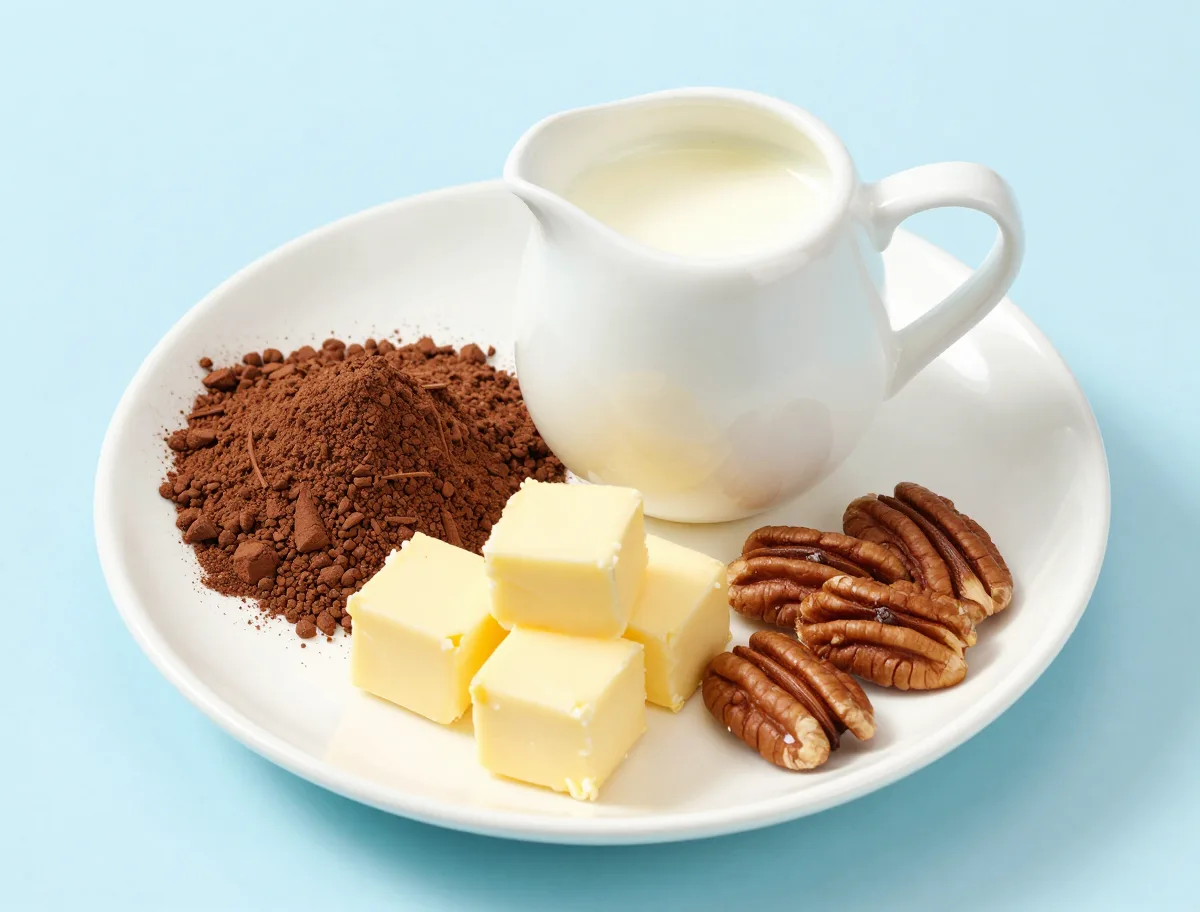
- 1/2 cup natural unsweetened cocoa powder, plus 2 tablespoons for the icing
- 1 1/2 teaspoons baking soda
- 1 teaspoon fine salt
- 1 cup unsalted butter, divided; 1 cup for the cake and 1/2 cup for the icing
- 1 cup water
- 2 large eggs, lightly beaten
- 1 cup cultured buttermilk, shaken well
- 2 teaspoons pure vanilla extract, divided; 1 teaspoon for the cake and 1 teaspoon for the icing
- 1/2 cup unsalted butter, for the icing
- 2 tablespoons natural unsweetened cocoa powder, for the icing
- 1/3 cup whole milk
- 3 cups confectioners’ sugar, sifted
- 1 cup pecans, finely chopped; toasted if desired (optional)
The Key Technique: Ice the Cake While It Is Hot
The success of this chocolate sheet cake depends less on elaborate decoration than on timing. Mix the batter only until combined, spread it evenly in the pan, and begin the icing while the cake is in its final minutes of baking. The icing must still be warm when it meets the hot cake.
- A level layer bakes evenly; thin corners or a thick center will finish at different times.
- Let the hot cocoa mixture stand briefly before adding eggs so the eggs do not begin to cook.
- Sift the confectioners’ sugar before making the icing and add it while the butter mixture is hot.
- Pour and spread immediately. Cooling narrows the icing’s workable window and can leave bare patches.
Instructions
- Prepare the pan and oven. Heat the oven to 350°F (175°C). Grease an 18-by-13-inch rimmed half-sheet pan, line the bottom with parchment, and lightly grease the parchment. Set the pan on a level surface; the shallow sides are important for the cake’s traditional thin profile.
- Combine the dry ingredients. In a large bowl, whisk the flour, granulated sugar, 1/2 cup cocoa powder, baking soda, and salt until evenly blended and no cocoa pockets remain.
- Make the hot cocoa mixture. In a saucepan over medium heat, bring 1 cup butter and the water just to a boil, stirring until the butter melts. Remove from the heat and let it stand for 3 minutes so it is still hot but no longer aggressively bubbling.
- Finish the batter. Pour the warm butter mixture over the dry ingredients and whisk just until smooth. Add the beaten eggs, buttermilk, and 1 teaspoon vanilla; whisk only until the batter is uniform. Pour it into the prepared pan and spread it into an even layer, especially at the corners.
- Bake until just set. Bake for 18 to 22 minutes, rotating the pan once if your oven browns unevenly. Begin checking at 18 minutes. The cake is ready when the center springs back lightly, the edges just begin to pull from the pan, and a toothpick inserted in the center comes out with a few moist crumbs but no wet batter.
- Start the icing near the end of baking. When the cake has about 5 minutes remaining, melt the 1/2 cup butter, milk, and 2 tablespoons cocoa in a medium saucepan over medium heat. Bring the mixture to a full simmer, stirring constantly, then remove it from the heat.
- Make the warm chocolate icing. Immediately whisk the sifted confectioners’ sugar into the hot cocoa mixture in several additions. Stir in the remaining 1 teaspoon vanilla. The icing should be glossy, smooth, and loose enough to pour. If it seems too thick, whisk in 1 teaspoon milk at a time; do not let it cool before using.
- Ice the hot cake. Set the pan on a heatproof surface as soon as the cake comes from the oven. Pour the warm icing over the cake and spread it quickly with an offset spatula. Scatter the chopped pecans over the surface while the icing is still fluid.
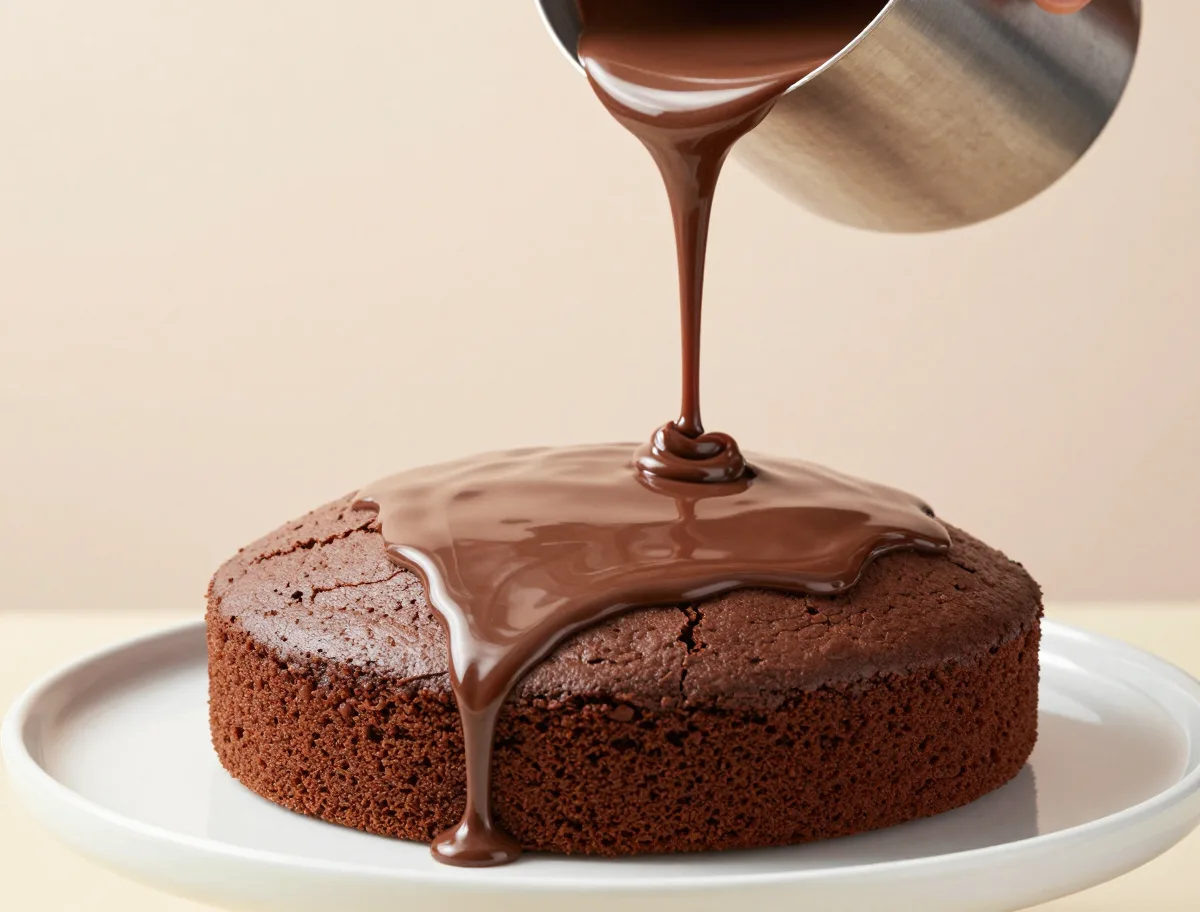
- Let the topping set. Leave the cake in the pan at room temperature for at least 30 minutes, until the icing loses its gloss and feels softly firm. Cut into 32 small squares with a thin knife, wiping the blade between cuts for the cleanest portions.
How to Tell When the Cake and Icing Are Ready
Because this is a shallow cake, the final few minutes matter. Use the timer as a guide, but rely on the center and the tester rather than waiting for a deeply browned surface. The icing will look glossy at first and then settle into a softer, matte fudge-like layer.
- The center should have a slight spring rather than a liquid wobble.
- A toothpick should carry moist crumbs; perfectly dry crumbs usually mean the cake has gone too far.
- The icing should flow from the whisk and level itself when poured.
- Allow at least 30 minutes of setting time for cleaner cuts, although the cake may be served warm.
Recipe Doneness Cues
- The center should spring back lightly when pressed.
- A tester should show a few moist crumbs, not liquid batter.
- The cake should remain soft and moist; a completely dry tester or hard, deeply browned edges indicates overbaking.
- The finished icing should be smooth and pourable while warm, then become softly fudgy as it cools.
The Variables That Control the Result
Pan area and icing concentration are the two decisions that most affect this recipe. A large shallow pan spreads the batter into the traditional thin layer and shortens the bake. In the icing, simmering the butter, milk, and cocoa briefly removes some water so the sugar can cool into a soft, sliceable coating.
- A smaller pan makes the cake deeper, so the edges may dry before the center is baked.
- Buttermilk’s acidity supports the baking soda; changing both the dairy and cocoa process can alter the rise.
- Overboiling the icing can make it seize or set too firmly, while insufficient heating may leave it loose.
- The warm topping lightly melds with the hot cake, which is why icing after complete cooling gives a different result.
Common Funeral Cake Problems and Fixes
Most failures with this cake come from pan geometry, overbaking, or icing at the wrong temperature. The shallow batter has little moisture margin, and the topping changes consistency quickly as it cools.
- Dry cake: Check early, measure flour accurately, and remove the cake as soon as the center is lightly springy. A small or dark pan can also shorten the useful baking window.
- Raw center with firm edges: The batter was too deep or uneven. Spread it carefully, or use the specified half-sheet pan rather than a smaller vessel.
- Lumpy icing: Sift the confectioners’ sugar and whisk it into the hot butter mixture gradually. If necessary, pass the warm icing through a fine sieve before pouring.
- Icing too thick: Rewarm it gently and whisk in milk a teaspoon at a time. Pour immediately once it flows.
- Icing too runny: Return it to low heat for a short simmer, stirring constantly, then remove it and reassess. Avoid prolonged boiling, which can make it grainy.
- Curdled batter: The cocoa mixture was too hot when the eggs were added. Let it cool briefly and whisk the eggs in gradually next time.
Buttermilk, Nut and Cocoa Substitutions
The recipe has room for practical substitutions, but the replacement should preserve both acidity and moisture. A simple flavor swap is not always structurally neutral, especially in a soda-leavened cake.
- Kefir can replace buttermilk in equal volume.
- Plain yogurt may be thinned with a little milk until it pours like buttermilk; it will make a somewhat richer batter.
- For an emergency substitute, stir 2 teaspoons lemon juice or vinegar into 1 cup milk and let it stand for 5 minutes. The flavor and body will be lighter than true buttermilk.
- Sour cream can be used as a richer variation, but thin it with milk or water to a buttermilk-like consistency; expect a slightly denser crumb.
- Replace pecans with walnuts, or omit the nuts entirely for a nut-free topping.
- Do not casually replace natural cocoa with Dutch-process cocoa without adjusting the leavening.
Traditional Variations That Still Keep Its Identity
Family versions differ in dairy, fat, pan dimensions, and the choice of nut, but the cake remains recognizably Texas funeral cake when it keeps its thin chocolate sheet-cake base and warm chocolate icing.
- Pecans are the classic finish; walnuts and no nuts are conventional alternatives.
- A 15-by-10-inch jelly-roll pan also works, though the cake will be a little thicker and may need a slightly longer bake.
- A 9-by-13-inch pan is practical for a smaller kitchen but produces a thicker, more cake-like result.
- A small amount of cinnamon is found in some regional formulas, but it is optional rather than essential.
- Layer cakes, cream-cheese frosting, whipped toppings, and thick brownie-style versions move away from the central format.
Serving Texas Sheet Cake for a Crowd
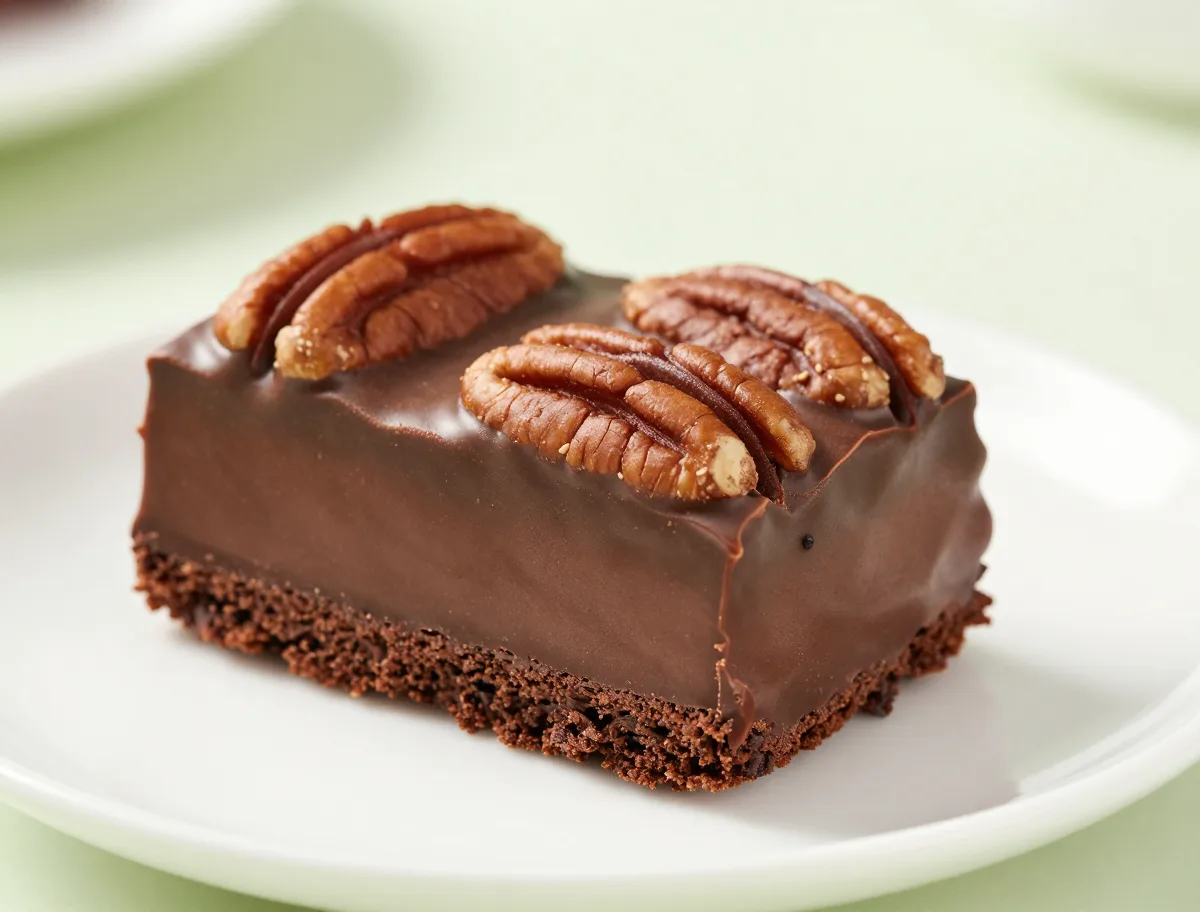
Let the icing set before transporting the cake, then serve it directly from the pan. Thirty-two small squares suit a buffet or communal meal; larger pieces are possible, but the cake’s appeal is its generous yield and easy portioning.
- Room temperature gives the best balance of tender crumb and cleanly set icing.
- For a softer, warmer dessert, serve individual pieces slightly warm with vanilla ice cream.
- Use a warmed, dry knife if the topping resists cutting.
- Keep the cake in its pan for transport and cover it only after the icing has fully set.
How to Store, Freeze and Make Funeral Cake Ahead
This cake is well suited to advance preparation. Bake and ice it the day before, allow it to cool completely, and cover it tightly. Quality and food safety depend on the room conditions and the exact icing, so use refrigeration when the room is warm or the topping contains more perishable additions.
- In a cool, dry room, the classic cake is generally at its best for 2 to 3 days when tightly covered.
- Refrigerate it for longer holding or warm conditions, then bring it toward room temperature before serving so the butter-based crumb softens.
- Freeze the fully set cake or individual squares, wrapped airtight in plastic and foil. Thaw covered in the refrigerator, then bring to room temperature.
- Warm individual portions gently if desired; avoid repeatedly reheating the whole cake, which can melt the icing and dry the crumb.
Texas Funeral Cake FAQ
These answers cover the practical questions that most often arise when choosing the pan, timing the icing, and preparing the cake for a gathering.
Is funeral cake the same as Texas sheet cake?
Usually, yes. In this usage, funeral cake is a regional or social name for the same broad style of thin chocolate sheet cake covered with warm boiled chocolate icing. Individual family recipes vary.
Why is it called funeral cake?
The name reflects its usefulness at bereavement meals and other community gatherings: it is economical, quick to make, easy to transport, and simple to divide among many people. It is not a separate funeral-only baking method.
What pan makes the classic thin cake?
An 18-by-13-inch rimmed half-sheet pan gives the thinnest, most crowd-friendly result. A 15-by-10-inch jelly-roll pan also works. A 9-by-13-inch pan makes a thicker cake and requires a longer bake.
Should the cake be iced hot, warm, or cooled?
Pour the icing over the cake while the cake is hot and the icing is still warm and fluid. This lets the topping settle into the surface and set as a cohesive fudgy layer.
How do I keep the icing smooth and pourable?
Sift the confectioners’ sugar, add it while the butter mixture is hot, and whisk thoroughly. Make the icing near the end of baking. If it thickens prematurely, gently rewarm it with a teaspoon of milk at a time.
Can I leave out the pecans?
Yes. Pecans are traditional but not essential to the cake’s identity. Omit them for a nut-free version or substitute walnuts for a similar texture.
Can I use sour cream instead of buttermilk?
Yes, as a recognized variation. Thin the sour cream to a pourable consistency with milk or water. The cake will generally be richer and slightly denser than the buttermilk version.
How many servings does one cake make?
An 18-by-13-inch cake yields about 32 small squares, or roughly 24 to 36 portions depending on how generously it is cut.
Can I make it the day before?
Yes. Bake and ice it the day before, cool it completely, and cover it tightly. Serve at room temperature in a cool environment, or refrigerate it when conditions are warm or uncertain.
The Tradition Behind Funeral Cake
The cake’s exact inventor and naming date are not firmly established. Historical research has found related large, shallow chocolate cakes in Texas newspaper evidence from the 1930s and in later Southern cookbooks, suggesting a regional family of recipes rather than one provable original formula.
- The terms sheet cake, sheath cake, and chocolate sheet brownie appear in older related recipes.
- Its association with Texas comes from regional adoption and the familiar combination of cocoa, buttermilk, pecans, and a large baking pan.
- Funeral meals, church suppers, and potlucks favored the cake because it travels well and serves many people.
- Stories crediting a single famous inventor, including Lady Bird Johnson, are not established by the strongest historical evidence.
For historical context on related names, early newspaper and cookbook evidence, and the unresolved origin of Texas-style sheet cake, see The Great Sheet Cake Mystery from the Library of Congress.