Cheddar Bay Chicken Pot Pie Recipe with Biscuit Topping
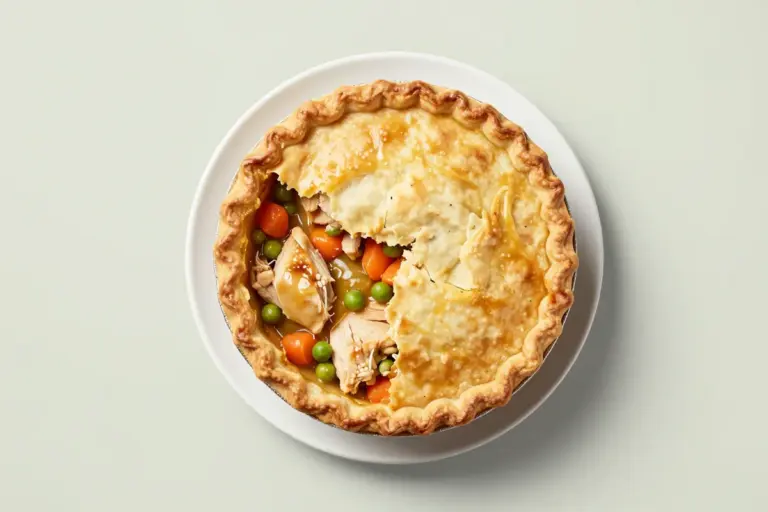
This cheddar bay chicken pot pie recipe combines a creamy chicken-and-vegetable filling with golden, cheesy garlic-butter biscuits in an easy 9-by-13-inch casserole.
What Makes This Cheddar Bay Chicken Pot Pie Different
This is a biscuit-topped chicken pot pie casserole, not a traditional pastry-crust pie. The filling is a thick, spoonable gravy with tender chicken and distinct vegetables, while the topping is made from cheddar biscuit dough and finished with garlic-herb butter.
- Use a hot, fully thickened filling before adding the biscuit dough.
- Keep the biscuit portions separate rather than spreading the dough into one solid blanket.
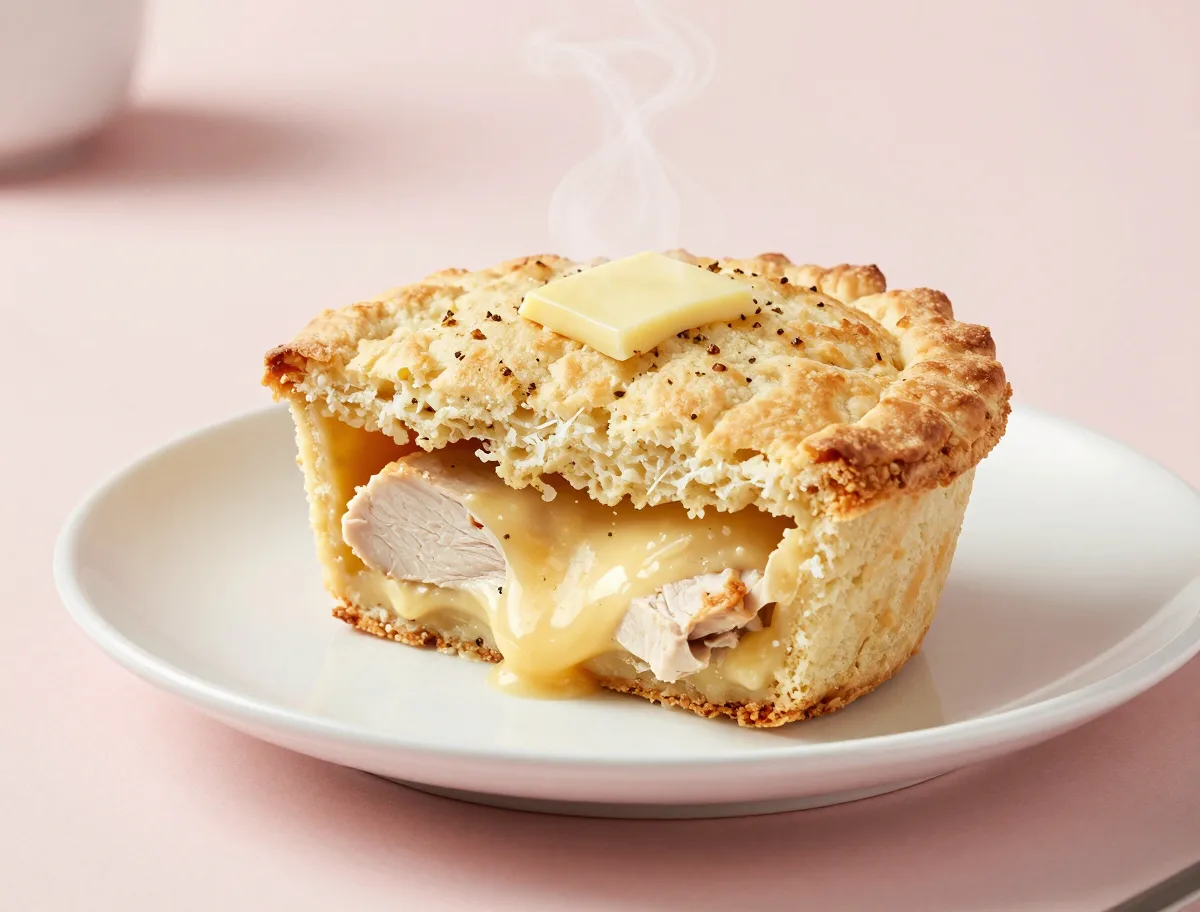
- The finished casserole should be creamy and cohesive, with a fluffy biscuit interior and bubbling edges.
Why the Key Ingredients Work
The filling balances richness, structure, and convenience. Flour cooked in butter gives the broth and milk enough body to support the topping, while condensed soup adds concentrated savory flavor and a stable creamy texture. Cooked chicken and drained vegetables can then be folded in without prolonged simmering.
- Sharp cheddar gives the biscuits enough flavor to stand up to the creamy filling.
- Frozen vegetables are convenient, but draining their thawed liquid prevents unnecessary dilution.
- Cold water hydrates the biscuit mix while helping the dough retain lift when it enters the hot oven.
- The garlic-herb butter is added after baking so its aroma remains pronounced on the biscuit surface.
For product-specific cheddar biscuit preparation and garlic-herb butter finishing details, see the official Cheddar Bay Biscuit Mix product information.
Ingredients
- 4 tablespoons unsalted butter, divided
- 1 small yellow onion, finely diced
- 1/4 cup all-purpose flour
- 2 cups low-sodium chicken broth
- 1 cup whole milk
- 1 can (10.5 ounces) condensed cream of chicken soup
- 1/2 teaspoon poultry seasoning
- 1/4 teaspoon black pepper
- 3 cups cooked chicken, shredded or cut into bite-size pieces
- 3 cups frozen mixed vegetables, thawed and thoroughly drained
- 1 package (about 11.36 ounces) Cheddar Bay biscuit mix
- 2/3 cup cold water
- 1 cup sharp cheddar cheese, shredded
- 3 tablespoons unsalted butter, melted
- 1 seasoning packet garlic-herb seasoning, from the biscuit mix package
How to Make the Biscuit-Topped Chicken Pot Pie
The most important sequence is to thicken the filling on the stovetop, add the cooked ingredients late, and mix the biscuits just before baking. A hot base shortens the oven time and makes it easier for the biscuit centers to cook before their tops become too dark.
- Whisk the broth and milk into the roux gradually to avoid lumps.
- Simmer the sauce until it coats a spoon; a merely warm or thin sauce will remain loose in the casserole.
- Portion the dough with a spoon or scoop so the drops are similar in size.
- Leave gaps between the drops for heat circulation and visible bubbling.
Instructions
- Heat the oven and prepare the dish: Heat the oven to 425°F (220°C). Lightly grease a 9-by-13-inch baking dish and place it on a rimmed sheet pan to catch any bubbling filling.
- Make the creamy filling: Melt 4 tablespoons of the butter in a large saucepan or Dutch oven over medium heat. Add the onion and cook until softened, about 4 minutes. Stir in the flour and cook for 1 minute. Gradually whisk in the chicken broth, then the milk, until smooth. Whisk in the condensed cream of chicken soup, poultry seasoning, and black pepper. Bring to a gentle simmer and cook, whisking often, until the sauce is thick enough to coat a spoon, 4 to 6 minutes.
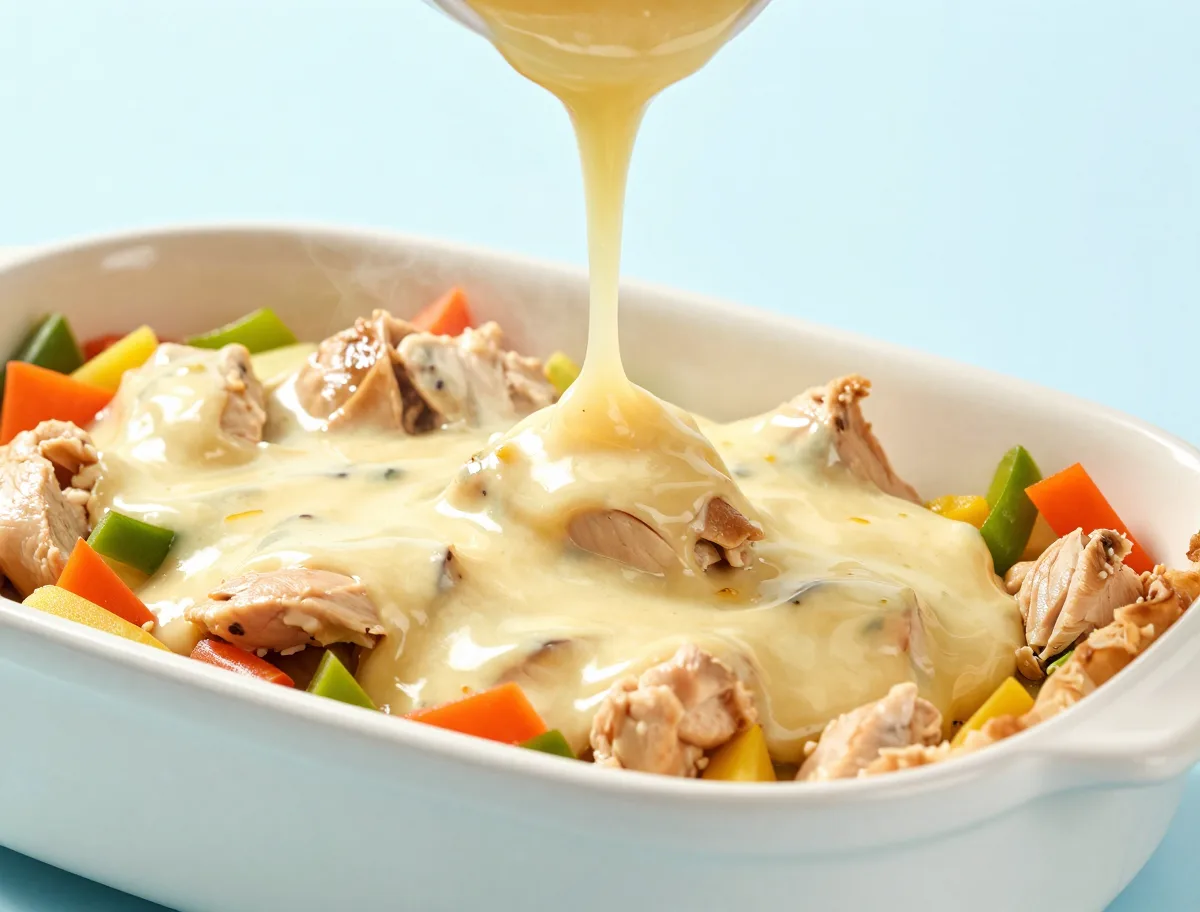
- Add the chicken and vegetables: Fold the cooked chicken and drained vegetables into the hot sauce. Taste and adjust only if needed; the soup, broth, biscuit mix, cheese, and seasoning packet may already provide ample salt. Transfer the filling to the prepared baking dish and spread it into an even, shallow layer.
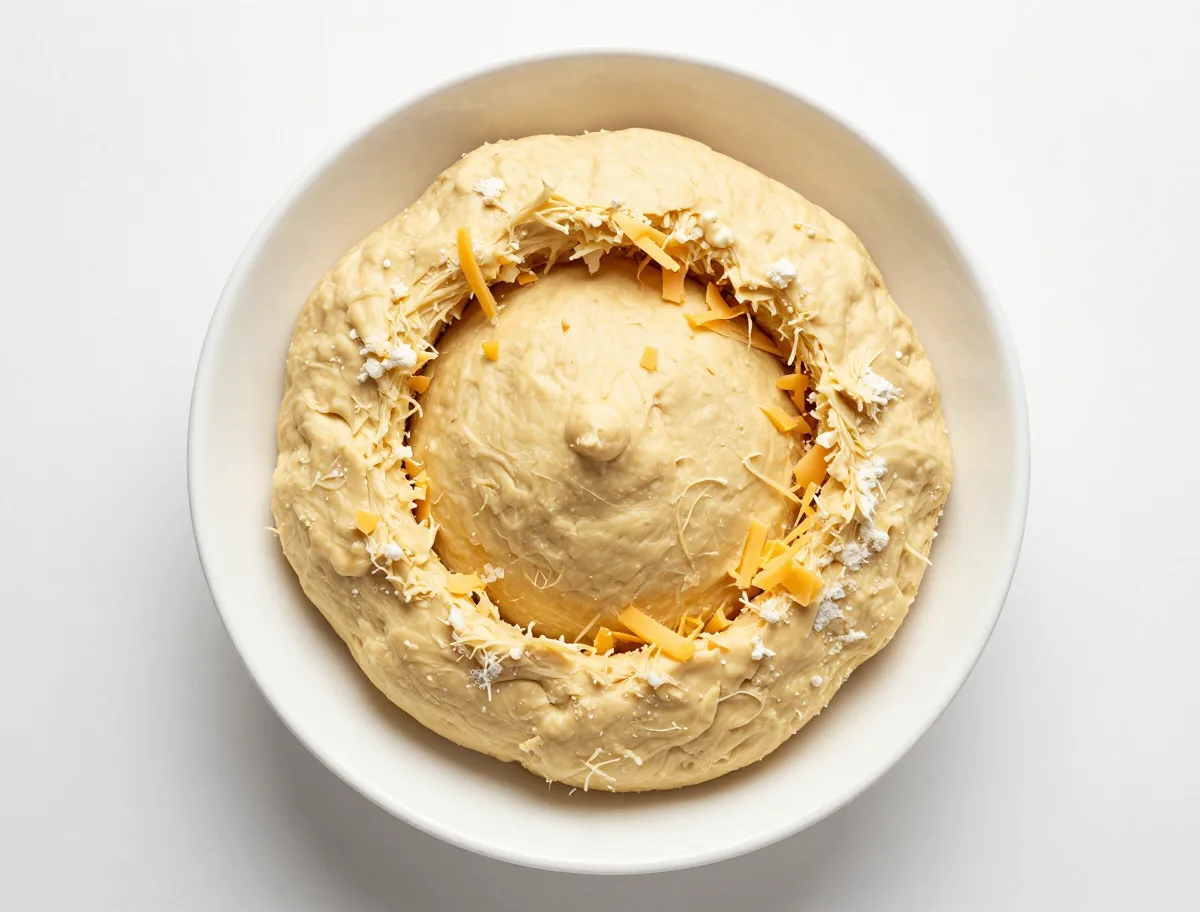
- Mix the biscuit topping: In a medium bowl, stir the biscuit mix, cold water, and shredded cheddar just until no dry pockets remain. The dough should be soft and slightly shaggy; do not overmix.
- Top the casserole: Immediately drop the biscuit dough over the hot filling in 12 to 14 portions, using a spoon or scoop. Leave small gaps between portions so steam can escape and the biscuits can cook around their sides. Avoid making any drop much thicker than the others.
- Bake until golden and cooked through: Bake for 20 to 25 minutes, until the filling is bubbling in the open spaces and the biscuits are puffed and golden. Check the thickest center biscuit by splitting it or inserting a toothpick; it should be fluffy with no wet dough. If the tops brown before the centers are done, loosely tent the dish with foil and bake for 5 to 8 minutes longer.
- Brush with garlic butter and rest: Stir the melted 3 tablespoons butter with the garlic-herb seasoning packet. Brush the mixture over the hot biscuits. Let the casserole rest for 10 minutes before serving so the sauce settles and thickens slightly.
How to Tell When the Casserole Is Done
A golden surface alone is not enough to judge this chicken pot pie. Moisture from the filling can leave the center of a biscuit undercooked even when the exposed top looks finished, so check both components.
- Look for active bubbling around the edges and between the biscuit portions.
- Press a biscuit lightly; it should feel set and spring back rather than feel soft and doughy.
- Split the thickest biscuit, preferably near the center of the dish, to confirm there is no wet dough.
- Rest the casserole for 10 minutes after baking. The gravy will settle, but resting should not be used to finish raw biscuits.
Additional Doneness Cues
- The filling should bubble around the biscuit drops and in the exposed spaces.
- Biscuits should be risen, golden on top, and firm at the edges.
- The thickest center biscuit must be dry and fluffy inside, not gummy or wet.
- After resting, the filling should be spoonable and creamy rather than runny.
- For reheated leftovers, the center should reach 165°F (74°C).
The Cooking Variables That Matter Most
This casserole succeeds when moisture and heat are controlled together. A shallow 9-by-13-inch dish exposes more topping to oven heat than a deep dish, while a preheated filling reduces the time the biscuits spend browning before the center becomes cooked.
- Cook the flour briefly in butter before adding liquid so it disperses smoothly and loses its raw flavor.
- Allow the sauce to reach a gentle simmer; starch needs heat to develop its thickening power.
- Drain thawed vegetables because melting ice becomes free water in the gravy.
- Avoid oversized biscuit drops. Thick, wet dough is the most likely place for a gummy center.
- If browning outpaces cooking, foil tenting is a better correction than increasing the oven temperature.
Common Chicken Pot Pie Casserole Problems
Most failures come from excess moisture or uneven heat rather than from a lack of baking time. Correct the cause before extending the bake, since simply baking a thin casserole longer can dry the chicken while the biscuits overbrown.
- Watery filling: Drain the vegetables, use the listed liquid amounts, and simmer the sauce until it coats a spoon before assembly. If the filling is already in the dish and still loose, longer baking may help only modestly.
- Raw biscuit centers: Use smaller, evenly sized drops and start with hot filling. Cover browned tops loosely with foil and continue baking until the center is dry.
- Dry chicken: Use medium-size pieces and fold cooked chicken in after the sauce thickens instead of boiling it throughout the filling.
- Pale biscuits: Confirm that the oven is fully preheated and that the dish is not excessively deep. Continue baking until the filling bubbles, rather than judging by color alone.
- Overly salty filling: Wait to add salt until after tasting the sauce with the soup, broth, cheese, and seasoned biscuit topping.
Useful Ingredient Substitutions
The recipe is flexible as long as the substitutions preserve a cooked poultry filling, a thick savory sauce, and a cheddar-garlic biscuit topping. Changes in moisture and seasoning may require small adjustments.
- Rotisserie or leftover turkey can replace the chicken in the same volume. Remove excess skin and account for its seasoning.
- Chicken thighs are more forgiving than breast meat; if using breast meat, keep the pieces fairly large and avoid simmering them.
- Peas and carrots, corn, or a combination of fresh and frozen vegetables can replace the mixed vegetables. Drain canned vegetables well.
- A similar cheddar biscuit mix may replace the packaged mix, but follow that product’s hydration directions because mixes do not absorb liquid identically.
- For homemade biscuits, use a tested cheddar drop-biscuit formula and retain the garlic-herb butter finish.
- Gluten-free and dairy-free versions require compatible biscuit mix, soup, broth, butter, milk, and cheese products. Ordinary gluten-free flour or plant milk is not automatically a one-to-one replacement.
Ways to Vary the Casserole Without Losing Its Identity
Controlled variations can make the recipe suit what is in the refrigerator while keeping its defining character: creamy chicken pot pie under a cheddar-and-garlic drop-biscuit topping.
- Use all peas and carrots for a classic profile, or choose a drained mixed vegetable blend for more color.
- Replace some of the chicken with cooked turkey while keeping the total amount of poultry consistent.
- For a skillet version, use a broad oven-safe skillet with enough surface area for separated biscuit drops; a deep, crowded skillet is less reliable.
- A homemade cheddar drop biscuit remains an appropriate variation, but a pastry crust or separately baked biscuits creates a different preparation.
- When scaling down, use a proportionally shallower baking dish and smaller biscuit portions rather than placing a reduced amount in a deep vessel.
How to Store, Freeze and Reheat Chicken Pot Pie
The biscuit topping has its best texture on the day it is baked. As it sits, it absorbs moisture from the filling, so make-ahead preparation is most successful when the filling and biscuit dough are kept separate until baking.
- Make ahead: Prepare and chill the filling separately for up to 24 hours. Reheat it until hot, mix fresh biscuit dough, then top and bake.
- Refrigerate leftovers: Store them in shallow, covered containers within two hours. Use them within 3 to 4 days when kept at 40°F (4°C) or below.
- Reheat: Reheat individual portions in the oven or toaster oven when possible to improve the biscuit texture. Cover loosely if the top browns too quickly.
- Reheat leftovers until the center reaches 165°F (74°C).
- Freezing is possible, but the cream sauce may separate and the biscuit topping will soften. For better quality, freeze the filling separately and add freshly mixed biscuits when baking.
Cheddar Bay Chicken Pot Pie FAQ
These answers address the practical details that most affect the texture and reliability of this chicken pot pie with biscuit topping.
Can I use rotisserie chicken?
Yes. Use about 3 cups of bite-size shredded or diced rotisserie chicken. Remove excess skin and taste the filling before adding salt because rotisserie chicken can be well seasoned.
Do frozen vegetables need to be thawed?
For the most dependable result, thaw and drain them first. Adding them frozen is possible, but they release more water and may require a longer bake and a thicker starting sauce.
Why does the filling need to be hot before the biscuits go on?
A hot, thickened filling begins heating the dough immediately. This reduces the chance that the biscuit tops will brown before the centers cook through.
Can I use a different biscuit mix?
Yes, but use the replacement mix’s own water or milk guidance. Biscuit mixes vary in hydration, salt, and leavening, so adding the same amount of liquid by assumption can produce a wet topping.
How do I know the biscuits are cooked in the middle?
Check the thickest biscuit near the center of the dish. Split it or use a toothpick; the interior should be fluffy and free of wet dough. If the top is already dark, tent the casserole with foil and keep baking.
Can I bake this in cast iron?
Yes, if the skillet is broad enough to hold a shallow filling and separated biscuit drops. Cast iron can brown more aggressively, so begin checking early and use foil if needed.
Can I assemble the entire casserole ahead of time and refrigerate it?
It is better to refrigerate the filling separately and add freshly mixed biscuit dough shortly before baking. A fully assembled cold casserole takes longer to heat and can produce a softer or undercooked topping.
Food Safety for Chicken Pot Pie Casserole
Because this dish contains cooked poultry, dairy, and a moist sauce, safe handling depends on time and temperature as well as appearance. A browned biscuit top does not confirm that the center is hot enough.
- Use cooked chicken that has been refrigerated promptly and kept at 40°F (4°C) or below.
- Refrigerate the casserole or leftovers within 2 hours of cooking, or within 1 hour if the room temperature is above 90°F (32°C).
- Keep leftovers refrigerated for 3 to 4 days and reheat the center to 165°F (74°C).
- Use a thermometer to check the coolest, thickest area after refrigeration or freezing.
- Check package labels for wheat, milk, soy, and other allergens in the biscuit mix, soup, broth, butter, and cheese.
For additional storage and reheating details, follow USDA leftovers and food safety guidance.