Chicken Broccoli Mayonnaise Casserole Recipe
This chicken broccoli mayonnaise recipe makes a hot, creamy baked casserole with tender cooked chicken, crisp-tender broccoli, cheddar cheese, and a golden Parmesan-panko topping.
What to Expect from This Chicken Broccoli Mayonnaise Casserole
This is a hot, creamy baked casserole—not a chilled chicken-broccoli salad. Cooked chicken and broccoli are coated in a tangy mayonnaise-based sauce, covered with cheese and buttery crumbs, then baked until bubbling and golden.
- The finished casserole should be creamy and cohesive rather than soupy.
- Broccoli should remain recognizable and tender, not collapse into the sauce.
- A short rest after baking helps the filling hold together when served.
Why the Key Ingredients Work
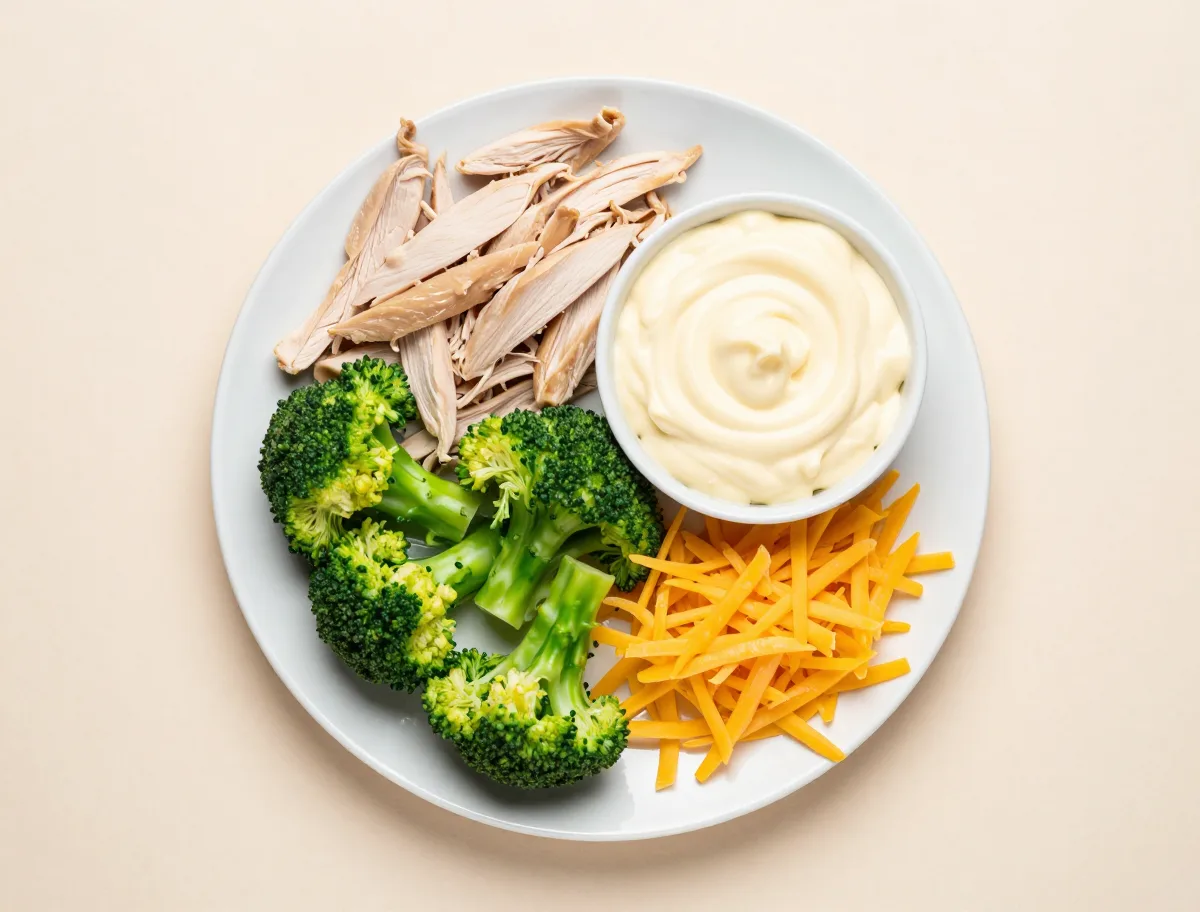
The recipe relies on balance rather than mayonnaise alone. Cooked chicken provides a quick, dependable protein base, while the broccoli adds color and structure. Condensed soup supplies body, sour cream adds tang, and mayonnaise contributes richness and a smooth mouthfeel.
- Full-fat mayonnaise gives the sauce its characteristic richness and generally provides better body than very low-fat versions.
- Condensed soup acts as a thick, seasoned binder so the sauce remains spoonable after baking.
- Cheddar melts into the filling and adds savory flavor; Parmesan and panko create a more flavorful, crisp surface.
- Briefly cooking fresh broccoli and drying it well controls moisture before it enters the casserole.
- 3 cups cooked chicken, shredded or cut into bite-size pieces
- 1 1/2 pounds broccoli florets, cut into medium, evenly sized florets
- 3/4 cup mayonnaise
- 1 10.5-ounce can condensed cream of chicken soup, undiluted
- 1/2 cup sour cream
- 1 tablespoon lemon juice
- 1 teaspoon garlic powder
- 1 teaspoon onion powder
- 1/2 teaspoon black pepper
- 1/2 teaspoon paprika
- 1 1/2 cups sharp cheddar cheese, shredded and divided
- 1/4 cup Parmesan cheese, finely grated
- 3/4 cup panko breadcrumbs
- 2 tablespoons unsalted butter, melted
- Cooking spray, as needed for the baking dish
How to Make the Casserole Successfully
The most important preparation choice is to control moisture before assembly. Blanch fresh broccoli only until barely tender, drain it thoroughly, and mix the sauce separately so the mayonnaise and other creamy ingredients are evenly dispersed.
- Use a shallow 9-by-13-inch dish and spread the filling evenly; a deep, tightly packed casserole heats less predictably.
- Fold the chicken and broccoli into the sauce gently to preserve the broccoli’s shape.
- Add the crumb topping immediately before baking so it does not absorb moisture and turn soft.
- Because the filling is already cooked, bake only until it is hot throughout and the topping is browned.
- Heat the oven and prepare the dish: Heat the oven to 375°F (190°C). Lightly coat a 9-by-13-inch baking dish with cooking spray.
- Par-cook the broccoli: Bring a large saucepan of water to a boil. Add the broccoli and cook for 2 minutes, just until it turns bright green and is barely tender. Drain thoroughly, let it steam-dry for a few minutes, and gently pat away excess moisture.
- Make the mayonnaise sauce: In a large bowl, whisk together the mayonnaise, condensed soup, sour cream, lemon juice, garlic powder, onion powder, black pepper, and paprika until smooth and evenly combined.
- Combine the filling: Fold the cooked chicken, drained broccoli, and 1 cup of the cheddar into the sauce. Transfer the mixture to the prepared baking dish and spread it into an even layer.
- Add the topping: Scatter the remaining 1/2 cup cheddar over the casserole. Stir the panko, Parmesan, and melted butter together, then distribute the mixture evenly over the cheese.
- Bake until hot and golden: Bake uncovered for 25 to 30 minutes, until the edges are bubbling, the topping is golden, and the center reaches 165°F (74°C). If the topping browns before the center is hot, loosely cover the dish with foil and continue baking.
- Rest and serve: Let the casserole rest for 10 minutes before serving. This allows the creamy sauce to settle so portions are scoopable rather than loose.
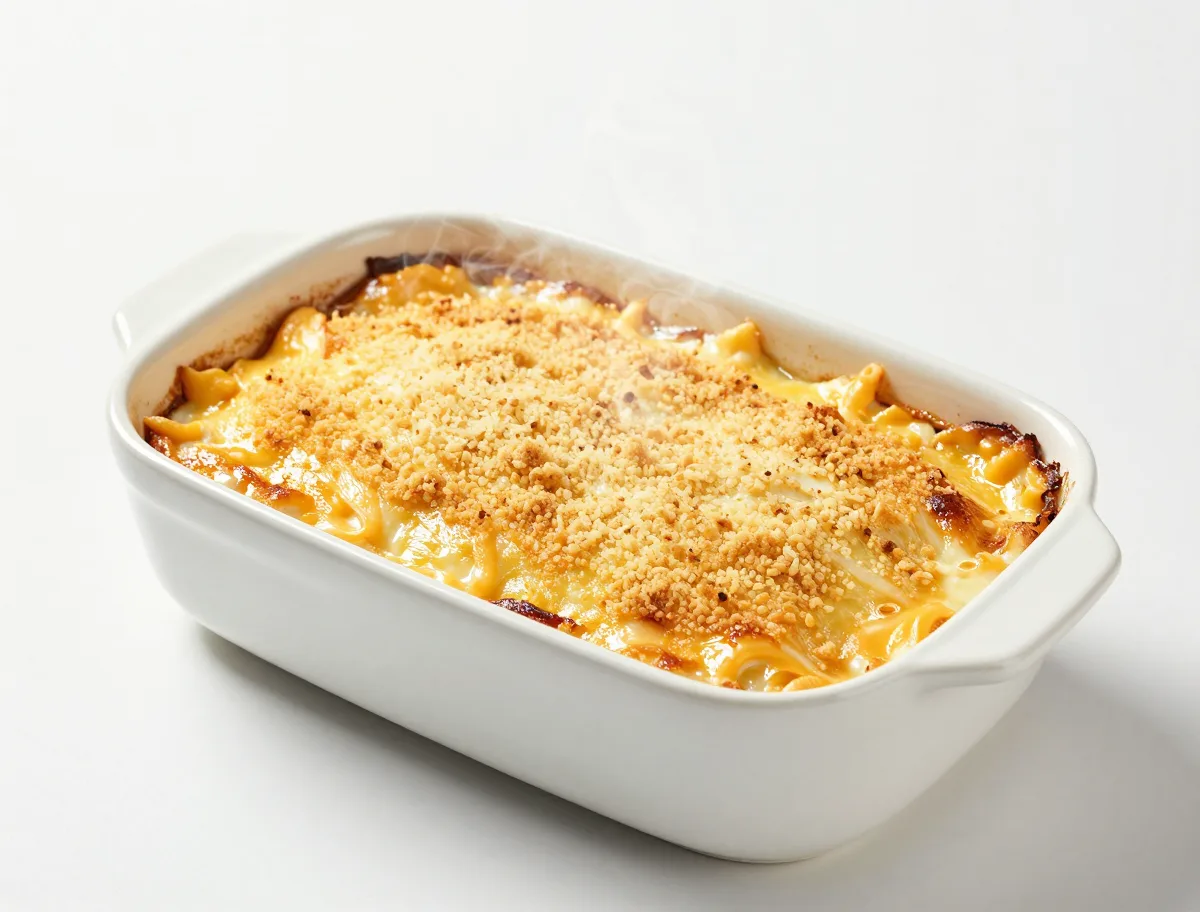
How to Tell When the Chicken Broccoli Bake Is Done
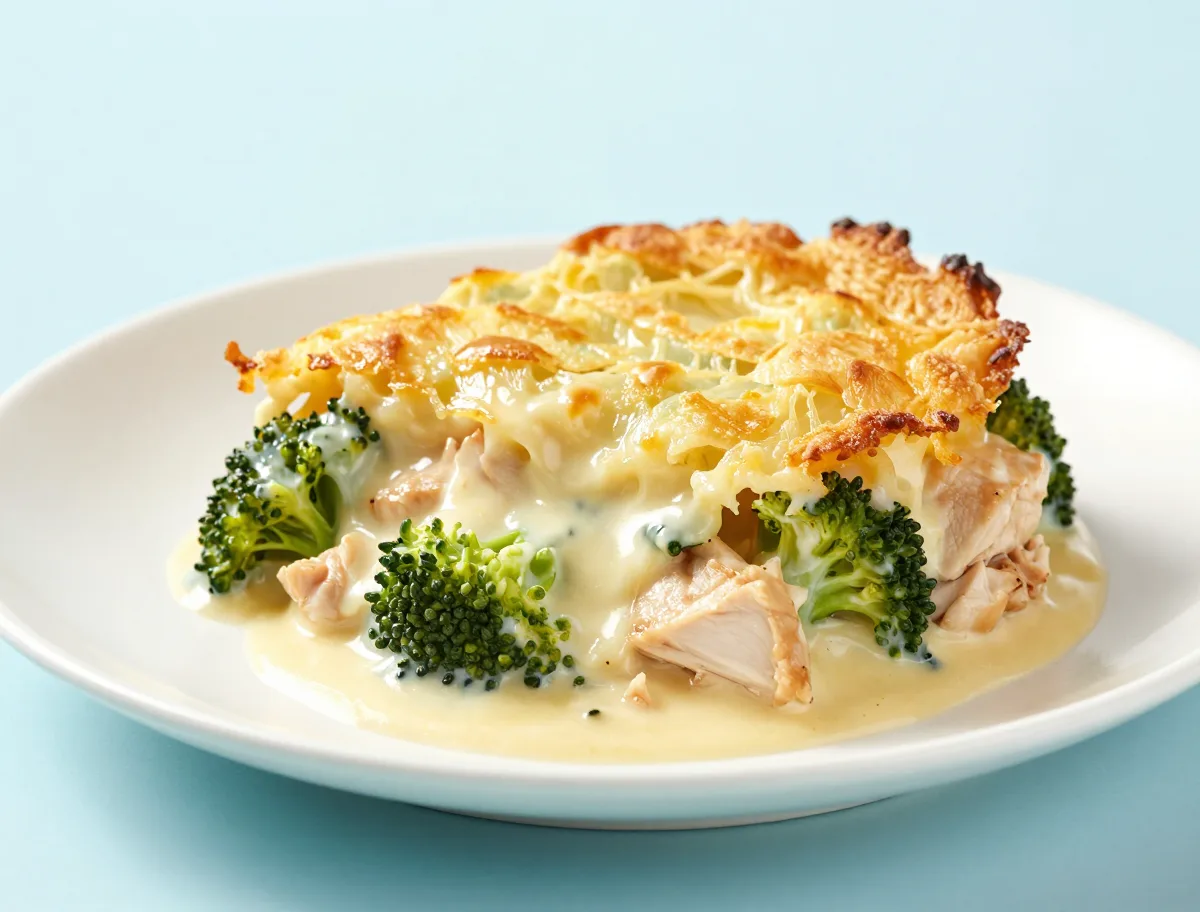
Visual cues help assess texture, but the center temperature is the dependable safety check. Look for bubbling around the edges, a hot center, and broccoli that yields easily while retaining its floret shape.
- The sauce should coat the ingredients and settle around them, not separate into a watery or oily layer.
- The topping should be golden and crisp-looking rather than deeply dark.
- Check the thickest part of the center with a thermometer; it should reach 165°F (74°C).
- Rest the casserole for 10 minutes before scooping to improve its structure.
- The broccoli is bright green and tender but still holds its shape.
- The sauce clings to the chicken and broccoli without a visible pool of water or oil.
- The edges are bubbling and the topping is lightly browned.
- The center reaches 165°F (74°C) when checked with an instant-read thermometer.
The Cooking Variables That Matter Most
Two factors determine whether this creamy casserole succeeds: moisture control and moderate heat. Broccoli releases water as it cooks, while mayonnaise can separate if exposed to excessive heat for too long. A thick supporting binder and a moderate oven help keep the sauce cohesive.
- Thawed frozen broccoli generally releases more water than fresh broccoli, so it should be drained and patted especially well.
- A chilled or unusually deep casserole needs more time for the center to heat; the browned top may need foil protection.
- Rice absorbs sauce and should not be added without increasing the creamy mixture.
- The surface browns faster than the center heats, which is why topping color alone is not a doneness test.
Common Chicken Broccoli Casserole Mistakes
Most problems come from adding too much free water, baking too aggressively, or starting with dry chicken. Correcting the issue before the casserole goes into the oven is more effective than trying to bake away excess liquid.
- Watery filling: Drain and dry the broccoli more thoroughly, and do not dilute the condensed soup. A wet frozen vegetable is the most common culprit.
- Greasy or broken sauce: Avoid increasing the oven temperature or baking far beyond the point when the center reaches 165°F. Very low-fat substitutes are also more prone to texture changes.
- Mushy broccoli: Use larger, uniform florets and stop the blanching while they are still slightly firm.
- Dry chicken: Use moist cooked chicken, cut it into small pieces, and avoid leaving the casserole in the oven after it is fully hot.
- Dark topping with a cool center: Cover loosely with foil and continue baking until the center reaches 165°F.
Useful Ingredient Substitutions
This chicken broccoli casserole is adaptable, but substitutions can change the sauce’s richness, thickness, and heat stability. For the most reliable result, change one major component at a time.
- Replace up to half of the mayonnaise with plain Greek yogurt or sour cream for a lighter, tangier sauce. Replacing all of it changes the dish’s character and may make the sauce sharper or less stable.
- Cooked turkey can replace the chicken in equal volume. Keep it moist and cut it evenly.
- Monterey Jack, Swiss, or a cheddar-Jack blend can replace cheddar. Parmesan is best retained as part of the topping rather than used as the only melting cheese.
- Use gluten-free panko or cracker crumbs when needed, and verify that the condensed soup is gluten-free.
- For a dairy-free version, every dairy component—including the soup, sour cream, cheese, and butter—requires a suitable labeled alternative; results will vary by product.
Rice, Low-Carb and Other Variations
The casserole can change form while keeping its defining combination of chicken, broccoli, creamy mayonnaise-based sauce, and a browned finish.
- For a chicken broccoli casserole with rice, fold in about 2 cups of cooked rice and loosen the sauce with an additional 1/2 cup of condensed soup or sour cream; rice absorbs moisture as it bakes.
- For a low-carb or keto-style version, omit rice and use pork-rind crumbs, almond-flour crumbs, or a cheese-only topping.
- Cauliflower can replace some or all of the broccoli, but it should also be briefly cooked and thoroughly drained.
- A cold mayonnaise chicken-broccoli salad is a different preparation: it is chilled, dressed for serving cold, and should not be baked using this method.
What to Serve with Creamy Chicken Broccoli Casserole
Serve the casserole warm after its brief resting period, when the sauce has settled but the topping is still crisp. Since the dish is rich and substantial, fresh or acidic sides provide the best contrast.
- Pair it with a green salad dressed with vinaigrette, a crisp slaw, or lightly dressed seasonal vegetables.
- Fresh parsley, chives, or scallions can brighten the surface without adding another heavy element.
- Bread, rice, or potatoes are optional; add them only if you want a more substantial meal and the casserole does not already contain rice.
- A small squeeze of lemon at the table can balance the mayonnaise, cheese, and condensed soup.
How to Store, Freeze and Reheat the Casserole
The casserole is convenient for advance preparation and leftovers, although freezing can soften the broccoli and reduce the topping’s crispness. Separate food-quality expectations from safe temperature handling.
- Make ahead: Assemble, cover, and refrigerate promptly for up to 24 hours. Bake directly from the refrigerator, allowing roughly 10 to 15 extra minutes.
- Refrigerate leftovers at 40°F or below and use them within 3 to 4 days.
- Freeze the fully cooled casserole tightly wrapped in a freezer-safe container. Thaw it in the refrigerator for more even reheating; the sauce may separate slightly and the broccoli may soften.
- Reheat covered at 350°F until the center reaches 165°F, then uncover briefly to refresh the topping.
- For microwave reheating, cover individual portions and heat in short intervals, rotating or stirring where practical to limit cold spots.
Food Safety for Chicken Casserole
Use cooked chicken from a safe source, prevent contact between raw poultry and ready-to-eat ingredients, and verify the finished casserole with a thermometer. Bubbling edges and a browned surface indicate cooking progress but do not prove that the center is safe. Follow USDA safe cooking temperature guidance for poultry, casseroles, and reheated leftovers.
- If starting with raw chicken, cook it separately to 165°F (74°C) before using it in this formulation.
- The center of the assembled casserole and reheated leftovers should also reach 165°F (74°C).
- Refrigerate the casserole within 2 hours, or within 1 hour when the surrounding temperature is above 90°F.
- Keep the refrigerator at 40°F or below and the freezer at 0°F or below.
- Cool leftovers in shallow portions when possible so they chill promptly, and use clean utensils for serving.