Chicken Curry Recipe: Guyanese-Style with Potatoes
This Guyanese chicken curry recipe uses bone-in dark meat, fresh green seasoning, curry powder, masala, roasted cumin and potatoes to produce tender chicken in a thick, spoon-coating gravy.
What Makes This a Guyanese Chicken Curry?
A recognizably Guyanese chicken curry is built from layered curry powder, masala, roasted cumin and fresh green seasoning rather than from curry powder alone. Bone-in chicken and potatoes are especially characteristic, and the finished dish is served with a concentrated, spoonable gravy—not a thin soup or a dry coating.
- Fresh scallion, herbs and chile give the curry a lively green-seasoning profile.
- Potatoes absorb spice and help give the gravy natural body.
- The water-based gravy keeps the curry focused on chicken, aromatics and toasted spices.
The Flavor Architecture of Guyanese Curry Chicken
Each part of the seasoning has a distinct job. Curry powder provides the main savory-spiced character; garam masala supplies warm aromatic depth; roasted cumin, or geera, contributes a toasted earthiness. Green seasoning carries garlic, ginger, scallion, herbs and pepper into both the chicken and the gravy.
- Skinless thighs and drumsticks stay moist during the long, gentle simmer and contribute more body than breast meat.
- Medium potato chunks absorb the curry while releasing just enough starch to enrich the sauce.
- A Guyanese or Caribbean curry powder is ideal, but blends vary, so taste before adding extra turmeric, salt or chile.
- 4 pounds skinless bone-in chicken thighs and drumsticks, cut large thighs in half if needed; pat dry
- 1 medium yellow onion, finely chopped
- 6 cloves garlic, finely grated or minced
- 1 2-inch piece fresh ginger, peeled and finely grated
- 4 scallions, 3 chopped for seasoning and 1 thinly sliced for finishing
- 6 sprigs fresh thyme, leaves picked from 4 sprigs; 2 sprigs reserved whole
- 1/4 cup fresh cilantro or culantro, finely chopped
- 1 small wiri wiri pepper, seeded and minced for moderate heat, or left whole for milder heat
- 3 tablespoons Guyanese-style or Caribbean curry powder
- 1 tablespoon garam masala
- 2 teaspoons roasted ground cumin (geera)
- 1 teaspoon fine sea salt, plus more to taste
- 1/2 teaspoon freshly ground black pepper
- 1/4 cup neutral cooking oil
- 2 1/2 pounds yellow-fleshed potatoes, peeled and cut into 1 1/2-inch chunks
- 2 cups hot water, plus up to 1/2 cup more if needed
How to Build a Deep, Thick Curry Gravy
The important sequence is seasoning, paste-making, blooming, coating and staged liquid addition. Turning the powdered spices into a moist paste gives them time to cook evenly; adding the chicken before much water is introduced lets its own juices concentrate the base instead of diluting it.
- Keep the paste moving over moderate heat. It should become fragrant and a shade darker, not dry out or blacken.
- Add hot water in small amounts at the first sign of sticking rather than turning up the heat.
- Once the chicken and potatoes are tender, uncover the pot so evaporation—not flour or cornstarch—creates the final gravy texture.
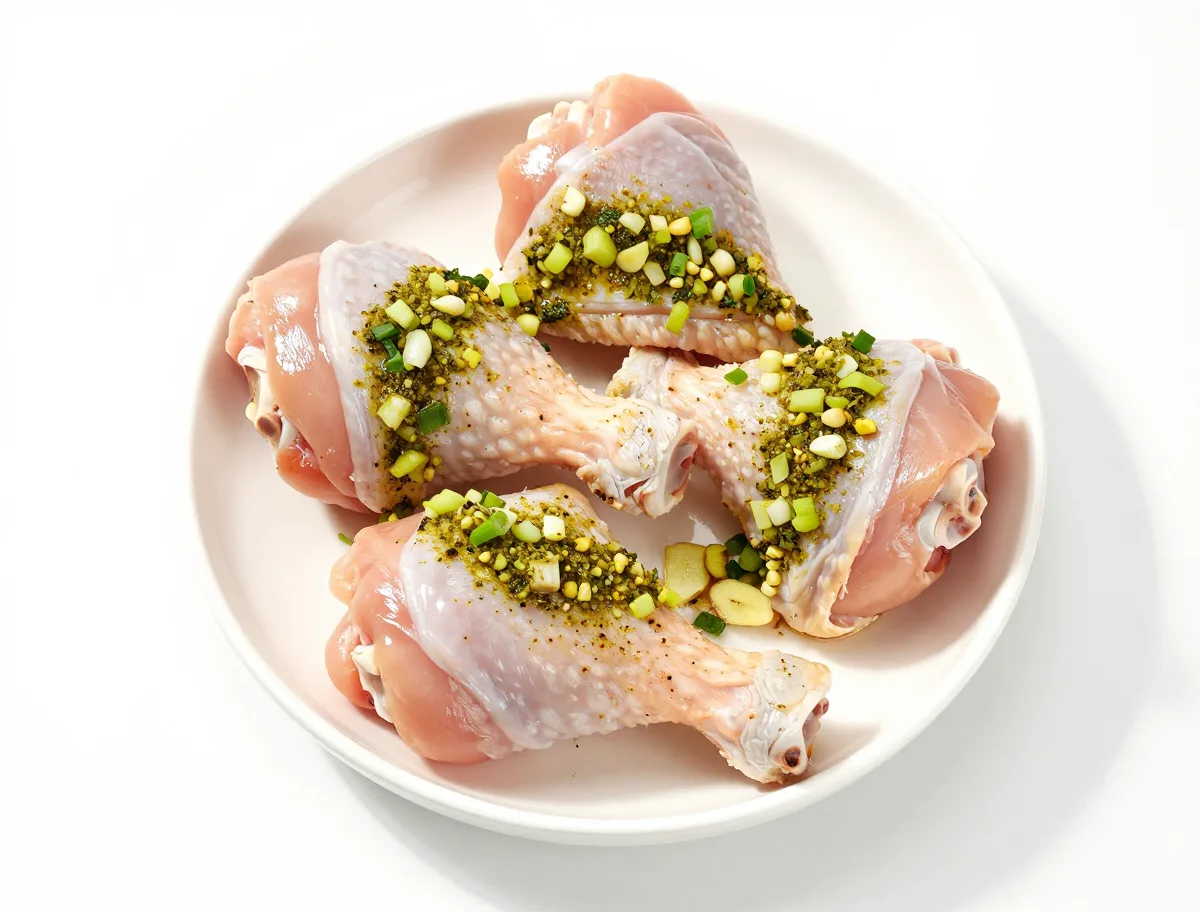
- Season the chicken: In a large bowl, combine the onion, garlic, ginger, chopped scallions, thyme leaves, cilantro or culantro, pepper, curry powder, garam masala, roasted cumin, salt and black pepper. Add the chicken and massage the mixture thoroughly over every piece. Cover and refrigerate for at least 30 minutes, or up to overnight.
- Make the curry paste: Remove the chicken from the refrigerator. Separate the chicken pieces from the seasoning mixture, keeping all the aromatics. Stir 1/2 cup of the hot water into the seasoning to form a loose paste; keep the remaining hot water nearby.
- Cook the spice base: Heat the oil in a heavy 6-quart Dutch oven over medium heat. Add the curry paste and the 2 reserved whole thyme sprigs. Cook, stirring constantly, for 6 to 8 minutes, until the paste is fragrant, slightly darker and thick enough to leave a brief trail on the bottom of the pot. If it begins to stick or catch, add hot water 1 tablespoon at a time and lower the heat; do not let the spices scorch.
- Coat and steam the chicken: Add the chicken pieces and turn them in the paste until evenly coated. Cover and cook over medium-low heat for 15 minutes, turning once or twice, until the chicken has released enough juices to make a moist, aromatic pot base.
- Simmer with potatoes: Add the potatoes and pour in 1 1/2 cups of the remaining hot water, or enough to come about halfway up the chicken rather than completely submerging it. Bring to a gentle simmer, cover and cook for 25 to 30 minutes, stirring carefully once or twice, until the potatoes are nearly fork-tender and the chicken is cooked through.
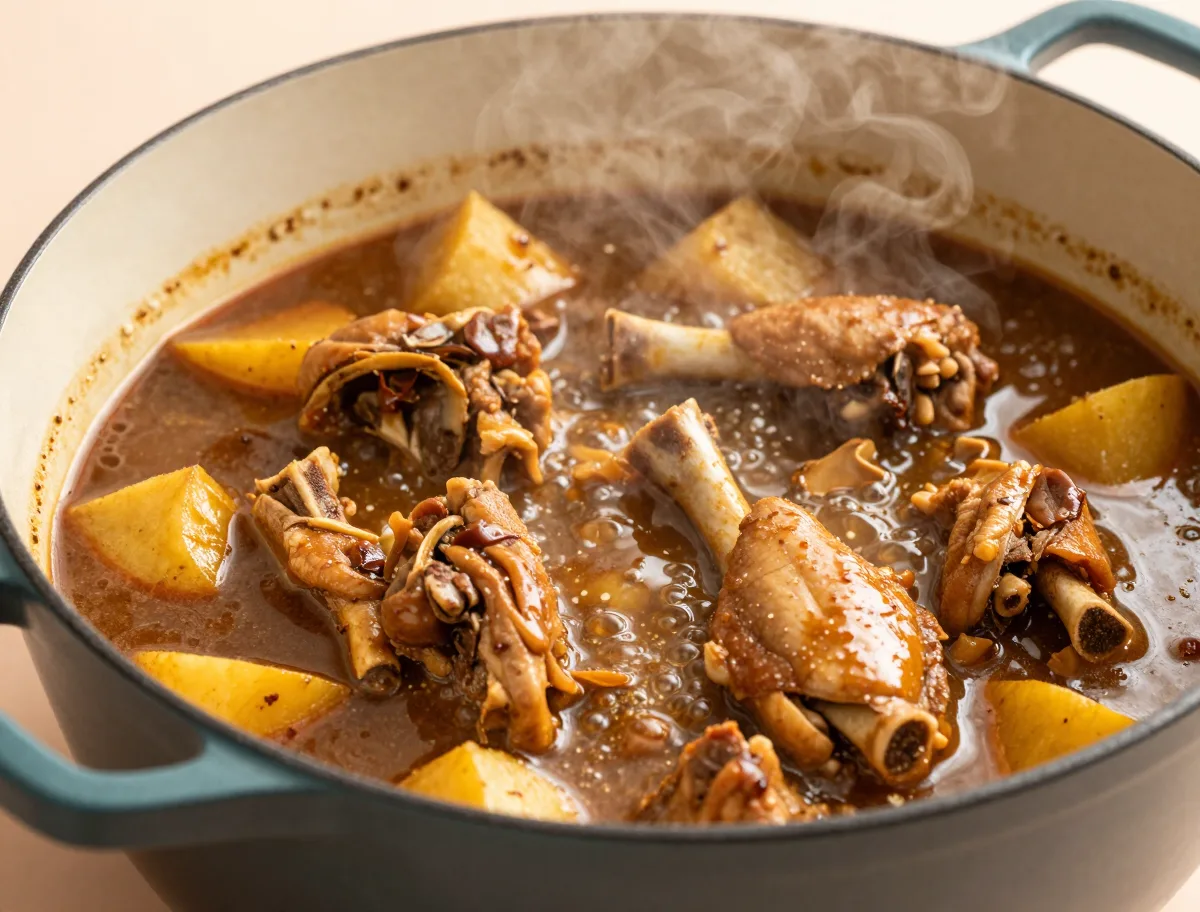
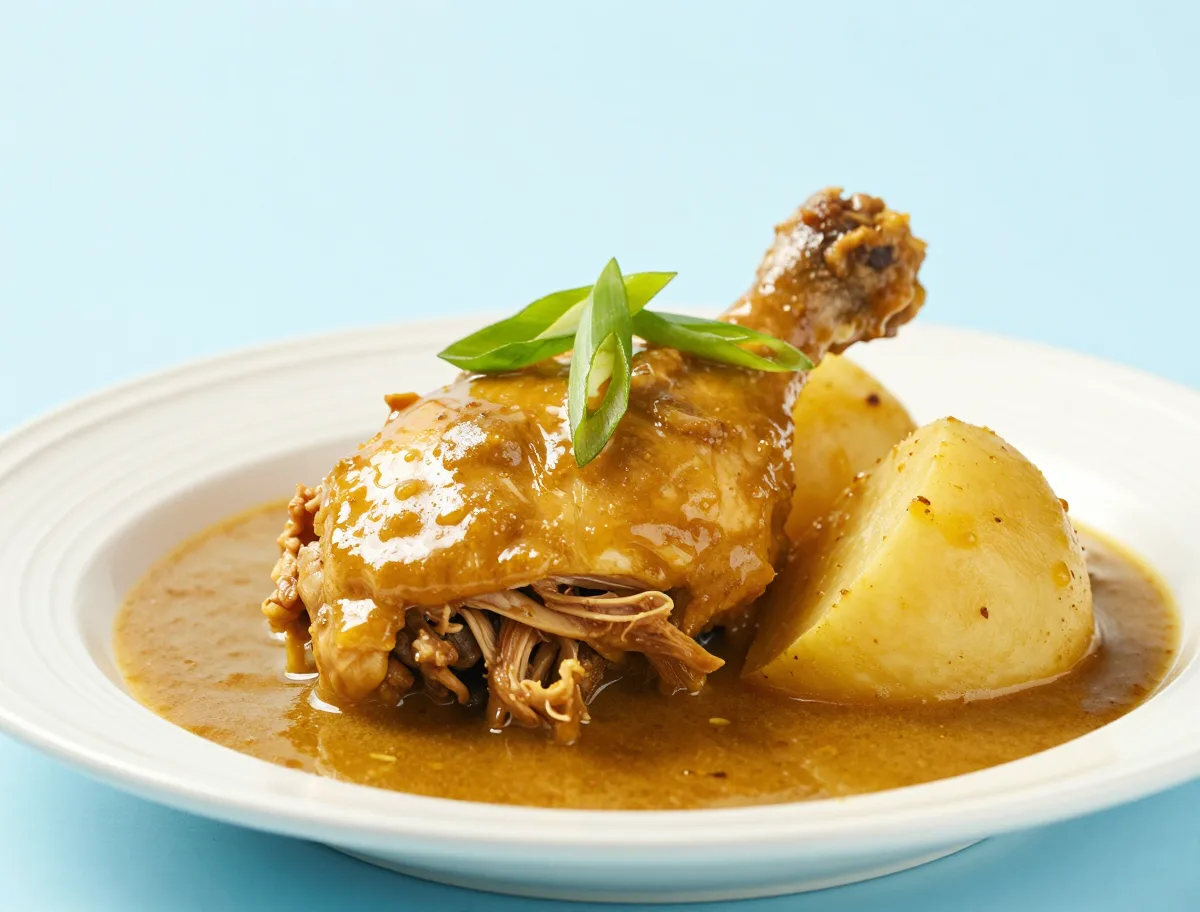
- Reduce the gravy: Uncover and simmer for 8 to 12 minutes, turning the chicken gently, until the gravy is glossy and clings to the meat while still flowing around the potatoes. Check the thickest chicken piece with a thermometer; it must reach at least 165°F (74°C), and dark meat should be tender enough to pull easily from the bone. Add a little of the remaining hot water if the pot becomes dry before the chicken is tender.
- Finish and serve: Remove the thyme sprigs. Taste and adjust the salt. Scatter the sliced scallion over the curry and serve hot with white rice, roti or dhal puri.
How to Tell When the Chicken Curry Is Done
Use the thermometer and the food’s texture together. Poultry is safe at 165°F (74°C), but bone-in dark meat is usually more enjoyable after a longer gentle simmer, when connective tissue has softened and the meat begins to release easily from the bone.
- Check the largest chicken piece in its thickest section, avoiding the bone.
- Test the largest potato separately; it should be fork-tender without collapsing into the sauce.
- The right gravy flows slowly from a spoon and gathers around the chicken, rather than running thinly across the plate.
- The cooked curry paste is darker, fragrant and cohesive, never black or bitter.
- The chicken is fully opaque and reaches at least 165°F (74°C) in the thickest part away from the bone.
- For the best texture, the dark meat should be fork-tender and loosen readily from the bone.
- The potatoes yield easily when pierced but remain in intact chunks.
- The gravy is glossy, thick enough to coat a spoon and still pourable over rice or roti.
The Cooking Decisions That Shape the Curry
Ground spices develop quickly in hot oil but can burn just as quickly. Moisture is the essential control: the seasoning paste protects the spices while they bloom, the covered chicken supplies additional juices, and a measured amount of water carries the curry through the simmer.
- Gentle heat softens dark-meat connective tissue without tightening the exterior as a hard boil can.
- Potato starch and gelatin from bone-in chicken naturally add body, so a separate thickener is unnecessary.
- A wide pot reduces faster because more surface is exposed; use the gravy’s appearance as the final guide rather than relying on an exact water volume.
Common Guyanese Chicken Curry Mistakes and Fixes
Most problems come from heat or moisture management. Stay beside the pot while frying the paste, add liquid gradually, and postpone final seasoning until after reduction, when salt and chile taste more concentrated.
- Bitter or burnt spices: the paste was too hot or left unstirred. If it is severely scorched, start again; a splash of water cannot remove the bitterness.
- Watery gravy: uncover the pot and simmer until it coats the chicken. Avoid adding a thickener, which can mask the spice flavor.
- Tough chicken: keep it covered at a quiet simmer until tender. Do not try to fix it with a vigorous boil.
- Hard potatoes: the pieces were too large or added too late. Continue simmering gently until the centers yield.
- Gravy that is too thick: loosen it with hot water a few tablespoons at a time, then simmer briefly to reincorporate it.
Practical Substitutions for Guyanese Curry Ingredients
The fresh seasoning and cooking method matter as much as any single specialty ingredient. Substitutions can make the curry accessible, but they may change the pepper’s heat, the herbs’ intensity or the toasted quality of the cumin.
- Use Scotch bonnet or habanero instead of wiri wiri; use less, remove the seeds or add it whole for aroma with gentler heat.
- For geera, briefly dry-toast whole cumin and grind it. Plain ground cumin works, but tastes less deeply roasted.
- Caribbean or Madras curry powder can replace Guyanese curry powder. Check the label before adding more turmeric, cumin or salt.
- Cilantro can stand in for culantro or shado beni. A little celery leaf with parsley and scallion gives a closer savory-herbal impression.
- A prepared green seasoning is suitable when it is herb- and allium-based rather than primarily salty; reduce the added salt if necessary.
Guyanese Curry Chicken Variations
Household versions vary, and potatoes are not mandatory in every pot. The recipe remains within a Guyanese-style framework when it keeps the fresh seasoning, curry-and-masala spice base, controlled chile and reduced gravy.
- For a faster version, use boneless thighs and shorten the simmer; begin checking them after about 18 minutes.
- For potato-free curry, omit the potatoes and reduce the gravy a little longer so it reaches a spoon-coating consistency.
- For mixed heat preferences, use a whole pepper in the pot and offer extra pepper sauce at the table.
- Tomato, coconut milk or cream can make a delicious adaptation, but they change the color, richness and flavor profile of this water-based baseline.
What to Serve with Guyanese Chicken Curry
Serve the curry hot with enough gravy to season the starch. Plain white rice gives the aromatic sauce a neutral landing place, while roti and dhal puri make it easy to scoop up the chicken, potato and gravy.
- Spoon the thick gravy over rice rather than serving it as a separate sauce.
- Use roti or dhal puri to gather the last of the gravy from the plate.
- Finish with scallion or a small amount of fresh herb, and pass additional chile separately.
How to Store, Freeze and Reheat Guyanese Chicken Curry
The curry can be made ahead; its flavors often settle and deepen overnight. The gravy will firm up in the refrigerator and potatoes may soften slightly, so reheat gently and restore the texture with a little water.
- Refrigerate the curry in shallow containers within 2 hours of cooking, or within 1 hour if the room is above 90°F (32°C).
- Keep refrigerated at 40°F (4°C) or below and use within 3 to 4 days.
- Freeze in airtight, single-meal portions for best quality within about 2 to 3 months. Potatoes may become softer after freezing.
- Reheat only the amount needed on the stovetop or in the microwave, adding water as necessary, until the center reaches 165°F (74°C).
The Guyanese Tradition Behind the Curry
Guyanese curry reflects the country’s richly plural food culture and the influence of Indian indentured communities, whose culinary traditions became adapted to local ingredients and cooking practices. Potatoes, scallions, masala, roasted cumin, fresh seasoning and local peppers create a profile that is related to South Asian curry but distinctly shaped in Guyana. For additional cultural context, see the New York Public Library’s look at Guyanese flavors in New York.
- There is no single commercial spice blend or universally fixed family formula that defines all Guyanese curry.
- Wiri wiri is strongly associated with Guyanese cooking, but its absence does not make a household curry invalid.
- Calling this recipe traditional-style or recognizably Guyanese is more accurate than claiming it is the one definitive version.
Food Safety for Bone-In Chicken Curry
Handle the raw poultry and fresh seasoning carefully, especially because the seasoning is prepared before the chicken is cooked. Keep the chicken cold during marination, prevent cross-contamination and use a thermometer rather than color alone to verify doneness. For broader official guidance, consult the FDA’s safe food-handling guidance.
- Do not wash raw chicken; pat it dry and sanitize surfaces, knives and boards after preparation.
- Marinate only in the refrigerator. Never reuse seasoning that has contacted raw poultry unless it is fully cooked.
- Every chicken piece must reach at least 165°F (74°C), measured away from the bone.
- Refrigerate or freeze leftovers within the stated time limit and reheat them to 165°F (74°C) throughout.