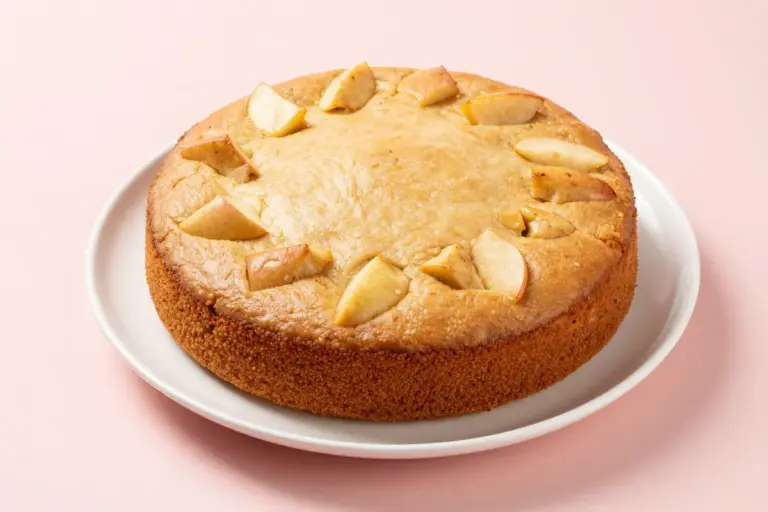
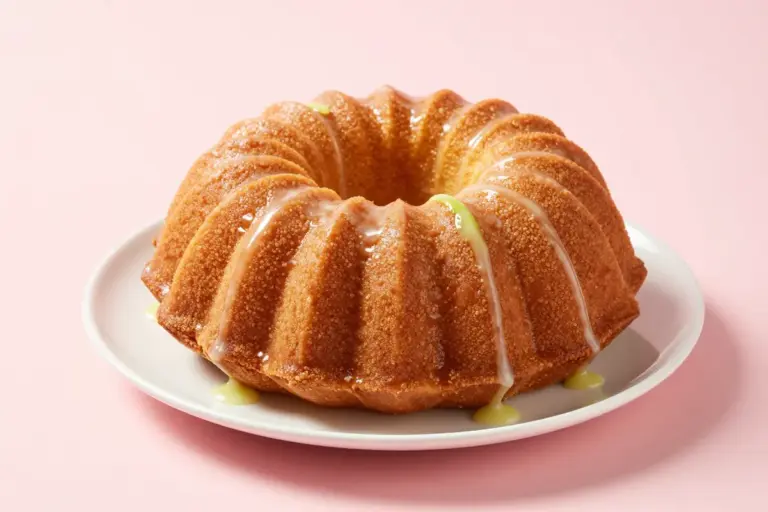
Sicilian Whole Orange Cake Recipe (Pan d’Arancio)
This Sicilian whole orange cake recipe blends the prepared orange peel, pulp, and juice into a moist olive-oil batter with almond flour for concentrated citrus flavor and a tender crumb.
What Makes This a Sicilian Whole Orange Cake?
Known as pan d’arancio, this traditional-style Sicilian cake uses the prepared orange as a whole fruit: peel, pith, pulp, and juice all contribute to the batter. The result is more aromatic and rounded than a cake made with juice alone.
- Expect a pronounced fresh-orange aroma and tiny flecks of peel in the crumb.
- The texture should be soft, moist, and sliceable rather than wet or gummy.
- A mild aromatic bitterness from the peel can be pleasant; a harsh bitter finish signals unsuitable fruit or insufficient preparation.
- Confectioners’ sugar is all the cake needs, although a restrained glaze or a few curls of candied orange also work.
Why the Ingredients Work
This formula balances a high-moisture orange puree with enough flour, egg, and leavening to produce a stable cake. Almond flour contributes richness and tenderness without making the crumb as heavy as an all-almond formula, while mild olive oil keeps the slices soft.
- Sweet thin-skinned oranges supply citrus oil from the peel as well as moisture from the pulp and juice.
- All-purpose flour provides the main structural framework; almond flour adds fat, tenderness, and a subtle nutty note.
- Eggs set the center and help emulsify the oil and orange puree.
- Sugar sweetens, tenderizes, and holds moisture, but the amount is kept in balance so the center can set.
- Yogurt adds body and gentle acidity; baking powder supplies dependable lift without requiring a large amount of leavener.
- Mild olive oil supports the Mediterranean character without overpowering the orange.
Ingredients
- 2 medium sweet thin-skinned seedless oranges, scrubbed and dried; enough prepared fruit to yield 300 g puree
- 1 1/2 cups (180 g) all-purpose flour, spooned and leveled
- 1/2 cup (60 g) fine almond flour
- 1 cup (200 g) granulated sugar
- 3 large eggs, at room temperature
- 1/2 cup (100 g) mild olive oil
- 1/3 cup (80 g) plain yogurt, whole-milk or Greek-style, at room temperature
- 2 1/2 teaspoons (10 g) baking powder
- 1 teaspoon vanilla extract
- 1/2 teaspoon fine salt
- 1 tablespoon confectioners’ sugar, for dusting; optional
The Key Technique: Preparing the Whole Orange
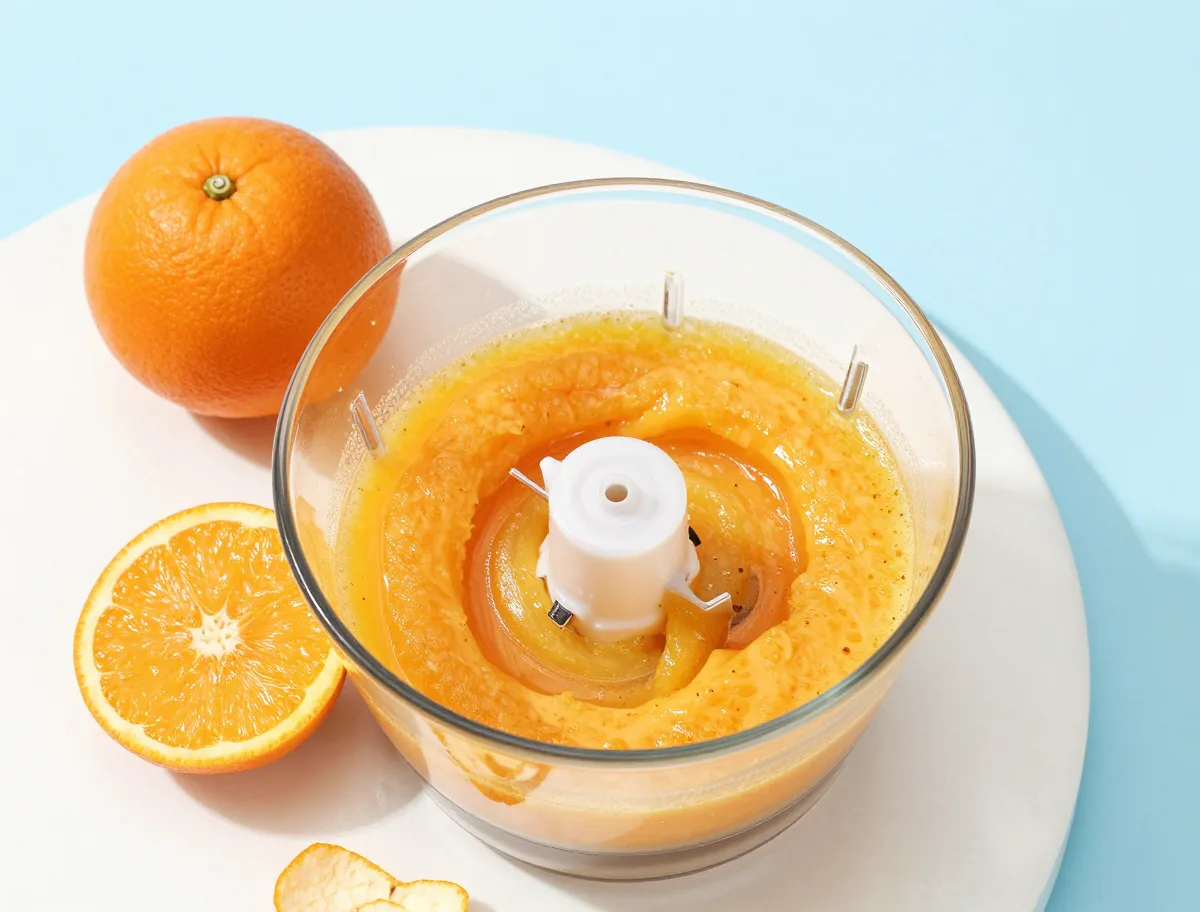
The orange puree determines both the flavor and the texture of the finished cake. Remove seeds and the tough stem ends, but retain the edible peel and pith. Process the fruit until nearly smooth so the peel is distributed throughout the batter rather than concentrated in bitter pieces.
- Use a food processor when possible; it gives better control over a thick puree than a blender.
- For a raw puree, choose sweet, thin-skinned oranges with no obvious bitterness.
- If the peel is thick or sharp-tasting, simmer the seeded fruit briefly, drain it, and cool it before processing.
- Measure 300 g of puree rather than relying on the number of oranges alone.
- Fold in the flour mixture only until combined. Extended mixing can make the cake heavier and less tender.
Instructions
- Prepare the pan and oven: Heat the oven to 350°F (175°C). Grease a 9-inch (23 cm) springform pan, line the base with parchment, and lightly flour the sides. Set the pan on a baking sheet.
- Make the whole-orange puree: For thin-skinned, sweet oranges, trim away the stem ends, quarter the fruit, remove every seed, and cut the quarters into smaller pieces. Leave the edible peel and pith intact. Process in a food processor until thick and nearly smooth, with no large pieces of peel. Weigh the puree and set aside 300 g. If the peel tastes sharply bitter or is especially thick, simmer the seeded, quartered oranges in water for 20 minutes, drain well, cool completely, then process them. Do not use hot puree in the batter.
- Combine the dry ingredients: Whisk the all-purpose flour, almond flour, baking powder, and salt in a medium bowl. Break up any almond-flour lumps.
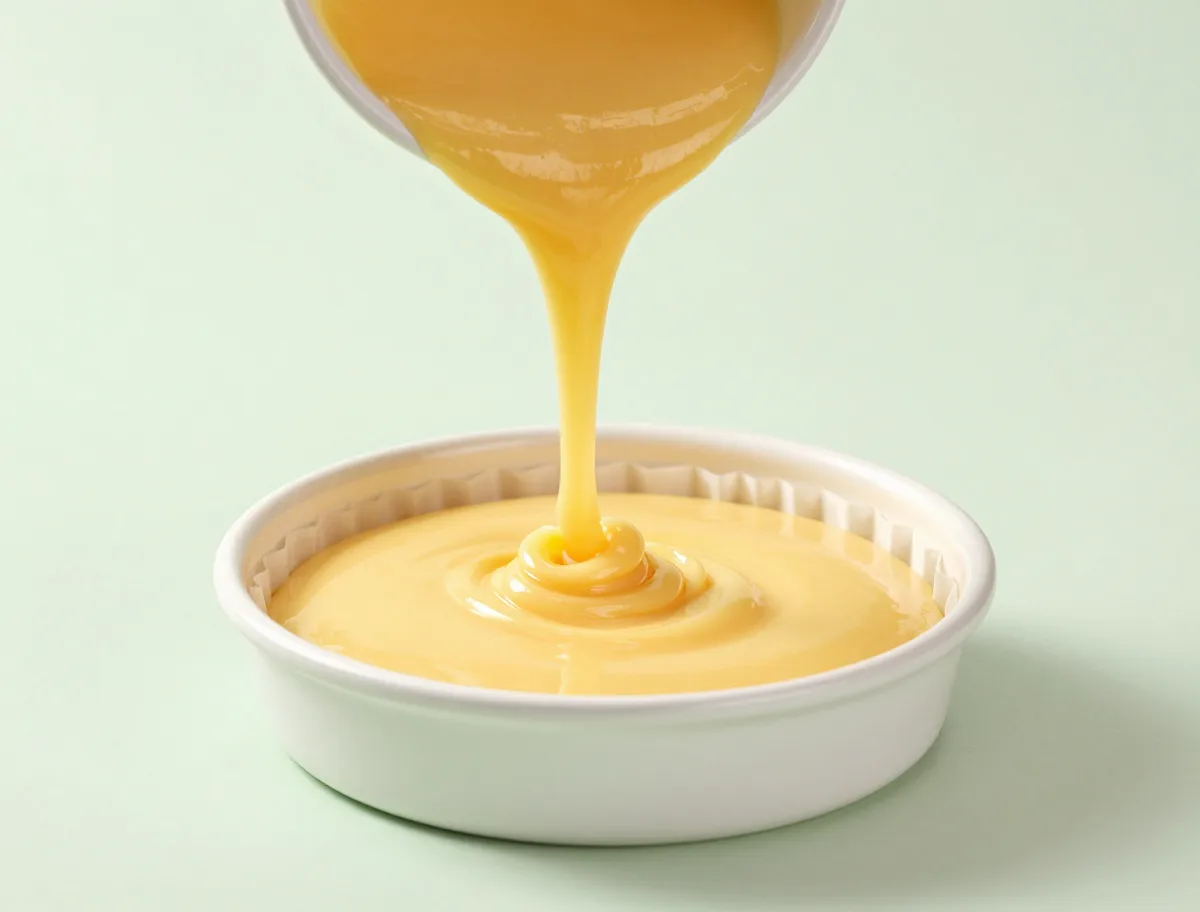
- Build the batter: In a large bowl, whisk the sugar and eggs for about 1 minute, until smooth and slightly thickened. Whisk in the olive oil, yogurt, vanilla, and 300 g orange puree. Add the dry ingredients and fold just until no dry streaks remain. The batter should be thick but pourable; do not continue mixing once it is combined.
- Fill the pan: Scrape the batter into the prepared pan and smooth the surface. Tap the pan once or twice gently on the counter to release large air pockets.
- Bake until the center is set: Bake on the middle rack for 50 to 60 minutes. Begin checking at 50 minutes. If the top is deeply browned while the center is still loose, tent the cake loosely with foil and continue baking. The cake is ready when the center springs back lightly, the edges have just begun to pull from the pan, and a skewer inserted in the exact center comes out clean or with a few moist crumbs, not wet batter.
- Cool and finish: Cool the cake in the pan for 15 minutes, then run a thin knife around the edge and release the springform. Transfer the cake to a rack and cool completely, about 45 minutes more. Dust with confectioners’ sugar just before serving.
How to Tell When the Cake Is Done
A whole-orange cake can look finished on top while its center is still underbaked. Use several signals together, especially the center skewer test, because the puree keeps the crumb moist even after the structure has set.
- The top should be golden, matte, and fragrant rather than shiny or pale.
- The center should spring back lightly when pressed.
- A skewer inserted in the center should emerge clean or with a few moist crumbs; wet, shiny streaks indicate more baking is needed.
- The edges should show slight separation from the pan.
- After baking, the crumb firms as it cools. Slice only after the cake is completely cool for clean pieces and the best texture.
Recipe Doneness Cues
- The surface is golden and matte rather than glossy.
- The cake smells strongly of fresh orange and the edges are beginning to pull away from the pan.
- The center springs back gently when pressed.
- A skewer inserted in the exact center shows a few moist crumbs but no liquid batter.
- For an additional check, the center should generally be around 200–210°F (93–99°C), though the texture and skewer test matter most.
For broader guidance on checking a moist cake’s center, see How to Tell When Cake Is Done.
How to Keep the Orange Cake Moist, Not Gummy
The central baking challenge is setting the water and pulp from the orange before the cake loses its structure. Flour starch and egg proteins create the framework, while oil, sugar, and almond flour soften it. Pan depth, puree quantity, and oven accuracy therefore matter as much as the ingredient list.
- Weighing the puree prevents an especially juicy orange from adding more liquid than the formula can support.
- A 9-inch round pan gives the batter enough surface area to bake through at a moderate temperature.
- A deep or undersized pan concentrates moisture in the center and may require substantially more time.
- A moderate oven allows the center to set before the peel-rich top becomes too dark.
- Baking powder is used conservatively because excessive lift can make the cake rise rapidly and then sink.
Common Sicilian Orange Cake Problems and Fixes
Most failures come from the fruit, the pan, or stopping the bake when the surface looks done rather than when the center has set. The following fixes address problems that can realistically be prevented or corrected.
- Harsh bitterness: Use a sweeter thin-skinned orange, remove every seed, and simmer thick-skinned fruit before pureeing. Extra sugar will not correct strongly bitter peel.
- Wet center: The cake may need more time, or the puree may have exceeded 300 g. Tent the top with foil and continue baking until the center tester shows crumbs rather than batter.
- Sunken middle: This usually indicates underbaking, too much liquid, excess leavener, or opening the oven early. Avoid opening the door during the first 40 minutes.
- Dense crumb: Overmixing, an unusually loose puree, or inaccurate flour measurement can weigh down the batter. Weigh the flour and fold gently.
- Dry edges: The oven may run hot or the cake may have baked too long. Check early and use an oven thermometer if results are repeatedly dry.
- Sticking: Grease the pan thoroughly, line the base with parchment, and wait 15 minutes before releasing the springform.
Ingredient Substitutions That Preserve the Cake
The base recipe is intentionally conservative so substitutions do not compromise the center. Change one major ingredient at a time and expect some differences in crumb and flavor.
- A mild neutral oil can replace the olive oil in the same amount with little structural change.
- Melted butter may be used by weight, but it gives a slightly firmer, more dairy-forward crumb, especially when chilled.
- Replace up to 60 g of the all-purpose flour with additional fine almond flour for a softer, richer cake. Do not replace all the wheat flour one-for-one.
- A certified gluten-free flour blend may work in place of the all-purpose flour if it is formulated for cakes and contains a suitable binder; results vary by blend.
- For dairy-free preparation, omit the yogurt and use 80 g of unsweetened, thick plant yogurt. Do not add extra liquid.
- A vegan version is not a simple egg swap: the eggs provide setting, aeration, and emulsification, so use a separately tested vegan formula rather than making an unmeasured substitution.
Simple Variations on Pan d’Arancio
Variations are welcome as long as the whole prepared orange remains the defining ingredient. Finishes should support the citrus rather than hide its fragrance or turn the cake into a heavily decorated dessert.
- Brush the cooled cake with a thin orange glaze made from confectioners’ sugar and orange juice for a shinier finish.
- Spread a very thin layer of warmed orange marmalade over the top for a more intense citrus note.
- Add a few strips of candied orange peel for decoration and texture.
- Drizzle sparingly with dark chocolate; its bitterness pairs well with orange but can amplify bitterness from the peel.
- A fully almond-flour version is a separate, denser style and should be judged as a moist flourless cake rather than against this lighter wheat-based crumb.
How to Serve Sicilian Whole Orange Cake
Serve the cake at room temperature, when the orange aroma is clearest and the crumb is at its softest. A light dusting of confectioners’ sugar keeps the presentation simple and lets the whole-fruit flavor remain central.
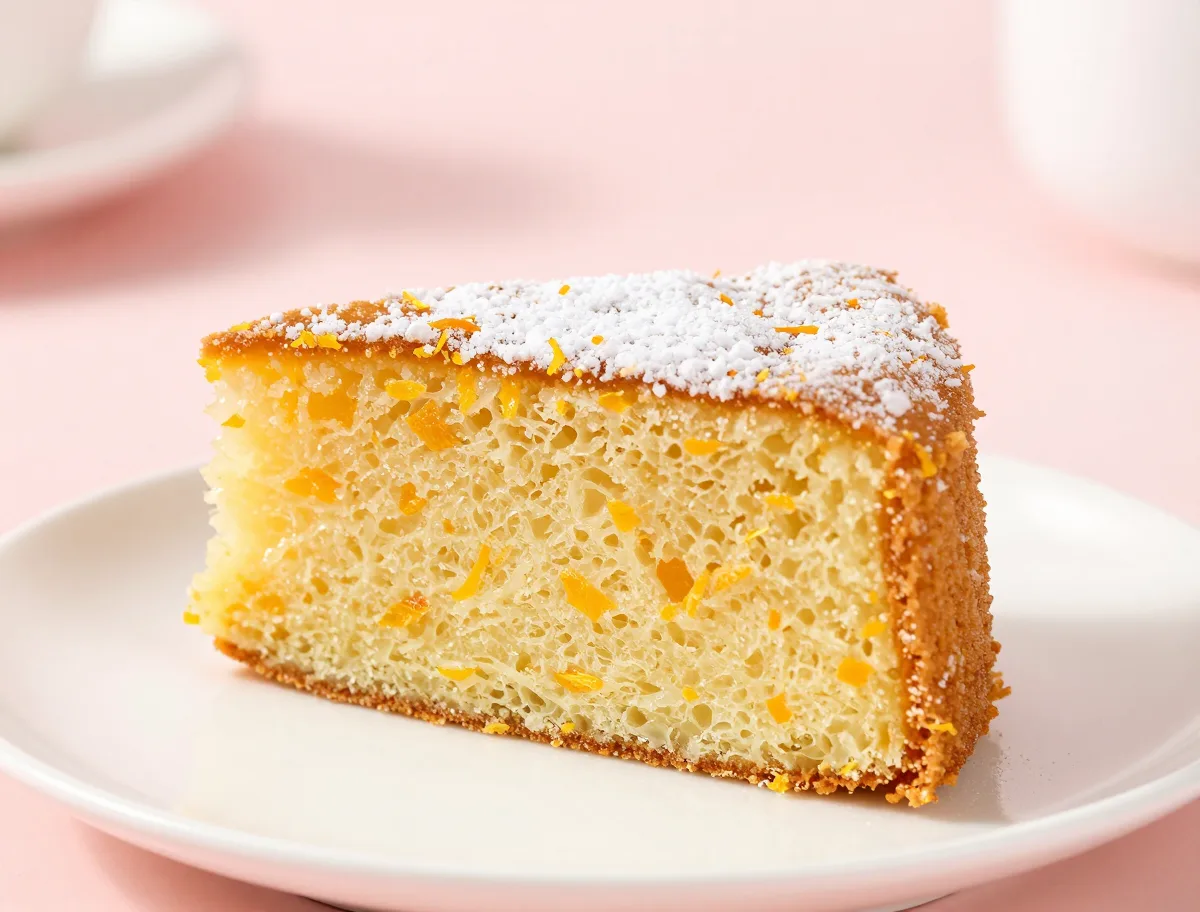
- Cut with a sharp serrated knife after the cake has cooled completely.
- Serve plain or with a small spoonful of lightly sweetened yogurt.
- Pair it with espresso, black coffee, or unsweetened or lightly sweetened tea.
- If using glaze, marmalade, or chocolate, keep the layer thin so the peel’s aromatic complexity remains noticeable.
- Refrigerated slices are firmer and less fragrant; let them stand at room temperature before serving.
How to Store, Freeze and Reheat Orange Cake
The plain cake keeps its best aroma and tenderness when wrapped and stored in a cool room. Refrigeration is useful for perishable toppings but firms the crumb, so allow chilled cake to warm before serving.
- Wrap the completely cooled, unfrosted cake airtight and keep it at cool room temperature for up to 3 days.
- Refrigerate within 2 hours any cake topped with cream, custard, fresh dairy, or other perishable ingredients; refrigerate sooner if the room is above 90°F (32°C). FDA food-safety guidance provides broader information on storing perishable foods.
- Freeze the cooled, unfrosted cake tightly wrapped for up to 3 months for best quality. Thaw it while wrapped, then finish it.
- Bring refrigerated slices to room temperature before serving. If desired, warm one slice gently for a few seconds, but avoid heating the entire cake.
Sicilian Whole Orange Cake FAQs
These answers address the decisions that most affect bitterness, texture, baking time, and the cake’s characteristic whole-fruit identity.
Does this recipe really use the entire orange?
Yes. The peel, pith, pulp, and juice are processed together. Seeds and the tough stem ends are removed before processing.
Should I boil the oranges first?
Not necessarily. Sweet, thin-skinned oranges can be processed raw. Simmer them first when the peel is thick, the fruit tastes bitter, or you are uncertain about the variety; drain and cool the fruit completely before pureeing.
How smooth should the orange puree be?
Aim for a thick puree that is nearly smooth, with only tiny flecks of peel. Large strips can create bitter pockets, while a very watery puree can make the center slow to set.
Can I use a blender instead of a food processor?
Yes, provided it is powerful enough. Cut the fruit into manageable pieces and process in batches if necessary. A food processor generally gives better control over the thickness.
Why is my cake bitter?
Likely causes include a thick-skinned or naturally bitter orange, retained seeds, excessive tough pith, or skipping the simmering option. Choose sweet eating oranges and remove all seeds.
Why is the center still wet?
The usual causes are underbaking, too much puree, a deep pan, inaccurate flour measurement, or an oven running cool. Tent the top and return the cake to the oven until the center tester shows moist crumbs rather than liquid batter.
Can I use almond flour for all the flour?
Not as a direct substitution in this formula. Almond flour has no gluten and can produce a fragile or under-set cake. Use the specified partial amount or follow a separately developed flourless formula.
When can I unmold and slice the cake?
Let it stand in the pan for 15 minutes before unmolding, then cool completely on a rack. Warm slicing can tear the crumb and make a properly baked cake seem gummy.
Pan d’Arancio: A Sicilian Tradition with Many Formulas
Pan d’arancio, also written pan d’arancia or pandarancio, is broadly associated with Sicily and is defined most reliably by its whole-orange preparation. There is no single universally fixed formula: regional and modern versions differ in flour, fat, dairy, pan shape, and finish.
- The recipe is best described as traditional-style or Sicilian-inspired rather than as the only authentic version.
- Whole orange, simple cake format, strong citrus aroma, and a restrained finish are the clearest markers of the style.
- Olive oil and almond flour are compatible regional-style choices, but neither is mandatory in every pan d’arancio.
- Specific stories about a single monastery, city, or precise founding date are not sufficiently established to present as settled history.