Macaroon Cake Recipe with Coconut
This macaroon cake recipe makes a moist, flourless almond-coconut cake with a lightly chewy crumb and a thin, golden layer of toasted shredded coconut on top. It is a coconut macaroon cake, not a French macaron dessert.
What Kind of Macaroon Cake Is This?
This is a coconut macaroon cake: a single-layer, flourless almond-coconut cake inspired by the moist, chewy texture of coconut macaroons. It has a tender but compact center, slightly chewy edges, and a thin toasted-coconut surface.
- It is not a French macaron cake made from piped almond-meringue shells.
- The cake is coconut-forward, with almond flour adding richness and structure.
- Expect a moist, sliceable crumb rather than a light sponge or a wet pudding-like center.
- The coconut is both folded into the batter and scattered over the top for a baked macaroon finish.
Why the Almond, Coconut and Egg Mixture Works
The recipe relies on a short list of ingredients whose roles are especially important because there is no wheat gluten holding the cake together. Whipped eggs provide the initial lift and, once baked, the protein structure that makes the cake sliceable.
- Fine almond flour contributes nutty flavor, natural richness, and a tender crumb. Its fine texture helps the cake hold together.
- Unsweetened shredded coconut supplies the defining flavor and a gentle chew. Using unsweetened coconut keeps the sugar level predictable.
- Sugar sweetens the cake, supports the whipped egg foam, retains moisture, and encourages the golden surface.
- Vanilla rounds out the flavor, while a small amount of almond extract reinforces the almond flour without overpowering the coconut.
- Salt keeps the sweet, nutty flavors from tasting flat.
Ingredients
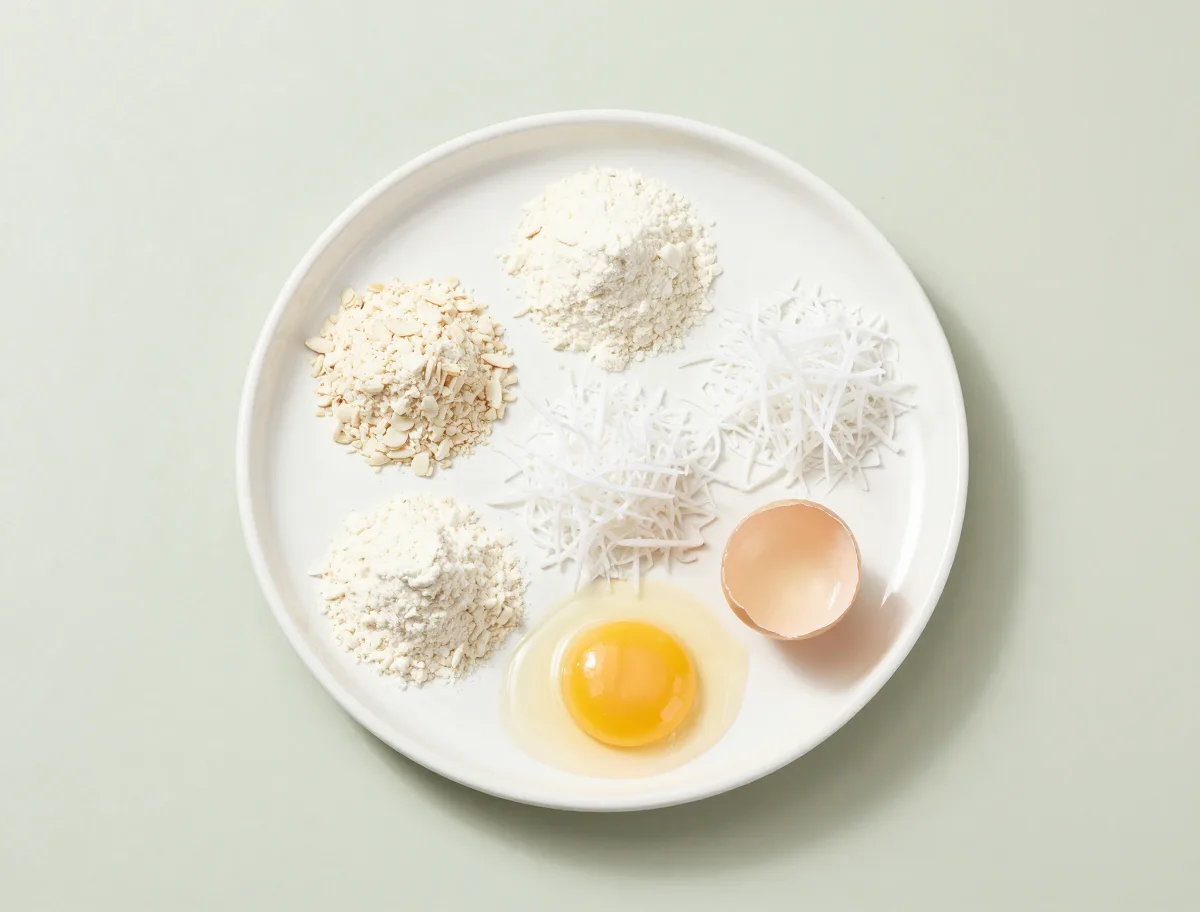
- 3 large eggs, at room temperature
- 180 g granulated sugar
- 140 g fine almond flour
- 140 g unsweetened shredded coconut, divided
- 1/2 teaspoon fine sea salt
- 1 teaspoon vanilla extract
- 1/4 teaspoon almond extract
How to Make Coconut Macaroon Cake Successfully
The most important technique is building enough volume in the eggs and sugar, then protecting that foam while incorporating the dry ingredients. Room-temperature eggs whip more readily, and the batter should go into the oven soon after folding.
- Beat until the mixture is genuinely pale, thick, and ribboning; simply mixing the eggs and sugar together will produce a heavier cake.
- Fold with broad, deliberate strokes and stop as soon as the dry ingredients disappear. Overmixing deflates the batter.
- Spread the surface coconut in a thin, even layer. A thick pile browns unevenly and can keep the cake beneath it moist.
- Bake on the middle rack and use foil as a shield if the topping colors faster than the center cooks.
- Allow the cake to cool in the pan before moving it; the warm, low-gluten structure is fragile.
Instructions
- Prepare the pan: Heat the oven to 350°F (175°C). Grease a 9-inch round cake pan or springform pan, line the base with parchment, and grease the parchment. Set aside 35 g of the shredded coconut for the topping; if the shreds are unusually long, snip them into shorter pieces.
- Whip the eggs and sugar: Using a stand mixer or electric hand mixer, beat the eggs and sugar on medium-high speed for 6 to 8 minutes, until very pale, thick, and voluminous. When the beaters are lifted, the mixture should fall in a slowly dissolving ribbon.
- Combine the dry ingredients: Whisk the almond flour, 105 g of the shredded coconut, and salt in a separate bowl, breaking up any almond-flour clumps.
- Fold the batter: Stir the vanilla extract and almond extract into the whipped egg mixture. Add the almond-flour mixture in two additions, folding gently with a spatula until no dry pockets remain. Do not beat the batter, or the egg foam will lose the lift that gives the cake its tender crumb.
- Add the macaroon topping: Scrape the batter into the prepared pan and smooth the surface. Sprinkle the reserved 35 g coconut evenly over the top, keeping the layer thin and avoiding a heavy mound around the edge.
- Bake: Bake on the middle rack for 35 to 40 minutes, rotating the pan once after 25 minutes if your oven browns unevenly. The top should be golden, the center should look set and spring back lightly when pressed, and a toothpick inserted in the center should come out without wet batter. If the coconut darkens before the center is ready, tent the cake loosely with foil.
- Cool and serve: Cool the cake in the pan for 20 minutes, then run a thin knife around the edge and transfer it to a rack. Cool completely, at least 55 minutes more, before slicing. Serve at room temperature for the fullest coconut aroma and a pleasantly chewy edge.
How to Tell When the Cake Is Done
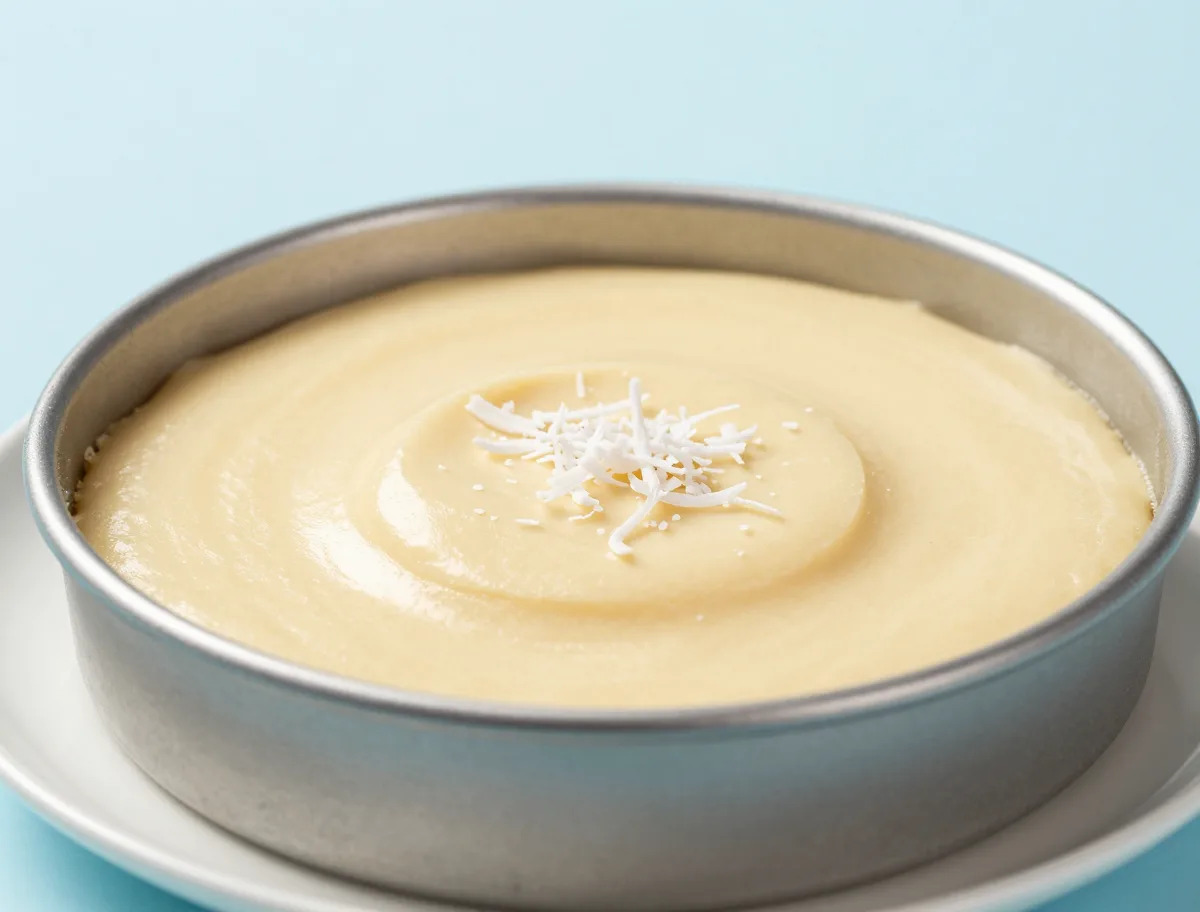
Macaroon cake should be moist and dense, but it should not have a fluid or gummy middle. Because almond flour and coconut retain moisture, the cake continues to firm as it cools, so judge it with both visual cues and a toothpick rather than by browning alone.
- The top should be golden and the coconut lightly toasted, with no broad patches of dark brown.
- A gentle press in the center should leave a slight spring rather than a ripple.
- A toothpick should show no liquid batter. A few damp crumbs indicate a tender cake and are acceptable.
- Wait until the cake is fully cool before slicing or deciding whether the crumb is properly set.
Additional doneness cues
- The coconut topping is pale golden to golden brown, not deeply dark.
- The center looks set rather than fluid and springs back slightly when pressed.
- A toothpick comes out without wet batter; a few moist crumbs are acceptable.
- The cake firms noticeably as it cools and slices cleanly only after complete cooling.
The Variables That Control Moisture and Lift
This cake has little structural support beyond the eggs, almond particles, and coconut fibers, so small changes in ingredient form or mixing can have a noticeable effect. Accurate weighing and gentle handling are more useful here than trying to adjust the batter by feel after the dry ingredients are added.
- Almond flour contains fat and does not form gluten, which creates tenderness but also makes the cake more delicate than a wheat-flour cake.
- Coconut varies in shred size and dryness. Very dry or unusually coarse coconut can make the batter thicker and the finished cake chewier.
- Sugar helps stabilize the egg foam and slows the eggs from setting too quickly. Large reductions can make the cake less tender and less stable.
- Egg foam loses volume through prolonged mixing, rough folding, or a long wait before baking; prepare the pan first and bake promptly.
- Coconut flour is far more absorbent than shredded coconut or almond flour and cannot be substituted by volume.
Common Coconut Macaroon Cake Mistakes
Most problems come from changing the flour, losing the egg foam, or baking until the coconut looks finished before the center has set. Diagnose the cake only after it has cooled, since a warm almond-based crumb can seem softer than it will be when ready to serve.
- Dry or crumbly: The likely causes are overbaking, unusually dry coconut, or using coconut flour. Weigh the ingredients and remove the cake when the center is just set.
- Gummy center: If the middle is still fluid, continue baking with the top loosely covered. If it is merely soft while hot, cool it fully before judging; returning a cooled cake to the oven is not a reliable fix.
- Dense or sunken: Under-whipped eggs, vigorous folding, or an underbaked center can all reduce lift. Beat to the ribbon stage and fold only until combined.
- Burnt coconut: Move the pan to the middle rack and tent with foil once the surface is golden. Avoid pre-toasting the topping for this version.
- Sticking or breaking: Use parchment on the base, cool the cake before unmolding, and loosen the edge with a thin knife.
Ingredient Substitutions for This Macaroon Cake
The formula is intentionally built around fine almond flour and unsweetened coconut. A few substitutions are possible, but each changes the texture or sweetness and should not be treated as interchangeable.
- Almond meal can replace almond flour by weight for a more rustic, slightly coarser cake. The slices may be more fragile.
- Sweetened shredded coconut can be used only if the added sugar is reduced substantially; it also browns faster, so watch the topping closely.
- Do not use coconut flour as a direct replacement for almond flour. It needs considerably more liquid and a separately developed recipe.
- Almond extract may be omitted for a gentler flavor, or replaced with an additional 1/2 teaspoon vanilla extract.
- For strict gluten-free preparation, verify the labeling of the almond flour, coconut, extracts, and any other packaged ingredients.
Ways to Vary the Almond-Coconut Cake
The cake can take on a few complementary accents without losing its macaroon character. Keep additions restrained so the moist, chewy almond-coconut crumb and baked coconut topping remain the focus.
- Add finely grated orange or lemon zest to the egg-and-sugar mixture for a brighter version.
- Scatter a small handful of sliced almonds over the coconut topping for extra crunch, keeping the surface layer thin.
- Drizzle cooled slices with dark chocolate for a bittersweet contrast.
- For a Passover-oriented preparation, use ingredients with the certification required by your community and practice; the almond-flour base itself contains no wheat flour.
- A frosted layer cake or a dessert made from French macaron shells is a different preparation rather than a direct variation of this recipe.
How to Serve Coconut Macaroon Cake
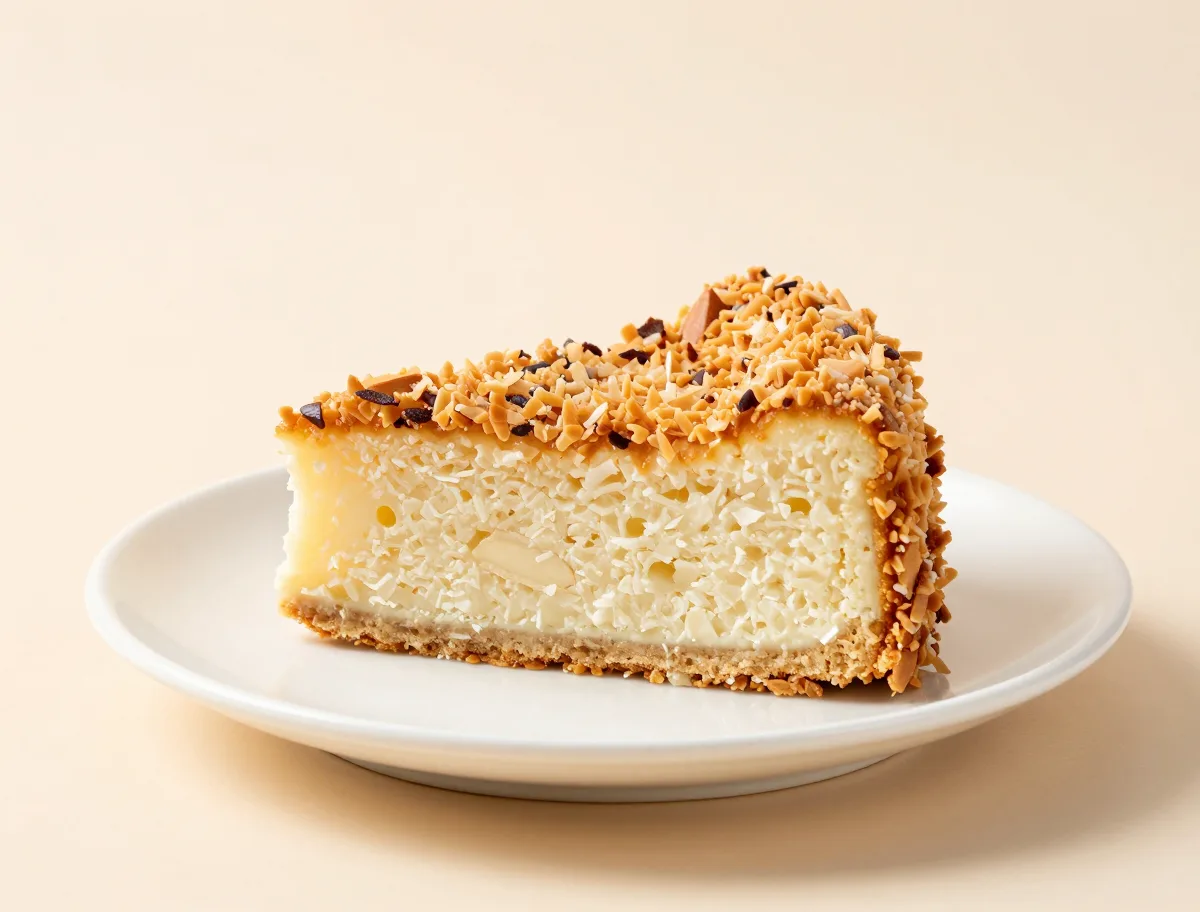
Serve the cake completely cool, preferably at room temperature, when the coconut aroma is most pronounced and the edges have their characteristic chew. Its richness makes modest wedges a good starting point.
- Dust individual slices lightly with confectioners’ sugar if desired; add it just before serving so it does not dissolve into the moist surface.
- Pair with unsweetened whipped cream, tart berries, or citrus segments for freshness.
- A small spoonful of berry or citrus compote balances the cake better than a very sweet sauce.
- Dark chocolate provides a useful bitter contrast, especially when the cake is served as an after-dinner dessert.
- Brief chilling makes the slices firmer and cleaner, while room temperature gives the fullest flavor.
How to Store, Freeze and Refresh the Cake
Cool the cake completely before covering it. Trapping warmth under an airtight cover creates condensation and softens the toasted coconut. For conservative handling, refrigerate the plain cake, especially in a warm kitchen or whenever it will be kept beyond the day it is baked.
- For best quality, keep the fully cooled plain cake tightly covered at room temperature for up to 2 days in a cool, dry kitchen, or refrigerate it for up to 5 days.
- Bring refrigerated slices to room temperature before serving for a softer, more aromatic crumb.
- Freeze the unfrosted cake tightly wrapped for up to 2 months. Thaw it overnight in the refrigerator while wrapped, then uncover and bring it to room temperature.
- Freezing may soften the coconut topping slightly; do not reheat aggressively, since heat can dry the crumb and darken the coconut.
- Any cream, custard, or dairy-based topping requires prompt refrigeration and different storage limits.
For general refrigerated and frozen food-storage guidance, consult the Cold Food Storage Chart.
Coconut Macaroon Cake FAQ
These answers clarify the cake’s identity, flour choices, pan requirements, topping, doneness, and storage so the recipe is easier to adapt without changing its intended texture.
Is this a coconut macaroon cake or an almond macaroon cake?
It is a coconut macaroon cake with almond flour. Coconut supplies the main flavor and chew, while almond flour adds richness and helps form the tender, flourless crumb.
Is this the same as a French macaron cake?
No. This is a baked cake inspired by coconut macaroons, the chewy coconut confection. It is not made from filled French macaron shells.
Can I make this cake gluten-free?
The recipe contains no wheat flour and can be gluten-free when the almond flour, coconut, extracts, and other packaged ingredients are verified gluten-free and handled without cross-contact.
What pan should I use?
A 9-inch round pan or 9-inch springform pan gives the batter the intended depth. Line the base with parchment because the moist, low-gluten cake can otherwise be difficult to release.
Should the coconut topping be added before or after baking?
Add it before baking in a thin, even layer so it becomes part of the toasted surface. If it browns early, tent the pan loosely with foil rather than removing the topping.
Can I use coconut flour instead of almond flour?
No. Coconut flour absorbs much more liquid and is not a one-for-one substitute. Using it here would likely produce a dry, pasty, or crumbly cake.
How do I know the center is done?
The center should look set, spring back lightly, and give a toothpick with no wet batter. A few moist crumbs are fine, and the cake will firm further as it cools.
Can I make the cake ahead?
Yes. Bake it a day ahead, cool it completely, and cover it only when no longer warm. Bring it to room temperature before serving for the best flavor.
Recipe Notes
- This is naturally made without wheat flour. For a strictly gluten-free cake, use certified gluten-free almond flour, coconut, extracts, and other packaged ingredients according to your cross-contact needs.
- Do not replace the almond flour with coconut flour; coconut flour absorbs liquid very differently and requires a new formula.
- For the cleanest slices, chill the fully cooled cake for 20 to 30 minutes before cutting, then let slices stand briefly before serving.
- The cake is moderately rich and compact, so small wedges are usually sufficient.