P.F. Chang’s Recipes: Kung Pao Chicken Copycat
Make P.F. Chang’s recipes Kung Pao Chicken at home with tender wok-fired chicken, dried red chilies, peanuts, crisp vegetables, and a glossy savory-sweet Kung Pao sauce.
What This P.F. Chang’s Kung Pao Chicken Copycat Is Like
This recipe targets the American restaurant interpretation: bite-size tender chicken, a glossy spicy-sweet sauce, dried red chilies, peanuts, green onion, celery, and crisp-tender bell pepper. It should taste chili-forward and tangy, not like a thick sweet-and-sour gravy.
- The sauce should cling lightly to each piece without making the dish soupy.
- Peanuts provide roasted crunch, while celery and bell pepper keep the stir-fry lively.
- The recipe is Sichuan-inspired and P.F. Chang’s-style, rather than a definitive traditional Sichuan formula.
The Ingredients That Build Restaurant-Style Kung Pao Flavor
The recipe uses two separate starch applications for two different jobs. A light cornstarch coating helps the chicken retain moisture and brown; a measured slurry thickens the sauce only at the end. Soy sauce supplies salt and umami, vinegar gives the sauce lift, sugar rounds the heat, and oyster sauce adds savory depth.
- Dried chilies bring aroma, color, and infused heat; chili-garlic sauce spreads additional heat through the sauce.
- Fresh garlic, ginger, and scallion whites form the aromatic base, while the green tops stay fresh for finishing.
- Roasted peanuts should be added late so they contrast with the glossy sauce instead of becoming soft.
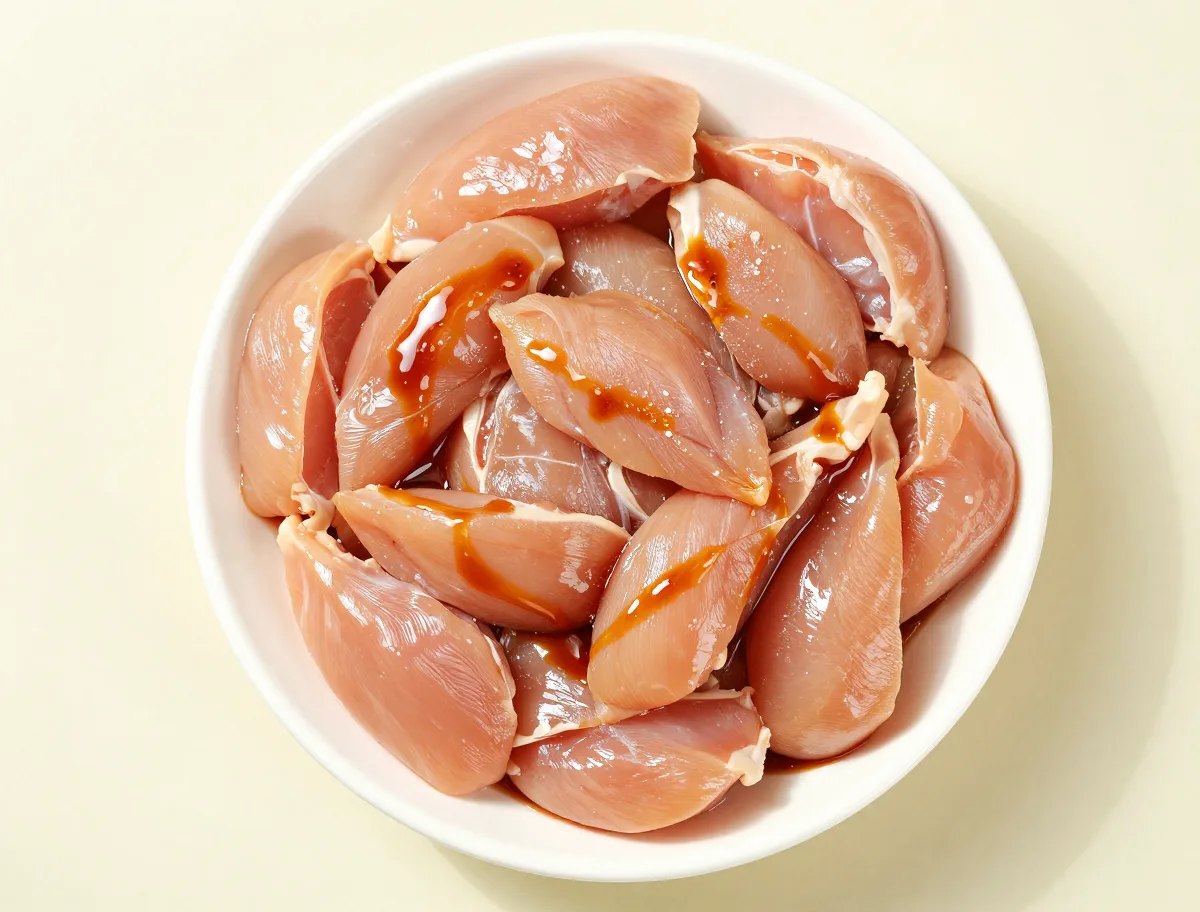
- 1 1/2 pounds boneless, skinless chicken breast, cut across the grain into 3/4-inch pieces and patted dry
- 1 tablespoon low-sodium soy sauce, for the chicken
- 1 tablespoon Shaoxing wine, for the chicken
- 2 tablespoons cornstarch, for the chicken coating
- 3 tablespoons low-sodium soy sauce, for the sauce
- 1 1/2 tablespoons unseasoned rice vinegar
- 1 1/2 tablespoons light brown sugar, packed
- 1 tablespoon oyster sauce
- 1 tablespoon chili-garlic sauce, such as sambal oelek
- 1/3 cup unsalted chicken stock
- 1 teaspoon cornstarch, for the sauce slurry
- 2 tablespoons neutral high-heat oil, such as grapeseed, canola, or peanut oil
- 8 to 10 whole dried red chilies, snipped into 1-inch pieces; shake out some seeds for less heat
- 3 cloves garlic, finely chopped
- 1 tablespoon fresh ginger, finely grated
- 4 green onions, white and pale-green parts sliced separately from the greens
- 2 stalks celery, cut on the diagonal into 1/2-inch pieces
- 1/2 medium red bell pepper, cut into 1-inch squares
- 2/3 cup dry-roasted unsalted peanuts
- 1 teaspoon toasted sesame oil
How to Make the Chicken Tender and Wok-Fired
Cut the chicken into evenly sized pieces across the grain so it finishes at the same time. Drying it before coating is important: surface moisture turns a fast stir-fry into a steam bath and prevents the thin starch layer from browning.
- Measure the sauce and arrange the vegetables before turning on the heat; the cooking sequence moves quickly.
- Sear the chicken in a single layer and remove it before cooking the vegetables.
- Bloom the dried chilies briefly, then add the fresh aromatics and liquid before they can scorch.
- Return the chicken only after the sauce has begun to thicken, and toss just long enough to finish cooking.
- Mix the sauce: In a small bowl, whisk together the sauce soy sauce, rice vinegar, brown sugar, oyster sauce, chili-garlic sauce, and chicken stock. In a second small bowl, stir the sauce cornstarch with 1 tablespoon of the mixed sauce until smooth, then return it to the bowl. Stir again immediately before using. 3 minutes.
- Coat the chicken: Toss the chicken with the chicken soy sauce and Shaoxing wine. Sprinkle with the coating cornstarch and turn until every piece has a thin, slightly tacky coating. Let stand while the pan heats; do not leave it in a pool of liquid. 5 minutes.
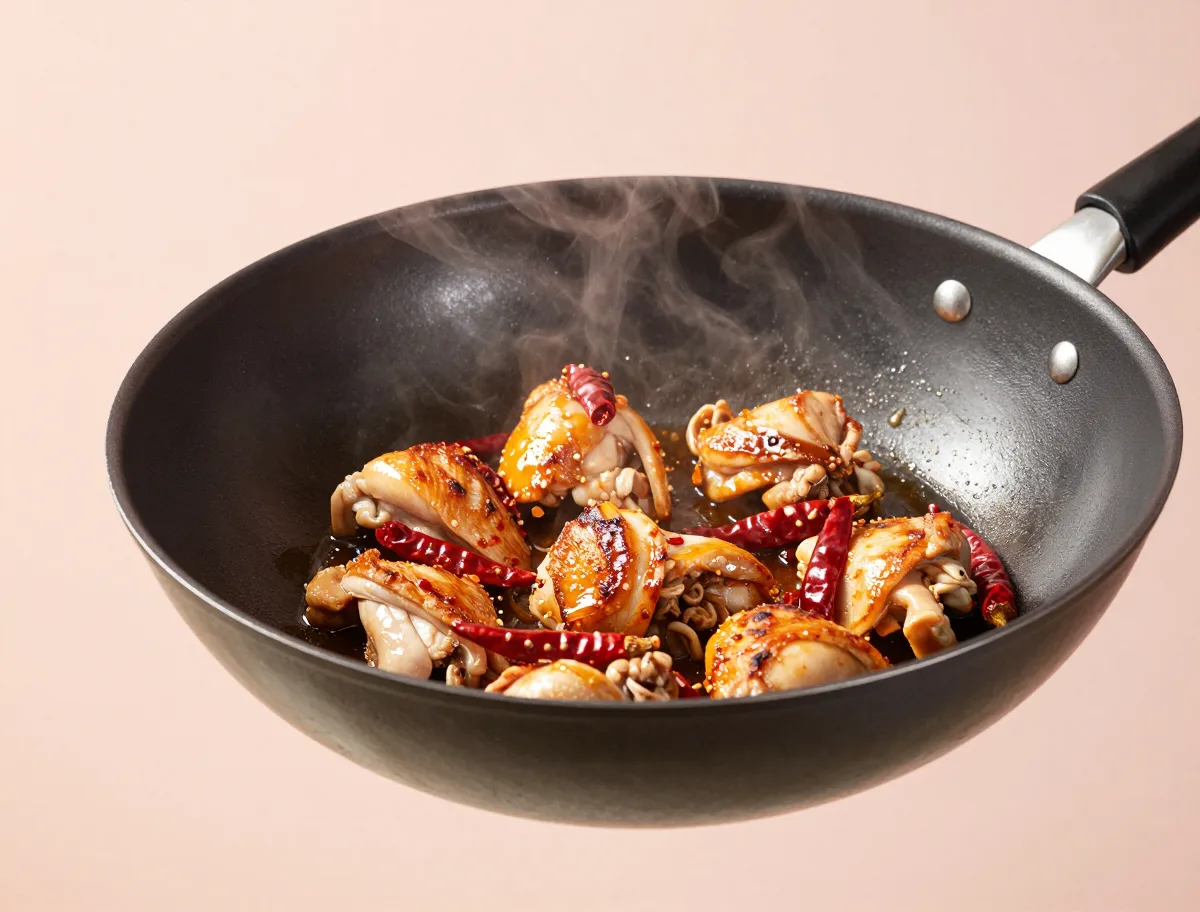
- Sear the chicken: Heat a wok or 12-inch skillet over high heat until a drop of water evaporates on contact. Add 1 tablespoon of the neutral oil and half the chicken in a single layer. Sear without moving for 1 minute, then stir-fry for 2 to 3 minutes, until browned and nearly cooked through. Transfer to a plate and repeat with the remaining oil and chicken. Keep the batches separate if the pan is not large enough for one uncrowded layer. 7 minutes.
- Stir-fry the vegetables and aromatics: Add the dried chilies to the hot pan and stir for 15 to 20 seconds, just until fragrant and slightly darkened. Add the celery and bell pepper; stir-fry for 1 1/2 minutes, leaving their edges crisp. Add the garlic, ginger, and sliced green onion whites and cook for 30 seconds, until aromatic. If the chilies begin to blacken, lower the heat immediately. 3 minutes.
- Glaze and finish: Stir the sauce slurry, pour it into the pan, and toss for about 30 seconds as it bubbles and turns glossy. Return the chicken and any accumulated juices to the pan. Toss for 1 to 2 minutes, until the sauce clings to the chicken and the thickest piece reaches 165°F (74°C). Remove from the heat and fold in the peanuts, toasted sesame oil, and sliced green onion tops. 2 minutes.
- Serve immediately: Spoon the Kung Pao chicken over hot steamed rice and serve while the sauce is shiny and the peanuts are crunchy.
How to Tell When Kung Pao Chicken Is Done
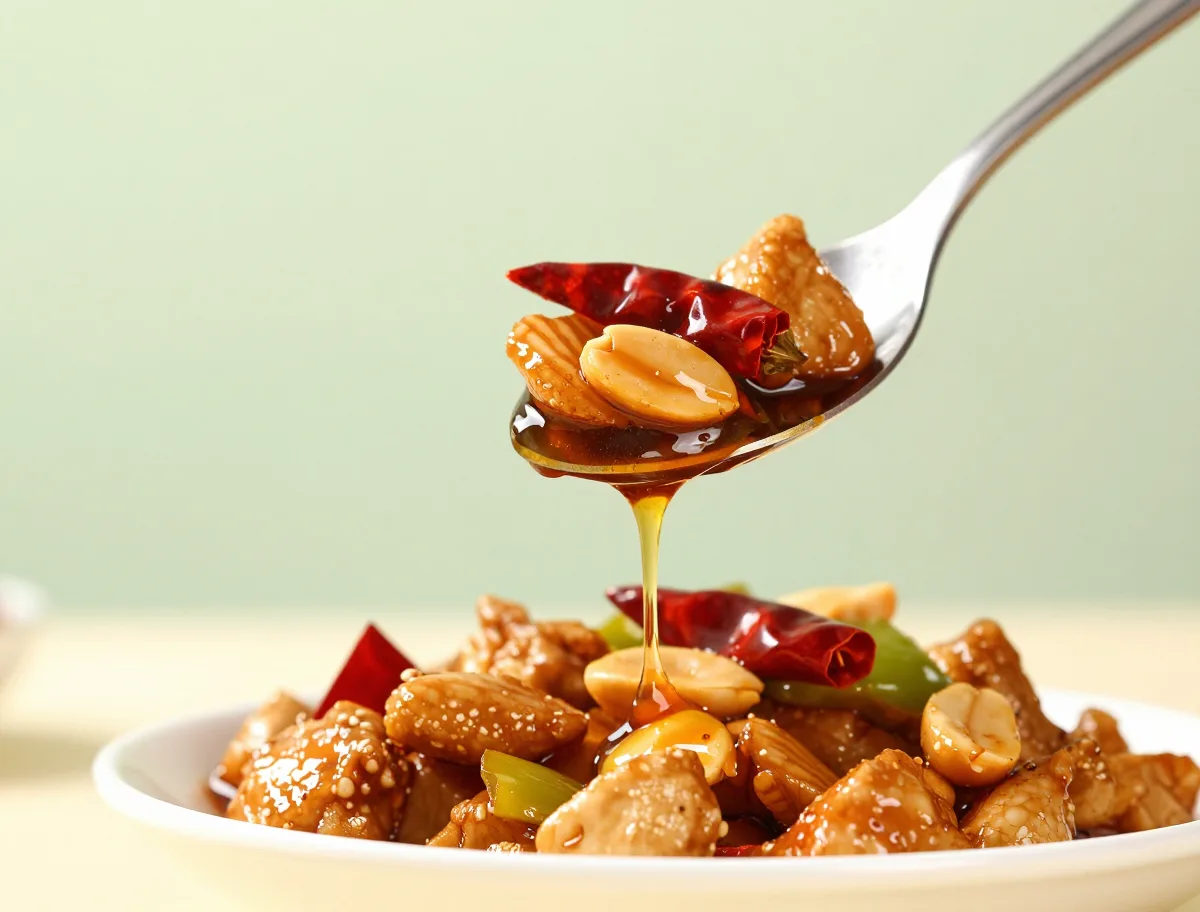
Look for contrast rather than uniform softness. The chicken should be opaque, firm but yielding, and lightly coated; the vegetables should retain sharp edges and a little snap; and the sauce should leave a shiny film on the food and pan.
- Use an instant-read thermometer when possible and check the thickest chicken piece for 165°F (74°C).
- A properly thickened sauce remains fluid and glossy. If it turns pasty, it has been over-thickened or boiled too long.
- The chilies should be fragrant and slightly darkened, never blackened.
- Peanuts lose their defining crunch if they sit in the sauce for a long time.
- The chicken has browned edges, is opaque throughout, and reaches 165°F (74°C) in the thickest piece.
- The sauce forms a thin glossy coating rather than pooling like gravy.
- Celery and bell pepper remain bright and crisp-tender.
- Dried chilies are fragrant and darkened slightly, never black or smoking.
- Peanuts are added at the end and remain noticeably crunchy.
The Cooking Variables That Make or Break the Stir-Fry
High heat helps only when the pan has room to evaporate moisture. An overcrowded wok or skillet cools rapidly, causing the chicken and vegetables to release liquid and steam. Batch cooking, dry ingredients, and a short finishing stage do more for texture than simply turning the burner higher.
- Keep the chicken pieces separated in the pan; two quick batches are better than one wet batch.
- Always disperse cornstarch in cold liquid before it reaches the hot pan so the sauce thickens smoothly.
- Use a restrained amount of slurry. The goal is a coating, not a spoon-standing paste.
- Residual heat continues cooking the chicken and vegetables, so remove the pan as soon as the sauce clings.
Common Kung Pao Chicken Mistakes and How to Avoid Them
Most disappointing stir-fries result from excess moisture or delayed timing. Fix the conditions before cooking rather than trying to rescue an over-reduced, salty sauce or meat that has already become dry.
- Watery chicken: Dry the meat and cook in smaller batches. Do not aggressively reduce a pan full of released juices, which can overcook the chicken.
- Dry chicken: Use smaller uniform pieces and remove them as soon as they are nearly done; the sauce finish supplies the final cooking.
- Bitter flavor: Burned chilies, garlic, or ginger are the usual cause. Remove scorched solids if possible, but severe bitterness cannot be fully repaired.
- Gummy sauce: Loosen it with a small splash of unsalted stock or water. Next time, use less slurry and stop boiling once the sauce turns glossy.
- Soft peanuts: Reserve a portion and scatter them over the dish immediately before serving.
Kung Pao Sauce and Ingredient Substitutions
Bottled P.F. Chang’s Kung Pao sauce is not necessary here; the homemade soy, vinegar, sugar, chili, and umami mixture is designed to supply the same broad flavor structure. Because commercial sauces vary in sweetness and sodium, substituting one for the other is not always a straight volume exchange.
- Replace Shaoxing wine with an equal amount of dry sherry. Sake or unsalted stock works in a pinch but gives a gentler flavor.
- Use vegetarian mushroom oyster sauce for a vegetarian-friendly umami substitute, or use 2 teaspoons hoisin sauce and reduce the brown sugar slightly. Hoisin is sweeter and thicker.
- Tamari can replace soy sauce, but check the label for gluten-free certification. Verify the oyster sauce, chili-garlic sauce, and stock as well.
- Potato starch can replace the chicken’s cornstarch for a lighter, somewhat crisper coating; the sauce slurry is most predictable with cornstarch.
- Cashews can replace peanuts for crunch, but the flavor becomes a cashew variation and the dish still contains a tree nut.
Heat, Sodium and Texture Variations
Adjustments work best when they preserve the dish’s defining combination of chicken, dried chilies, peanuts, aromatics, and balanced sauce. Removing all chilies or replacing the sauce with a sweet bottled glaze changes the character substantially.
- For less heat, remove more chili seeds and reduce the chili-garlic sauce while retaining several whole chilies for aroma.
- For a lower-sodium version, use low-sodium soy sauce, unsalted stock, and a restrained amount of oyster sauce; taste before the sauce thickens.
- Boneless chicken thighs are juicier and more forgiving but slightly less lean. Adjust cooking time by doneness rather than by the clock.
- Sichuan peppercorn may be added as a traditionalizing variation, but it introduces a citrusy, numbing mala character not required for this copycat target.
- To pursue a crispier version, use potato starch and fry or sear the chicken separately, understanding that the sauce will soften the coating.
What to Serve with Kung Pao Chicken
Serve the stir-fry immediately over hot steamed white rice. The neutral rice absorbs extra sauce and moderates the chili heat without competing with the chicken, peanuts, and vegetables.
- Brown rice or fried rice are suitable alternatives, though fried rice makes the meal richer and more heavily seasoned.
- Finish with the green onion tops and, if desired, a few reserved peanuts for color and crunch.
- A simple steamed vegetable or cool cucumber side provides contrast without introducing another strongly seasoned dish.
How to Store, Freeze and Reheat Kung Pao Chicken
For the best texture, prepare the sauce, vegetables, aromatics, and raw chicken ahead, then cook the stir-fry just before eating. Once sauced, the peanuts and vegetables gradually soften, so leftovers will be flavorful but less crisp than the fresh dish.
- Refrigerate cooked chicken promptly in a shallow container within 2 hours, or within 1 hour if the room is above 90°F. Keep the refrigerator at 40°F or below.
- Use refrigerated leftovers within 3 to 4 days.
- Reheat a serving in a skillet with a small splash of water or stock until it reaches 165°F throughout. A microwave is faster but softens the coating more.
- Freeze cooked chicken and sauce separately when practical, and keep peanuts and scallions separate for serving. Freezing the completed dish is safe when cooled promptly, but celery, bell pepper, and the coating will soften after thawing.
P.F. Chang’s Kung Pao Chicken Copycat FAQ
These answers address the practical choices that most affect the flavor and texture of this homemade restaurant-style chicken stir-fry.
How closely does this recipe aim to reproduce P.F. Chang’s Kung Pao Chicken?
It is an independently formulated copycat based on the publicly described profile: spicy chili sauce, tender chicken, peanuts, green onion, celery, and red chilies. P.F. Chang’s proprietary formula and cooking method are not public, so no homemade recipe can verify an exact match.
Can I use a skillet instead of a wok?
Yes. Use a large, heavy 12-inch skillet and cook the chicken in batches. The broad surface is helpful, but overcrowding will steam the ingredients and produce pale chicken.
Do I need bottled P.F. Chang’s Kung Pao sauce?
No. The sauce in this recipe combines soy sauce, vinegar, sugar, chili-garlic sauce, oyster sauce, and stock to create the same general salty-sweet, tangy, chili-forward balance. Bottled sauces vary enough in sweetness and sodium that they may require adjustment.
How can I make the dish milder?
Use fewer dried chilies, remove most of their seeds, and reduce the chili-garlic sauce to 1 teaspoon. Keep a few whole chilies in the pan so the dish retains its characteristic aroma.
Why did my chicken turn soggy?
The pan was probably crowded, the chicken was too wet, or the sauce was added too early. Dry the pieces, cook in batches, and add the sauce only after the vegetables are crisp-tender and the chicken is nearly cooked.
Should the chicken be fried or velveted?
This weeknight version uses a light cornstarch coating and high-heat searing. Velveting gives silkier chicken, while frying with a heavier starch coating gives a crisper exterior that softens once sauced; these are different valid texture goals.
Can I make this gluten-free?
Use certified gluten-free tamari or soy sauce and verify every condiment, including oyster sauce, chili-garlic sauce, stock, and cornstarch packaging. Tamari is not automatically gluten-free in every brand.
How This Restaurant Copycat Relates to Traditional Kung Pao Chicken
Kung Pao chicken, or gong bao ji ding, is strongly associated with Sichuan cuisine and is commonly linked to Ding Baozhen’s title, Gong Bao. Accounts of the dish’s precise origin differ, so a single origin story should not be treated as settled fact.
- Traditional versions commonly center on diced chicken, dried chilies, peanuts, aromatics, and a sweet-sour-savory balance.
- Sichuan peppercorn is common in traditional interpretations but is optional here because it is not part of the publicly described P.F. Chang’s ingredient profile.
- P.F. Chang’s version is a modern American restaurant interpretation, so this recipe is best described as Sichuan-inspired and P.F. Chang’s-style rather than as an authoritative regional formula.
The public P.F. Chang’s official catering menu describes the restaurant-style profile of spicy Sichuan chili sauce, peanuts, green onion, celery, and red chili peppers used as the copycat target.
Food Safety for Chicken Stir-Fry
Keep raw poultry separate from cooked food throughout preparation. Use a clean plate for cooked chicken, wash hands and tools after handling the raw meat, and use the separate sauce mixture rather than any liquid that has contacted the chicken.
- Cook the chicken to 165°F (74°C) in the thickest piece; color alone is not a reliable safety test.
- Refrigerate or freeze leftovers within 2 hours, or within 1 hour when the ambient temperature is above 90°F.
- Reheat leftovers to 165°F throughout before serving.
- Potential allergens include peanuts, soy, wheat, sesame, and oyster sauce ingredients. Check labels and account for cross-contact when cooking for someone with an allergy.
For additional poultry temperature, leftover reheating, and storage guidance, consult the FDA safe food-handling guidance.
Recipe Notes
- This is an independently formulated homemade copycat aimed at the current P.F. Chang’s-style profile, not an official or proprietary restaurant formula.
- For mild Kung Pao chicken, use 4 to 5 chilies, remove most seeds, and reduce the chili-garlic sauce to 1 teaspoon. For hotter chicken, use the full chili range and add chili-garlic sauce gradually to taste.
- For especially silky chicken, replace the direct sear with a brief velvet: mix the coated chicken with 1 tablespoon water and 1 teaspoon oil, rest 20 minutes, then blanch in barely simmering water until the outside turns opaque. Drain very thoroughly and finish it in the pan at step 5; still verify 165°F.
- A large skillet works as well as a wok. Its flatter surface makes batch cooking particularly important.
- Serve with steamed white rice for the closest neutral restaurant-style pairing; brown rice or fried rice also works.