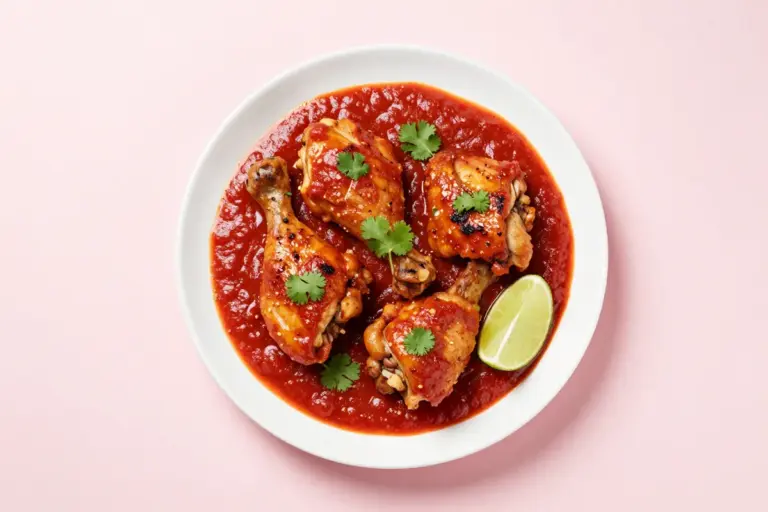
Authentic Mexican Chicken Burrito Recipe
This traditionally inspired northern Mexican-style chicken burrito pairs tender chile-seasoned shredded chicken with refried beans, a modest amount of Mexican rice, and fresh pico de gallo inside a warm flour tortilla. Serve it soft or give it a brief skillet toast for a lightly crisp finish.
What Makes This a Traditionally Inspired Mexican Chicken Burrito
There is no single national formula for an authentic Mexican burrito. This version takes its cue from northern Mexican flour-tortilla burritos, where a well-seasoned guisado is the focus, then adds restrained refried beans, rice, and fresh pico for a practical, substantial home meal. The chicken remains the principal filling rather than being buried under toppings.
- Use a large, soft flour tortilla associated with northern Mexican burrito traditions.
- Aim for a moist, cohesive center and a compact roll that can be eaten by hand.
- Soft service is the traditional baseline; brief skillet toasting is an optional dorado-style finish.
- Rice, cheese, guacamole, and crema broaden the burrito toward border or Mexican-American styles without defining every Mexican burrito.
Why the Chicken, Beans, Rice, and Tortilla Work Together
The chicken is cooked with chile, aromatics, and concentrated broth so it tastes seasoned throughout rather than merely dusted with spices. Refried beans provide a smooth layer that binds the filling, while a modest portion of rice adds body without absorbing all the available moisture. Lime, pico de gallo, and cilantro keep the combination lively.
- Chicken thighs offer the most forgiving texture; their cooking juices also help prevent a dry shredded filling.
- Ancho chile contributes rounded chile flavor and mild fruitiness. Add a pinch of hotter chile to the seasoning if desired.
- Refried beans act as both a creamy element and a structural adhesive.
- Rice should be warm and moderately moist, never wet or tightly packed.
- Fresh toppings add acidity and contrast, but draining pico is essential for a sturdy tortilla.
- Cheese, guacamole, and crema are useful optional additions rather than requirements.
- 1 1/4 pounds boneless, skinless chicken thighs, trimmed
- 2 tablespoons fresh lime juice, divided
- 2 tablespoons neutral oil, divided
- 1 teaspoon ground ancho chile
- 1 teaspoon ground cumin
- 1/2 teaspoon dried Mexican oregano, crumbled
- 1/2 teaspoon fine salt, plus more for the beans if needed
- 1/4 teaspoon black pepper
- 1/2 medium white onion, finely diced
- 2 cloves garlic, finely chopped
- 2 tablespoons tomato paste
- 1/2 cup chicken broth
- 1 1/2 cups refried pinto beans
- 1 1/2 cups cooked Mexican rice, warm
- 4 10- to 12-inch flour tortillas, fresh and flexible
- 3/4 cup pico de gallo, drained well
- 1/2 cup shredded Monterey Jack cheese, optional
- 1/2 cup guacamole, optional, for serving or a restrained amount inside
- 1/4 cup Mexican crema, optional, for serving
- 1/4 cup fresh cilantro leaves, chopped, plus more for serving
- 1 whole lime, cut into wedges
How to Assemble and Roll a Chicken Burrito
The most important technique is controlling the shape of the filling. Prepare every component before warming the tortillas, then work while the tortillas are supple. A short, low mound rolls more securely than a large pile spread across the center.
- Warm tortillas only until they flex; prolonged dry heat makes them brittle.
- Place the filling in the lower third and leave generous side margins.
- Spread the beans first so they form a base, then add chicken and rice in a narrow line.
- Fold both sides inward before bringing up the bottom edge.
- Tuck the near edge firmly over the filling while rolling, then rest the burrito seam-side down.
- If toasting, start seam-side down over moderate heat so the seal sets before the tortilla browns.
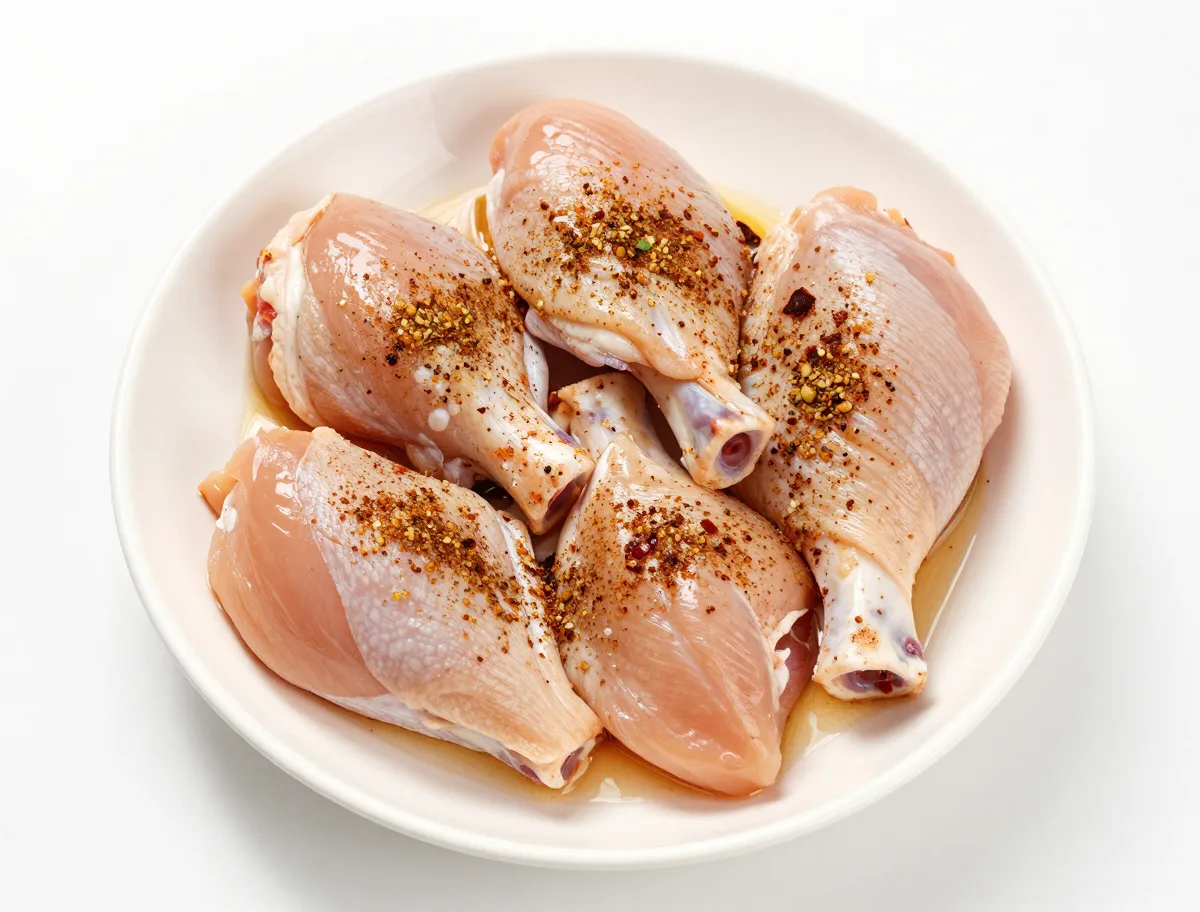
- Season the chicken: Combine the chicken with 1 tablespoon lime juice, 1 tablespoon oil, ancho chile, cumin, oregano, salt, and pepper. Turn to coat and let stand for 15 minutes while preparing the remaining ingredients.
- Build the chile-onion base: Heat the remaining oil in a large skillet over medium heat. Add the onion and cook until softened, about 4 minutes. Stir in the garlic and tomato paste and cook for 1 minute, until the paste darkens slightly.
- Cook the chicken gently: Add the seasoned chicken and chicken broth. Bring the broth to a gentle simmer, cover, and cook, turning the chicken once, until the thickest piece reaches 165°F (74°C), about 10 to 12 minutes. Transfer the chicken to a plate and leave the skillet juices over medium heat.
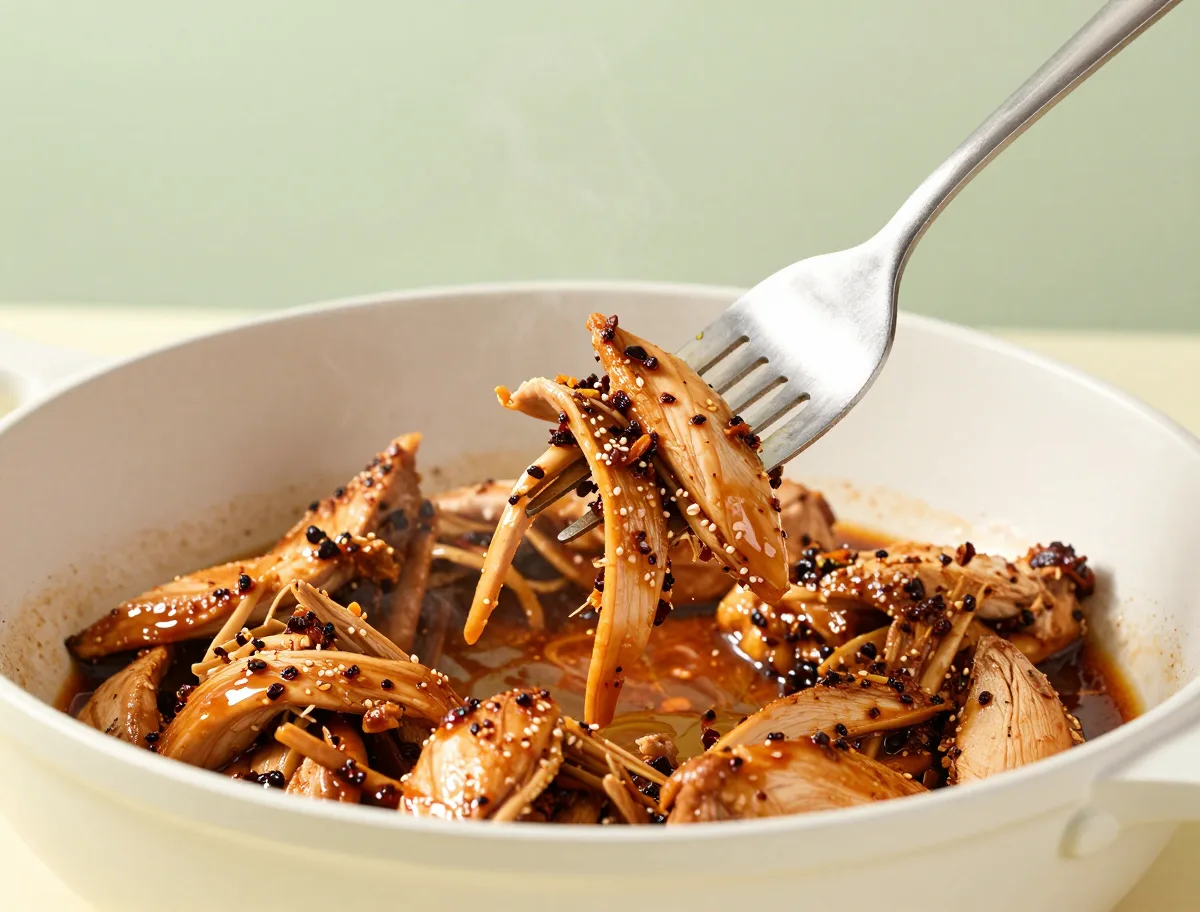
- Shred and concentrate the juices: Shred the chicken with two forks. Simmer the skillet juices uncovered for 2 to 3 minutes, until thick enough to coat a spoon rather than pool. Return the chicken to the skillet, add the remaining lime juice and cilantro, and toss until glossy and moist. Remove from the heat.
- Warm the fillings and tortillas: Warm the refried beans and rice separately until hot; loosen the beans with a spoonful of their own moisture if needed, but keep them spreadable rather than runny. Heat a dry skillet or comal over medium heat and warm each tortilla for 15 to 20 seconds per side, just until flexible. Keep warmed tortillas covered with a clean towel.
- Fill each burrito: Place one tortilla on the work surface. Spread about 1/3 cup refried beans in a narrow strip in the lower third, leaving at least 2 inches clear at the sides and bottom. Add about 3/4 cup chicken, 1/3 cup rice, and 3 tablespoons drained pico de gallo. Add cheese or a small spoonful of guacamole if using; do not mound the filling.
- Fold and roll tightly: Fold the left and right edges inward over the ends of the filling. Lift the bottom edge over the filling, tuck it firmly toward you, and continue rolling into a compact cylinder. Set the burrito seam-side down and repeat with the remaining tortillas and fillings.
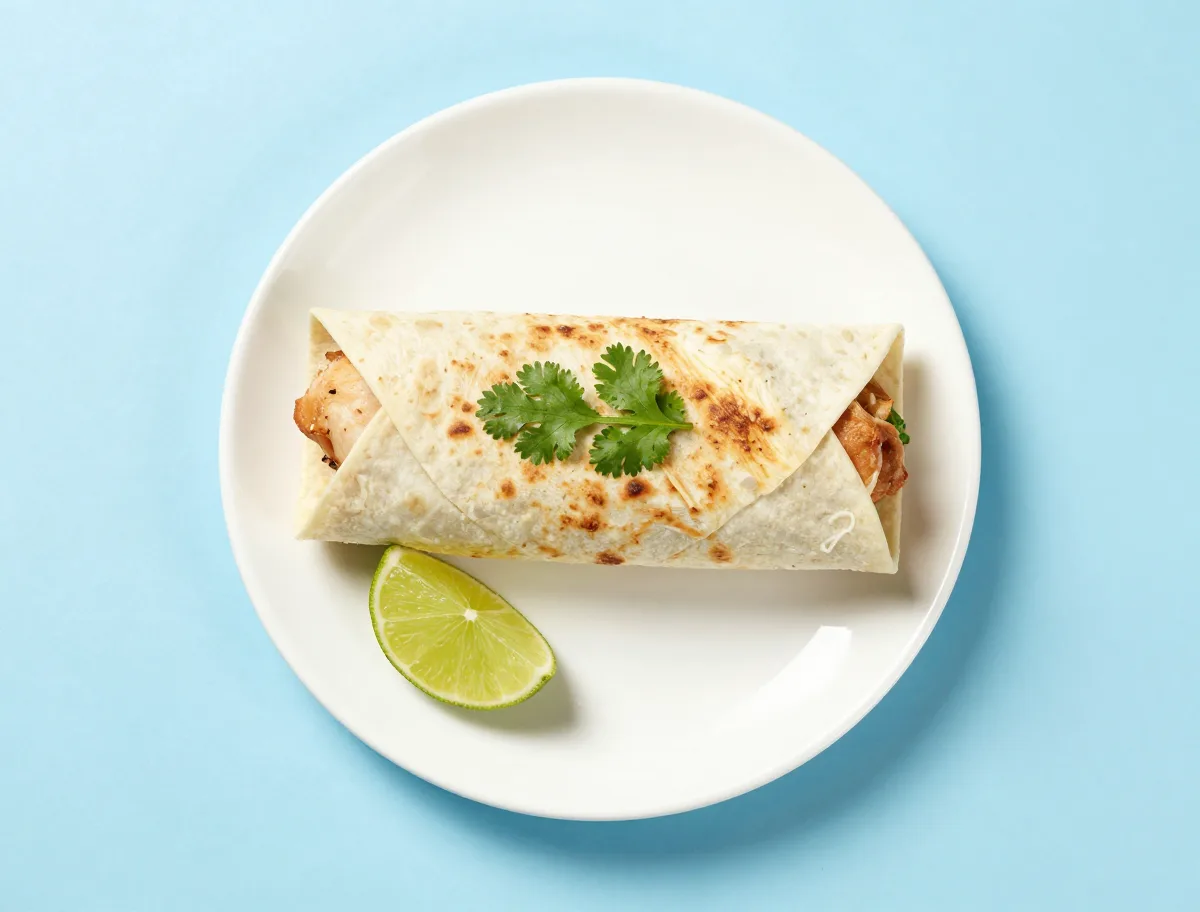
- Serve soft or toast dorado-style: For soft burritos, serve immediately with crema, extra guacamole, cilantro, and lime wedges. For a lightly crisp exterior, return the burritos seam-side down to the dry skillet over medium-low heat. Toast for 1 to 2 minutes per side, turning gently, until golden in spots and warmed through. Serve at once with the same accompaniments.
How to Tell When the Burritos Are Done
Good burritos are defined by texture as much as flavor. The chicken should shred easily but still look juicy, and its sauce should cling to the meat. The tortilla must be flexible before filling and strong enough to hold a firm, compressible cylinder afterward.
- Use a thermometer to confirm the chicken reaches 165°F (74°C); tenderness is a separate quality check.
- The reduced juices should coat the chicken instead of running into the tortilla.
- The filling should form one continuous center with no bulky, loose pockets.
- A soft burrito should remain pliable and closed seam-side down.
- A crisped burrito should be lightly golden and crisp at the surface while the interior stays moist.
- The chicken reaches 165°F (74°C) in its thickest section and pulls apart easily while remaining moist.
- The reduced cooking juices cling to the shredded chicken instead of collecting as free liquid.
- The beans spread smoothly, the rice is hot and separate, and the pico de gallo is drained rather than watery.
- A warmed tortilla bends without cracking.
- The finished burrito is firm and compact, with sealed ends and no filling escaping.
- A toasted burrito has scattered golden spots and a crisp surface, not a hard or dark shell.
The Moisture Rules for a Burrito That Does Not Turn Soggy
Burrito problems are usually moisture or structure problems. Warm fillings are fine, but free liquid migrates into the tortilla and weakens it. Concentrating the chicken juices, draining fresh salsa, and using starches in moderate amounts creates a filling that is moist without being wet.
- Reduce broth and pan juices until they cling to the chicken.
- Drain watery toppings before they touch the tortilla.
- Avoid overloading rice and beans: both absorb liquid, but too much can make the center pasty or dry.
- Warm the fillings before assembly so a toasted burrito heats through before its exterior becomes too dark.
- Use medium-low heat for pan-toasting; high heat browns the tortilla faster than it warms the center.
Common Chicken Burrito Mistakes and How to Fix Them
A burrito that tears, leaks, or tastes dry can usually be traced to one controllable choice. Correct the filling before trying to force a larger roll; once a tortilla is saturated or torn, rewrapping is more reliable than repairing it.
- Dry chicken: It was likely overcooked or shredded without its juices. Toss it with the reduced skillet sauce; next time, check lean breast meat earlier.
- Soggy tortilla: Drain pico and reduce the chicken juices further. Serve wet condiments separately if the burritos will stand.
- Torn tortilla: Warm it more briefly but thoroughly, use a larger tortilla, and reduce the filling rather than stretching the wrap.
- Loose burrito: Make the filling log shorter and lower, tuck the bottom edge firmly, and set the finished roll seam-side down.
- Burned outside and cool center: Lower the pan heat and begin with warm fillings. Cover briefly if the center needs help warming.
Smart Substitutions for Chicken Burritos
The recipe is flexible, but each substitution changes the burrito’s moisture or structure. Keep the filling quantity modest when using a less elastic tortilla or ingredients that do not bind as well.
- Chicken breast may replace thighs, but cook it only to 165°F (74°C) and mix it with the reduced pan juices immediately.
- Chopped chicken works in place of shredded chicken; the bites will be more distinct and slightly less cohesive.
- Well-drained pinto or black beans can replace refried beans. Lightly mash them so they do not roll out of the tortilla.
- Omit the rice for a smaller, more chicken-centered burrito, or omit the beans for a looser filling that should be rolled more carefully.
- Omit cheese and crema for a dairy-free burrito; avocado or beans can provide richness.
- A large gluten-free wrap can work, but performance varies considerably. Warm it according to its package directions and use less filling if it cracks.
- A large, freshly made corn tortilla is possible in some regional preparations, but standard small corn tortillas are not a direct structural substitute for the flour tortilla used here.
Authentic-Style Variations That Still Feel Like a Chicken Burrito
Keep the chicken seasoned with Mexican aromatics and chile, and change only the balance or finish. A compact chicken-and-bean version is closer to the single-guisado spirit often associated with northern burritos; a fuller rice-and-bean version is a broader border-style adaptation.
- For a simpler northern-inspired version, use chicken with a thin smear of beans and serve rice on the side.
- For more heat, add a small amount of hot chile to the chicken seasoning rather than flooding the burrito with hot sauce.
- Use black beans instead of pinto beans for a different flavor and slightly firmer texture.
- Add cheese, guacamole, and crema for a richer border or Mexican-American profile.
- Serve the burrito soft, or toast it lightly for a dorado-style surface.
- A sauce-covered burrito is a plated wet burrito; deep-frying the roll changes it into a chimichanga.
How to Serve Mexican Chicken Burritos
Serve these burritos as soon as they are rolled, or immediately after skillet toasting. The best accompaniments add brightness without soaking the tortilla: lime, cilantro, drained pico, salsa, guacamole, and a restrained spoonful of crema.
- Offer extra pico de gallo or salsa on the side so diners can control moisture and heat.
- Finish with lime just before eating for acidity that cuts through the beans and chicken.
- Serve guacamole and crema at the table when the burritos need to remain portable.
- Pair with a simple green salad, grilled vegetables, or a small serving of beans rather than another heavy starch.
- If the burrito is smothered with sauce, serve it on a plate and eat it with a fork.
How to Store, Freeze, and Reheat Chicken Burritos
For the best tortilla texture, prepare the chicken, beans, and rice ahead but assemble close to serving. Fresh tomato salsa, guacamole, and crema are best added after reheating because their water and fat can soften the wrap during storage.
- Cool cooked chicken, rice, and beans in shallow containers and refrigerate within 2 hours, or within 1 hour above 90°F (32°C).
- Use refrigerated cooked chicken or assembled leftovers within 3 to 4 days when held at 40°F (4°C) or below.
- For freezing, assemble with chicken, beans, and rice only; omit pico, guacamole, and crema. Wrap tightly, label, and freeze for best quality within 2 to 6 months.
- Thaw frozen burritos in the refrigerator overnight when possible.
- Reheat covered in a 350°F (175°C) oven or in a covered skillet until the center reaches 165°F (74°C), then uncover briefly to dry and crisp the tortilla.
- When microwaving, cover, rotate during heating, and let the burrito stand briefly before checking the center temperature.
Chicken Burrito Questions, Answered
These practical answers address the choices that most affect flavor, authenticity, structure, and serving style.
Is chicken breast or thigh better for burritos?
Both work, but boneless thighs are more forgiving and stay juicier during cooking and reheating. Breast is a leaner option; monitor it closely and coat the shredded meat with the reduced cooking juices.
Should the chicken be shredded or chopped?
Shredded chicken is the most cohesive choice because it catches the chile-seasoned juices and combines neatly with the beans. Chopped chicken gives larger, meatier pieces and is also suitable.
Can rice and refried beans go in the same burrito?
Yes. This recipe uses both in controlled amounts, but they do not have to appear together. A smaller northern-inspired burrito may use chicken with only a modest bean layer, while omitting rice reduces bulk and dryness risk.
Does an authentic Mexican burrito have to be toasted?
No. Soft service is a valid and traditional way to serve many burritos. Brief skillet toasting is an optional dorado-style finish that adds a lightly crisp exterior.
How do I stop pico de gallo from making the tortilla soggy?
Drain it well before assembly and use a restrained amount. If the burritos will be stored, leave pico out entirely and serve it after reheating.
How much filling should go in a burrito?
Use enough to make a substantial short log, but leave at least 2 inches at the side margins and enough room to fold the bottom edge over the filling. The tortilla should close without being stretched tight.
A Note on Mexican Burrito Tradition
The modern flour-tortilla burrito is strongly associated with northern Mexico, particularly regions such as Sonora and Chihuahua, where wheat-flour tortillas have deep culinary roots. The exact origin of the burrito is disputed, and historical uses of related rolled-tortilla terms are not perfectly uniform. For additional context, see Britannica’s overview of the burrito.
- Northern Mexican burritos are often compact and centered on one flavorful guisado, sometimes with refried beans.
- Large combinations of chicken, rice, beans, cheese, guacamole, and crema are also recognizable burritos, but more closely reflect border, Mexican-American, Mission-style, or restaurant adaptations.
- This recipe is best described as traditionally inspired northern Mexican-style with practical rice-and-bean additions.
- No single ingredient list represents every regional Mexican burrito, and popular invention stories should not be treated as settled history.
Chicken Burrito Food Safety
Handle raw chicken separately from tortillas, cooked fillings, and ready-to-eat garnishes. A thermometer is more reliable than color or texture for confirming poultry doneness, particularly when using boneless pieces of different sizes. For authoritative poultry and leftover temperature guidance, consult the USDA safe cooking temperature chart.
- Cook chicken to 165°F (74°C), measured in the thickest piece.
- Reheat cooked burritos and leftovers to 165°F (74°C) before serving.
- Refrigerate perishable components within 2 hours, or within 1 hour when the surrounding temperature exceeds 90°F (32°C).
- Keep cooked chicken, rice, beans, and assembled burritos refrigerated at 40°F (4°C) or below and use within 3 to 4 days.
- Wash hands and sanitize surfaces after contact with raw chicken; use separate utensils for cooked food and garnishes.