Baked Chicken Cacciatore with Artichokes
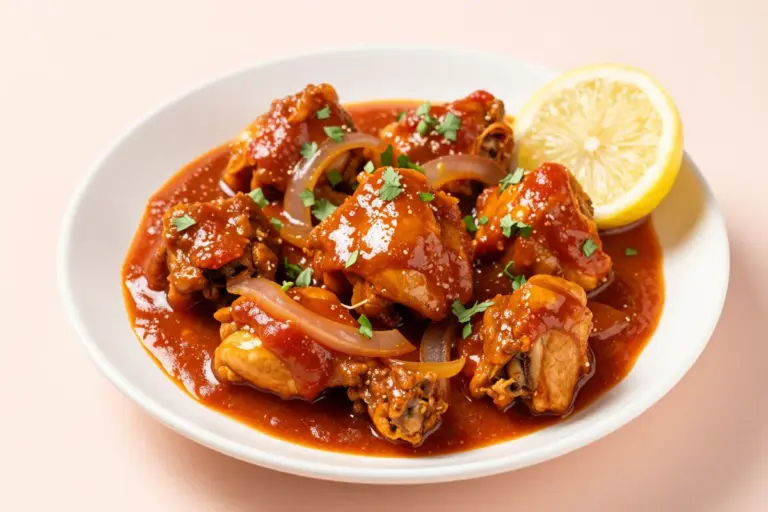
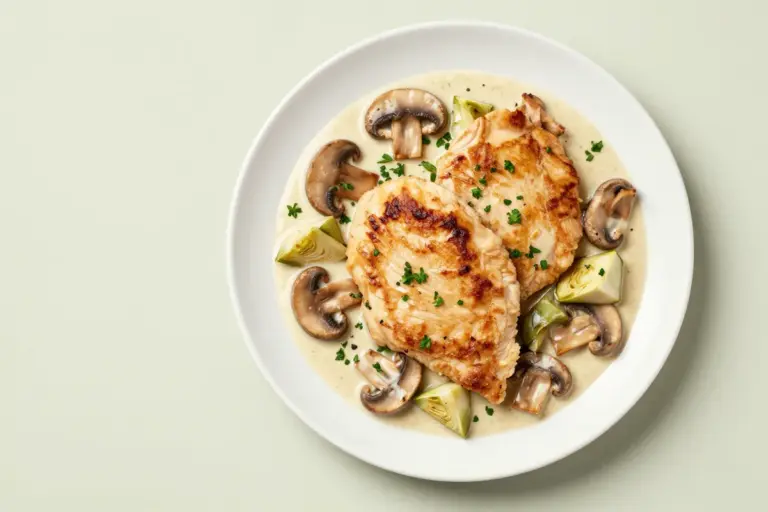
This baked chicken cacciatore recipe combines browned chicken thighs, tender artichoke hearts, tomatoes, peppers, mushrooms, and Italian herbs in a richly reduced one-pan Mediterranean sauce.
What to Expect from This Baked Chicken Cacciatore
Cacciatore means “hunter-style” and describes a flexible, rustic braise rather than one single fixed formula. This version keeps the recognizable foundation—browned chicken, aromatic vegetables, herbs, and a tomato-rich sauce—then adds artichokes for a distinctly Mediterranean variation.
- Expect tender, savory chicken in a thick but spoonable sauce.
- The artichokes should remain in recognizable pieces and contribute a mild vegetal, nutty flavor.
- Lemon, capers, and olives brighten the dish but remain accents to the tomato braise.
Why the Ingredients Work
Bone-in thighs are the most forgiving choice for an oven braise: their dark meat stays moist while the sauce develops. Tomatoes provide the liquid, acidity, color, and body, while tomato paste deepens the sauce and helps it finish with more concentration.
- Onion, pepper, celery, mushrooms, and garlic create the savory aromatic base and add texture.
- White wine loosens the browned bits in the skillet and supplies acidity; stock provides a measured amount of braising liquid.
- Dried oregano and rosemary withstand oven cooking, while parsley and lemon are added at the end for freshness.
- Drained, patted-dry artichokes add structure without unnecessarily watering down the sauce.
Ingredients
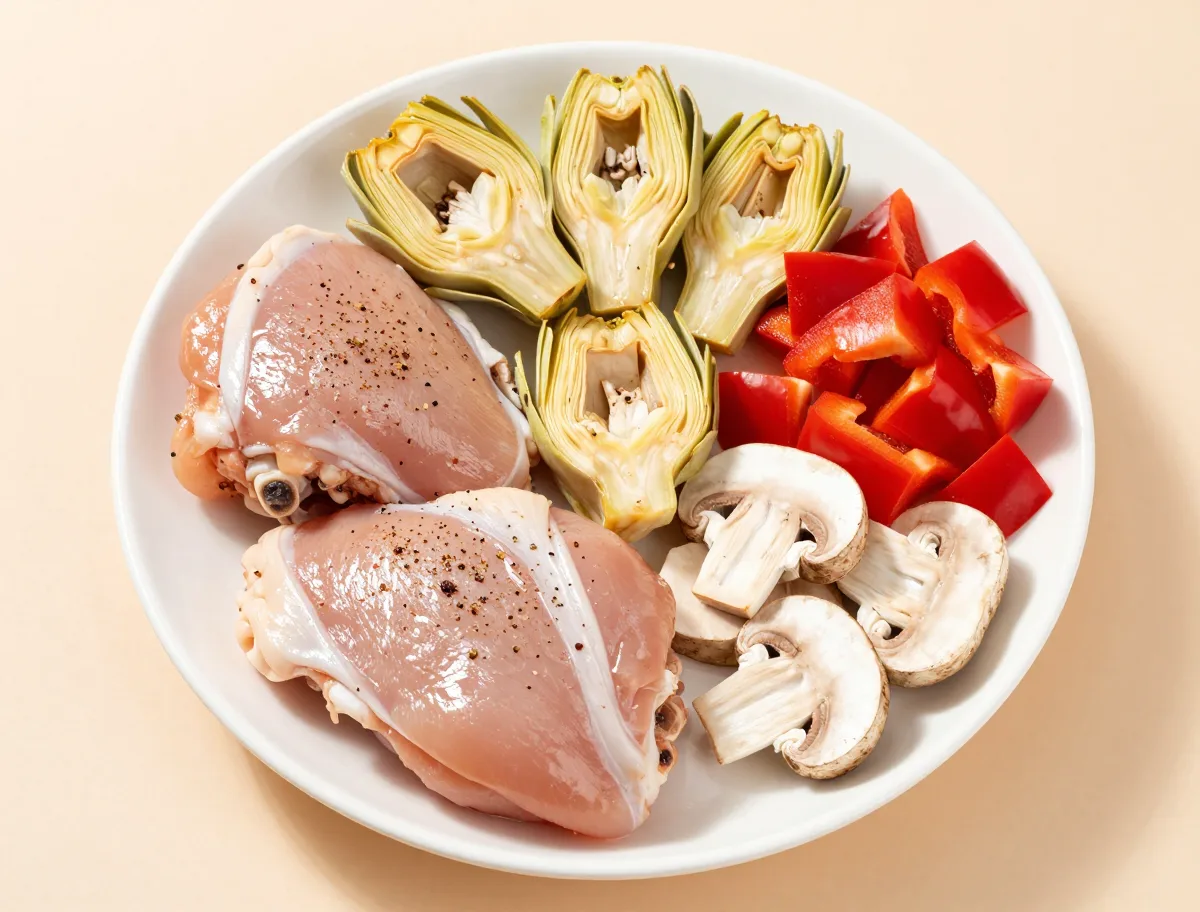
- 2 1/2 pounds bone-in, skin-on chicken thighs, 6 thighs, trimmed of excess fat
- 1 1/4 teaspoons kosher salt, divided
- 1/2 teaspoon black pepper, freshly ground
- 2 tablespoons extra-virgin olive oil
- 1 medium yellow onion, diced
- 1 medium red bell pepper, seeded and sliced
- 1 small stalk celery, thinly sliced
- 8 ounces cremini mushrooms, quartered
- 4 cloves garlic, thinly sliced
- 2 tablespoons tomato paste
- 1/2 cup dry white wine
- 1 (28-ounce) can whole peeled tomatoes, crushed by hand with their juices
- 1/2 cup low-sodium chicken stock
- 1 teaspoon dried oregano
- 1 teaspoon chopped fresh rosemary
- 2 teaspoons capers, rinsed and drained, optional
- 12 ounces artichoke hearts, canned or jarred, drained, patted dry, and halved
- 1/4 cup pitted Kalamata olives, halved, optional
- 1 tablespoon fresh lemon juice
- 1/4 cup flat-leaf parsley, chopped
The One-Pan Oven Method
This chicken artichoke bake uses a skillet-to-oven method. Browning is a flavor step, not a requirement for poultry safety, but it creates a more developed exterior and leaves flavorful browned residue for the sauce. Building everything in the same pan also avoids losing that foundation.
- Use a broad, heavy ovenproof pan so the chicken browns instead of steams and the sauce can evaporate efficiently.
- Brown the chicken in batches if the pieces touch; crowding traps moisture.
- Keep the chicken skin above the liquid so it does not become completely soft.
- The covered first phase protects the meat while the uncovered finish concentrates the sauce.
- If the chicken reaches temperature before the sauce is ready, remove the chicken and reduce the sauce separately.
Instructions
- Heat the oven and season the chicken. Place a rack in the center of the oven and heat to 400°F (205°C). Pat the chicken thoroughly dry, then season all over with the salt and pepper.
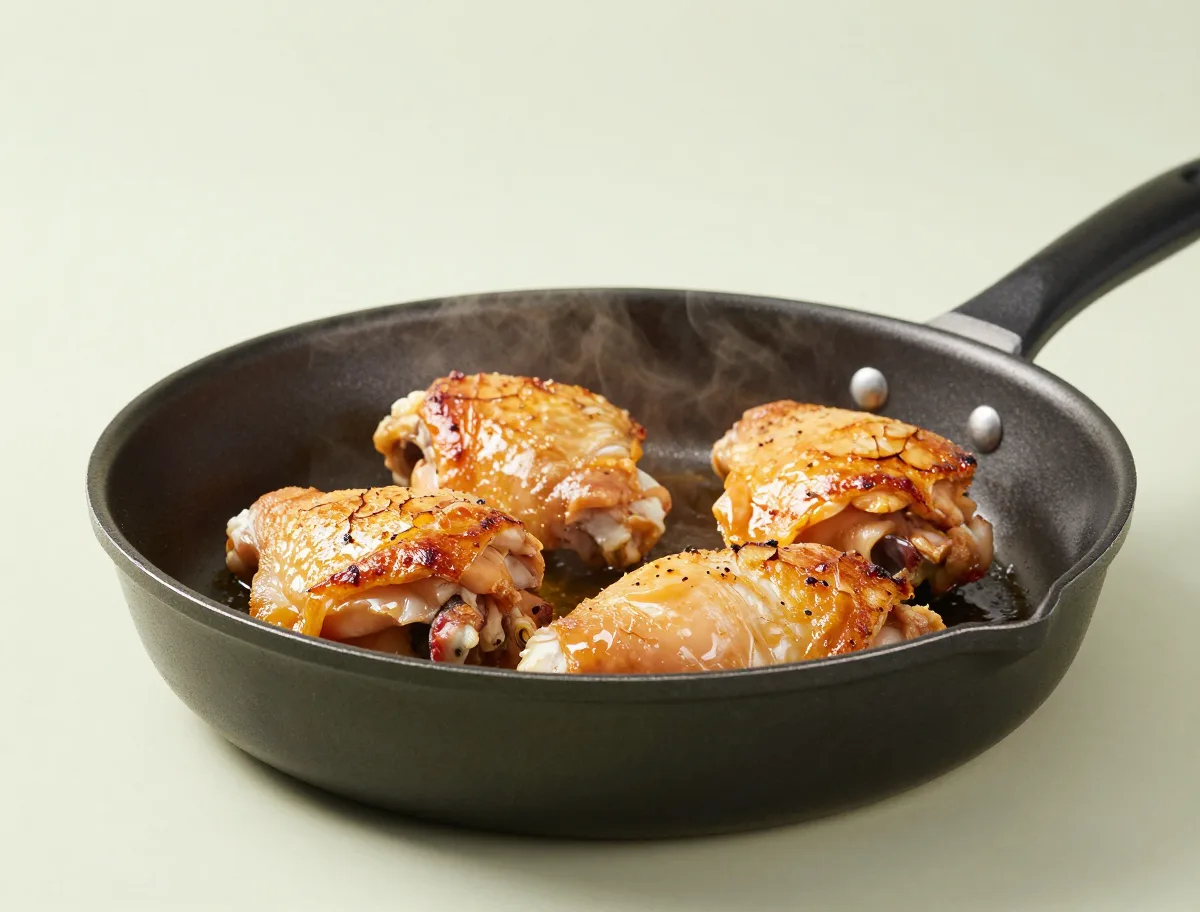
- Brown the thighs. Heat the olive oil in a wide, ovenproof 12-inch skillet or shallow Dutch oven over medium-high heat. Arrange the chicken skin-side down without crowding; work in two batches if necessary. Cook until the skin is deeply golden and releases easily, 6 to 8 minutes. Turn and brown the second side for 2 minutes. Transfer the chicken to a plate.
- Build the tomato sauce. Pour off all but about 1 tablespoon of fat. Add the onion, bell pepper, celery, and mushrooms. Cook, stirring occasionally, until the vegetables begin to soften and the mushrooms lose their raw appearance, about 6 minutes. Stir in the garlic and tomato paste and cook for 1 minute. Add the wine, scraping up the browned bits, and simmer until reduced by about half, 2 to 3 minutes.
- Add the artichokes and tomatoes. Stir in the crushed tomatoes, chicken stock, oregano, rosemary, and capers if using. Bring the sauce to a lively simmer. Fold in the artichoke hearts and olives if using, taking care not to break up the artichokes.
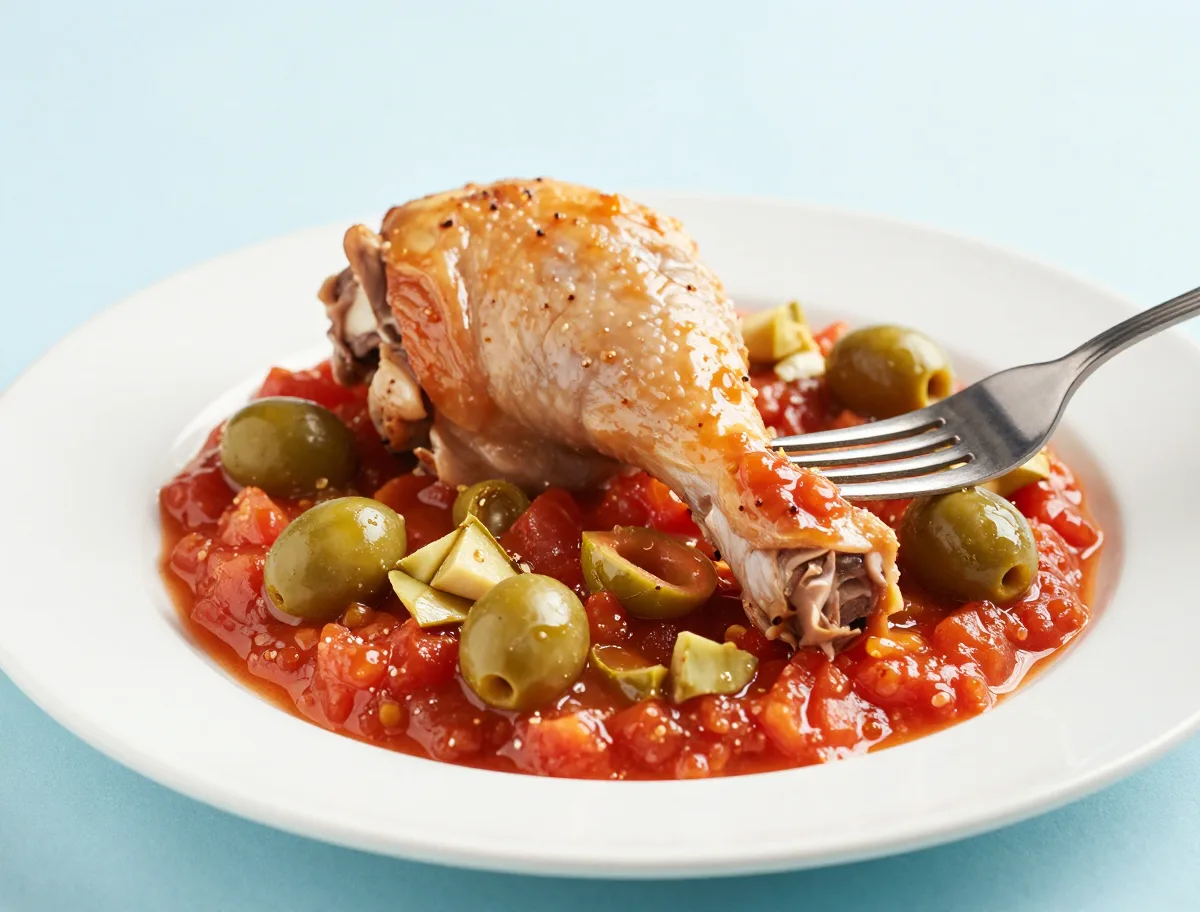
- Bake the cacciatore. Nestle the chicken into the sauce, skin-side up, leaving the skin exposed. Cover the skillet loosely with a lid or foil and bake for 25 minutes. Uncover and continue baking for 15 to 20 minutes, until the sauce is bubbling and the thickest part of every thigh reaches at least 165°F (74°C) without the thermometer touching bone.
- Reduce and finish. If the chicken is cooked but the sauce is still thin, transfer the thighs to a plate and simmer the sauce on the stovetop over medium heat for 3 to 5 minutes, until it coats a spoon. Return the chicken to the pan, stir the lemon juice into the sauce, and scatter the parsley over the top. Rest for 5 minutes before serving.
How to Tell When the Chicken and Sauce Are Ready
Time is a useful guide, but piece size, starting temperature, pan depth, and oven accuracy all affect the result. Use the thermometer for safety and visual cues for texture and sauce consistency.
- The thickest part of each differently sized thigh should reach at least 165°F (74°C), measured away from the bone.
- A finished sauce should coat a spoon lightly and cling to the chicken rather than look like thin tomato broth.
- Bone-in thighs are ready when the meat yields easily to a fork; artichokes should be fork-tender but intact.
- Begin checking boneless pieces earlier because they have less protection against overcooking.
- The chicken skin is browned before baking, and the sauce bubbles gently around the pieces.
- Artichoke hearts are tender but still hold their shape.
- The sauce is thick enough to cling lightly to a spoon rather than pooling as watery liquid.
- Check the largest thigh in the thickest section, avoiding the bone; poultry must reach 165°F (74°C). Dark meat may become more tender with a little additional moist cooking.
The Variables That Control Tender Chicken and Thick Sauce
The recipe balances moist heat for tenderness with exposed surface area for reduction. A covered pan retains steam and liquid; an uncovered pan allows water to escape. That is why the recipe does not begin with enough liquid to submerge the chicken.
- A wide skillet reduces sauce faster than a narrow, deep pot because more surface is exposed.
- Bone-in and skin-on pieces take longer to heat through but tolerate the moist cooking environment well.
- Wet artichokes, watery tomatoes, excess stock, or a tightly covered pan can all delay reduction.
- Lean breasts have a narrower quality window than thighs, so they should be checked early and removed as soon as they reach the safe temperature.
Common Baked Chicken Cacciatore Mistakes
Most problems with one-pan cacciatore come from excess surface moisture, too much liquid, or allowing lean meat to remain in the oven after it is done. The sauce and chicken can be managed separately when their timing does not match.
- Watery sauce: Drain and dry the artichokes, use a wide pan, and finish uncovered. If necessary, remove the cooked chicken and simmer the sauce until concentrated.
- Pale chicken: Pat the pieces dry, preheat the skillet properly, and leave each side undisturbed long enough to brown.
- Dry chicken: Check early, especially when using breasts or small boneless pieces, and keep the pan covered during the moist-cooking phase.
- Uneven doneness: Use similarly sized pieces and test the largest one in its thickest area.
- Overly salty sauce: Wait until the tomatoes, artichokes, capers, olives, and stock have cooked together before making the final salt adjustment.
Chicken, Artichoke and Wine Substitutions
The sauce is adaptable, but chicken cuts are not interchangeable on a one-for-one timing basis. Boneless thighs are the easiest weeknight alternative; breasts work when their thickness and cooking time are controlled.
- Boneless, skinless thighs: Use about 2 pounds and begin checking after 20 minutes of covered baking; they are usually done in roughly 30 to 35 minutes total in the oven.
- Boneless, skinless breasts: Use evenly thick pieces, begin checking after 18 to 20 minutes, and remove promptly at 165°F (74°C) to limit drying.
- Drumsticks or mixed bone-in pieces: Arrange pieces by size and expect the larger pieces to need additional time; verify each piece with a thermometer.
- Frozen artichoke hearts: Thaw and drain them well before adding. Fresh hearts require trimming and removal of the choke and may need separate cooking for tenderness.
- Wine-free option: Replace the wine with an equal amount of unsalted stock, then add the lemon juice at the end. Red wine also works but gives the sauce a darker, more assertive character.
- Vegetable flexibility: Shallots can replace onion, and additional peppers or mushrooms can be used, but extra vegetables release more water and may require a longer final reduction.
Artichoke Cacciatore Variations
Small changes can personalize this tomato-forward dish while preserving its cacciatore identity. Keep the browned chicken, aromatic vegetables, herbs, and rustic tomato braise in place when making substitutions or additions.
- Add extra mushrooms for a more earthy sauce or use green olives in place of Kalamata olives for a gentler briny note.
- Use a pinch more rosemary and a splash of red wine for a darker, more assertive variation.
- For a lighter version, use skinless chicken and reduce the olive oil, recognizing that the dish will have less browned richness.
- A lemon-butter sauce with no tomatoes, or a cream-based artichoke casserole, may be delicious but belongs to a different chicken-and-artichoke recipe family rather than this cacciatore-style preparation.
What to Serve with Chicken and Artichokes
The finished sauce is substantial enough to make a starch part of the meal. Spoon the chicken and sauce over soft polenta or pasta, or serve it with bread for a simpler rustic supper.
- Soft polenta and short pasta are especially effective at carrying the tomato sauce.
- Rice, mashed potatoes, or roasted potatoes are practical alternatives when those are already in the pantry.
- A crisp green salad, bitter greens, or simply cooked vegetables provide a fresh contrast.
- Finish individual portions with extra parsley and, if the tomatoes taste particularly rich, a little lemon zest.
How to Store, Freeze and Reheat Baked Chicken Cacciatore
The saucy format makes this dish useful for make-ahead meals, especially when prepared with boneless thighs. The flavor holds well, although chicken skin will soften and artichokes may become more tender after chilling.
- Refrigerate leftovers in shallow containers within 2 hours of cooking, or within 1 hour when the surrounding temperature is above 90°F (32°C). Use within 3 to 4 days.
- Freeze cooled portions in airtight containers for best quality within 2 to 4 months. Thaw in the refrigerator rather than on the counter.
- Reheat covered over low heat or in the microwave, adding a splash of stock or water if the sauce has tightened.
- Reheated portions should reach 165°F (74°C) throughout. Reheat only what will be eaten to avoid repeated warming.
A Mediterranean Artichoke Variation on Cacciatore
Cacciatore, or cacciatora, refers to a rustic “hunter-style” preparation built around meat, aromatics, herbs, and a braising liquid. Regional Italian versions vary considerably: some emphasize tomatoes and peppers, while others use different combinations of wine, herbs, or vinegar.
- Artichokes are not a universal defining ingredient of pollo alla cacciatora, so this recipe is best described as an artichoke-focused adaptation.
- Its tomato sauce, browned chicken, aromatic vegetables, and oven-braising method preserve the familiar cacciatore framework.
- There is no need to assign the dish to one definitive Italian birthplace; cacciatore traditions are broad and regional.
For additional culinary context on the searing, vegetable-sautéing, deglazing, and braising sequence associated with cacciatore, see this chicken cacciatore cooking guide.
Chicken Cacciatore Food-Safety Essentials
Keep raw chicken separate from the vegetables, sauce, and garnishes until it has been cooked. Wash hands, boards, knives, and counter surfaces with hot soapy water after handling the raw poultry.
- Chicken is safe when the thickest portion reaches 165°F (74°C), measured without touching bone. Check more than one piece when sizes vary.
- Do not rely on color or clear juices alone to judge doneness.
- Refrigerate cooked food within 2 hours, or within 1 hour in temperatures above 90°F (32°C). Keep the refrigerator at 40°F (4°C) or below.
- Cool large amounts in shallow containers, thaw frozen portions in the refrigerator, cold water, or microwave, and reheat leftovers to 165°F (74°C).
For authoritative poultry, leftover, and reheating temperature guidance, consult the USDA safe cooking temperature guidance.