Baked Chicken Spinach Recipes: Easy Chicken and Broccoli Bake
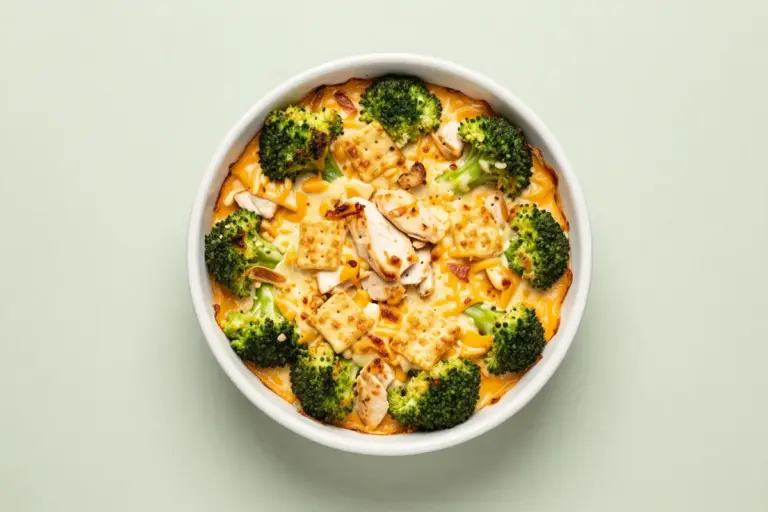
This one-dish baked chicken spinach recipe combines tender seasoned chicken, thoroughly drained spinach, small broccoli florets and a creamy Parmesan-mozzarella topping for an easy weeknight dinner. It is a practical choice among baked chicken spinach recipes when you want a satisfying, oven-baked meal without complicated techniques.
What to Expect from This Baked Chicken Spinach Recipe
This is a creamy one-dish chicken bake rather than a dry sheet-pan dinner. The chicken cooks over a concentrated layer of spinach and broccoli, while cream cheese, Parmesan and mozzarella create a savory sauce and lightly browned finish.
- The chicken should be juicy and opaque, with no pink center.
- The spinach should be fully integrated into the sauce, not floating in liquid.
- Small broccoli florets become tender without requiring a separate cooking step.
- A short rest gives the sauce enough time to settle and cling to each serving.
Why the Key Ingredients Work
The formula is built around moisture control and a stable, spoonable sauce. Even chicken cutlets cook at the same rate, while squeezed spinach prevents the dairy mixture from becoming watery.
- Cream cheese supplies body and helps the sauce remain cohesive during baking.
- Milk loosens the cream cheese just enough to spread over the vegetables.
- Mozzarella provides a smooth melt; Parmesan adds salt, savory depth and browning.
- Frozen spinach is convenient, but its thawing liquid must be removed mechanically.
- Small broccoli pieces expose more surface area to the heat and finish at roughly the same time as the chicken.
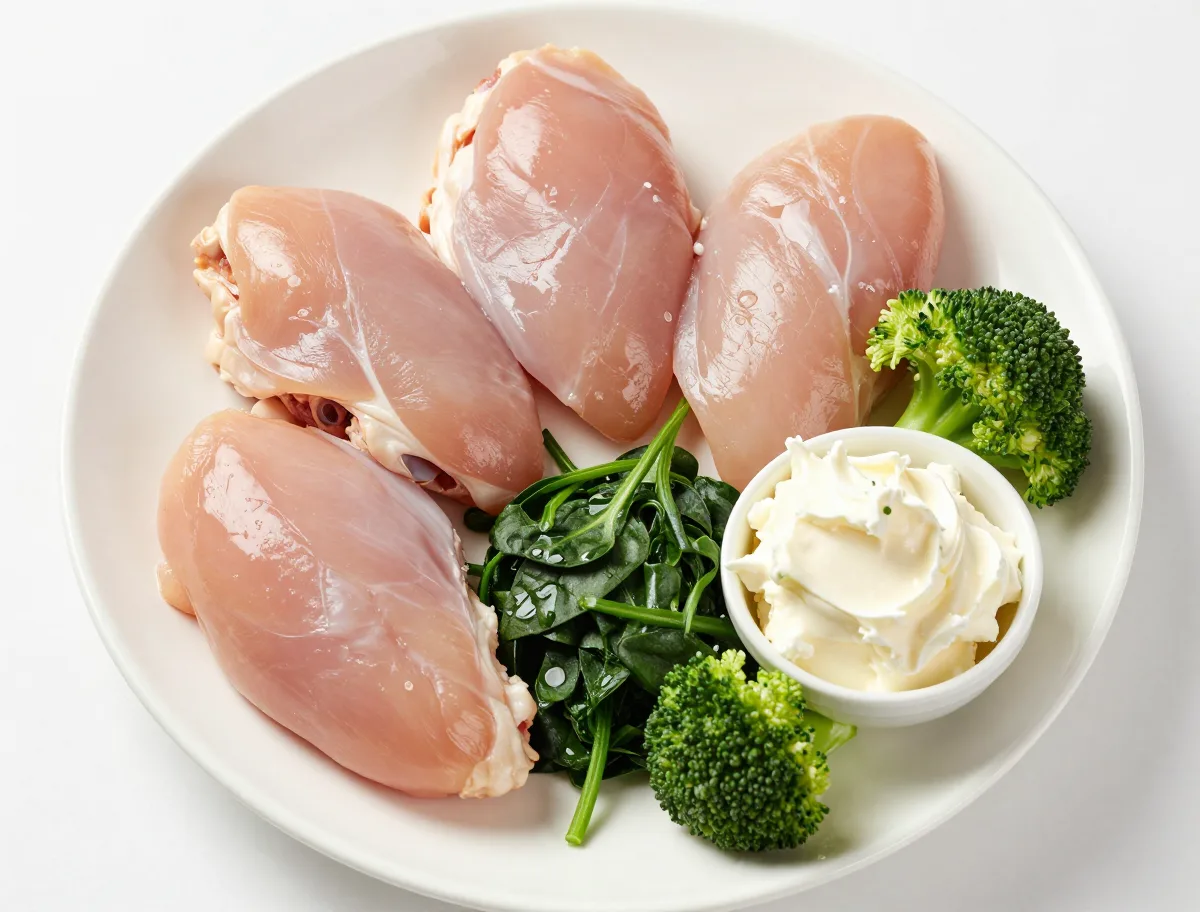
- 1 3/4 pounds boneless, skinless chicken breasts, cut into 4 even cutlets, about 3/4 inch thick
- 10 ounces frozen chopped spinach, thawed and squeezed very dry
- 3 cups broccoli florets, cut into small, even pieces
- 1 tablespoon olive oil
- 3 cloves garlic, finely grated or minced
- 8 ounces cream cheese, softened
- 1/2 cup whole milk
- 1/2 cup finely grated Parmesan cheese, divided
- 1 cup shredded low-moisture mozzarella
- 1 teaspoon Italian seasoning
- 1/2 teaspoon sweet paprika
- 1 teaspoon kosher salt, divided
- 1/2 teaspoon black pepper, divided
- 1 teaspoon finely grated lemon zest, optional
The Technique for an Even, Moist Chicken Bake
The most important preparation step is evening out the chicken. Thick, tapered breasts can leave you with dry edges and an undercooked center, so cut or gently flatten them before seasoning.
- Pat the chicken dry so the seasoning adheres and the surface does not steam excessively.
- Press thawed spinach in a clean towel, strainer or potato ricer until it is no longer dripping.
- Keep the chicken in one layer rather than overlapping pieces.
- Bake covered first, then uncover to evaporate excess moisture and brown the cheese.
- Searing is unnecessary for this version; omitting it keeps the dish genuinely one-pan and lets the creamy topping protect the chicken.
- Heat the oven and prepare the chicken. Heat the oven to 375°F (190°C). Pat the chicken dry. If any cutlet is thicker than the others, place it between sheets of parchment and gently flatten it until the pieces are an even thickness. Season both sides with the paprika, 1/2 teaspoon of the salt and 1/4 teaspoon of the pepper.
- Make the creamy sauce. In a bowl, stir the softened cream cheese, milk, garlic, Italian seasoning, the remaining 1/2 teaspoon salt, remaining 1/4 teaspoon pepper and lemon zest, if using, until smooth. Stir in 1/4 cup of the Parmesan. A few small cream-cheese lumps are acceptable, but the mixture should be spreadable rather than runny.
- Build the vegetable layer. Lightly coat a 9-by-13-inch baking dish with the olive oil. Spread the squeezed spinach evenly over the bottom, then distribute the broccoli over it. Do not use frozen spinach until it has been thawed and pressed dry; excess water will thin the sauce.
- Assemble the bake. Spread the cream-cheese mixture over the vegetables as evenly as possible. Arrange the chicken cutlets in a single layer on top. Sprinkle with the mozzarella and the remaining 1/4 cup Parmesan.
- Bake covered. Cover the dish tightly with foil and bake for 20 minutes. The cover protects the chicken while the vegetables soften and the sauce heats through.
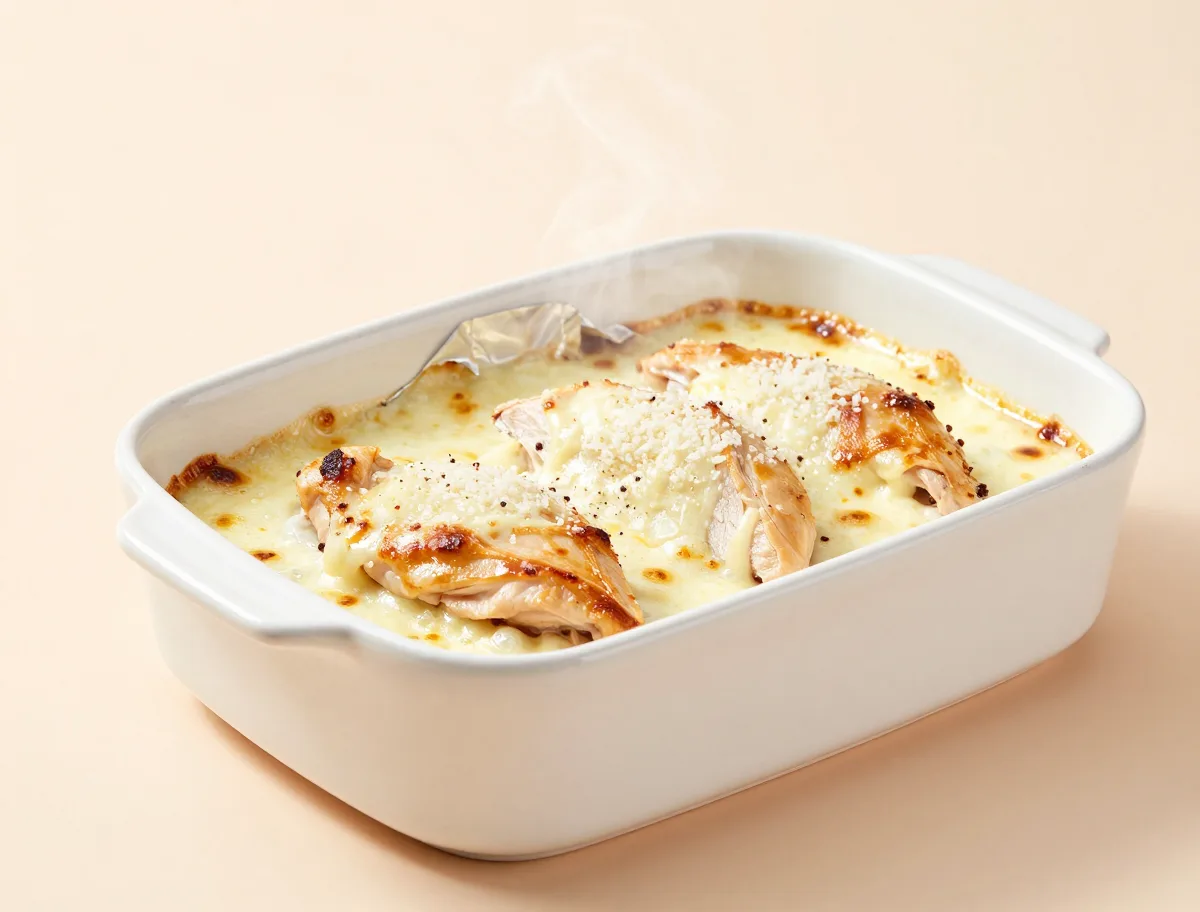
- Finish uncovered. Remove the foil and continue baking for 8 to 12 minutes, until the cheese is melted and lightly golden and the sauce is bubbling at the edges. Begin checking the thickest chicken cutlet at 8 minutes; it must reach 165°F (74°C) in the center.
- Rest and serve. Let the bake rest for 8 minutes before serving. The sauce will thicken slightly as it stands. If deeper browning is desired after the chicken has reached 165°F (74°C), broil briefly while watching closely so the cheese does not scorch.
How to Tell When the Chicken and Sauce Are Done
Use visual cues to judge texture, but use a thermometer to determine safety. Timing varies with cutlet thickness, starting temperature and the material of the baking dish.
- Check the thickest cutlet from the side so the probe reaches the center without touching the pan.
- The chicken must read 165°F (74°C); color alone is not a dependable doneness test.
- The sauce should bubble at the perimeter and coat the vegetables.
- The cheese should be melted and lightly golden rather than deeply browned.
- Rest for several minutes before serving so the sauce tightens and the chicken retains more of its juices.
- The thickest chicken cutlet reaches 165°F (74°C) when the thermometer is inserted sideways into its center.
- The sauce bubbles gently around the edges and clings to the spinach and broccoli rather than pooling as clear liquid.
- The broccoli is tender when pierced with a fork, and the cheese is melted with light golden patches.
- After resting, the sauce should be creamy and spoonable, not watery.
The Moisture and Heat Decisions That Matter
Spinach and broccoli release water as they heat, while chicken becomes progressively less juicy when left in the oven after reaching doneness. This recipe manages both variables with dry vegetables, moderate heat and staged covering.
- Squeezing spinach is more effective than trying to bake excess liquid away after the chicken is already cooked.
- A covered first stage limits evaporation and gives the chicken a gentler environment.
- The uncovered finish concentrates the sauce and dries the cheese surface enough for browning.
- Very high heat or prolonged baking can make dairy sauces oily or grainy, especially when aged cheese is overused.
- Resting improves consistency, but it is not a substitute for reaching 165°F (74°C).
Common Chicken Broccoli Bake Problems and Fixes
Most failures in a creamy chicken casserole come from excess water or uneven chicken thickness. Correct those two issues before changing the oven temperature or extending the bake.
- Watery sauce: the spinach was not squeezed dry, the broccoli pieces were too large or the dish was overcrowded. Rest the finished bake first; if the chicken is not yet done, uncover it briefly to reduce.
- Dry chicken: the cutlets were too thin or baked beyond 165°F (74°C). Check early and remove the dish as soon as the thickest piece reaches the safe temperature.
- Undercooked center: the breasts were tapered or unusually thick. Flatten them before baking and keep the pieces similar in size.
- Pale topping: the dish stayed covered too long. Uncover for the final stage or broil briefly after the chicken is done.
- Separated sauce: excessive heat or prolonged baking is usually responsible. Use moderate heat and avoid adding a large amount of thin liquid.
Spinach, Chicken and Cheese Substitutions
Several substitutions work, but they change the sauce thickness or the final texture. Adjust the moisture rather than assuming every ingredient can be swapped in equal volume without consequence.
- Fresh spinach may replace frozen: wilt it first, cool it and squeeze it well before assembling.
- Boneless thighs are more forgiving and richer than breasts; use similar-sized pieces and follow the temperature endpoint.
- Monterey Jack, provolone or young cheddar can replace mozzarella. Feta adds tang but remains crumbly instead of melting into a stretchy topping.
- Ricotta or a thick cooking cream can replace cream cheese, but the sauce will be softer and less tangy. Thick dairy-free cream cheese plus a melting plant-based cheese is the most reliable dairy-free route.
- For a lighter sauce, reduce the cheese only modestly; removing most of the cream cheese without adding another thickener can make the bake loose.
Simple Variations That Keep the Dish Intact
Flavor variations are easy as long as the chicken, spinach, creamy sauce and baked structure remain central. High-water additions should be limited or pre-cooked.
- Add thinly sliced mushrooms only after sautéing them until their liquid has evaporated.
- Replace part of the broccoli with drained sun-dried tomatoes for a more pronounced savory flavor.
- Add a pinch of red-pepper flakes with the Italian seasoning for gentle heat.
- Swap the mozzarella for a Parmesan-panko topping for a crisp surface; use only a thin layer so it does not dry out.
- Rice, pasta or canned soup would require a different liquid balance and bake time, so those additions create a separate casserole rather than a simple variation.
What to Serve with Creamy Baked Chicken
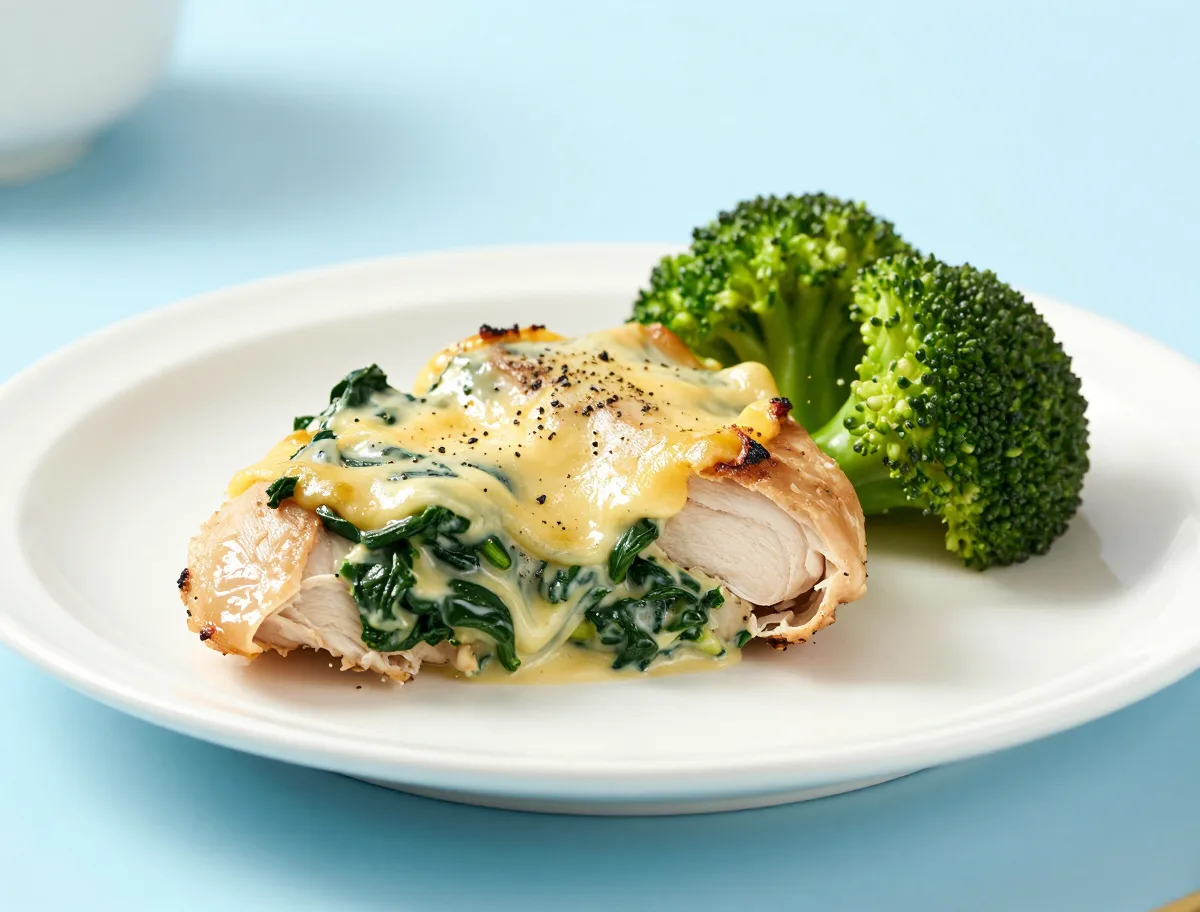
Because the bake already contains chicken, two vegetables and a rich sauce, it needs only a simple contrast. Serve it warm after resting, with something fresh or a modest starch for catching the sauce.
- A crisp green salad with a lemony dressing balances the creamy topping.
- Cauliflower rice or simply dressed greens keep the meal lower in carbohydrates.
- Rice, quinoa or crusty bread makes the dish more substantial and absorbs the sauce.
- Finish individual portions with black pepper, chopped herbs or a little extra lemon zest.
How to Store, Freeze and Reheat the Chicken Bake
This recipe works well for meal prep when it is cooled and portioned promptly. The sauce may lose some of its original smoothness after freezing, but covered reheating helps preserve moisture.
- Refrigerate leftovers in shallow, covered containers within two hours. Use them within 3 to 4 days.
- Freeze cooled portions airtight for best quality within about 2 to 4 months. Spinach will soften and the dairy may separate slightly after thawing.
- Thaw frozen portions in the refrigerator, or reheat them covered directly from frozen.
- Reheat covered in a moderate oven or microwave with a small splash of milk if needed. The center must reach 165°F (74°C), not merely become bubbly.
- For make-ahead assembly, keep the uncooked dish refrigerated and bake it promptly; a cold casserole will need additional time.
Baked Chicken Spinach Recipes: Your Questions Answered
These practical answers address the substitutions, moisture concerns and timing decisions most likely to affect this chicken and broccoli bake.
Can I use fresh spinach instead of frozen?
Yes. Wilt the fresh leaves first, let them cool enough to handle, and press out their liquid. Fresh spinach is not a direct volume-for-volume visual equivalent because it collapses substantially.
Should I pound or slice chicken breasts before baking?
Thick or tapered breasts should be sliced into cutlets or gently flattened to about 3/4 inch thick. Uniformity matters more than the exact shape.
Can I add broccoli without pre-cooking it?
Yes, provided the florets are small and evenly cut. Very large pieces may remain firm by the time the chicken is done; steam them briefly first if you prefer very tender broccoli.
Why did my casserole turn watery?
The usual causes are wet spinach, oversized or excessive vegetables, overlapping chicken and vegetables, or too much thin dairy. Squeeze frozen spinach aggressively and use the covered-then-uncovered method.
Can I make this without cream cheese?
You can use ricotta or a thick cooking cream, but the sauce will have a different body and flavor. Thin milk alone will not provide the same cohesive coating.
Can the chicken be seared first?
Yes, but it is optional. Searing adds browning and another pan while shortening the oven time slightly; it does not replace the need to verify 165°F (74°C) in the center.
What size baking dish should I use?
A 9-by-13-inch dish keeps the vegetables and chicken in a fairly shallow layer, which helps the chicken cook evenly and gives the sauce room to reduce.
Food Safety for Baked Chicken and Leftovers
Handle the raw chicken separately from ready-to-eat ingredients, wash hands and utensils after contact, and verify the temperature with a food thermometer rather than relying on appearance.
- Cook every chicken portion to at least 165°F (74°C) in the thickest part. Refer to FoodSafety.gov’s safe minimum internal temperature guidance for the chicken endpoint.
- Keep raw poultry refrigerated while preparing the dish and avoid using the same cutting board for cooked food without washing it thoroughly.
- Refrigerate or freeze the finished bake within two hours, or within one hour when the surrounding temperature is above 90°F (32°C).
- Keep refrigerated leftovers at 40°F (4°C) or below and use them within 3 to 4 days. See the FoodSafety.gov cold food storage chart for official storage guidance.
- Reheat leftovers to 165°F (74°C); microwave portions can have cold spots, so check more than one location.