Braised Chicken Feet Recipe, Cantonese Dim Sum Style
This braised chicken feet recipe makes tender, gelatinous dim sum-style phoenix claws with wrinkled skin and a glossy sauce of fermented black beans, soy, ginger, garlic and Shaoxing wine.
What to Expect from Cantonese Phoenix Claws
Phoenix claws is the Cantonese dim sum name for chicken feet, especially the version that is blistered, soaked and then softened in a savory braise. This recipe centers on fermented black beans, soy and aromatics for the deeply seasoned, glossy style served at yum cha.
- The ideal texture is tender, bouncy and gelatinous rather than meaty; diners eat the softened skin and tendons around the bones.
- Fried skin should become wrinkled and slightly puffed, creating a porous surface that catches the sauce.
- The sauce should be concentrated enough to cling to the feet without forming a thin pool on the plate.
Why the Ingredients Matter
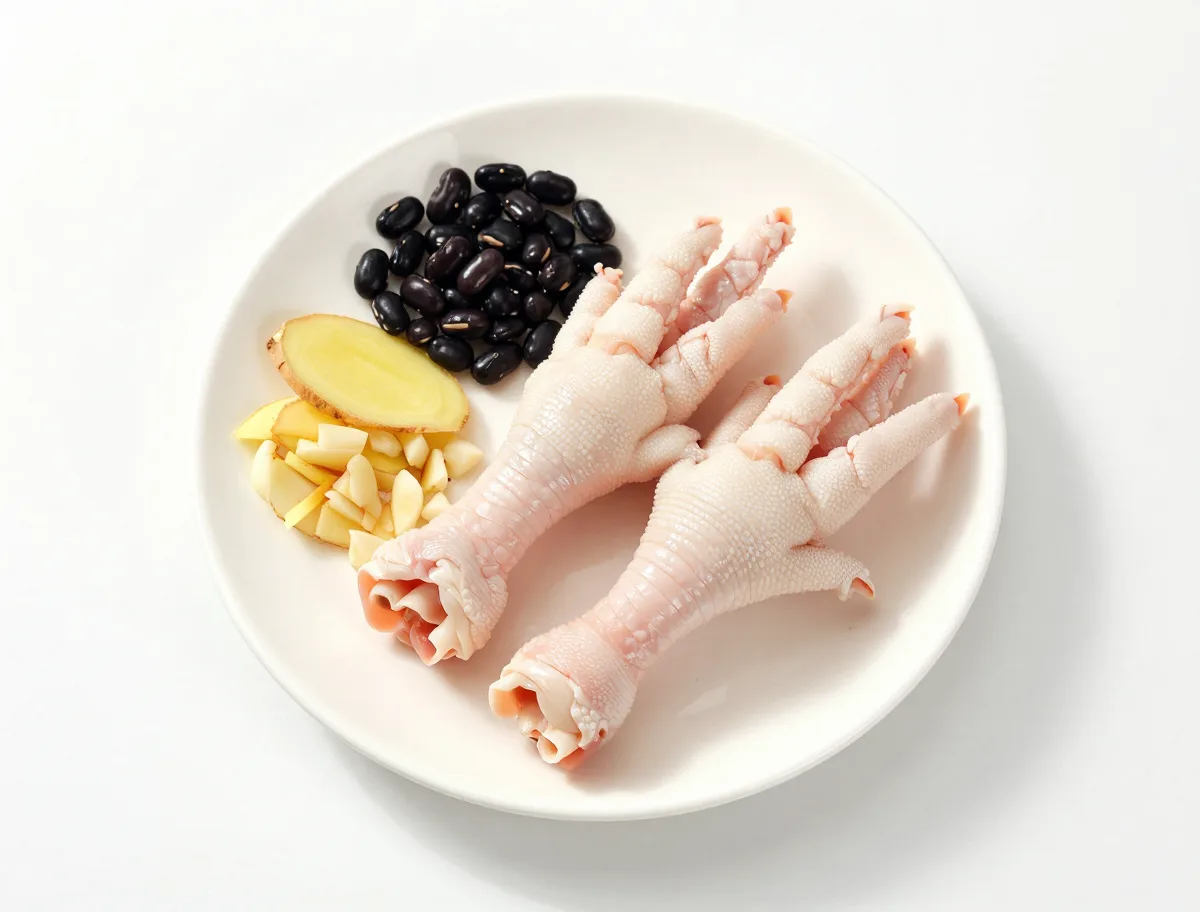
Chicken feet contribute collagen, skin and tendons, so the cooking liquid is designed to season and soften connective tissue rather than support a conventional meat braise. Fermented black beans provide the dish’s characteristic salty, earthy funk; light soy seasons, while dark soy is used mainly for color.
- Ginger, garlic and scallion keep the sauce aromatic and balance the poultry flavor.
- Oyster sauce and sugar round out the sharp edges of soy and black beans without making the dish dessert-sweet.
- Shaoxing wine adds fragrance, while star anise and cinnamon supply a restrained warm-spice background.
- Unsalted stock gives the sauce body without making the final reduction too salty.
- 1 1/2 lb chicken feet, thawed if frozen, rinsed, nails trimmed and loose skin removed
- 8 cups water, for blanching
- 1 oz fresh ginger, thinly sliced; divide between blanching and braising
- 2 scallions, white and green parts separated; whites for blanching and braising, greens for garnish
- 8 cups ice water, for soaking after frying
- 1/4 cup neutral frying oil, in a deep, heavy pot; add more if needed to reach 1 1/2 inches depth
- 3 tbsp fermented black beans, rinsed briefly, drained and lightly crushed
- 5 cloves garlic, finely chopped
- 1/2 tsp dried red chile flakes, optional
- 2 cups unsalted chicken stock or water
- 1/4 cup Shaoxing wine
- 2 tbsp light soy sauce
- 1 tbsp dark soy sauce
- 1 1/2 tbsp oyster sauce
- 1 tbsp granulated sugar
- 1 whole star anise
- 1 small piece cinnamon stick
- 1 tsp toasted sesame oil, for finishing
- 1 tsp cornstarch, optional, mixed with 1 tablespoon cold water if the sauce needs thickening
The Dim Sum Method: Blanch, Fry, Soak and Braise
The sequence matters. Blanching cleans the feet and firms the exterior; frying builds blisters; the ice bath encourages the skin to contract into wrinkles; and the covered braise converts firm collagen into soft gelatin. Drying after blanching is especially important because even a small amount of surface water can make hot oil splatter violently.
- Trim the nails and remove loose skin before blanching, when the feet are easiest to handle.
- Fry in small batches so the oil temperature remains stable and the feet blister rather than steam.
- Keep the braise at a quiet simmer and turn the feet gently; vigorous boiling and stirring can tear softened skin.
- Reduce the sauce only after the feet are tender, since early reduction can produce an overly salty braise.
- Clean and blanch the feet: Place the trimmed chicken feet, blanching water, half of the sliced ginger and the scallion whites in a large pot. Bring to a boil, then cook for 5 minutes. Drain, rinse under cool running water and discard the blanching liquid.
- Dry thoroughly: Spread the feet on a rimmed tray lined with clean towels and pat them completely dry. Let them air-dry uncovered for 15 minutes, or refrigerate uncovered for up to 2 hours. This step is essential before frying.
- Blister the skin: Heat the neutral oil in a deep, heavy pot to 350°F/175°C. Working in small batches, lower the dry feet in carefully with long tongs or a spider. Fry for 3 to 4 minutes, using a splatter screen and keeping the pot covered as needed, until the skin is lightly blistered and beginning to puff. Do not crowd the pot.
- Soak for the wrinkled texture: Transfer each fried batch directly to the ice water. Soak for 30 minutes, then drain well. The skin should look puckered and slightly expanded rather than smooth.
- Build the black-bean sauce: Pour off all but 1 tablespoon of the frying oil, or use 1 tablespoon of fresh oil in a wide, heavy braising pot. Over medium heat, cook the remaining ginger, scallion whites, garlic, fermented black beans and chile flakes, if using, for 1 minute, just until fragrant. Do not let the garlic or beans burn.
- Braise gently: Add the stock, Shaoxing wine, light soy sauce, dark soy sauce, oyster sauce, sugar, star anise and cinnamon. Stir once, add the drained feet and bring the liquid just to a simmer. Cover and cook gently for 75 to 90 minutes, turning the feet carefully once or twice, until a chopstick or fork enters the thickest skin and tendon with little resistance. Keep the heat low enough that the liquid does not boil vigorously.
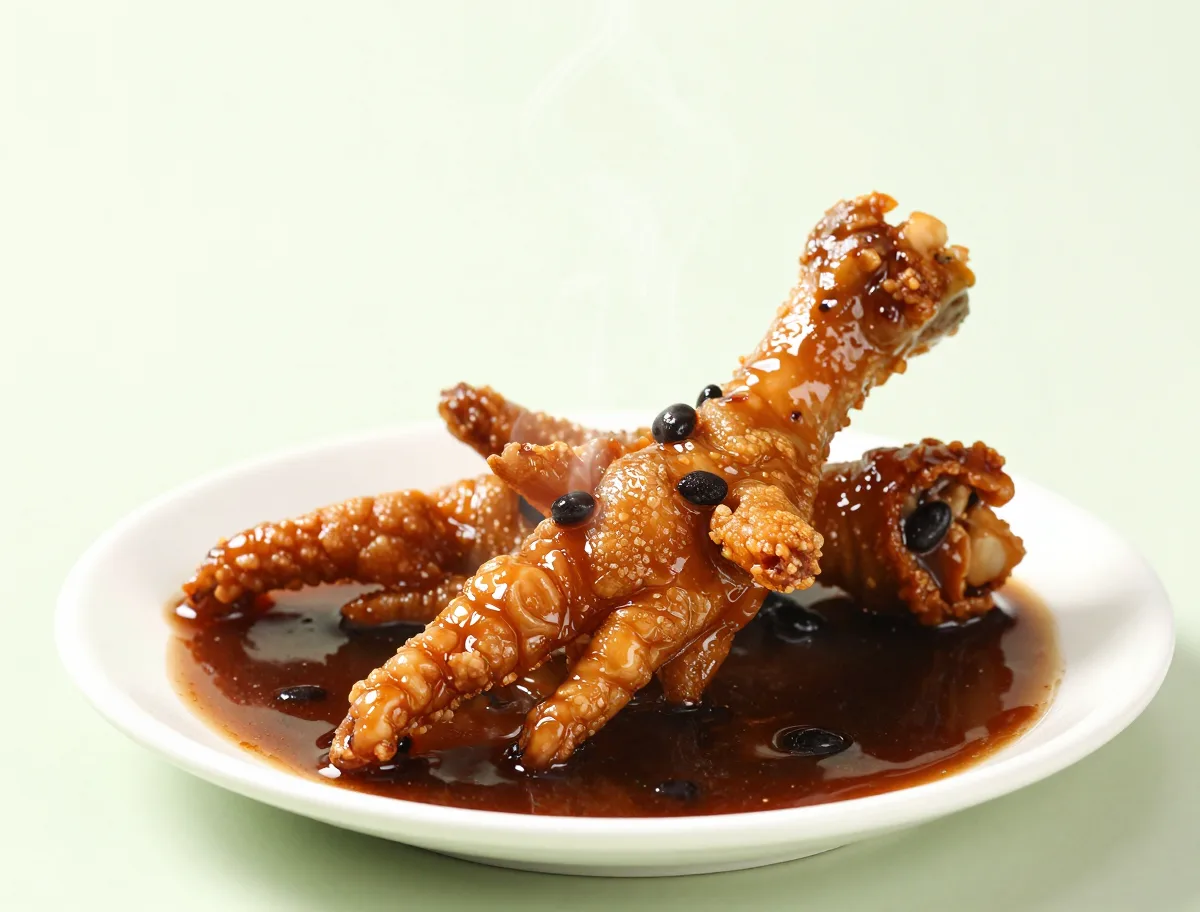
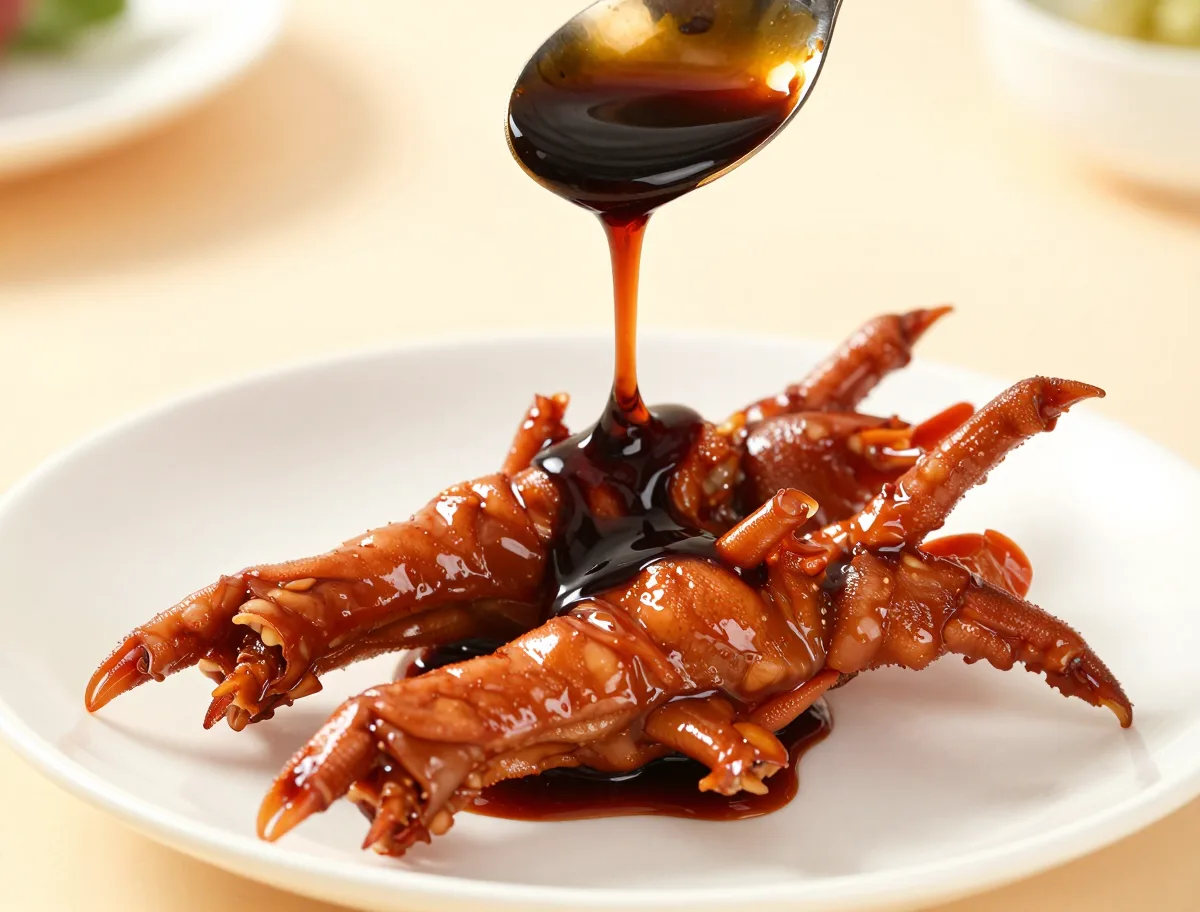
- Reduce to a glaze: Remove the lid and transfer the tender feet to a serving dish. Remove the star anise and cinnamon from the sauce. Simmer the liquid for 5 to 10 minutes, until it coats a spoon and looks glossy. If it remains loose, whisk in the cornstarch mixture and cook for 30 to 60 seconds. Taste before adding any further seasoning; the black beans and soy sauces are already salty.
- Finish and serve: Return the feet to the reduced sauce and turn them gently to coat, or spoon the sauce over them. Drizzle with sesame oil and scatter with the scallion greens. Serve hot or very warm.
How to Tell When Chicken Feet Are Tender
Clock time is a guide, not the final test. Foot size, freezing, pot shape and simmering strength all affect the schedule. Begin checking after about an hour of braising and judge the thickest skin and tendon areas rather than the thin toes.
- A chopstick, fork or skewer should slide into the thick skin with minimal resistance.
- The skin should feel soft and slippery, while the tendons should be pleasantly gelatinous rather than chewy or rubbery.
- The feet should hold their shape but separate easily into edible pieces around the bones.
- A glossy coating is ready when the sauce clings to a spoon; it should remain fluid while hot and thicken further as it cools.
- The fried skin is lightly blistered and puffy, never dark or leathery.
- After braising, the skin is soft and slippery, the tendons are gelatinous, and a chopstick or fork meets little resistance.
- The feet remain intact but yield easily around the small bones; they should not be rubbery or falling apart.
- The finished sauce clings to the feet in a glossy coating. It will set more firmly as it cools.
- For food safety, the thickest part of the cooked feet should reach at least 165°F/74°C, although the longer braise is needed for tenderness.
The Cooking Variables That Create Tender, Gelatinous Feet
Collagen does not soften simply because the liquid is hot; it needs sustained moist heat. A gentle covered simmer gives collagen time to turn into gelatin while limiting evaporation and mechanical damage. Frying changes the skin’s structure, but the long braise is what makes the feet tender.
- Keep enough liquid in the pot during the tenderizing stage for the feet to remain mostly surrounded by braising liquid.
- Avoid a hard boil, which can split the skin before the connective tissue has softened.
- Season conservatively at the beginning because reduction concentrates salt as well as flavor.
- Natural gelatin and a measured reduction usually provide sufficient gloss; use the optional slurry only when the sauce refuses to coat.
Common Braised Chicken Feet Mistakes and Fixes
Most disappointing results come from either rushing the collagen-softening stage or concentrating the sauce too soon. Handle the feet gently once they are tender, and correct the liquid separately whenever possible.
- Tough or rubbery feet: Continue covered braising at a gentle simmer until a chopstick meets little resistance. Higher heat is not a better shortcut.
- Dangerous oil splatter: The feet were not dry enough. Pat them thoroughly and air-dry before frying; never add wet feet to hot oil.
- Thin sauce: Remove the tender feet and reduce the liquid alone, adding the small cornstarch mixture only if necessary.
- Overly salty sauce: Add unsalted water or stock before reducing further. Sugar may soften the impression of salt but will not remove it.
- Broken skin: Lower the heat, avoid vigorous boiling and turn the feet with tongs rather than stirring them.
Ingredient Substitutions That Still Work
Fresh or completely thawed frozen chicken feet can be used interchangeably, although frozen feet may need more careful drying and may vary in skin condition. The fermented black beans are the most distinctive ingredient, so substitutions should be treated as flavor compromises rather than exact matches.
- Prepared fermented black-bean sauce can replace whole fermented black beans, but reduce the soy, oyster sauce or sugar after checking the product label because commercial sauces may already contain all three.
- Dry sherry can stand in for Shaoxing wine. Water or unsalted stock also works, with less aromatic complexity.
- Water is a suitable replacement for unsalted chicken stock because the aromatics and collagen supply much of the sauce’s body.
- Air-frying or baking the blanched, dried feet can replace deep-frying, but the surface will be less blistered and wrinkled.
- Do not treat chili bean paste as a direct substitute for fermented black beans; it is typically hotter, saltier and more heavily seasoned.
Black-Bean, Soy-Braised and Spicy Variations
This is specifically a Cantonese black-bean version of braised chicken feet. Related preparations are easy to make, but changing the dominant seasoning changes the dish’s identity.
- For a milder black-bean version, omit the chile flakes while keeping the fermented black beans, aromatics and soy balance intact.
- For a more soy-forward braise, omit the black beans and add a little extra ginger, star anise or cinnamon; expect a cleaner, sweeter profile rather than the funky dim sum character.
- For a spicy variation, add more dried chile or finish with a small amount of chili oil, adjusting carefully for added salt and heat.
- Red-braised versions emphasize caramelized sugar, soy and warm spices and will taste sweeter and look darker than this black-bean preparation.
- A short final steam in small serving dishes is a traditional dim sum-style finish, but it is not necessary when the braise has already made the feet tender.
How to Serve Braised Chicken Feet
Serve the feet hot or very warm, with just enough reduced sauce to make them glossy rather than submerged. Small plates, chopsticks and a discard bowl make the bone-in eating experience comfortable and practical.
- Garnish with the reserved scallion greens and, if desired, a few fresh chile slices for color and freshness.
- Pair with jasmine rice, plain steamed greens, congee or other dim sum dishes.
- Chinese tea is a natural accompaniment because its bitterness and warmth balance the rich, sticky sauce.
- Explain to diners that the edible pleasure is the softened skin, tendons and cartilage around the small bones, not a boneless portion of meat.
How to Store, Freeze and Reheat Chicken Feet
The dish is well suited to make-ahead cooking: chilling firms the gelatin and gives the sauce time to deepen. Quality is best when the feet are stored in their sauce and reheated gently, although the fried skin will be softer after refrigeration or freezing.
- Refrigerate the feet and sauce in a shallow, airtight container within 2 hours of cooking, or within 1 hour in temperatures above 90°F/32°C.
- Use refrigerated leftovers within 3 to 4 days.
- Freeze portioned servings in airtight containers for longer storage. Thaw in the refrigerator; expect some loss of the freshly puffed skin.
- Reheat covered by steaming or gently simmering with a splash of water or stock until the center reaches 165°F/74°C.
- Do not judge reheating safety by bubbling sauce alone; use an instant-read thermometer.
Braised Chicken Feet Recipe FAQ
These practical answers address the points that most affect cleaning, texture, cooking time and sauce quality.
How do I clean and trim chicken feet?
Rinse them thoroughly, trim every nail with kitchen shears or a sharp knife, and remove loose, discolored skin. Blanching afterward lifts surface residue and gives you a cleaner starting point.
Do I need to blanch and fry the feet?
Blanching is recommended for cleanliness. Frying is traditional for dim sum-style phoenix claws because it creates blistered, wrinkled skin, but you can skip it and braise the blanched feet directly for a simpler version.
Why are fried chicken feet soaked in ice water?
The rapid temperature change contracts the fried skin and helps it become wrinkled and slightly expanded. Those folds also provide more surface area for the sauce.
How long should chicken feet braise?
Plan on roughly 75 to 90 minutes after frying, or longer if the feet are large or remain firm. The reliable endpoint is tactile: a chopstick or fork should enter the thickest skin and tendon with little resistance.
What should the finished sauce look like?
It should be dark, glossy and thick enough to cling to the feet and coat a spoon. Reduce it after the feet are tender so the sauce concentrates without overcooking the skin.
Can I serve chicken feet cold?
You can, but the gelatin will firm and the sauce will set. They are most appealing hot or very warm, when the skin is supple and the glaze is fluid.
Phoenix Claws in Cantonese Dim Sum
鳳爪, commonly rendered as phoenix claws or fung jaau, is a recognized Cantonese term for chicken feet and is closely associated with dim sum and yum cha service. The familiar restaurant-style approach uses blistering or frying followed by braising or steaming, often with fermented black beans.
- Authenticity here means alignment with Cantonese ingredients, technique and service style, not adherence to one universal formula.
- Black-bean phoenix claws, plain steamed feet and soy-spiced braises all exist within the broader Chinese chicken-feet tradition.
- Specific claims about a single ancient origin, medicinal purpose or universal symbolism are not necessary to define the dish and vary in reliability.
For additional culinary context, see this reference on Cantonese phoenix claws and fermented-black-bean preparation.
Safe Handling and Deep-Frying Guidance
Chicken feet require the same careful raw-poultry handling as other chicken, with an additional hot-oil hazard if you use the traditional frying step. Keep raw poultry utensils separate, wash hands and surfaces after handling, and make thorough drying a non-negotiable part of the method.
- Use a deep, stable pot with ample headroom, fry only a few feet at a time and lower them into the oil slowly with long tongs or a spider.
- Keep a splatter screen nearby and never add wet or icy feet to hot oil.
- Cook the feet to at least 165°F/74°C; the longer braise is also needed to achieve a tender texture.
- Refrigerate cooked feet within 2 hours, or within 1 hour when the room is above 90°F/32°C, and reheat leftovers to 165°F/74°C.
- Cool leftovers in shallow containers so the sauce and poultry chill promptly.
For the official poultry and leftover-reheating temperature, follow USDA safe cooking temperature guidance.