Campbell’s Chicken Noodle Soup Recipe
Turn Campbell’s condensed chicken noodle soup into a quick, comforting stovetop meal with tender carrots and celery, extra cooked chicken, and a fresh herb finish.
What to Expect from This Campbell’s Chicken Noodle Soup Recipe
This is an enhanced condensed-soup preparation: Campbell’s condensed chicken noodle soup supplies the familiar seasoned broth, noodles, and chicken, while fresh vegetables and additional cooked chicken make it feel more substantial. The result should remain light, savory, and broth-forward rather than creamy or heavily spiced.
- Use the condensed product and dilute it with water; ready-to-eat chicken broth is a different product and is not a one-for-one substitute. For official product context and preparation guidance, see Campbell’s condensed chicken noodle soup.
- Expect tender noodles, soft but intact vegetables, bite-size chicken, and a lightly thickened broth.
- The added ingredients improve the soup without disguising its recognizable canned-soup character.
Why the Ingredients Work
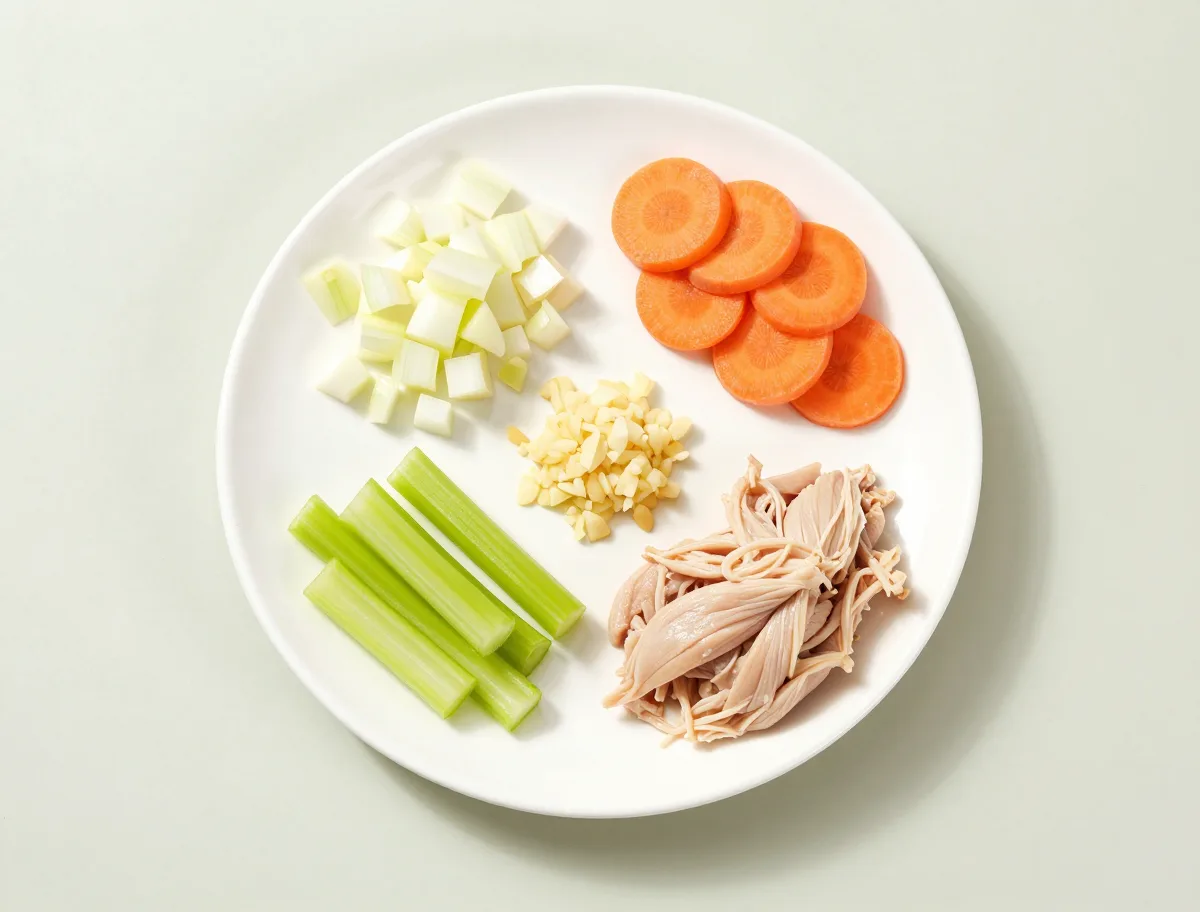
The condensed soup provides concentrated seasoning, chicken flavor, noodles, and body, so the additions should be restrained. Onion, carrot, and celery create the aromatic vegetable foundation; cooked chicken adds substance; and a small amount of pepper, thyme, or parsley provides contrast without requiring a new stock or complicated seasoning.
- Water is the most predictable diluent because the soup is already seasoned and concentrated.
- Oil helps the vegetables soften and gives the onion and garlic a rounder aroma.
- Small, evenly cut vegetables cook quickly and remain proportional to the noodles.
- Cooked chicken is added near the end because it needs reheating, not prolonged cooking.
- 1 tablespoon olive oil or neutral cooking oil
- ½ small yellow onion, finely diced
- 1 medium carrot, peeled and cut into thin half-moons
- 1 rib celery, thinly sliced
- 1 clove garlic, minced (optional)
- 1 can Campbell’s condensed chicken noodle soup, about 10.5 to 10.75 ounces
- 1¼ cans water, use the empty soup can for measuring
- 1 cup cooked chicken, shredded or cut into bite-size pieces
- ¼ teaspoon freshly ground black pepper
- ½ teaspoon dried thyme (optional)
- 2 tablespoons fresh parsley, chopped (optional)
How to Make This One-Pot Stovetop Chicken Noodle Soup
The most reliable sequence is vegetables first, diluted soup second, and chicken last. Softening the vegetables before adding the liquid prevents crisp carrots and celery, while a gentle simmer protects the canned noodles and keeps the broth from reducing too aggressively.
- Stir the condensed soup thoroughly into the water before allowing it to heat fully.
- Keep the soup at a gentle simmer rather than a rolling boil.
- Add cooked chicken only after the vegetables are nearly tender.
- Serve as soon as the noodles reach the texture you prefer; they continue softening in the hot broth.
- Soften the vegetables: Warm the oil in a 4-quart saucepan or small soup pot over medium heat. Add the onion, carrot, and celery. Cook for 5 to 6 minutes, stirring occasionally, until the onion is translucent and the carrot has begun to soften. Add the garlic, if using, and cook for 30 seconds.
- Build the soup base: Stir in the condensed chicken noodle soup and water until smooth. Add the black pepper and thyme, if using. Raise the heat just enough to bring the soup to a gentle simmer, stirring frequently so the concentrated soup does not settle or scorch.
- Simmer until the vegetables are tender: Reduce the heat to medium-low and simmer uncovered for 7 to 8 minutes, stirring once or twice. The carrot should be easily pierced with a fork while still holding its shape, and the celery should no longer taste raw.
- Heat the chicken: Add the cooked chicken and simmer for 3 to 4 minutes, just until the pieces are hot throughout. Avoid a hard boil, which can make previously cooked chicken dry.
- Finish and serve: Remove the pot from the heat and stir in the parsley, if using. Taste only now, after the vegetables and chicken have diluted the seasoned soup base; add no salt unless it is clearly needed. Ladle into bowls and serve promptly so the noodles do not continue absorbing too much broth.
How to Tell When the Soup Is Ready
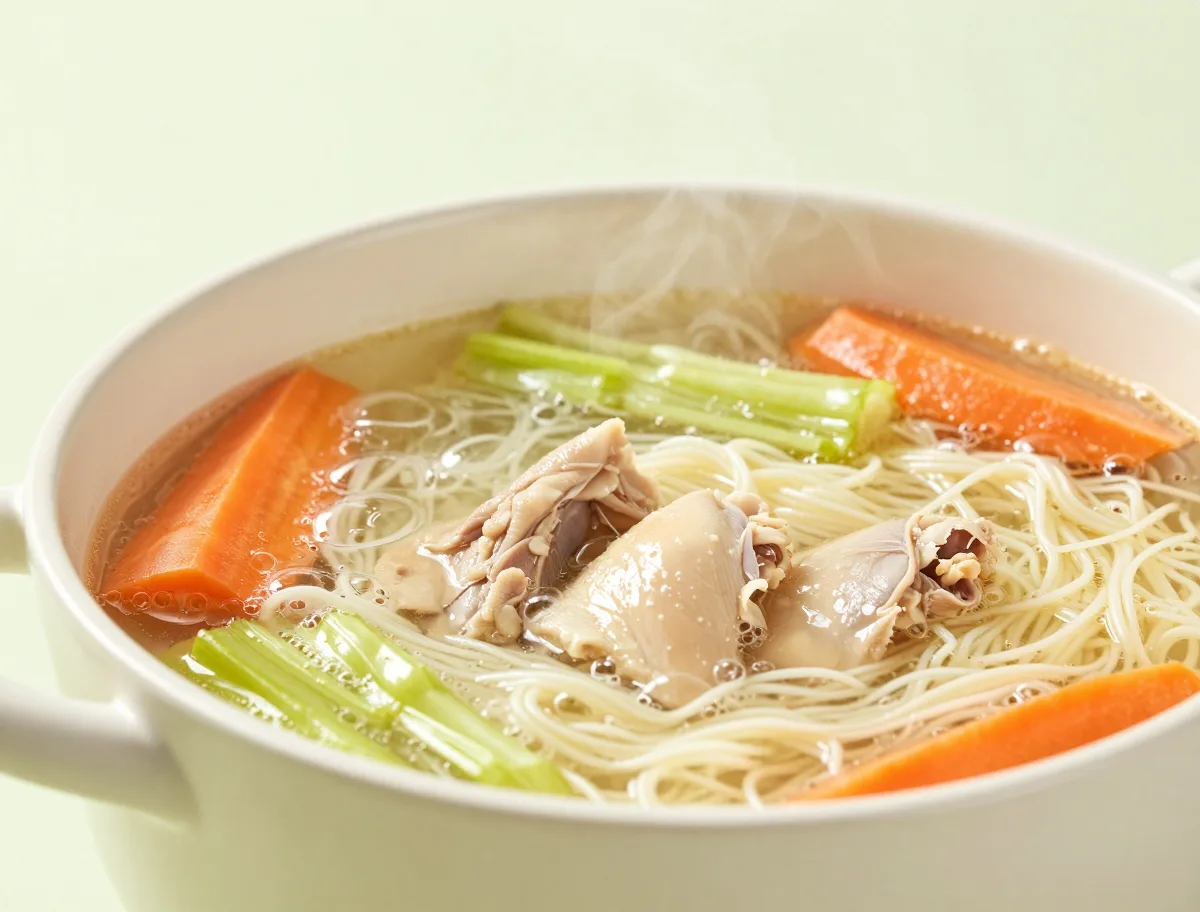
A finished bowl should be fluid enough to ladle easily but have a little body from the soup base and noodles. The vegetables should yield to a fork without collapsing, and the chicken should be moist and hot throughout. Check the noodles early because their texture can change quickly during the final minutes.
- Tender noodles offer little resistance but are not swollen, ragged, or falling apart.
- A carrot slice should pierce easily while retaining a defined edge.
- The chicken should have no cool center, especially if the pieces are larger than bite-size.
- If using a thermometer, reheated chicken and leftovers should reach 165°F (74°C).
- The soup is steaming hot and the broth remains pourable with a lightly thickened body.
- Carrots are fork-tender but intact, and celery is tender rather than crunchy.
- The noodles are tender without breaking apart or becoming swollen.
- The chicken is hot in the center; reheated poultry should reach 165°F (74°C).
The Key to Keeping the Broth and Noodles in Balance
Noodles keep taking up liquid as they stand, which is why a soup that looks brothy in the pot can become thick in the bowl. Condensed soup also contains concentrated salt and starch, so too little water creates a salty, heavy result while too much water makes the broth weak.
- Begin with the measured dilution instead of pouring in broth by eye.
- Avoid unnecessary evaporation from a hard boil or prolonged simmer.
- For clearer broth and better leftovers, cook any additional noodles separately and add them at serving.
- Taste after all additions are hot; vegetables and chicken change the final salt perception.
Common Campbell’s Chicken Noodle Soup Mistakes and Fixes
Most problems come from incorrect dilution, excessive heat, or leaving the noodles in the pot too long. Make corrections gradually, since adding liquid can restore a salty soup but may also require reheating the whole mixture to rebalance its flavor.
- Mushy noodles: They were cooked too long or held in the broth. Remove the pot from heat promptly and store noodles separately for future servings; overcooked noodles cannot be firmed again.
- Too salty: Add unsalted water a few tablespoons at a time and taste after each addition. Avoid reducing the soup, which concentrates the salt.
- Too thin: Confirm that the soup is fully hot, then simmer briefly while watching the salt level. A small amount of additional condensed soup can add body, but it will also add seasoning.
- Firm vegetables: Cut them smaller next time and give them more time in the pot before adding chicken.
- Dry chicken: Use larger bite-size pieces and heat them only until hot rather than boiling them for an extended period.
Easy Substitutions for Chicken, Noodles, and Vegetables
The recipe is flexible as long as substitutions preserve a light chicken-and-noodle soup. Changes in noodle shape or vegetable size can alter both cooking time and the amount of broth absorbed, so add alternatives late and follow their package directions when applicable.
- Rotisserie chicken, leftover roast chicken, or poached chicken can replace the added cooked chicken.
- Water can be replaced partly or entirely with unsalted or low-sodium chicken broth, but taste before seasoning.
- Frozen carrots, celery, peas, or mixed vegetables may be used; add them according to their size and whether they are already blanched.
- Wide egg noodles, fine noodles, small pasta, rice, or gluten-free noodles can work, but their timing and liquid needs differ.
- For a gluten-free bowl, verify that both the Campbell’s product and the noodles are labeled gluten-free; changing only the noodles is not enough.
Simple Ways to Customize the Soup
Keep variations modest if you want the familiar Campbell’s-style profile. A little extra vegetable color or a fresh finish works naturally; large amounts of cream, tomato, coconut milk, strong chile, or dumplings create a different soup and need a separate formulation.
- Add up to ½ cup peas or corn with the chicken for extra color and sweetness.
- Use a small handful of baby spinach at the end; it wilts from the residual heat.
- Finish with a few drops of lemon juice or extra parsley for brightness, tasting carefully because the base is already seasoned.
- For a more vegetable-forward bowl, increase the carrot and celery modestly and add a splash of water only if the broth becomes too crowded.
How to Serve Chicken Noodle Soup
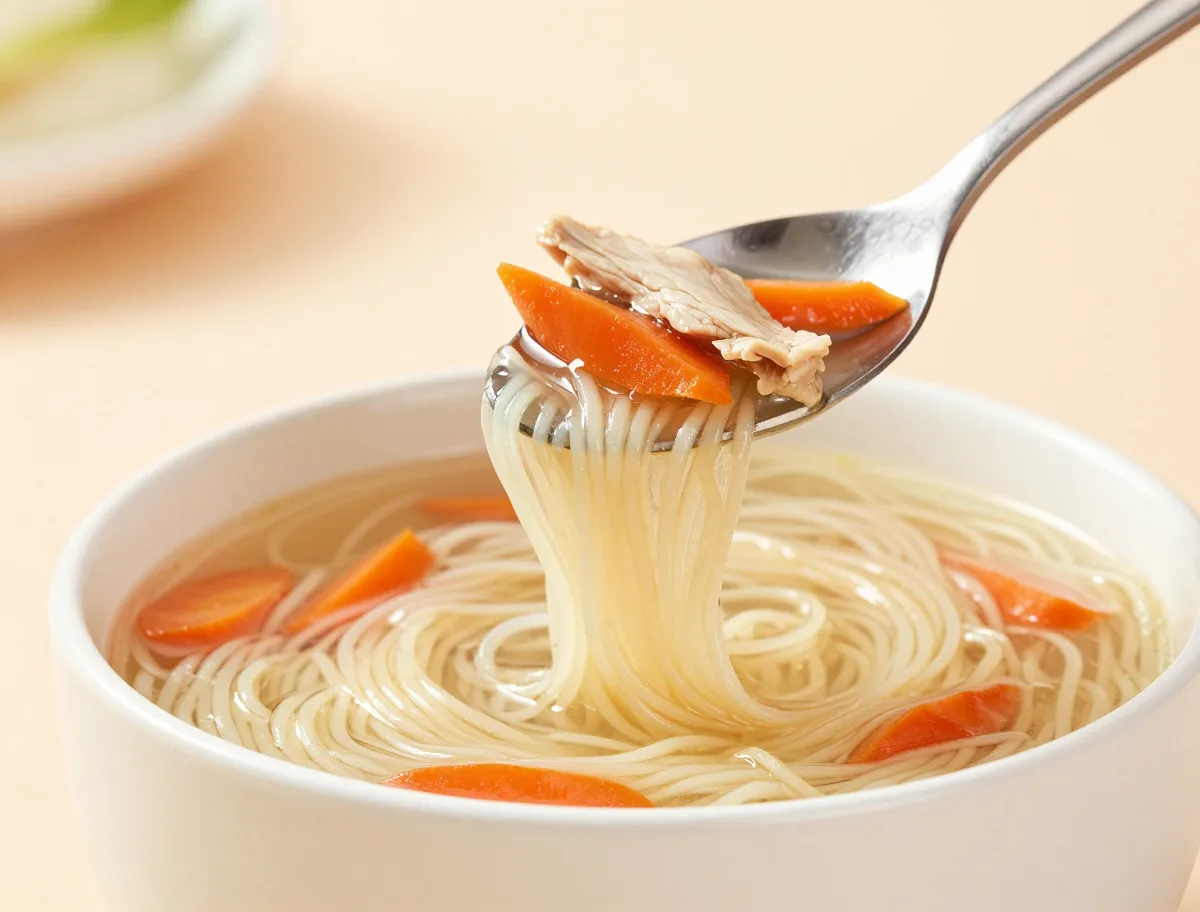
Ladle the soup immediately after finishing so the noodles retain their best texture and the broth-to-solid ratio stays balanced. A restrained garnish is enough because the soup already contains seasoning and starch.
- Top with a little parsley, sliced scallion, or freshly ground black pepper.
- Serve with plain crackers, toast, or a simple green salad.
- For a heartier weeknight meal, pair it with a small grilled-cheese sandwich.
- Avoid very salty toppings or heavily seasoned sides that can overwhelm the broth.
How to Store, Freeze, and Reheat Chicken Noodle Soup
The soup base keeps better than the noodles. For planned leftovers, refrigerate the broth, vegetables, and chicken separately from cooked noodles whenever possible; this preserves both liquid volume and noodle texture.
- Refrigerate leftovers in shallow, covered containers within 2 hours of cooking or serving, and use them within 3 to 4 days.
- Freeze the soup base without noodles for the best quality; use frozen soup within about 2 to 3 months for its best texture.
- Reheat on the stovetop until steaming and thoroughly hot, or microwave a covered portion while stirring partway through. Reheated leftovers should reach 165°F (74°C).
- Add a little water or unsalted broth during reheating if the noodles or evaporation have reduced the liquid, then taste again.
- Do not use a slow cooker to reheat chilled leftovers; reheat them quickly first, then hold them at 140°F (60°C) or above if necessary.
Campbell’s Chicken Noodle Soup Recipe FAQs
These answers clarify the product, dilution, timing, and practical shortcuts behind the recipe.
Does this recipe use Campbell’s condensed soup or Campbell’s chicken broth?
It uses one can of Campbell’s condensed chicken noodle soup. The soup is mixed with water before heating. Campbell’s ready-to-serve chicken broth can support a separate homemade soup, but it does not replace the condensed can in this formula.
How much water should be added to condensed Campbell’s chicken noodle soup?
The usual starting point is one can of water for one can of condensed soup. This recipe uses 1¼ cans because the added vegetables and chicken contribute solids; add the measured amount first and adjust only after tasting.
Can rotisserie chicken be used?
Yes. Remove the skin and bones, then shred or cut the chicken into bite-size pieces. Add it near the end so it heats through without becoming dry.
Can the soup be made in the microwave?
The plain condensed product can generally be heated in a covered, microwave-safe bowl after mixing with water, following the current package directions and stirring carefully. This enhanced version contains raw carrots and celery, which may not become tender during the short label heating time, so the stovetop method is more reliable unless the vegetables are already cooked.
How do I keep the noodles from becoming mushy?
Do not boil the soup longer than needed, serve it promptly, and store noodles separately from the broth for leftovers. If adding extra dry noodles, add them only near the end and check them before the package’s full cooking time.
How many servings does this recipe make?
It makes about 6 cups, or approximately four modest meal portions. The exact number depends on bowl size and how generously the chicken and vegetables are portioned.
Can raw chicken be used instead of cooked chicken?
Raw chicken requires a different, longer method. It must be cooked completely before serving, with the thickest pieces reaching 165°F (74°C). For this quick recipe, cooked chicken is safer and more predictable.
How can I make the soup lower in sodium?
Choose a reduced-sodium condensed product if available, use water rather than regular chicken broth, skip added salt and bouillon, and taste only after all ingredients are combined. Product sodium levels vary, so check the current label.
Chicken Soup Food-Safety Basics
Use properly refrigerated cooked chicken and keep it separate from raw foods during preparation. Because this soup contains poultry and is often made in a large batch, cooling and reheating practices matter as much as the cooking step.
- If using raw chicken in another version, cook it to a minimum internal temperature of 165°F (74°C).
- Refrigerate or freeze finished soup within 2 hours, or within 1 hour when the surrounding temperature is above 90°F (32°C).
- Cool soup in shallow containers rather than leaving a deep, hot pot on the counter.
- Reheat leftovers to 165°F (74°C), stirring to distribute heat, especially in the microwave. Follow USDA safe cooking temperature guidance for poultry and reheated leftovers.
- If holding soup for serving, keep it at 140°F (60°C) or above and discard perishable soup left at room temperature beyond the recommended time limit.