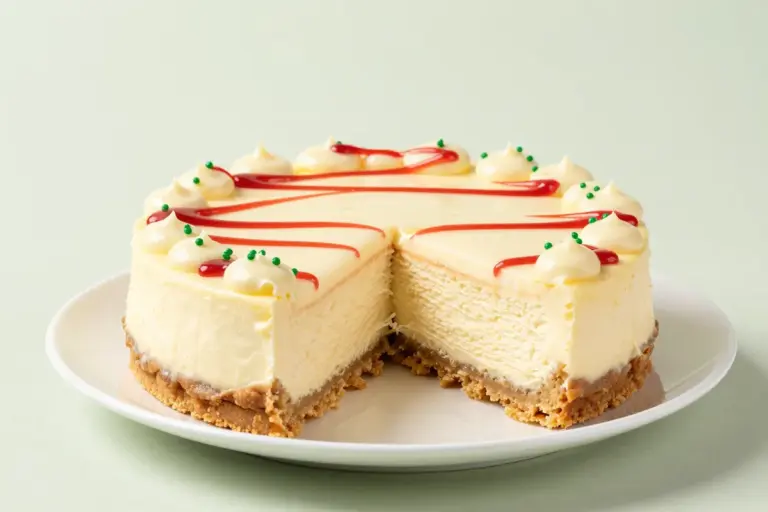
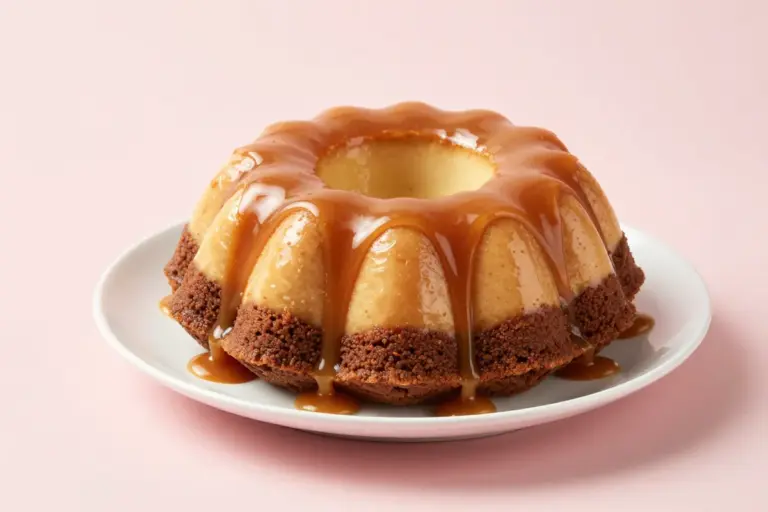
Randazzo’s King Cake Recipe: New Orleans-Style
This New Orleans-style Randazzo’s king cake recipe is a soft, cinnamon-scented braided yeast cake finished with thick white icing and classic purple, green, and gold sugar.
What Makes This a Randazzo-Style King Cake
The defining features are a tender enriched yeast crumb, a generous oval braid, pronounced cinnamon flavor, thick white icing, and distinct purple, green, and gold sugar. This recipe aims for that bakery-style profile while acknowledging that the original commercial formula is not public.
- Traditional style: cinnamon-forward and unfilled rather than cream cheese-filled.
- Shape: a large braided oval with a visible center opening.
- Texture: soft, moist, and fine-crumbed rather than crusty or cake-batter-like.
- Yield: approximately 20 small party slices.
Why the Dough and Icing Work
Milk, egg, butter, and sugar enrich the dough and keep the crumb tender. Bread flour supplies enough gluten strength to support a long braid, while cinnamon gives the cake its signature aroma without requiring a heavy, leak-prone filling. The icing is deliberately thick so it remains visibly white across the ridges.
- Bread flour improves structure and braid definition; adding too much extra flour makes the cake dry.
- Butter and egg soften the crumb but also encourage faster browning.
- Confectioners’ sugar creates a smooth icing that sets opaque rather than translucent.
- Coarse sanding sugar keeps the Mardi Gras colors crisp and separate.
Ingredients
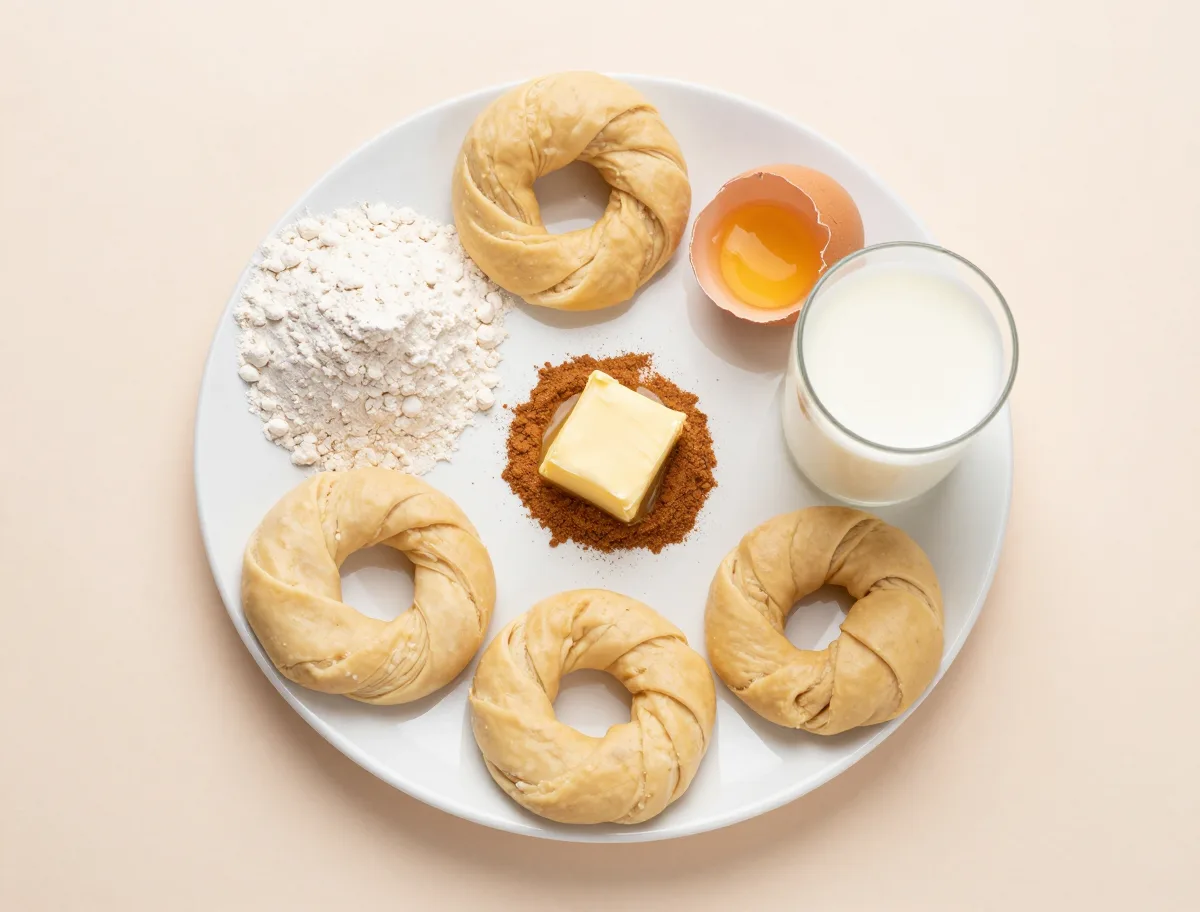
- 2 1/4 teaspoons instant yeast
- 1 cup whole milk, warmed to about 105°F
- 1/2 cup granulated sugar, divided
- 1 large egg, at room temperature
- 4 tablespoons unsalted butter, melted and cooled slightly
- 5 cups bread flour, plus more only if needed
- 2 teaspoons ground cinnamon
- 1 1/2 teaspoons fine salt
- 3 cups confectioners’ sugar, sifted
- 3 tablespoons whole milk, for the icing
- 1 teaspoon vanilla extract
- 2 tablespoons purple sanding sugar
- 2 tablespoons green sanding sugar
- 2 tablespoons gold sanding sugar
How to Shape and Braid the King Cake
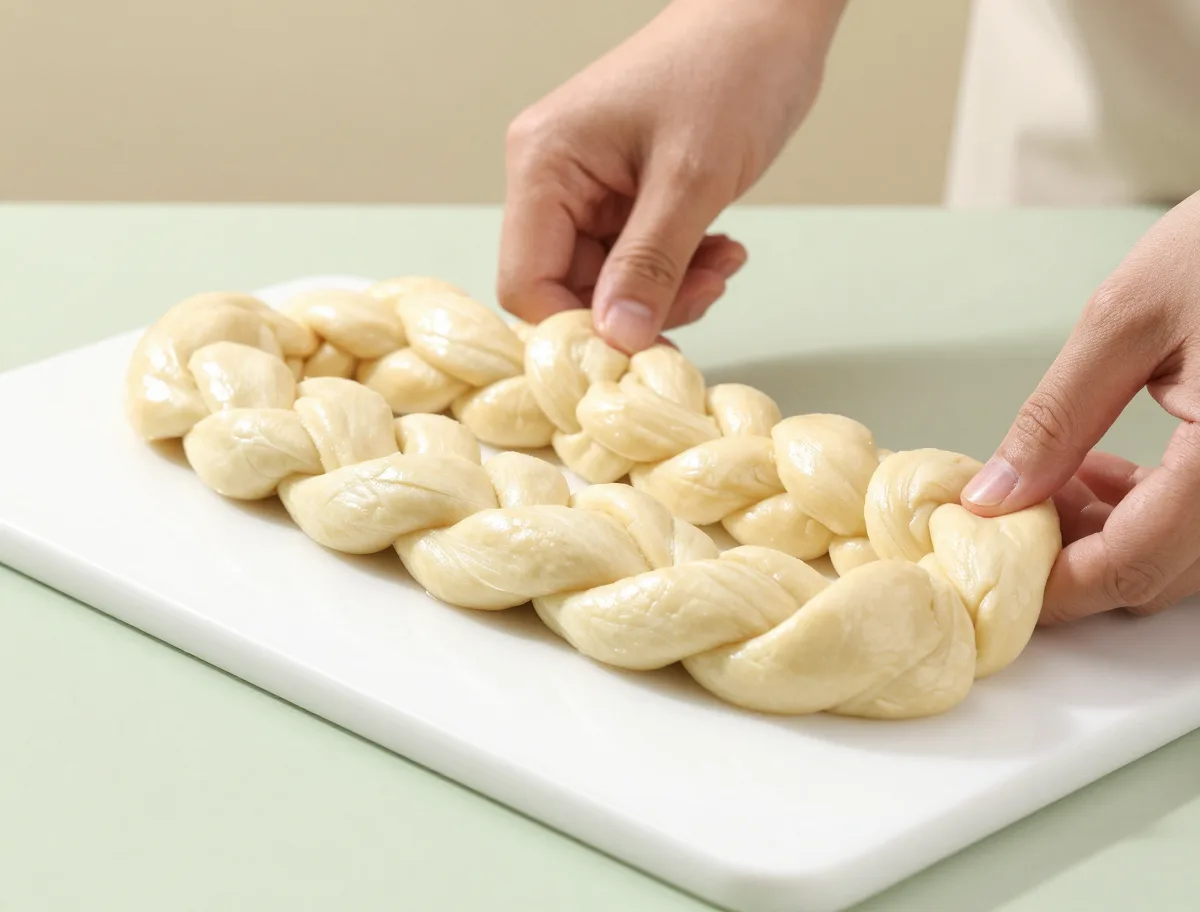
The dough should be developed before shaping, but it should remain supple enough to stretch into long strands. Roll all three ropes to similar lengths, braid with a light hand, and make the seam underneath the oval. A spacious center prevents the ring from closing as it proofs.
- Use a short rest before kneading instead of correcting stickiness immediately with flour.
- A braid that is pulled too tightly can split or bake unevenly.
- Pinch and tuck the joined ends securely; an open seam is a common escape route for dough and icing.
- Judge both rises by visible expansion and feel, not by the clock alone.
Instructions
- Start the yeast: In the bowl of a stand mixer, stir the warm milk, yeast, and 1 tablespoon of the sugar together. Let stand for 5 minutes, until the surface looks lightly foamy. If it does not foam, replace the yeast before continuing.
- Mix the enriched dough: Add the remaining sugar, egg, melted butter, flour, cinnamon, and salt. Mix with the dough hook on low speed until no dry flour remains, about 2 minutes. Scrape the bowl, then let the dough rest for 10 minutes so the flour can absorb the liquid.
- Knead until elastic: Knead on medium-low speed for 8 to 10 minutes. The dough should become smooth, stretchy, and slightly tacky but should pull away from the sides of the bowl. Add flour only 1 tablespoon at a time if it remains unusually loose after kneading; avoid stiffening it.
- Let the dough rise: Shape the dough into a ball and place it in a lightly buttered bowl. Cover and let rise in a warm, draft-free place until nearly doubled, 60 to 75 minutes.
- Form three strands: Turn the dough onto a lightly floured surface and divide it into three equal pieces. Roll each piece into a smooth rope about 30 inches long. Keep the strands even so the finished cake bakes uniformly.
- Braid and shape the oval: Pinch the three ropes together at one end and braid them without compressing the dough. Transfer the braid to a parchment-lined baking sheet. Join the ends into a large oval, pinch the seam firmly, and tuck it underneath. Leave an opening at least 5 inches wide in the center.
- Proof the shaped cake: Cover the braid loosely and let it rise for 35 to 45 minutes, until visibly puffy. A gentle fingertip press should spring back slowly and leave a slight impression.
- Bake the king cake: Heat the oven to 350°F. Bake the cake on the center rack for 28 to 32 minutes, rotating the sheet once if needed. The braid should be evenly golden and the thickest part should register about 190 to 195°F. If the top darkens early, tent it loosely with foil. Cool completely on the baking sheet before icing.
- Ice and decorate: Whisk the confectioners’ sugar, icing milk, and vanilla extract until smooth and thick but slowly pourable. Drizzle and spread the icing over the cooled braid, allowing some icing to cling to the ridges. Immediately add separate bands of purple, green, and gold sanding sugar while the icing is still tacky.
- Add the baby safely: Do not bake a plastic baby into the cake. Place a clean, clearly identified plastic baby beneath a serving slice or provide it separately, and tell guests where it is before serving.
How to Tell When the King Cake Is Ready
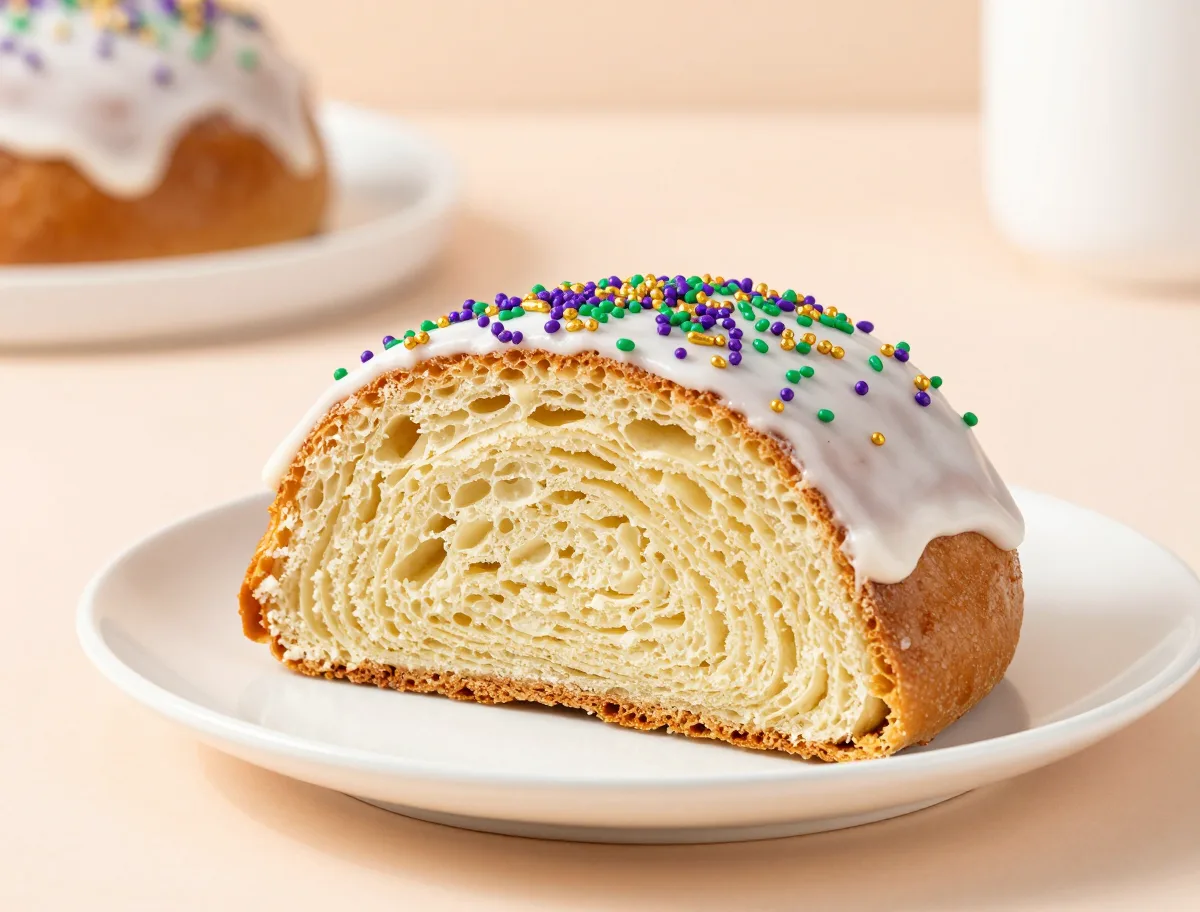
A properly proofed cake feels light and aerated before it enters the oven. Because the braid is thick at its junctions, surface color is not enough to confirm doneness. Look for a set, tender crumb and use an instant-read thermometer as a supporting check.
- Underproofed dough springs back immediately when pressed and tends to bake dense.
- Properly proofed dough slowly recovers from a gentle indentation.
- The surface should be golden, not deeply brown.
- The center should be set without a gummy band where the strands meet.
- Cool fully before icing so the coating stays thick and white.
Doneness Cues
- After kneading, the dough is smooth, elastic, and slightly tacky rather than stiff.
- The bulk dough has nearly doubled in volume.
- The shaped braid is puffy and a fingertip indentation recovers slowly.
- The baked cake is evenly golden, feels set at the thickest junction, and has an internal temperature of about 190 to 195°F.
- The icing falls slowly from a whisk and remains opaque white on the cooled cake.
The Variables That Control Rise and Softness
Yeast must produce gas, and the kneaded gluten network must hold it. The dairy, butter, egg, and sugar make this a rich dough that ferments more slowly than lean bread while browning more quickly in the oven. Moderate warmth, restrained flour, and careful color monitoring make the biggest practical difference.
- Milk should feel warm, not hot; overheated liquid can weaken or kill the yeast.
- Sugar competes for available water, so a rich dough may need more time to rise.
- Enriched dough colors quickly; foil tenting protects the top while the center finishes.
- A humid kitchen can soften icing and colored sugar, so decorate shortly before serving when possible.
Common King Cake Mistakes and How to Fix Them
Most problems come from changing the dough’s balance or judging fermentation by time alone. Small adjustments are better than dramatic corrections, especially when flour is involved.
- Dense cake: The dough may be underkneaded, underproofed, or burdened with excess flour. Knead until elastic and wait for clear expansion.
- Collapsed braid: It was likely overproofed or the seam was weak. Bake when puffy but still resilient, and support the join underneath.
- Dark top with a raw center: Reduce the oven temperature slightly or tent with foil rather than simply extending the bake.
- Dry crumb: Too much flour or overbaking is the usual cause. Keep the dough slightly tacky and remove the cake once the center is set.
- Runny icing: The cake was too warm or the icing contained too much milk. Cool completely and whisk in more confectioners’ sugar.
- Muddy colors: The icing was too wet or the sugar was added after the surface had set. Decorate while the icing is still tacky.
Practical Ingredient Substitutions
The classic flavor depends more on the enriched yeast dough, cinnamon, white icing, and Mardi Gras colors than on one specific flour brand. Substitutions are possible, but each changes handling or texture.
- Strong all-purpose flour can replace bread flour; add it gradually and expect a slightly less structured braid.
- Active dry yeast can replace instant yeast by weight. Dissolve it in the warm milk and allow a few extra minutes for fermentation if needed.
- Reduced-fat milk works, though the crumb will be a little less rich. Unsweetened, unflavored plant milk is workable but may alter browning and flavor.
- Margarine or shortening can replace butter, but butter gives the most characteristic dairy flavor.
- Cassia cinnamon provides the familiar assertive profile; Ceylon cinnamon is more floral and delicate.
Cream Cheese and Pecan-Praline Variations
Cream cheese and pecan praline are established king-cake flavor directions, but they are not the same as the traditional cinnamon cake. Both add moisture and richness, making the braid heavier and changing storage requirements.
- For a cream cheese version, use a restrained, firm filling and seal it completely; refrigerate the finished cake promptly.
- Pecan-praline filling should be used sparingly because concentrated sugar and nuts can leak and brown quickly.
- Apple, lemon, or strawberry fillings create legitimate seasonal variations but move farther from the classic cinnamon profile.
- A cake-batter ring or an unbraided frosted coffee cake is a different dessert, not a close Randazzo-style copy.
How to Store, Freeze, and Reheat King Cake
For the plain cinnamon version, quality is best preserved by protecting the cake from air and humidity. Cool it completely before wrapping. Cakes containing cream cheese or another perishable filling must be handled according to food-safety limits rather than ordinary bakery holding advice.
- Plain cake: seal airtight and keep in a cool, dry place for up to 3 days for best texture.
- Freezing: wrap the fully cooled, undecorated or decorated cake tightly, then place it in a freezer-safe bag or container. Thaw it while still wrapped to reduce condensation on the icing.
- After thawing, allow about 2 hours at room temperature for a plain cake, then unwrap and refresh the icing if necessary.
- Reheat individual plain slices in the microwave for 8 to 12 seconds. Check carefully because the icing can become hot and melt.
- Cream cheese-filled cake: refrigerate at 40°F or below within 2 hours, or within 1 hour when the room is above 90°F. Thaw perishable versions in the refrigerator.
Randazzo’s King Cake Recipe FAQ
These answers clarify the traditional bakery style, the filling question, the king-cake baby, and practical planning for a Mardi Gras gathering.
Is this an exact copy of Manny Randazzo’s original recipe?
No commercial formula is publicly available, so this is an independently developed, style-focused copycat. It follows the recognizable targets: soft enriched yeast dough, cinnamon flavor, a hand-braided oval, white icing, and purple, green, and gold sugar.
Does the traditional cake use cinnamon, cream cheese, or both?
The traditional Randazzo-style cake is cinnamon-infused and unfilled. Cream cheese and pecan praline are separate filled variations. This base recipe keeps the cinnamon in the dough so it remains faithful to the traditional profile.
How large is the finished cake?
The recipe makes one large oval cake, approximately 12 by 15 inches, with about 20 small slices. Wider slices will reduce the serving count.
Why is the cake braided?
The braid is a key visual feature of this New Orleans bakery style. Even strands create a more regular bake and provide ridges for the thick icing and colored sugar.
Can I bake the plastic baby inside the cake?
No. Keep the plastic baby outside the dough. Place it beneath a cooled serving slice or provide it separately, and warn guests before anyone eats.
Can I make the cake ahead for Mardi Gras?
Yes. A plain cake can be baked up to 3 days ahead and kept airtight in a cool, dry place, or frozen for longer storage. Cream cheese-filled versions require refrigeration and should be thawed in the refrigerator.
The New Orleans King Cake Tradition
King cake is associated with Epiphany and the Carnival season, with New Orleans developing its own recognizable yeast-raised, decorated style. Purple, green, and gold became strongly associated with Mardi Gras through Rex in 1872; the commonly assigned meanings are justice, faith, and power.
- The exact European and local pathway of king cake is debated, so no single origin story explains every version.
- The plastic baby is a later New Orleans convention related to older bean or trinket traditions and represents the Christ child.
- The person who finds the baby may be expected to provide the next cake or host the next gathering, though customs vary.
- Randazzo’s contribution to the regional style is especially associated with a soft, cinnamon-scented, braided, heavily iced cake.
For additional background on the bakery’s traditions, see the official Manny Randazzo king cake tradition information.
King Cake Food-Safety Notes
Handle the unbaked dough as a raw food because it contains flour and egg. Clean the work area after mixing, and never taste the dough before baking. The plastic baby is a foreign object and should remain outside the baked cake.
- Wash hands, utensils, bowls, and counters after contact with raw flour or egg.
- Keep cream cheese-filled cakes and other perishable variations refrigerated at 40°F or below.
- Discard perishable cake left above 40°F for more than 2 hours, or more than 1 hour in temperatures above 90°F.
- Do not surprise guests with the baby; identify its location before serving and supervise children around it.
- Freeze food at 0°F or below and thaw perishable-filled cake in the refrigerator.
For more detail on handling raw flour and dough, consult the FDA guidance on flour as a raw food.