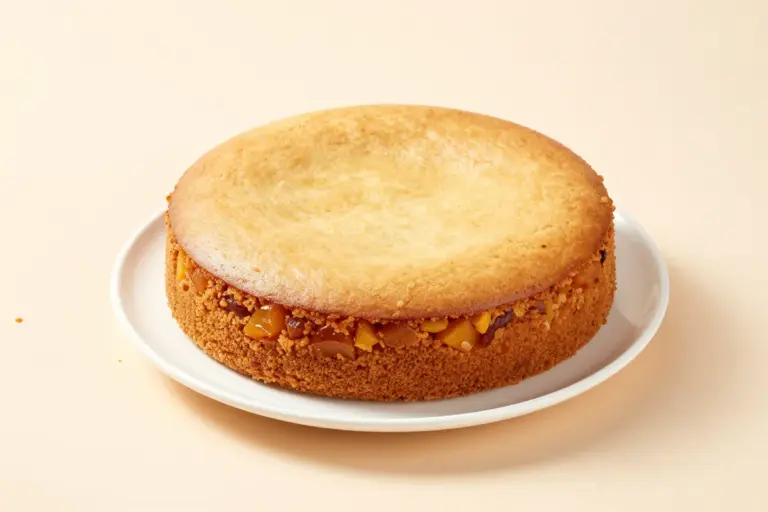
Nova Scotia Blueberry Cream Cake Recipe
This Nova Scotia blueberry cream cake combines a tender pressed buttery base, a generous layer of fresh or frozen blueberries, and a lightly sweet sour-cream custard that bakes into clean, creamy slices after chilling.
What Makes This Nova Scotia Blueberry Cream Cake Distinct
This is a baked blueberry custard dessert, not a conventional layer cake with frosting. Its identity comes from three contrasting components: a lightly sweet pressed buttery base, a substantial layer of blueberries, and a tangy sour-cream-and-egg topping that firms as it cools.
- The finished cake is served chilled and cut into wedges.
- The berries remain visible within the creamy custard rather than being folded into a sponge batter.
- The texture should be tender, juicy, and custardy, with no whipped-cream frosting or cream-cheese layer.
Why the Ingredients Work
The base is deliberately closer to a press-in shortcake dough than to a pourable cake batter. Cold butter limits gluten development, flour provides structure, and the egg yolk helps the crumbs bind. In the topping, sour cream supplies richness and acidity while eggs create the custard network that makes the chilled cake sliceable.
- Cornstarch lightly coats the berries and helps manage the juice released during baking without turning the custard into a thick pudding.
- Full-fat sour cream provides better body and a silkier finish than low-fat versions.
- Vanilla is essential to the rounded flavor; almond extract is optional and adds a gentle bakery-style almond note.
- A restrained amount of sugar keeps the berries and sour cream tasting bright rather than frosting-sweet.
Ingredients
- 1 1/2 cups all-purpose flour
- 1/4 cup granulated sugar, divided
- 1 teaspoon baking powder
- 1/4 teaspoon fine salt
- 6 tablespoons unsalted butter, cold and cut into small pieces
- 1 large egg yolk
- 1 teaspoon vanilla extract, divided
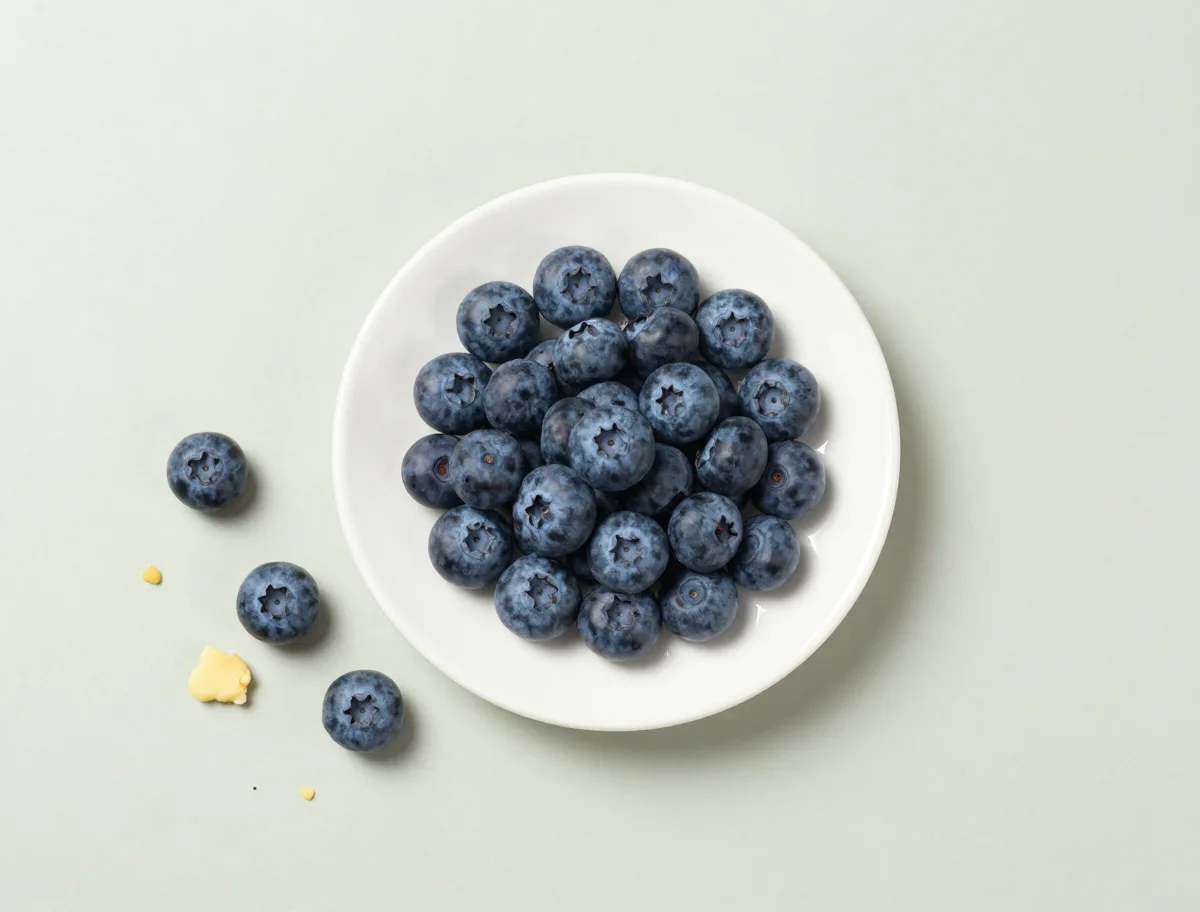
- 3 cups blueberries, fresh and dry, or frozen and used directly from the freezer
- 2 teaspoons cornstarch
- 1 1/2 cups full-fat sour cream
- 2 large eggs
- 1 large egg yolk
- 1/2 cup granulated sugar
- 1/2 teaspoon almond extract, optional
How to Make the Pressed Base and Custard Layers
The most important technique is handling the base like a crumbly dough. Cut the butter into the dry ingredients until coarse crumbs form, then press just firmly enough to create an even layer. A short preliminary bake gives the base a head start before it meets the juicy fruit.
- Use parchment on the springform base and place the pan on a baking sheet because removable seams are not always watertight.
- Press the base evenly rather than building a thick ridge; uneven thickness leads to hard edges and a soft center.
- Add dry fresh berries shortly before baking. Frozen berries should remain frozen unless they are thawed, drained, and blotted carefully.
- Whisk the sour-cream mixture only until smooth so the baked surface stays even rather than foamy.
Instructions
- Prepare the pan and oven. Heat the oven to 350°F (175°C). Grease a 9-inch springform pan, line the base with parchment, and set the pan on a rimmed baking sheet to catch any butter or fruit juice that escapes.
- Make the pressed base. Whisk the flour, baking powder, salt, and 2 tablespoons of the sugar in a bowl. Cut in the cold butter with a pastry blender or your fingertips until coarse crumbs form. Add the egg yolk and 1/2 teaspoon of the vanilla extract, then mix just until the crumbs begin to hold together. Press the mixture firmly and evenly over the bottom of the pan; do not knead it into a smooth dough.
- Partially bake the base. Bake the base for 12 minutes, until it looks set but is still pale. Remove it from the oven and let it stand while you prepare the berries and custard.
- Prepare the blueberries. Toss the blueberries gently with the cornstarch and the remaining 2 tablespoons of base sugar. If using fresh berries, make sure they are dry. Keep frozen berries frozen; if they have heavy surface ice, shake it off without rinsing or adding water.
- Mix the sour-cream custard. Whisk the sour cream, eggs, egg yolk, remaining 1/2 cup sugar, remaining 1/2 teaspoon vanilla, and the almond extract if using, just until smooth. Avoid whipping in excess air.
- Assemble the cake. Spread the blueberries over the warm base in an even layer. Pour the sour-cream custard slowly over the berries, tilting the pan gently if needed to distribute it without crushing the fruit.
- Bake until softly set. Bake on the center rack for 45 to 55 minutes. The perimeter should be set and lightly golden, while the center should quiver gently as one cohesive mass rather than ripple like liquid. Check the custard in a berry-free spot; it should reach at least 160°F (71°C). If the top darkens too quickly, lay foil loosely over the pan.
- Cool and chill. Transfer the cake to a rack and cool in the pan until no longer hot, then refrigerate it uncovered or loosely covered until fully cold, at least 4 hours and preferably overnight. Run a thin knife around the edge before unclipping the springform ring.
- Slice and serve. Cut the chilled cake with a sharp knife warmed in hot water and wiped dry between cuts. Serve cold or let individual slices stand briefly at cool room temperature. Add whipped cream only as an optional accompaniment.
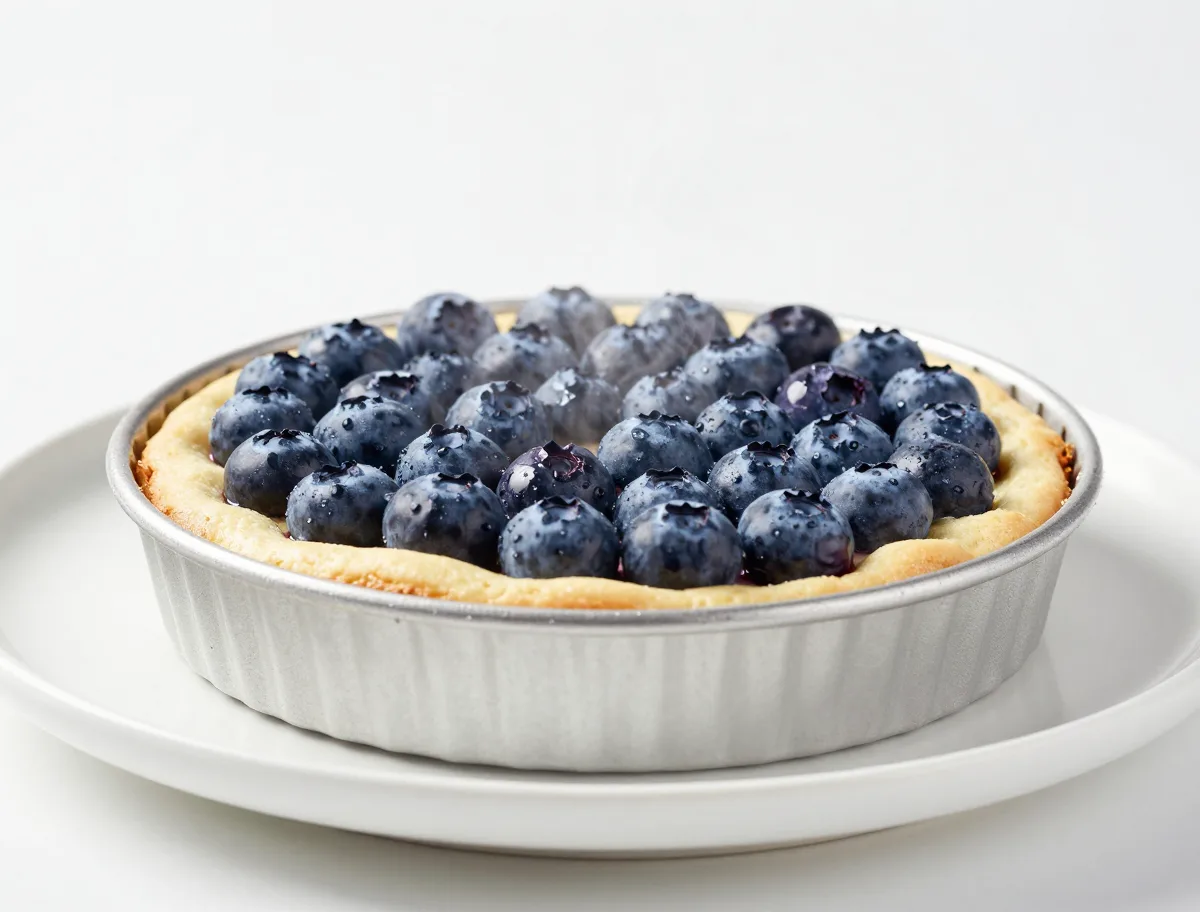
How to Tell When the Blueberry Custard Cake Is Done
Do not wait for the center to become completely motionless in the oven. The ideal cake has lightly browned edges and a center that moves with a restrained, cohesive jiggle. The custard continues setting as it cools and becomes firm enough to slice after several hours in the refrigerator.
- A liquid ripple indicates underbaking; a small unified tremble is expected.
- A deeply browned or cracked surface usually means the custard has been exposed to too much heat for too long.
- Use an instant-read thermometer in a berry-free area and look for at least 160°F (71°C).
- Judge the final texture only after the cake is fully chilled, not while it is warm.
Doneness Cues
- The base is pale but set after its short preliminary bake.
- The custard edges are firm and lightly browned.
- The center trembles slightly as a unified layer, not as loose liquid.
- The center reaches at least 160°F (71°C) in a spot without a blueberry.
- The chilled cake releases cleanly and cuts into distinct layers.
The Variables That Control the Final Texture
Blueberries release water as they heat, while sour cream, sugar, and fruit juice dilute the egg proteins that set the custard. Moderate heat gives those proteins time to thicken gradually; aggressive baking can make them tighten, crack, and force out liquid.
- Berry moisture is the main reason the base can become soft, so dry fresh fruit and controlled handling of frozen fruit matter.
- Chilling is part of the recipe’s structure, not merely a serving preference: the egg-and-dairy layer firms substantially as it cools.
- A small amount of cornstarch improves tolerance for juicy berries, but excessive starch would make the topping pasty.
- Accurate baking powder measurement helps limit unwanted lift and protects the clean blueberry color.
Common Nova Scotia Blueberry Cream Cake Problems
Most problems with this dessert are caused by moisture or timing and are easier to prevent than repair. Work with dry fruit, support the springform pan, and remove the cake when the custard is softly set rather than waiting for a rigid surface.
- Soggy base: Wet berries, excess juice, an overly thin base, or underbaking are common causes. Drain and blot thawed fruit, keep fresh berries dry, and use the brief preliminary bake.
- Loose filling: If the center is liquid rather than gently jiggly, continue baking in 5-minute increments. If it is only softly trembling, chill it fully before deciding it is underdone.
- Cracks or watery separation: These usually indicate overbaking or excessive heat. Tent the cake loosely with foil if the top browns early.
- Leaking pan: A springform seam can release butter or berry juice even when the pan is properly assembled. The lined baking sheet is essential; foil can contain drips but should not be treated as a guaranteed watertight seal.
- Difficult release: Chill the cake completely, run a thin knife around the edge, and unclasp the ring gradually rather than forcing it.
Fresh, Wild, or Frozen Blueberries: What to Use
Fresh wild blueberries are a natural choice for this Nova Scotia-style dessert because they are small and intensely flavored, but any good-quality blueberry works. Frozen fruit is a practical year-round option and can go into the cake directly from the freezer.
- Fresh cultivated blueberries can replace wild berries at the same volume; their larger pockets may make the slices look less evenly studded.
- Frozen berries used frozen minimize handling and color bleed, though the cake may need a few extra minutes in the oven.
- If frozen berries are heavily iced or unusually juicy, thaw them in a strainer, drain thoroughly, and blot dry before using.
- Reduced-fat sour cream is workable but can make the filling less rich and less stable. Full-fat sour cream is the most dependable choice.
- A deep fixed-sided pie dish is not an ideal substitute for a springform because releasing the moist cake cleanly is difficult. A removable-bottom tart pan can work if it is sufficiently deep.
How to Serve Blueberry Cream Cake
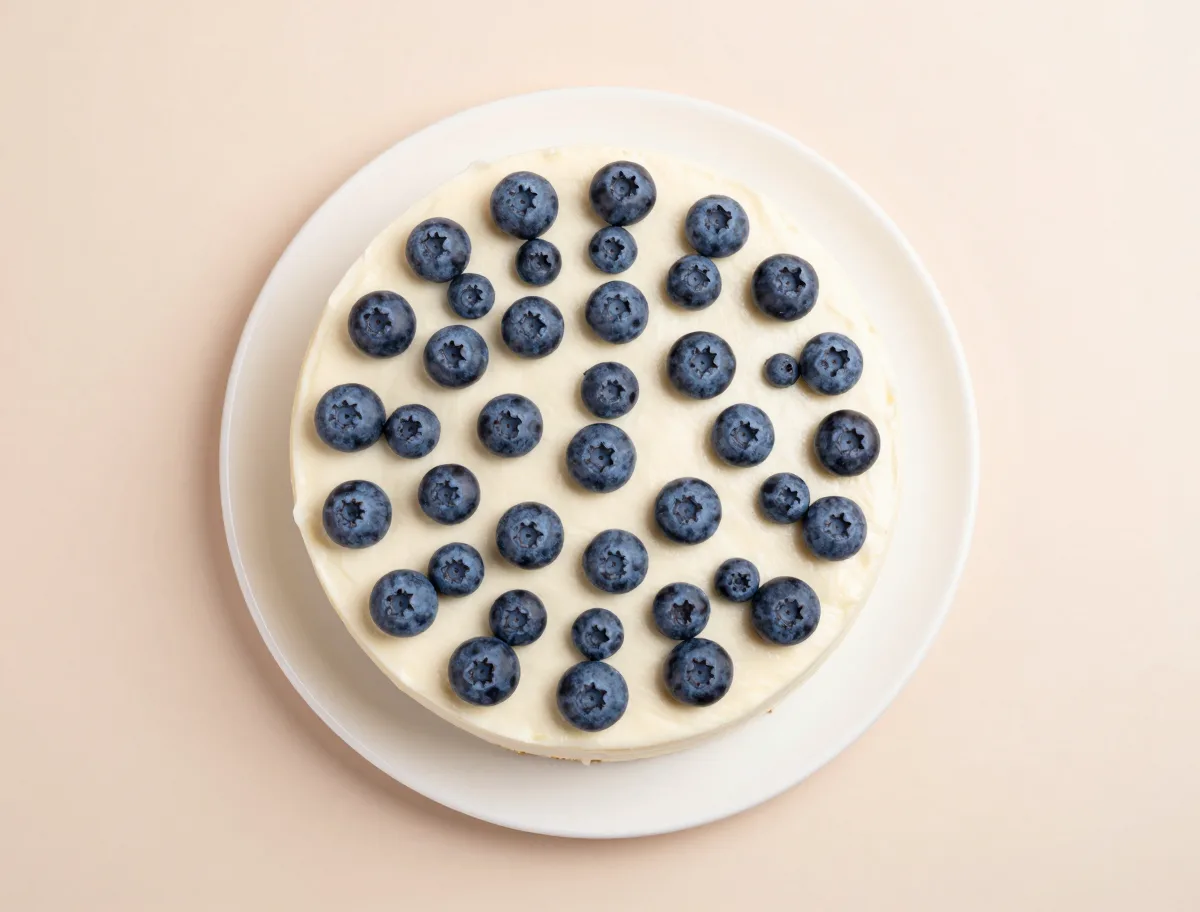
Serve the cake cold for the cleanest wedges and the firmest contrast between the buttery base, berries, and sour-cream custard. A brief tempering period softens the texture and releases more aroma, but keep the dessert refrigerated between servings.
- Use a warm, dry knife and wipe it between cuts for neat slices.
- A small spoonful of lightly sweetened whipped cream is an accompaniment, not a replacement for the defining sour-cream layer.
- A little lemon zest or a few fresh blueberries can garnish the plate without obscuring the cake.
- Coffee, black tea, or a lightly sparkling beverage balances the dessert’s richness and acidity.
How to Store, Freeze, and Make This Cake Ahead
This is an excellent make-ahead dessert because the custard becomes easier to cut after an overnight chill. Cool it promptly, cover it once fully cooled, and maintain continuous refrigeration because the cake contains cooked eggs and sour cream.
- Refrigerate at 40°F (4°C) or below and use within 3 to 4 days; quality is generally best during the first two days.
- Do not leave the cake at room temperature for more than 2 hours, or more than 1 hour in temperatures above 90°F (32°C).
- Freezing is possible, preferably in individual airtight portions, but the sour-cream custard may thaw slightly watery or grainy and the base may soften.
- Thaw frozen portions in the refrigerator. Do not reheat, since heat can over-set the custard and worsen separation.
Recipe Notes
- Full-fat sour cream gives the smoothest, most stable custard. Reduced-fat sour cream can work but may produce a softer, wetter filling.
- Fresh wild blueberries are especially well suited, but cultivated fresh berries and frozen berries are also reliable.
- For thawed frozen berries, drain and blot them thoroughly before using; direct-from-freezer berries generally retain better shape but may add several minutes to the bake.
- The cake is best made one day ahead. Keep it covered and refrigerated at 40°F (4°C) or below, and use within 3 to 4 days.
- Freezing is possible for individually wrapped portions, but thawing may make the custard slightly watery and the base softer. Thaw in the refrigerator and do not reheat.
The Nova Scotia Connection
Nova Scotia’s regional identity is strongly tied to wild blueberries, which are recognized as the province’s official berry and have long been gathered, preserved, and used in local desserts. The exact first maker or canonical historical formula for this particular cream cake is not firmly established, so “Nova Scotia-style” is the most careful description.
- The blueberry-and-custard format reflects the province’s longstanding blueberry dessert culture.
- Frozen local berries are a fitting choice outside the short fresh season because much of Nova Scotia’s blueberry crop is preserved for year-round use.
- This cake should not be confused with blueberry grunt, a better-documented regional dessert, or with modern frosted blueberry layer cakes that use the same name.
For official context about Nova Scotia’s provincial berry and regional symbols, see Nova Scotia’s Provincial Symbols.
Food Safety for This Egg-and-Sour-Cream Dessert
Because the cake remains moist after baking and contains eggs and dairy, treat it as a perishable refrigerated dessert. Bake the custard thoroughly, cool it promptly, and keep it cold during storage and service.
- The center should reach at least 160°F (71°C), checked away from a blueberry; visual doneness cues remain important because fruit can distort a thermometer reading.
- Refrigerate the cake within 2 hours of baking, or within 1 hour when the room temperature is above 90°F (32°C).
- Keep the refrigerator at 40°F (4°C) or below and discard the cake after 3 to 4 days.
- People at higher risk from foodborne illness may prefer pasteurized eggs or pasteurized egg products, while still following the baking and refrigeration instructions.
For additional information on safe cooking temperatures and refrigeration practices, consult the FDA’s safe food handling guidance.