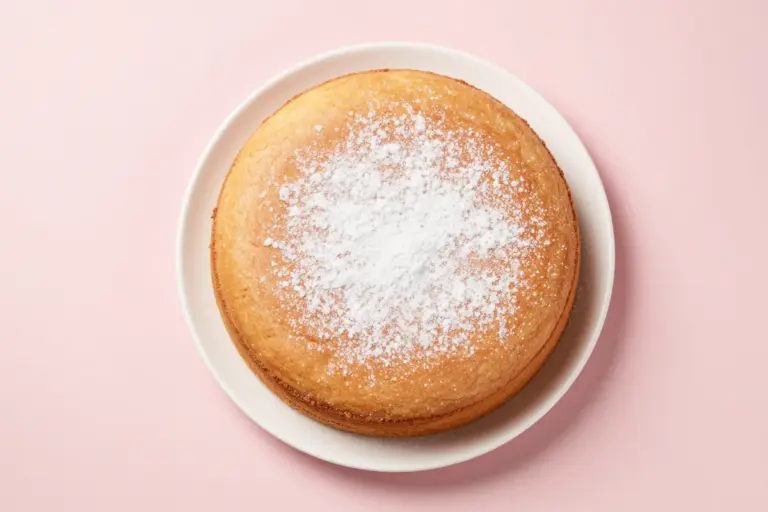
Maria Cookie Cake Recipe (Portuguese Bolo de Bolacha)
This no-bake Maria cookie cake layers coffee-softened Maria biscuits with a smooth coffee buttercream, then chills until tender, sliceable, and cake-like.
What Is a Portuguese Maria Cookie Cake?
Bolo de bolacha is a chilled Portuguese biscuit cake rather than a baked sponge. Its defining combination is Maria biscuits, strong coffee, and a sweet butter-based cream layered until the biscuits become tender and cake-like.
- The finished cake should be soft enough to cut cleanly but firm enough to stand in distinct layers.
- Coffee should be noticeable in both the biscuit layers and the overall flavor.
- A round flower arrangement is traditional, while a springform pan makes a taller cake easier to unmold.
Why the Ingredients Matter
Dry, thin Maria biscuits are central because they absorb coffee gradually without immediately disintegrating. Strong coffee supplies bitterness, aroma, and the moisture that transforms crisp biscuits into a cake-like crumb. Buttercream provides sweetness and the chilled fat structure that holds the layers together.
- Powdered sugar keeps the no-cook buttercream smooth when served cold.
- Soft butter whips into a lighter filling; melted butter produces a loose, greasy mixture.
- A small amount of salt and vanilla keeps the sweet coffee flavor from tasting flat.
Ingredients
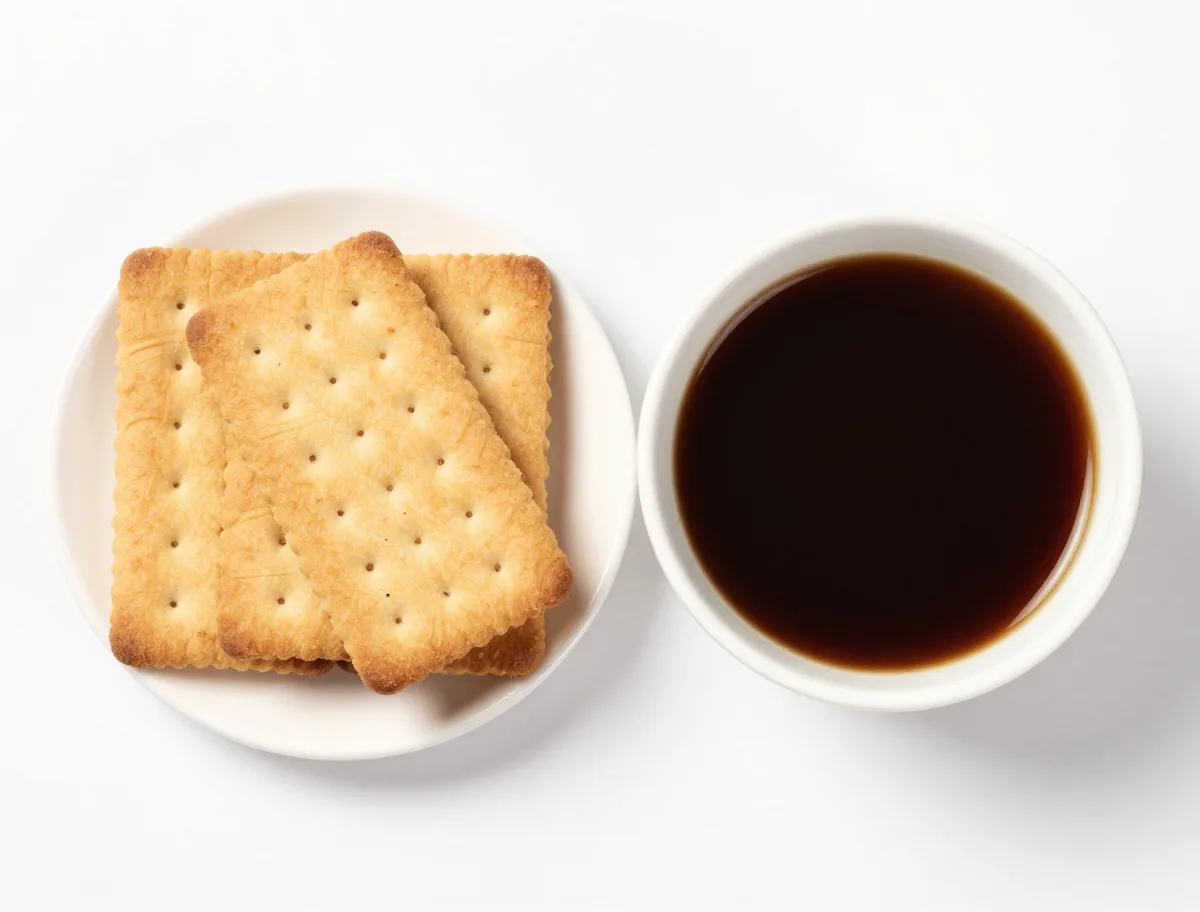
- 450 g Maria or Marie biscuits, use about 400 g for layering and reserve the remainder for crumbs
- 500 ml strong brewed coffee, cooled completely
- 225 g unsalted butter, softened but not melted
- 200 g powdered sugar, sifted
- 1 tsp vanilla extract
- 1 pinch fine salt
How to Assemble the Layered Maria Biscuit Cake
Successful assembly is mostly a matter of restraint. Cool the coffee, dip each biscuit individually, and spread the buttercream in thin, even layers. Pack the biscuits closely so the layers compress into a single stable cake as they chill.
- Begin with a little buttercream under the first biscuit layer to prevent shifting.
- Test one biscuit before dipping the rest; different brands soften at different rates.
- Use an offset spatula to level each cream layer instead of building thick mounds.
- Keep the buttercream cool enough to hold its shape but soft enough to spread without tearing the biscuits.
Instructions
- Prepare the pan and coffee. Line the base and sides of an 8-inch (20 cm) springform pan with parchment or acetate. Pour the cooled coffee into a shallow bowl. If the coffee is still warm, wait until it reaches room temperature before assembling. 5 minutes; approximately 70°F (21°C).
- Make the coffee buttercream. Beat the softened butter and salt on medium speed for 3 to 4 minutes, until noticeably paler and airy. Add the powdered sugar in three additions, beating well after each. Beat in the vanilla and 2 tablespoons of the cooled coffee. The finished buttercream should be smooth, cohesive, and firm enough to hold soft ridges from a spatula. 8 minutes; approximately 70°F (21°C).
- Test the biscuit dip. Dip one Maria biscuit briefly into the coffee, turning it once so both sides are moistened, then lift it out immediately. It should be flexible and fragrant but remain intact when picked up. If it bends or breaks, shorten the dip for the remaining biscuits. 2 minutes; approximately 70°F (21°C).
- Build the first layers. Spread a very thin layer of buttercream over the base of the pan. Dip the biscuits one at a time and pack them closely in a single layer, breaking a biscuit only when needed to fill a small gap. Spread about one-sixth of the remaining buttercream evenly over the biscuits. 6 minutes; approximately 70°F (21°C).
- Continue layering. Repeat the coffee-dipped biscuits and buttercream until all the layering biscuits and buttercream are used, finishing with buttercream. Keep every cream layer thin and level; the tightly fitted biscuits provide the cake’s structure. 15 minutes; approximately 70°F (21°C).
- Add the finish. Crush the reserved Maria biscuits into fine crumbs and scatter them over the top. Cover the pan without pressing against the surface. 2 minutes; approximately 70°F (21°C).
- Chill until sliceable. Refrigerate the cake for at least 4 to 6 hours, preferably overnight. Before serving, remove the sides of the pan while the cake is still cold. Slice with a warm, dry knife, wiping the blade between cuts. At 39°F (4°C) for at least 4 to 6 hours.
The Texture to Expect
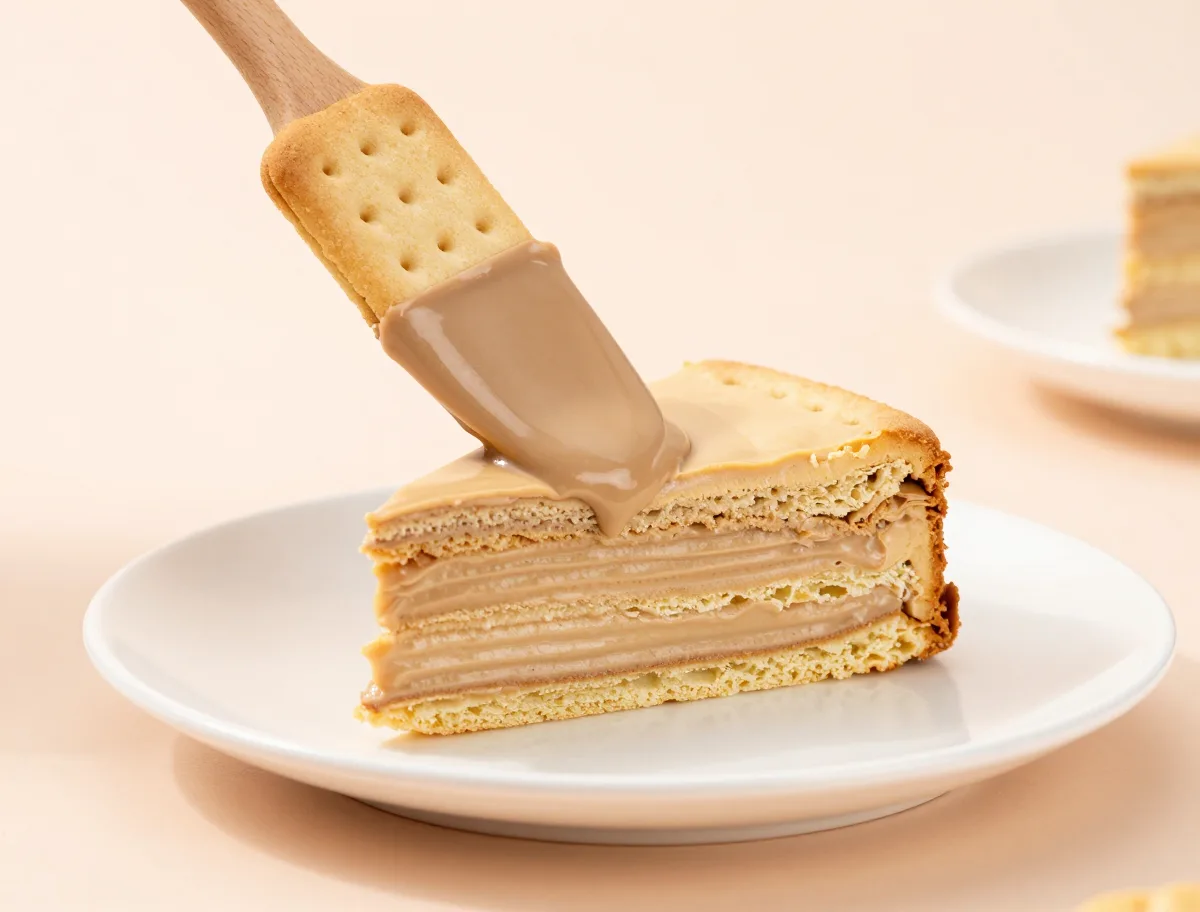
This dessert is ready through chilling and moisture migration, not baking. Immediately after dipping, the biscuits should still be structurally sound. After several hours in the refrigerator, they become tender and cake-like while retaining enough definition to show regular biscuit bands in each slice.
- A properly chilled cake resists light pressure and does not ooze coffee when cut.
- The buttercream should remain cohesive rather than oily, gritty, or runny.
- Slice directly from the refrigerator for the cleanest layers.
Doneness Cues
- A dipped biscuit is moist and slightly flexible but does not collapse when lifted.
- The buttercream is pale, smooth, cohesive, and spreadable, with shallow ridges that remain visible.
- After chilling, the cake feels firm to a light touch and a removed slice stands upright.
- The cut surface shows distinct biscuit and cream bands without coffee pooling at the base.
Why Coffee Temperature and Chilling Time Matter
The cake sets in two ways: the biscuits absorb moisture from the coffee and cream, while the buttercream firms as it cools. Absorption continues for hours after assembly, which is why a lightly moistened biscuit can become fully tender overnight.
- Room-temperature coffee gives better control than hot coffee and reduces the risk of a mushy surface.
- Thin, even cream layers distribute moisture more consistently than thick layers.
- Refrigeration firms the buttercream and stabilizes the stack, but it cannot repair biscuits that were saturated during dipping.
Common Maria Cookie Cake Mistakes
Most failures come from excess liquid, excess warmth, or uneven construction rather than from a missing baking technique. Correcting the variables early is far easier than rescuing a collapsed cake.
- If biscuits break in the bowl, shorten the dip and make sure the coffee is fully cool.
- If the cake slides, the buttercream may be too warm, the layers too thick, or the cake insufficiently chilled. Refrigerate it overnight before unmolding.
- If the base is wet, too much coffee was absorbed or pooled; extended chilling may firm the cake but will not remove excess liquid.
- If buttercream looks curdled, continue beating briefly. If it remains loose, chill it for a few minutes and beat again.
- If the biscuits are still crunchy, cover the cake and refrigerate it longer rather than adding more coffee.
Practical Substitutions
The recipe is flexible as long as the defining structure remains: Maria-style biscuits, coffee-softening, and a layered cream. Marie biscuits or another plain, dry tea biscuit can work, but their thickness determines how quickly they absorb the coffee.
- Strong decaffeinated coffee is a direct substitute with little effect on texture.
- Espresso diluted to a dipping strength can replace brewed coffee.
- Granulated sugar is possible in a cooked or thoroughly dissolved filling, but it is less reliable for a smooth no-cook buttercream.
- For a different filling, stabilized whipped cream or mascarpone can be used, but the result will be lighter and less traditionally butter-rich.
Bolo de Bolacha Variations
Portuguese households make this dessert in several ways, and the name can cover more than one filling style. The buttercream version is the classic reference point; other creams change the cake’s sweetness, richness, and stability.
- A condensed-milk filling creates a heavier, sweeter cake, so the coffee should remain strong.
- Cooked custard gives a softer, more pudding-like result and benefits from a supporting ring or pan.
- Stabilized whipped cream makes a lighter icebox cake but does not have the same dense buttercream character.
- Cocoa, dark chocolate, cinnamon, coffee liqueur, or port can flavor the cream or garnish without changing the biscuit-and-coffee identity.
- A baked sponge or a dessert made solely from crushed biscuits is an adaptation rather than the classic layered form.
How to Serve Maria Biscuit Cake
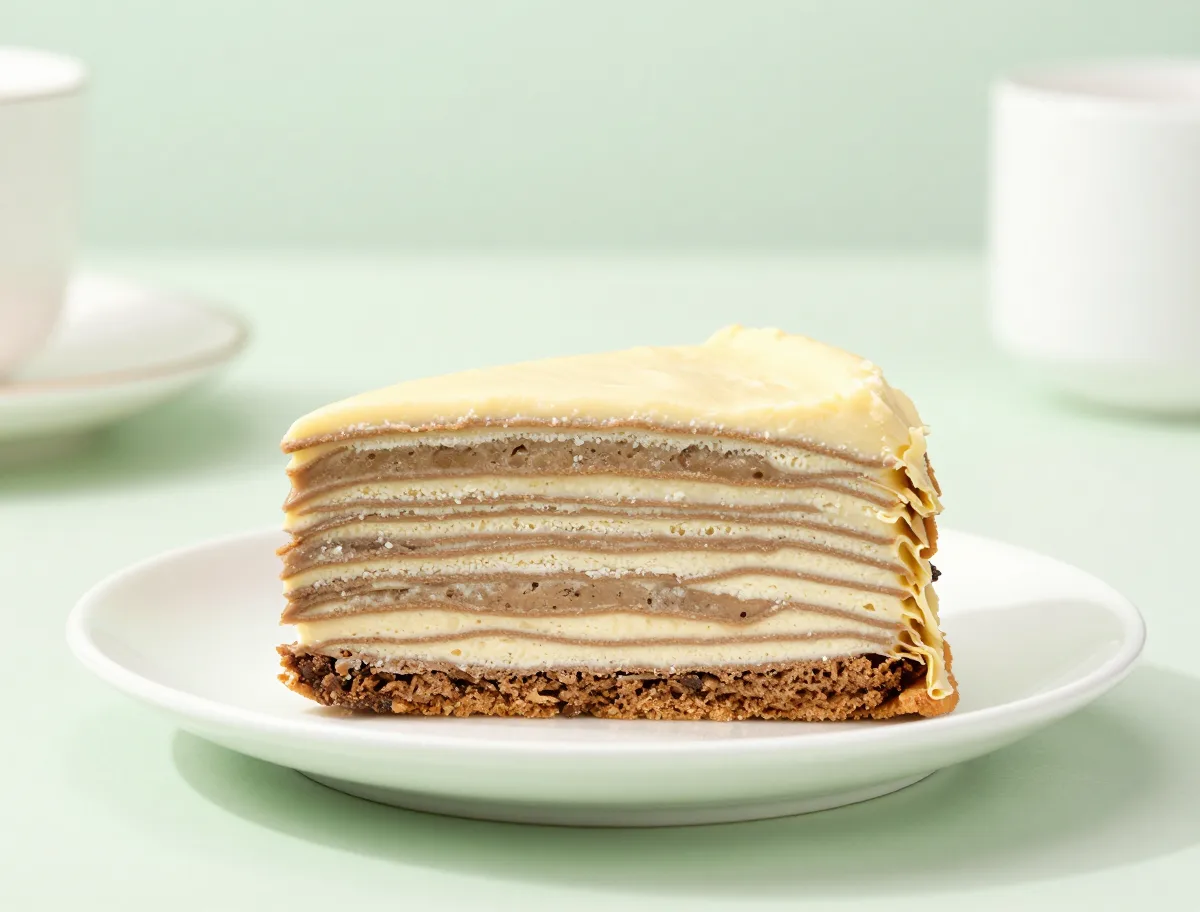
Serve the cake cold, when the buttercream is firm and the layers are easiest to cut. Let it stand for only a few minutes if you prefer a softer cream, then slice with a warmed and wiped knife.
- Crushed Maria biscuits make the most natural finish.
- Unsweetened cocoa or finely grated dark chocolate adds contrast to the sweet buttercream.
- Pair slices with espresso, unsweetened coffee, or plain tea.
- Keep the cake refrigerated between servings so the buttercream does not soften enough to cause sliding.
How to Store and Make Ahead Bolo de Bolacha
This refrigerated cookie cake is designed for advance preparation. In fact, overnight chilling usually produces a more even texture and cleaner slices than the minimum setting time.
- Cover and refrigerate for at least 4 to 6 hours, preferably overnight.
- Keep the cake at 4°C (40°F) or below and do not leave it at room temperature for more than 2 hours, or more than 1 hour in temperatures above 32°C (90°F).
- Refrigerated leftovers are best enjoyed within a few days for peak texture and flavor.
- Freezing is possible when the cake is tightly wrapped, but the biscuit texture and buttercream may change. Thaw it covered in the refrigerator and do not reheat.
A Brief History of Bolo de Bolacha
Bolo de bolacha is recognized as a Portuguese dessert built around Maria biscuits, coffee, and cream. The familiar flower-shaped presentation was documented in a 1959 edition of Laura Santos’s O Mestre Cozinheiro, although that publication date does not establish when the dessert was first created. Cultural context and the documented presentation are discussed by Público’s account of bolo de bolacha.
- Maria biscuits themselves originated in Britain in the 19th century and later became deeply established in Portugal and Spain.
- Some accounts connect bolo de bolacha with the French gâteau de famille, but that relationship is best described as possible influence rather than settled authorship.
- Portuguese family versions may use buttercream, custard, condensed milk, whipped cream, or other fillings while retaining the central layered biscuit concept.