Oatmeal Cream Pie Cake Recipe with Vanilla Filling
This oatmeal cream pie cake recipe features tender cinnamon-and-brown-sugar cake layers, softened quick oats, and a fluffy vanilla marshmallow buttercream inspired by the classic snack cake.
What to Expect from This Oatmeal Cream Pie Cake
This is a two-layer cake adaptation of the familiar oatmeal creme pie: tender oat cake replaces the cookies, while a thick vanilla marshmallow buttercream creates the sweet white center. Brown sugar, cinnamon, molasses, and vanilla provide the recognizable nostalgic direction without trying to duplicate commercial stabilizers or flavorings. For a reference to the flavor profile that inspires this homemade version, see the official Little Debbie Oatmeal Creme Pies product page.
- The crumb should be soft and moist, with oats that are visible but fully softened.
- The filling should be fluffy and sweet, but stable enough to remain in a clean layer.
- Two round layers give the clearest cream-pie appearance and are easier to handle than three thin layers.
Why the Key Ingredients Matter
The formula balances oat flavor with enough wheat flour to make layers that rise, hold together, and slice neatly. Hot milk hydrates the oats before they enter the batter, preventing them from pulling moisture away during baking.
- Quick oats blend into the crumb more smoothly than intact rolled oats.
- Dark brown sugar and a small amount of molasses bring moisture and the deep caramel flavor associated with oatmeal creme pies.
- Butter supplies the best nostalgic flavor, while eggs provide structure and help emulsify the batter.
- Cinnamon leads the spice profile; nutmeg is kept restrained so the cake does not become a generic spice cake.
- Marshmallow creme gives the buttercream a softer, more elastic character. The salt keeps the sweet filling from tasting flat.
Ingredients
- 1 1/2 cups quick oats
- 1 1/4 cups whole milk
- 2 cups all-purpose flour, spooned and leveled
- 1 1/2 teaspoons ground cinnamon
- 1/4 teaspoon ground nutmeg
- 1 teaspoon baking powder
- 1/2 teaspoon baking soda
- 3/4 teaspoon fine salt, divided
- 3/4 cup unsalted butter, softened
- 3/4 cup dark brown sugar, packed
- 1/4 cup granulated sugar
- 3 large eggs, room temperature
- 2 teaspoons vanilla extract, divided
- 1 tablespoon unsulphured molasses
- 1 cup unsalted butter, softened, for frosting
- 4 cups confectioners’ sugar, sifted
- 1 cup marshmallow creme
- 2 tablespoons heavy cream, plus more if needed
The Technique for Soft, Even Cake Layers
The most important preparation step is the oat soak. Let the hot milk and oats stand until the mixture is plump and merely warm, then add it to the batter. Steaming-hot oats can melt the butter or interfere with the eggs.
- Grease the pans and line their bottoms with parchment; moist oat cakes are more fragile during release.
- Cream the butter and sugars long enough to lighten the mixture, but mix only briefly after adding flour.
- Cool the layers completely before frosting. A frosting dam is not necessary with this thick filling, but keeping the filling slightly inside the edge helps prevent bulging.
- A short chill after the crumb coat firms the cake and makes the final frosting easier.
Instructions
- Soften the oats: Place the quick oats in a heatproof bowl.
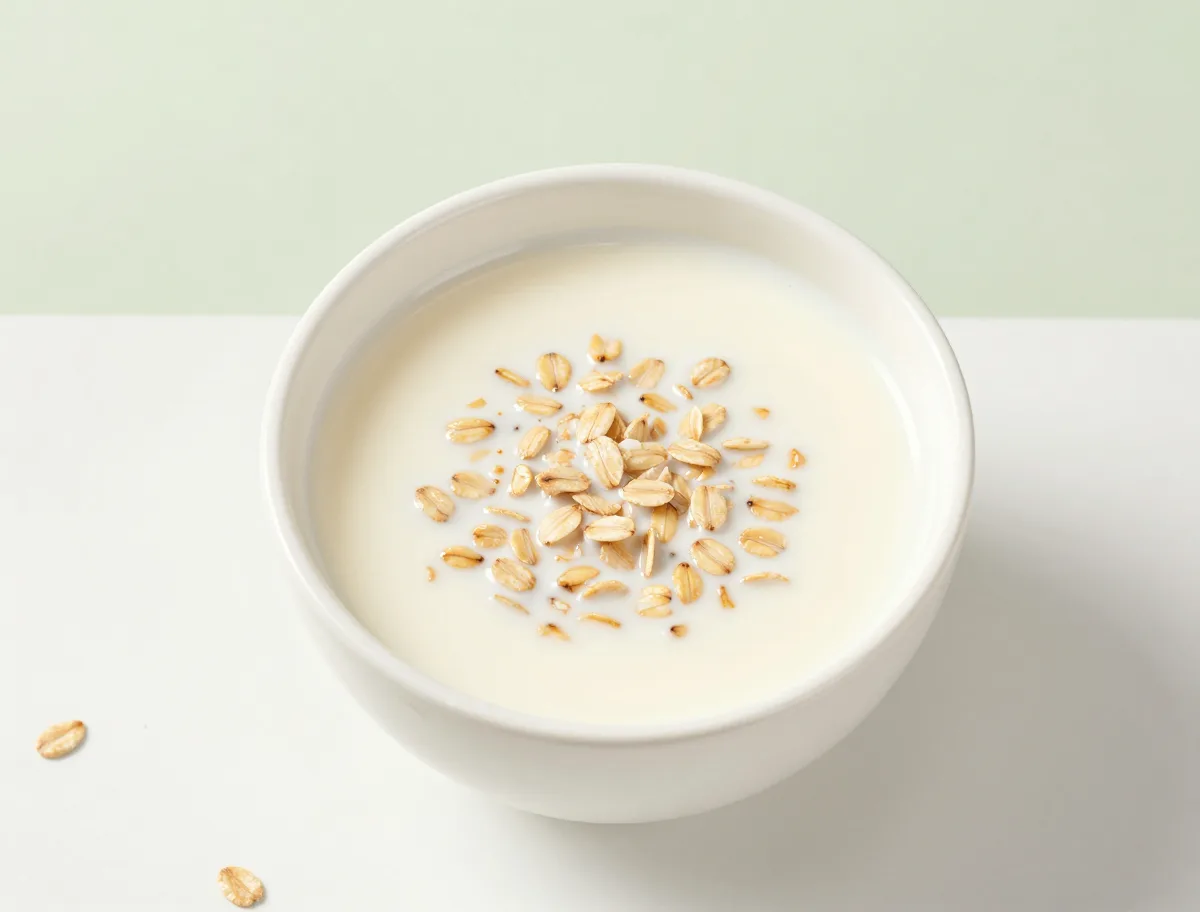
Bring the milk just to a simmer, about 190°F (88°C), pour it over the oats, and stir. Cover and let stand for 20 minutes, until the oats are plump and the mixture is no longer steaming hot.
- Prepare the pans: Heat the oven to 350°F (175°C). Grease two 9-inch round cake pans, line the bottoms with parchment, and grease the parchment. In a medium bowl, whisk together the flour, cinnamon, nutmeg, baking powder, baking soda, and 1/2 teaspoon of the salt.
- Build the batter: Beat the softened cake butter, brown sugar, and granulated sugar on medium speed for 3 minutes, until lighter and fluffy. Beat in the eggs one at a time, then beat in 1 teaspoon of the vanilla and the molasses. Add the flour mixture in two additions, alternating with the cooled oat mixture; mix on low only until no dry flour remains.
- Bake the layers: Divide the batter evenly between the prepared pans and smooth the tops.
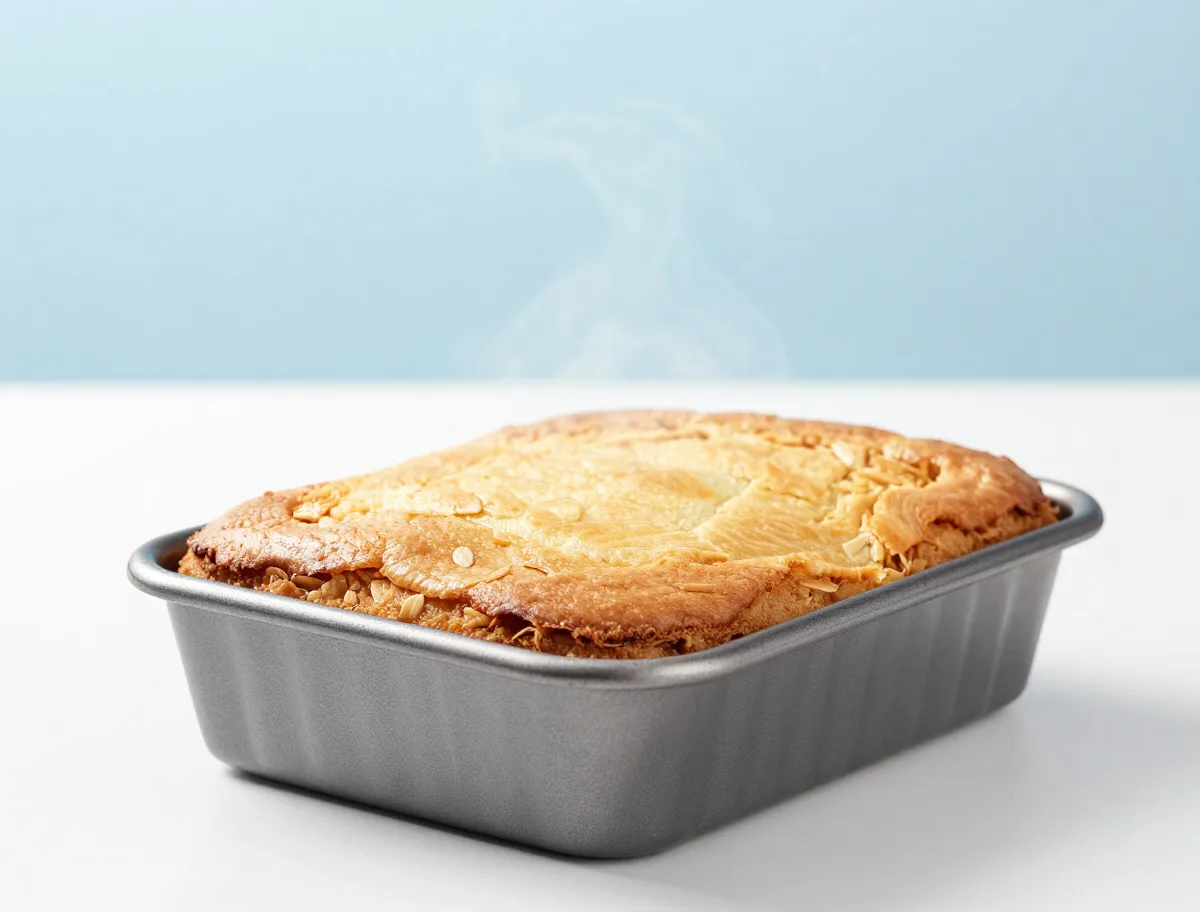
Bake at 350°F (175°C) for 25 to 30 minutes, rotating the pans once, until the centers spring back lightly and a tester comes out with a few moist crumbs. Cool in the pans for 10 minutes, then turn the layers onto racks, remove the parchment, and cool completely.
- Whip the vanilla creme frosting: Beat the frosting butter on medium speed for 2 minutes. Gradually add the confectioners’ sugar and the remaining 1/4 teaspoon salt. Add the marshmallow creme, heavy cream, and remaining 1 teaspoon vanilla, then beat for 3 to 4 minutes until very light and smooth. If it is too stiff to spread, beat in additional heavy cream 1 teaspoon at a time.
- Fill and frost: Trim the tops of the cooled layers if needed. Set one layer on a serving plate. Spread about 1 1/2 cups of frosting over it, keeping the filling level and about 1/2 inch from the edge. Place the second layer on top, then apply a thin coat of frosting over the top and sides. Chill for 30 minutes, then finish with the remaining frosting. Sprinkle lightly with cinnamon if desired.
- Chill and serve: Refrigerate the assembled cake at about 40°F (4°C) for at least 30 minutes before slicing.
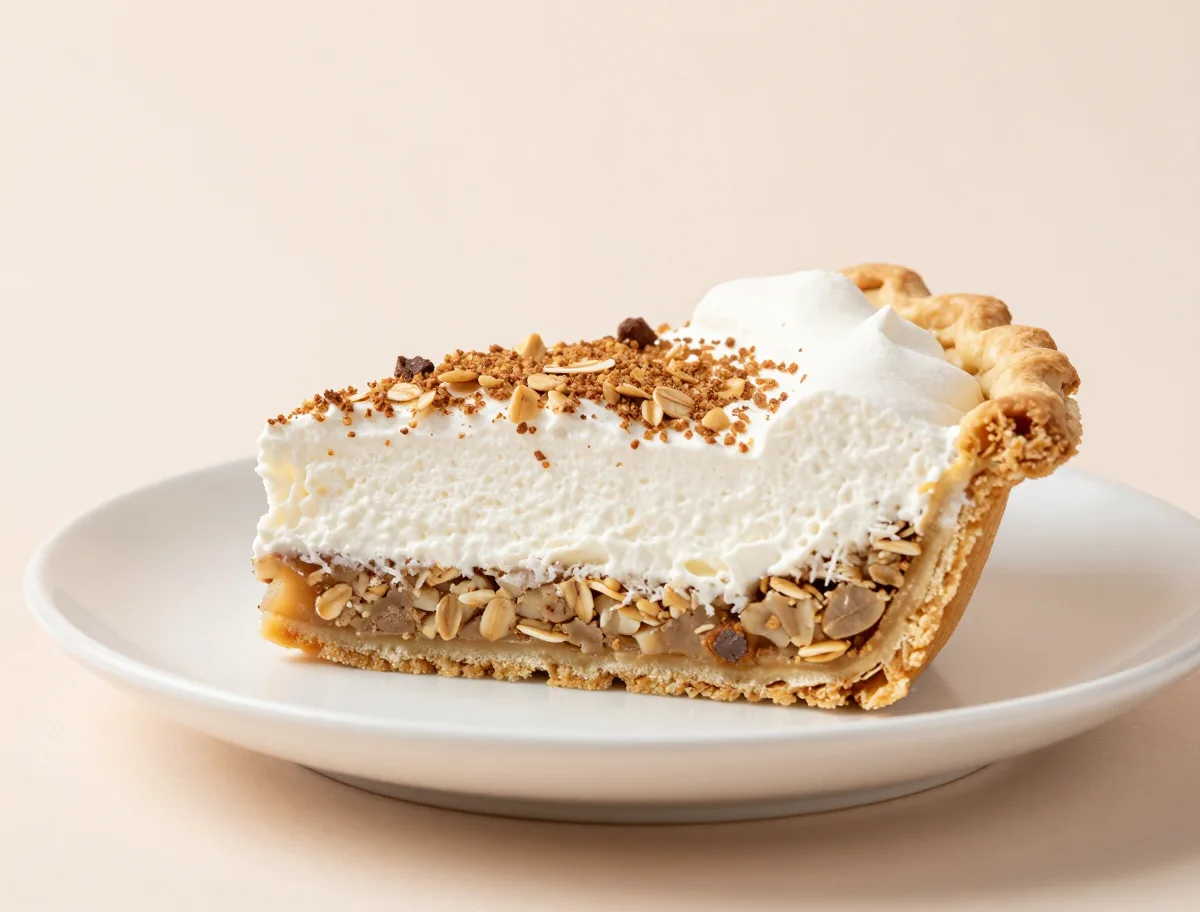
For the softest texture, let it stand at room temperature for 15 to 20 minutes before serving.
How to Tell When the Oatmeal Cake Is Done
Oatmeal cake can remain pleasantly moist after baking, so a dry toothpick is not the goal. Look for a set surface, a gentle spring in the center, and a tester carrying a few moist crumbs.
- Wet batter on the tester means the cake needs more time.
- Firm, shrunken edges and a completely dry tester suggest the layers may be overbaked.
- The finished crumb should compress slightly under a fingertip and recover rather than feel wet, gummy, or coarse.
- The frosting should spread without tearing the cake and should stay in place when the second layer is set down.
- The soaked oats should be tender and plump, not dry or crunchy.
- The baked cake tops should be set and lightly golden, with a slight spring when pressed in the center.
- A cake tester should show a few moist crumbs rather than wet batter; do not bake until the tester is completely dry.
- The frosting should be smooth, airy, and firm enough to hold a distinct layer without sliding.
The Variables That Keep This Cake Tender
Oats absorb a substantial amount of liquid, which is why they are hydrated before mixing. That step makes the batter’s moisture more predictable and protects the cake from a coarse, dry texture. Wheat flour supplies the framework that oats cannot provide on their own.
- Do not replace all the flour with oat flour; the layers would be more fragile and less lofty.
- Do not substantially reduce the sugar or liquid, since both contribute to tenderness and moisture retention.
- Overmixing after the flour is added develops gluten and can turn a soft snack-cake crumb chewy.
- The modest amount of baking soda works with the molasses, while baking powder supplies additional lift.
Common Oatmeal Cream Pie Cake Mistakes
Most problems come from treating the oats like a dry mix-in, baking by the clock alone, or assembling before the layers have cooled. The following checks address the most likely failures.
- Dry or coarse cake: The oats may not have soaked fully, the flour may have been overmeasured, or the layers may have baked too long. Weigh the flour or spoon it into measuring cups, and remove the cake when moist crumbs remain.
- Heavy cake: Cold ingredients, excessive mixing, or too many intact oats can limit rise. Use room-temperature eggs and stop mixing as soon as the flour disappears.
- Sinking center: Underbaking or opening the oven too early is common. Keep the oven closed until the cake looks set and the center springs back.
- Broken layers: Turn them out only after a brief cooling period, and use parchment. Handle them fully cooled.
- Sliding filling: The cake may be warm or the frosting too loose. Chill the layers, beat the frosting until firm, and use a smaller amount in the center rather than forcing out a thick edge.
Useful Substitutions for the Oats, Sugar and Filling
The safest substitutions preserve the recipe’s moisture and structure. Small flavor changes are straightforward; replacing the main flour, dairy, or fat requires more caution.
- Old-fashioned oats can replace quick oats if pulsed briefly first. Without processing, they may leave a more noticeable and slightly coarse texture.
- Light brown sugar can replace dark brown sugar in the same amount, though the cake will have a paler color and gentler molasses flavor.
- Use regular or unsulphured molasses rather than blackstrap, which can taste bitter here.
- Marshmallow creme may be omitted if desired; increase the confectioners’ sugar by about 1/2 cup and add cream gradually to reach a spreadable buttercream. The filling will be less marshmallow-like.
- Cake flour can make more delicate layers, but all-purpose flour is the more dependable choice for stacking. Dairy and vegan substitutions vary in water content and may change the crumb or frosting consistency.
Ways to Vary the Oatmeal Creme Pie Cake
Keep the core combination of oats, brown sugar, cinnamon, and vanilla creme intact if you want the dessert to retain its oatmeal cream pie identity.
- For a sheet-cake version, bake the batter in a greased and parchment-lined 9-by-13-inch pan at 350°F for roughly 28 to 34 minutes, checking for the same spring-back and moist-crumb cues. Spread the frosting over the cooled top.
- Add a pinch of ground clove with the cinnamon for a slightly warmer spice profile, but keep it subtle.
- For a more dramatic cream stripe, divide the batter among three 8-inch pans and begin checking much earlier; the thinner layers will dry more quickly and require careful handling.
- Nuts, coconut, chocolate, pumpkin, and cream cheese frosting can be enjoyable, but each moves the dessert away from the classic oatmeal creme pie profile.
How to Serve Oatmeal Cream Pie Cake
Chilling firms the filling and gives the neatest slices, while a short rest at room temperature brings back the soft cake texture and fuller vanilla aroma. Cut modest wedges because both the cake and filling are rich.
- Serve after 15 to 20 minutes of tempering from the refrigerator.
- Pair slices with cold milk, coffee, hot chocolate, or a small scoop of vanilla ice cream.
- A light dusting of cinnamon is enough garnish; fine oatmeal cookie crumbs can also reinforce the theme without overwhelming the cake.
How to Store and Make This Cake Ahead
Because the filling contains butter, cream, and marshmallow creme, refrigerate the completed cake in a covered container. For best quality, serve it within three days; the cake may firm in the refrigerator, so temper slices briefly before eating. For additional guidance on refrigerated cream-filled and dairy-frosted desserts, consult the FDA’s food-storage guidance.
- Do not leave the assembled cake at room temperature for more than two hours, or more than one hour in temperatures above 90°F.
- Bake the layers up to one day ahead, wrap them airtight once cool, and refrigerate. Assemble when ready to serve.
- For longer make-ahead storage, wrap the unfrosted layers well and freeze for up to one month. Thaw them while wrapped to reduce condensation.
- An assembled cake can be frozen, but the marshmallow filling may lose some of its original texture and the frosting may become damp after thawing.
- Do not microwave the cake to soften it; let refrigerated slices stand at room temperature instead.
Oatmeal Cream Pie Cake Questions, Answered
These practical answers cover the oat choice, format, filling, flavor, and make-ahead decisions that most affect the finished cake.
Does this taste like a Little Debbie oatmeal creme pie?
It is inspired by that flavor profile rather than an exact commercial duplicate. Brown sugar, molasses, cinnamon, vanilla, soft oats, and a sweet white creme filling create the recognizable direction, while the homemade version has a more tender cake crumb.
What kind of oats should I use?
Quick oats are the best choice for a soft, cohesive cake. Old-fashioned oats work if you pulse them briefly before soaking, but intact flakes will give the layers a more pronounced texture.
Is this a layer cake or a sheet cake?
The main recipe is a two-layer 9-inch round cake, which gives the strongest cream-pie appearance. You can bake it as a 9-by-13-inch sheet cake using the timing guidance in the variation section.
What filling best matches the classic cream center?
Vanilla buttercream reinforced with marshmallow creme gives the closest homemade approximation of a fluffy creme center. Marshmallow creme is optional in spirit, but omitting it makes the filling denser and less elastic.
How do I keep the cake from becoming too sweet or heavy?
Keep the cake’s spice and molasses balanced, use the salt in the frosting, and avoid an oversized filling layer. Chilling before slicing also makes it easier to serve modest portions.
Can I make it ahead?
Yes. The most reliable plan is to bake and wrap the layers ahead, then frost the thawed cake. Refrigerate the finished cake and let slices temper briefly before serving.
How many layers should an oatmeal cream pie cake have?
Two layers are the most dependable and easiest to stack. Three thinner layers increase the filling-to-cake ratio but are more delicate and need a shorter, closely watched bake.
Recipe Notes
- Quick oats give the most cohesive, snack-cake-like crumb. If using old-fashioned oats, pulse them briefly in a food processor before soaking.
- The cake is inspired by the flavor of a packaged oatmeal creme pie, but homemade layers will be more cake-like and less shelf-stable than the commercial original.
- For clean slices, chill the cake before cutting and use a sharp knife wiped clean between cuts.
- The assembled cake must be refrigerated. Unfilled, cooled layers can be wrapped airtight and frozen for up to 1 month; thaw them while still wrapped before filling.