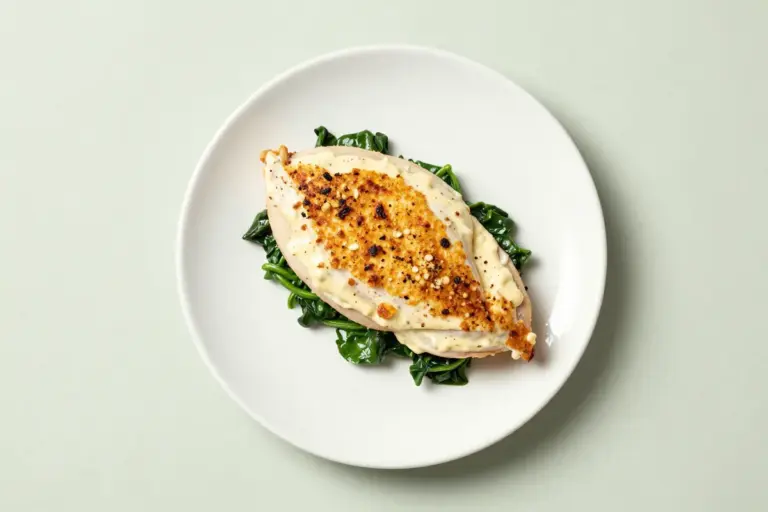
Basic Jerk Chicken Recipe with Jamaican Marinade
This easy Jamaican-style jerk chicken uses Scotch bonnet, allspice, thyme, scallions, ginger, and garlic for juicy meat with a spicy-sweet, mahogany-brown crust. Roast it in the oven or finish it on the grill for extra char.
What Makes This Jamaican-Style Jerk Chicken
Jerk chicken is defined by a particular balance rather than by heat alone: warm, peppery allspice; fruity chile; thyme and scallion; and a lively base of ginger, garlic, onion, salt, and acid. The finished chicken should be juicy inside, strongly seasoned near the surface, and marked by a dark reddish-brown crust with controlled char.
- Allspice, also called pimento in Jamaica, and Scotch bonnet are the signature flavor markers.
- A standard oven or grill creates a useful home adaptation, while traditional jerk cooking gains additional smoke and aroma from pimento wood.
- The goal is aromatic, spicy-sweet chicken—not chicken coated in a black, bitter crust.
The Essential Jerk Marinade Ingredients
The marinade works because each component has a job. Allspice supplies the unmistakable warm spice; Scotch bonnet contributes both fruitiness and heat; thyme and scallions keep the flavor herbal and fresh; and ginger, garlic, and onion give the paste depth. Lime, soy sauce, oil, and a restrained amount of brown sugar provide brightness, seasoning, surface moisture, and browning support.
- Freshly ground allspice berries are especially fragrant, but good ground allspice is convenient and effective.
- Sugar is deliberately modest: enough to round the chile and encourage browning, not enough to scorch before the chicken cooks.
- Lime adds lift rather than acting as a long-term tenderizer; too much acid or too much time can toughen the outer layer.
- Soy sauce supplies savory seasoning, so additional salt should remain measured.
Ingredients
- 8 bone-in, skin-on chicken thighs, about 3 1/2 pounds
- 6 scallions, roughly chopped
- 1 small yellow onion, roughly chopped
- 4 cloves garlic
- 1 1/2 inches fresh ginger, peeled and sliced
- 1 Scotch bonnet pepper, stem removed; leave seeds in for pronounced heat
- 2 teaspoons ground Jamaican allspice, pimento
- 2 tablespoons fresh thyme leaves
- 3 tablespoons fresh lime juice
- 2 tablespoons soy sauce
- 2 tablespoons neutral oil
- 1 tablespoon light brown sugar, packed
- 1 teaspoon kosher salt
- 1/2 teaspoon black pepper, freshly ground
How to Prepare the Jerk Chicken Marinade
Blending the marinade into a cohesive paste helps it cling evenly to the chicken and prevents large pieces of onion or chile from burning prematurely. Shallow cuts in thick thighs increase seasoned surface area without turning the meat into a perforated sponge. Refrigerate the chicken while it marinates; four hours is useful, and an overnight rest gives the most developed flavor.
- Reserve a clean portion of marinade before it touches raw chicken if you want a sauce.
- Pat the chicken dry and let excess paste drip away before high heat so the surface browns instead of steaming.
- On a grill, use indirect heat first and direct heat only at the end. In the oven, a rack improves airflow and a brief broil supplies the final color.
Instructions
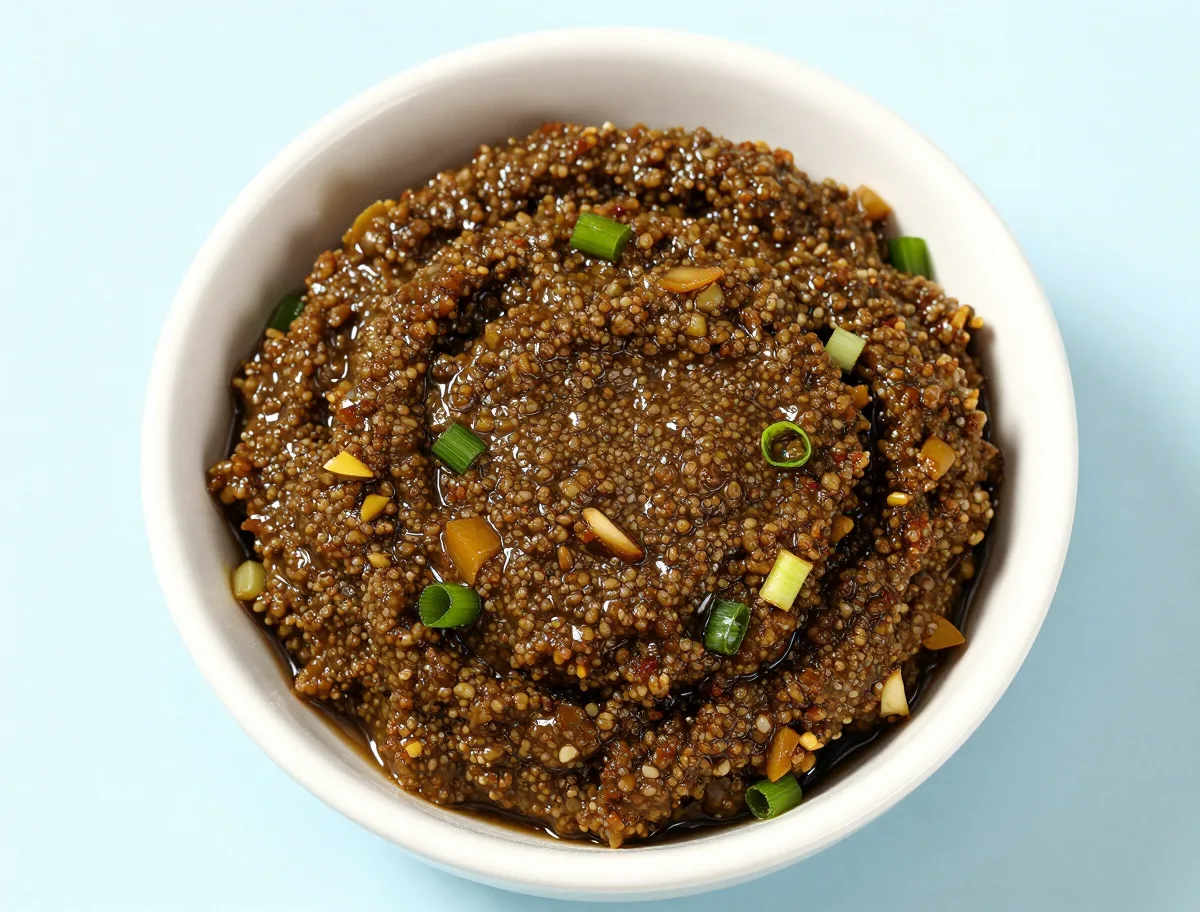
- Make the jerk marinade: Add the scallions, onion, garlic, ginger, Scotch bonnet, allspice, thyme, lime juice, soy sauce, oil, brown sugar, salt, and black pepper to a blender or food processor. Blend until a coarse, spoonable paste forms, scraping down the sides once or twice. Reserve 1/4 cup of the marinade in a clean container if you want sauce for serving; keep it separate from the raw chicken.
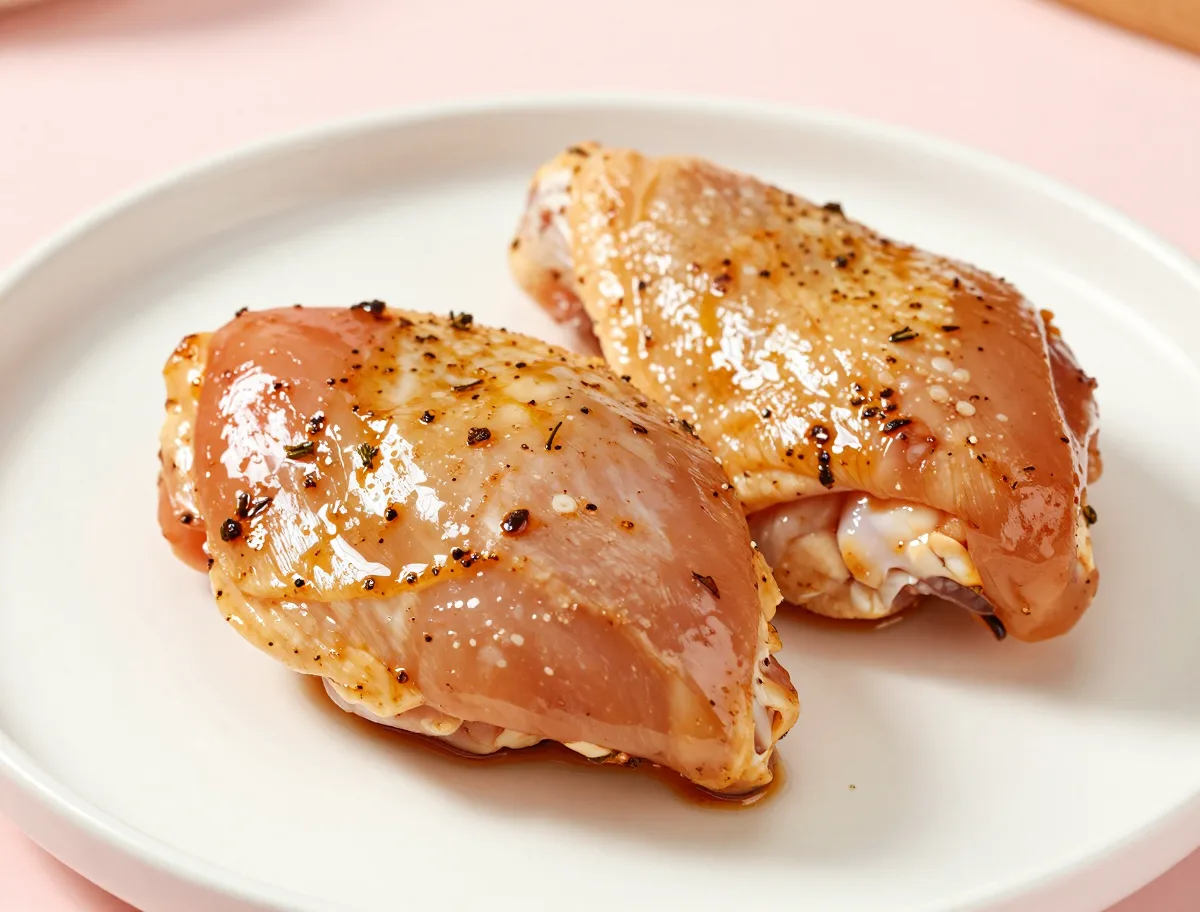
- Marinate the chicken: Pat the chicken dry. Make two shallow cuts through the thickest part of each thigh, stopping short of the bone. Toss the chicken with the remaining marinade, working some under the skin where possible. Cover and refrigerate for at least 4 hours, preferably overnight, and never longer than 48 hours.
- Prepare for roasting: Set a rack in the center of the oven and heat to 400°F (205°C). Line a rimmed baking sheet with foil and set a wire rack on top. Lift the chicken from the marinade, allowing excess paste to drip off, and arrange the pieces skin-side up without crowding.
- Roast until nearly cooked: Roast the chicken until the skin is browned and an instant-read thermometer inserted into the thickest part, away from the bone, reads 155 to 160°F (68 to 71°C), about 35 to 42 minutes. Begin checking smaller pieces early; do not rely on the timing alone.
- Finish with controlled char: Switch the oven to broil. Broil the chicken 2 to 4 inches from the heat until the skin is deeply browned with a few dark, fragrant spots, watching constantly so the sugar does not burn. Continue cooking until every piece reaches at least 165°F (74°C). If the reserved marinade is being served, bring it to a full boil in a small saucepan before using it as a sauce.
- Rest and serve: Transfer the chicken to a platter and rest for 5 minutes. Serve warm with the cooked sauce, if using.
How to Tell When Jerk Chicken Is Done
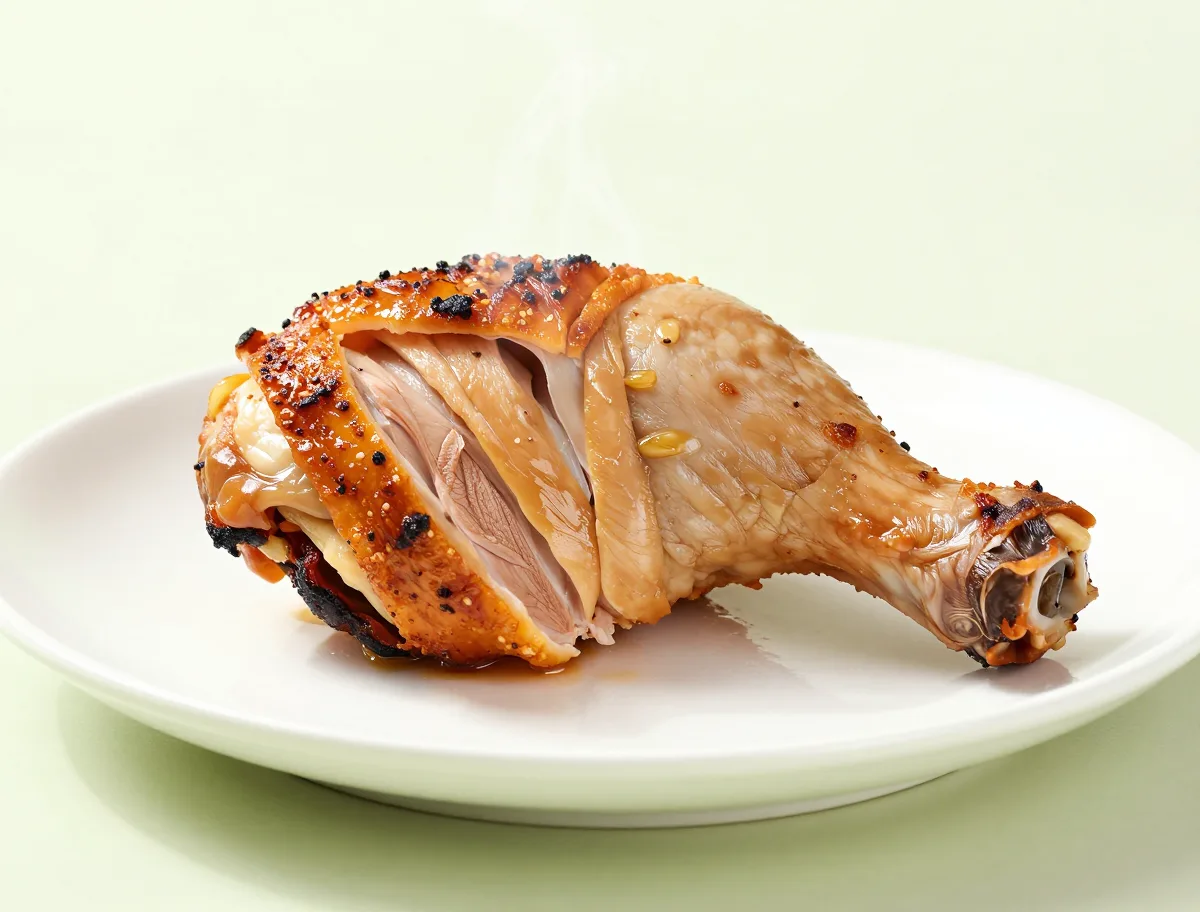
Color is a quality cue, not a safety test. Insert an instant-read thermometer into the thickest part of each cut, avoiding the bone; every piece must reach 165°F (74°C). The meat should be opaque and firm but yielding, with rendered skin and a deeply browned seasoning crust. Breasts should come off the heat as soon as they reach the safe temperature, while thighs can tolerate a little more cooking for tenderness.
- Check more than one piece when cooking bone-in chicken or mixed cuts.
- A few charred patches are desirable; a uniformly black, bitter, or acrid surface indicates excessive heat.
- Resting for five minutes helps the juices settle, but it cannot make substantially undercooked chicken safe.
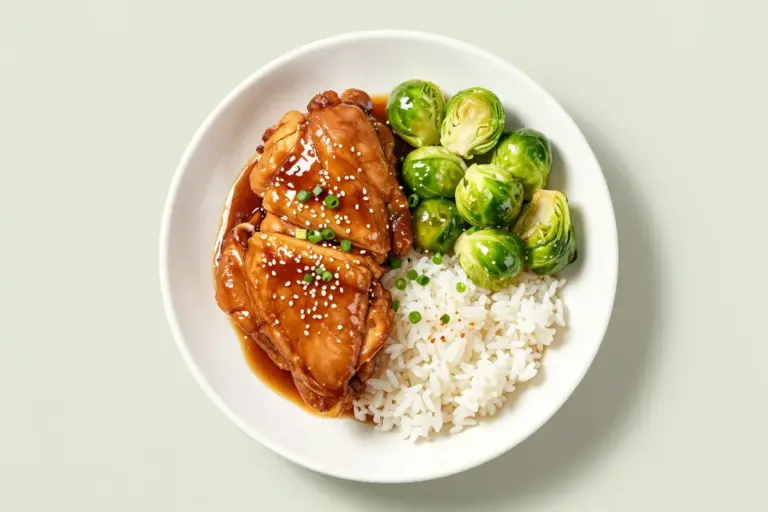
- The crust should be mahogany-brown with scattered charred spots, not uniformly black or acrid.
- The skin should be rendered and lightly crisp, while the meat feels firm but yielding.
- Check the thickest part of several pieces away from the bone; every piece must reach at least 165°F (74°C).
- Dark meat may be more tender at a somewhat higher temperature, but the safety minimum is 165°F (74°C).
Why Heat Control Matters in Jerk Chicken
The marinade contains sugar and oil, so intense direct heat can darken the outside long before a bone-in thigh is cooked through. Indirect heat narrows that gap, allowing the chicken to cook more evenly; a short final blast then develops the characteristic char. Salt supports seasoning and moisture retention, while acid mainly affects the outer surface and should remain moderate.
- Bone-in thighs and leg pieces cook more slowly than boneless breasts and should not be timed interchangeably.
- A crowded pan traps steam and delays browning; leave space around each piece.
- Smoke from a grill adds character, but it does not replace a thermometer or make an oven method unsafe or incomplete.
Common Jerk Chicken Mistakes and How to Avoid Them
Most problems come from too much surface paste over too much heat, mismatched chicken pieces, or judging doneness by appearance. The recipe’s indirect-first approach is designed to protect the marinade while the chicken cooks. Make corrections early rather than waiting for burnt sugar or dry meat to announce the problem.
- If the coating burns before the center is cooked, move the chicken to indirect heat or lower the oven temperature; do not add more sauce over the bitter crust.
- If the chicken is pale but already safe, finish it briefly under the broiler or over direct grill heat while watching closely.
- Weak flavor usually reflects short marination, incomplete coating, or stale allspice—not a need for unlimited extra chile.
- Dry breasts result from cooking them alongside larger bone-in pieces without checking them separately.
- If a sauce tastes too salty, do not dilute raw marinade and serve it unboiled; use a clean reserved portion instead.
Jerk Chicken Substitutions
Dark-meat chicken is the most forgiving choice, but the marinade can be adapted for other cuts. Habanero is the closest widely available replacement for Scotch bonnet because it retains comparable fruity heat. Other substitutions can preserve the structure of the dish, although they may change its freshness or intensity.
- Use habanero in the same amount as Scotch bonnet, adjusting for the individual pepper’s heat.
- Ground allspice can replace freshly ground berries; avoid compensating for stale spice by adding a large amount, which can taste dusty and harsh.
- Dried thyme can stand in for fresh at about one-third the volume, but the herbal note will be less bright.
- Boneless thighs cook faster than bone-in thighs. Breasts work well when monitored closely, but they are less forgiving.
- A sweet pepper alone will make the dish milder but removes much of the fruity chile character; retain at least a small amount of hot pepper for recognizable jerk flavor.
Grilled, Oven-Baked, Mild, and Hot Variations
The same allspice-and-aromatic paste can take two practical routes. Oven baking is steady and convenient, with broiling used for the final crust; grilling brings more smoke and a stronger char when the chicken is finished over direct heat. Both remain within the identity of Jamaican-style jerk as long as the defining spice and aromatic profile stays intact.
- For grilled jerk chicken, cook covered over a two-zone medium fire before searing briefly over the hot side.
- For oven-baked jerk chicken, use a rack and broil only after the chicken is nearly cooked.
- Reduce the Scotch bonnet for mild jerk; use the full pepper, or a second pepper, for hotter chicken, recognizing that chile heat varies.
- The recipe is not a bottled barbecue sauce treatment: heavy sweetness or a generic chile rub will shift it away from jerk.
What to Serve with Jerk Chicken
Jerk chicken is especially good with sides that are mild, cooling, starchy, or gently sweet. Rice and peas make a natural base, while plantains echo the marinade’s sweet-hot balance. Finish the platter with lime wedges and scallions, and add a crisp slaw or cucumber salad if the chicken is particularly hot.
- Rice and peas provide a mellow counterpoint to Scotch bonnet heat.
- Fried or roasted plantains add soft texture and caramelized sweetness.
- A fresh slaw, cucumber salad, or lightly pickled vegetables refreshes the palate.
- Keep extra raw chile optional so diners can control the heat at the table.
How to Store, Freeze, and Reheat Jerk Chicken
The chicken can be marinated ahead in the refrigerator for several hours or overnight; two days is the upper refrigerated limit, not a target for better flavor. Once cooked, transfer leftovers to a shallow container within two hours. They will keep for three to four days in the refrigerator or may be frozen for longer storage, though the crust and skin will soften.
- Freeze cooled portions tightly wrapped or in airtight containers for best quality.
- Reheat covered in a 325°F (165°C) oven with a small splash of water, or gently in a skillet; microwave portions covered and turn them for even heating.
- Reheat until the center reaches 165°F (74°C). Crispness will not fully match freshly cooked chicken.
- Marinade that contacted raw chicken must be discarded or boiled thoroughly before serving.
A Note on Jamaican Jerk Tradition
Jerk belongs to Jamaica’s layered culinary history, shaped through Indigenous Taíno and African-derived foodways and developed notably by Maroon communities. Pimento, chile, salt, smoke, and aromatic leaves were central to earlier preparations, while modern Jamaican versions commonly build on Scotch bonnet, allspice, scallion, thyme, ginger, and garlic.
- Pimento means allspice in this context; it should not be confused with sweet pimento peppers.
- Traditional jerk cooking is strongly associated with pimento wood and smoky, covered cooking.
- This recipe is intentionally labeled Jamaican-style because a household oven or standard grill cannot duplicate the flavor of pimento-wood cooking.
- Jerk recipes vary by cook and region, so differences in secondary spices do not create a single universal formula.
For additional cultural context, see this brief history of Jamaican jerk.
Jerk Chicken Food-Safety Essentials
Keep raw chicken and its marinade separate from ready-to-eat food throughout preparation. Marinate only in the refrigerator, wash hands and equipment after contact with poultry, and use temperature rather than color or clear juices as the final safety check.
- Every chicken piece must reach at least 165°F (74°C) in the thickest section away from the bone.
- Never use raw-used marinade as a sauce unless it is brought to a full boil; a clean reserved portion is safer.
- Refrigerate cooked chicken within two hours, store it for three to four days, and reheat leftovers to 165°F (74°C).
- Use separate utensils for raw and cooked chicken, or wash them thoroughly between uses.
For more detail on refrigerated marination, raw marinade handling, poultry temperatures, leftovers, and reheating, consult USDA safe cooking and marinating guidance for poultry.