Chicken Portabella Mushroom Recipe with Savory Pan Sauce
This chicken portabella mushroom recipe pairs evenly cooked chicken cutlets with meaty browned mushrooms, garlic, herbs, and a silky pan sauce for an easy one-pan weeknight dinner.
What to Expect from This Chicken Portabella Mushroom Recipe
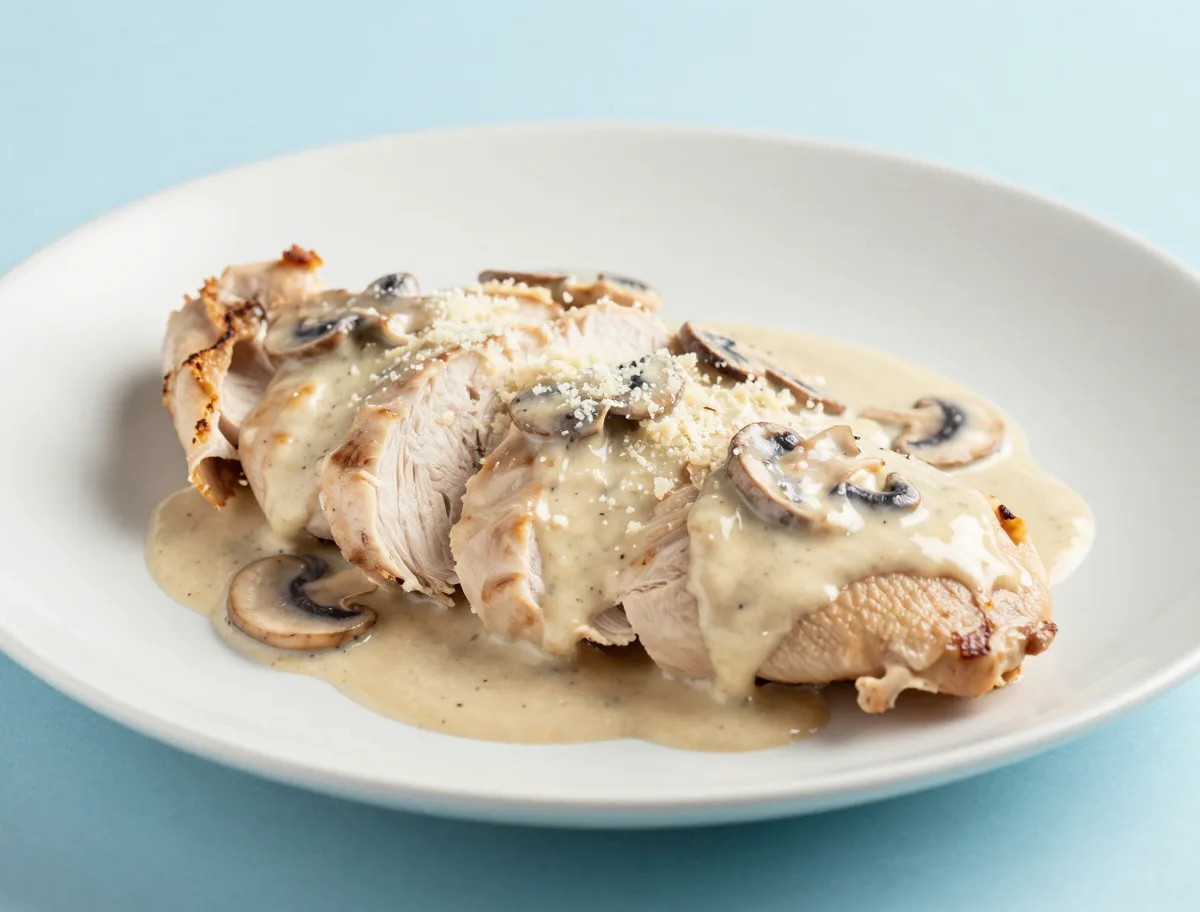
This is a one-skillet chicken and mushroom dinner rather than stuffed portabella caps: tender chicken cutlets are served with substantial browned mushroom slices in a restrained cream pan sauce. The finished sauce should be savory and spoonable, with enough body to cling to the chicken without hiding the mushrooms.
- Thin cutlets keep the cooking time short and reduce the risk of dry chicken.
- Separate browning gives both the chicken and portabellas better color and flavor.
- The sauce is rich enough for pasta or potatoes but balanced with stock, mustard, herbs, and lemon.
Why the Ingredients Work
Chicken cutlets provide a quick-cooking foundation, while portabellas contribute a dense, savory texture. Olive oil protects the butter during searing, and the butter adds richness to the mushrooms and sauce. Shallot, garlic, and thyme create the aromatic base; stock loosens and concentrates the browned pan residue; cream supplies body; and Parmesan adds salt and umami.
- Dry mushrooms brown more effectively than damp ones, so surface moisture matters.
- The wine is optional but adds acidity and aroma; stock alone makes a rounder sauce.
- Dijon and lemon are used in small amounts to keep the cream sauce from tasting flat or overly heavy.
Ingredients
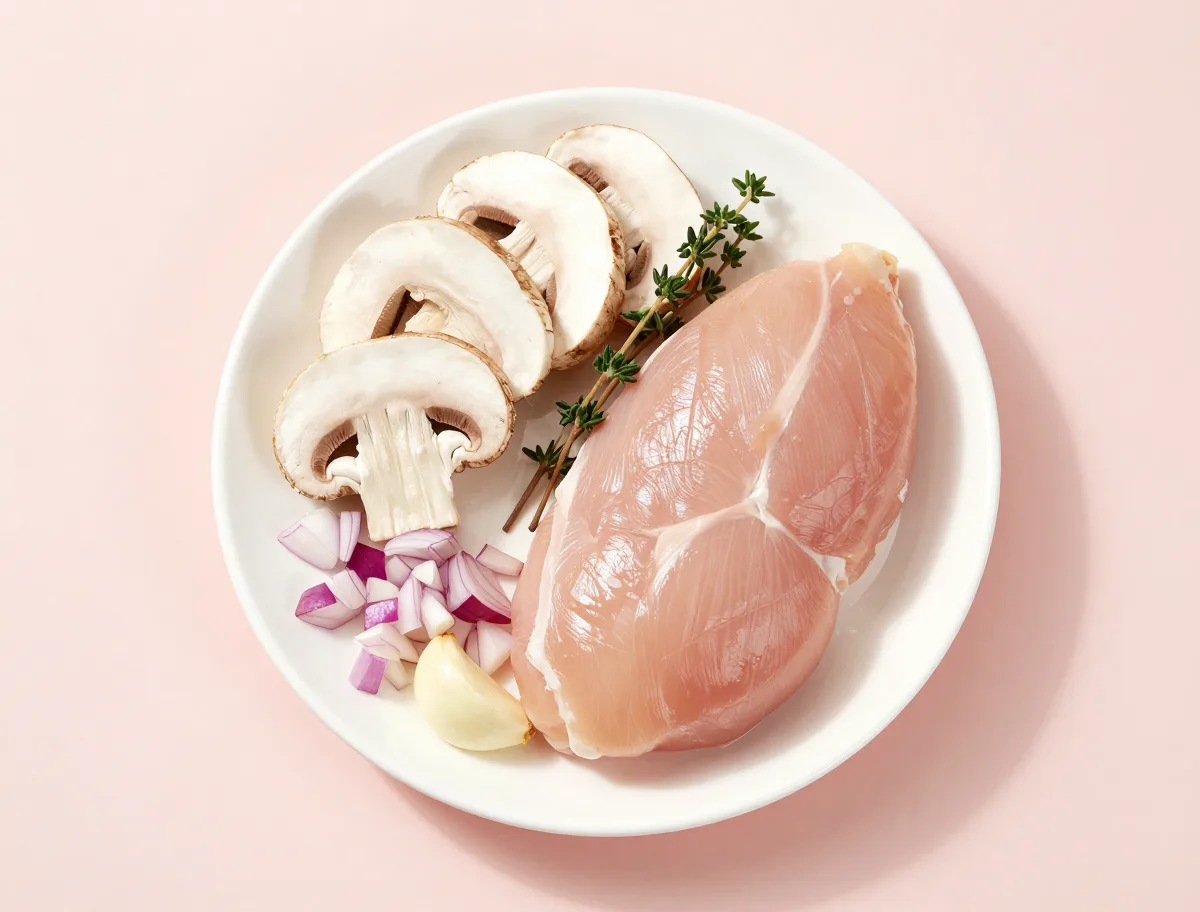
- 1 1/2 pounds boneless, skinless chicken breasts, cut horizontally into 4 even cutlets, or use prepared cutlets
- 1 teaspoon kosher salt, divided
- 1/2 teaspoon freshly ground black pepper, divided
- 2 tablespoons olive oil
- 2 tablespoons unsalted butter, divided
- 12 ounces portabella mushrooms, wiped clean, stems trimmed, gills removed if desired, and sliced 1/4 inch thick
- 1 medium shallot, finely chopped
- 3 cloves garlic, finely chopped
- 1 teaspoon fresh thyme leaves
- 1/2 cup dry white wine, optional
- 1 cup low-sodium chicken stock
- 3/4 cup heavy cream
- 1 teaspoon Dijon mustard
- 1/4 cup finely grated Parmesan cheese
- 2 tablespoons flat-leaf parsley, chopped
- 1 teaspoon fresh lemon juice
For additional guidance on selecting, cleaning, trimming, and storing mushrooms, see the mushroom cleaning and storage guide.
The Key Technique for a Reliable Skillet Chicken with Mushrooms
Uniform chicken thickness is the most important preparation step. Cutlets should be similar in size so one piece does not dry out while another is still undercooked. Keep the mushrooms in a broad single layer whenever possible, and let their released moisture evaporate before judging their browning.
- Sear the chicken just until browned, then finish it later in the sauce.
- Cook mushrooms separately from the chicken so they are not overwhelmed by poultry juices.
- Scrape the browned residue into the wine and stock; that fond is the backbone of the pan sauce.
- Add cream only after the non-dairy liquid has reduced, then maintain a gentle simmer.
Instructions
- Prepare the chicken and mushrooms: Pat the chicken and mushrooms thoroughly dry. Season the chicken on both sides with 3/4 teaspoon of the salt and 1/4 teaspoon of the pepper. If using whole breasts, slice them horizontally into even cutlets; very thick pieces can be lightly pounded between sheets of parchment.
- Sear the chicken: Heat the olive oil and 1 tablespoon of the butter in a wide 12-inch skillet over medium-high heat. When the butter foams, arrange the chicken in one layer. Cook without moving it until golden underneath, about 3 to 4 minutes. Turn and cook until lightly browned on the second side, 2 to 3 minutes more; the chicken does not need to be fully cooked yet. Transfer it to a plate.
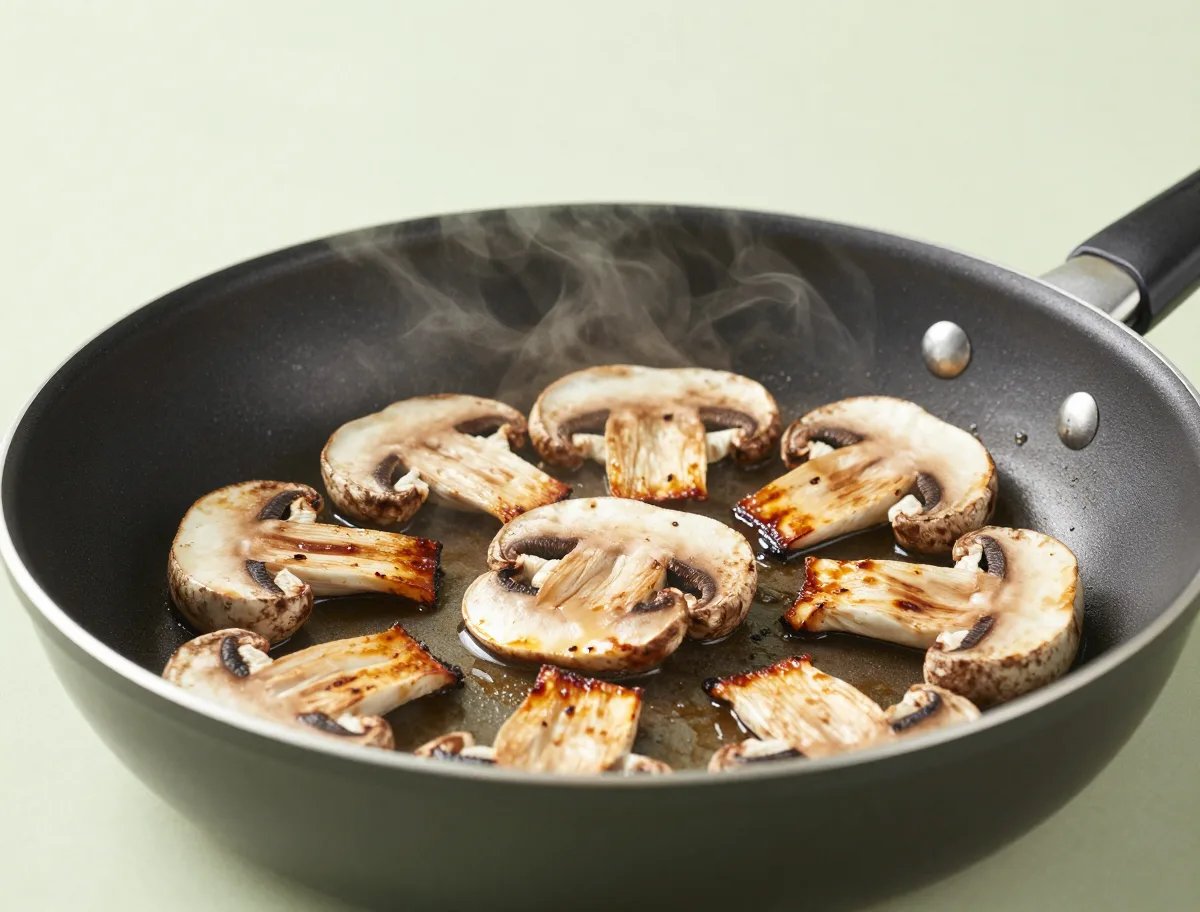
- Brown the portabella mushrooms: Add the remaining tablespoon of butter to the skillet. Arrange the mushroom slices in a single layer, working in two batches if needed. Cook until they release their liquid, the liquid evaporates, and the edges become browned and supple, 6 to 8 minutes per batch. Transfer the mushrooms to the plate with the chicken.
- Build the pan sauce: Reduce the heat to medium. Add the shallot and cook until softened, about 2 minutes. Stir in the garlic and thyme and cook for 30 seconds, just until fragrant. Pour in the white wine, if using, and scrape up the browned bits. Simmer until nearly reduced to a few tablespoons, about 2 minutes. Add the chicken stock and simmer until reduced by roughly one-third, 3 to 4 minutes.
- Finish the creamy sauce: Lower the heat to medium-low and whisk in the cream and Dijon mustard. Simmer gently, without a hard boil, until the sauce lightly coats a spoon, 3 to 4 minutes. Stir in the Parmesan until smooth. Taste and add the remaining salt and pepper as needed.
- Return the chicken and mushrooms: Return the chicken, mushrooms, and any juices from the plate to the skillet. Turn the chicken once or twice in the sauce and cook gently until the thickest portion reaches 165°F (74°C), about 3 to 5 minutes depending on thickness. Remove from the heat and stir in the lemon juice and parsley.
- Rest and serve: Let the skillet stand for 5 minutes so the sauce settles and thickens slightly. Spoon the sauce and mushrooms over the chicken and serve immediately.
How to Tell When the Chicken and Sauce Are Ready
Use a thermometer for the chicken and visual cues for the mushrooms and sauce. The chicken is safely cooked at 165°F (74°C) in its thickest portion. It should be opaque and tender, while the mushrooms should be supple with browned edges rather than floating in excess liquid.
- A spoon dragged through the sauce should leave a brief visible path.
- The sauce should flow slowly rather than stand in a stiff mound.
- Resting for five minutes allows the sauce to settle and helps prevent a watery-looking plate.
Doneness cues
- The chicken is opaque throughout and registers 165°F (74°C) in the thickest portion.
- The mushrooms have visibly reduced, their liquid has evaporated, and their edges are browned rather than pale and wet.
- The sauce coats the back of a spoon but remains fluid enough to flow around the chicken.
The Cooking Variables That Matter Most
Mushrooms contain considerable water, so they first steam and then brown. Overcrowding traps that moisture in the skillet and lowers the effective heat. Chicken thickness is equally important: a thick or uneven breast takes much longer to cook than a cutlet, increasing the chance of a dry exterior.
- Use a wide skillet or cook the mushrooms in batches.
- Keep the heat high enough for evaporation during mushroom cooking, but lower it before adding cream.
- Reduce stock and wine before adding dairy so the finished sauce gains flavor and body without excessive cream.
- Season progressively because reduction concentrates salt along with the savory flavors.
Common Chicken Mushroom Skillet Problems and Fixes
Most problems come from excess moisture, uneven chicken, or prolonged high heat. The sequence in the recipe is designed to prevent them, but small corrections can still rescue a sauce before serving.
- Dry chicken: Use thinner, even cutlets and remove the chicken while the sauce reduces. If it is already overcooked, slice it thinly and coat it generously with sauce.
- Watery mushrooms: Keep cooking until their liquid evaporates, or transfer some to a plate and brown them in a less crowded pan.
- Thin sauce: Simmer it gently for another minute or two before returning the chicken. For a gluten-free thickener, whisk 1 teaspoon cornstarch with 2 teaspoons cold water and add it gradually.
- Overly thick sauce: Stir in warm stock, water, or cream a tablespoon at a time.
- Grainy or separated sauce: Remove the skillet from the heat and whisk in a small splash of warm stock. Avoid hard boiling, especially after adding Parmesan.
- Burnt garlic or blackened fond: Do not build the sauce over scorched material; wipe out the skillet and begin the sauce in a clean pan.
Chicken, Mushroom and Sauce Substitutions
The core method is flexible, although each substitution changes the final texture or flavor. Boneless skinless thighs are more forgiving than breasts but need additional cooking time and should still reach 165°F (74°C). Cremini mushrooms can replace portabellas, though the pieces will be smaller and less meaty.
- For gluten-free cooking, use certified gluten-free stock and seasonings and thicken by reduction or with a small cornstarch slurry.
- Replace heavy cream with half-and-half or evaporated milk for a lighter sauce; keep the heat gentle because lower-fat liquids are less forgiving.
- For a dairy-free version, use an unsweetened dairy-free cooking cream and omit the Parmesan. Expect a thinner, less rounded sauce and adjust it with reduction if needed.
- If wine is omitted, use stock plus the recipe’s lemon juice to restore brightness.
- Cooked shredded chicken can be folded into the finished sauce, but it will not have the browned surface of skillet-seared cutlets.
Variations That Keep the Dish a Portabella Chicken Dinner
The primary recipe is a creamy skillet preparation. A few adjustments can change its richness or dietary profile without changing its identity, while baked chicken or stuffed mushroom caps require different cooking plans and should not be treated as automatic swaps.
- For a lower-carbohydrate meal, serve the skillet over cauliflower mash, sautéed greens, or roasted vegetables instead of pasta or potatoes.
- For a more herb-forward version, increase the fresh thyme slightly and finish with extra parsley.
- A baked adaptation works best with thicker chicken pieces that have been seared first, but the chicken must be checked with a thermometer rather than timed from this skillet method.
- Stuffed portabella caps filled with chicken are a separate oven-baked preparation: whole caps hold more moisture and need a different filling ratio and cooking time.
What to Serve with Creamy Portobello Mushroom Chicken
Choose an accompaniment that can catch the sauce, then add something green or crisp for contrast. Rice, noodles, mashed potatoes, polenta, or crusty bread all work well; cauliflower mash keeps the meal lighter and lower in carbohydrates.
- Pair with steamed green beans, broccoli, asparagus, or a sharply dressed salad.
- Scatter parsley over the skillet just before serving for freshness and color.
- Serve promptly, since the sauce thickens and the chicken loses moisture during prolonged holding.
How to Store, Freeze and Reheat Chicken and Portabella Mushrooms
For best quality, make this dish no more than a day ahead and store the chicken, mushrooms, and sauce together in a shallow covered container. Refrigerate within two hours and use within three to four days when the refrigerator is 40°F (4°C) or colder.
- Reheat covered over low heat with a splash of stock, water, or cream; do not let the sauce boil hard.
- For microwave reheating, use short intervals, stir the sauce between intervals, and check that the chicken reaches 165°F (74°C) throughout.
- Freezing is possible, but thawed mushrooms will be softer and the cream sauce may separate. Freeze only if that texture trade-off is acceptable.
- For planned make-ahead cooking, brown the chicken and mushrooms separately, cool them promptly, and combine them with freshly warmed sauce when serving.
Chicken Portabella Mushroom Recipe FAQs
These answers address the most common decisions about the chicken cut, mushrooms, one-pan method, and dietary adaptations.
Should I use whole chicken breasts or thin cutlets?
Thin cutlets are the most dependable choice for this quick skillet method. If using whole breasts, slice them horizontally or pound them to an even thickness so they cook before the sauce becomes over-reduced.
Do portabella mushroom gills need to be removed?
No. Gills are edible and can remain for a deeper mushroom flavor. Remove them with a spoon if you prefer a lighter-colored, cleaner-looking cream sauce.
Can I make this chicken and mushroom dinner in one pan?
Yes. Use the same wide skillet for the chicken, mushrooms, and sauce, but cook the chicken and mushrooms in separate stages. One-pan cooking does not require crowding everything into the skillet at once.
How do I keep the chicken from drying out?
Start with evenly thick cutlets, sear them briefly, and remove them while you reduce the sauce. Return them only near the end and use a thermometer to confirm 165°F (74°C).
Can I make the recipe without cream?
Yes. Use unsweetened dairy-free cooking cream for a dairy-free version, or use half-and-half or evaporated milk for a lighter sauce. Keep the heat low and expect the sauce to be less rich or less stable than one made with heavy cream.
How can I make it gluten-free?
The primary method is flour-free. Use certified gluten-free chicken stock and packaged seasonings, and thicken with further reduction or a small cornstarch slurry if the sauce needs more body.
Can I use chicken thighs?
Boneless skinless thighs are a good substitute and are less likely to dry out, but they need more time than cutlets. Cook them until the thickest portion reaches 165°F (74°C), then continue with the sauce only as needed.
Can I use cooked shredded chicken?
Yes. Fold it into the completed mushroom sauce just long enough to heat through. This is a useful shortcut, but the dish will not have the seared crust or distinct cutlet texture of the main recipe.
Food Safety for Skillet Chicken with Mushrooms
Do not rinse raw chicken; rinsing can spread contaminated droplets without making the poultry safer. Wash your hands after handling it, and clean any board, knife, plate, or surface that contacted the raw chicken before using it for ready-to-eat food.
- Check the thickest chicken portion with an instant-read thermometer and cook it to 165°F (74°C).
- Keep raw chicken separate from mushrooms, herbs, garnishes, and serving utensils.
- Refrigerate leftovers within two hours, or within one hour in very hot conditions.
- Reheat leftovers to 165°F (74°C) throughout; a bubbling sauce alone is not a reliable temperature check.
For more detail, consult the USDA safe cooking temperature guidance.