Chimney Cake Recipe (Hungarian Kürtőskalács)
This chimney cake recipe makes warm, hollow spirals of tender yeast dough with a crisp caramelized sugar crust. Bake the Hungarian kürtőskalács around oven-safe metal tubes and finish with cinnamon sugar or finely ground walnuts.
What Is Hungarian Chimney Cake?
Kürtőskalács, commonly called Hungarian chimney cake, is a lightly sweetened yeast pastry wound around a cylinder and baked or roasted until its exterior sugar forms a crisp shell. The finished pastry should be hollow, visibly spiral-shaped, tender and bread-like inside, and golden rather than uniformly hard.
- The open center is created by the mold and is part of the pastry’s identity.
- The sugar coating is baked onto the dough so it caramelizes; it is not simply added after baking.
- Cinnamon, walnuts, vanilla sugar, and coconut are common dry finishes, with cinnamon sugar a dependable classic.
Why the Chimney Cake Dough Works
This formula uses a moderately enriched wheat dough: strong enough to stretch into strips, but not so rich that it loses its grip around the mold. Flour supplies the gluten structure, yeast creates a light interior, and milk, egg, and butter soften the crumb while supporting browning. The separate granulated sugar coating supplies the characteristic crackly shell.
- A slightly tacky dough is preferable to a dry dough heavily dusted with flour.
- Butter adds flavor and tenderness; the egg contributes richness, color, and a finer crumb.
- Fine granulated sugar coats the irregular surface evenly and melts predictably in the oven.
- Cinnamon flavors the crust without replacing the sugar needed for caramelization.
Ingredients
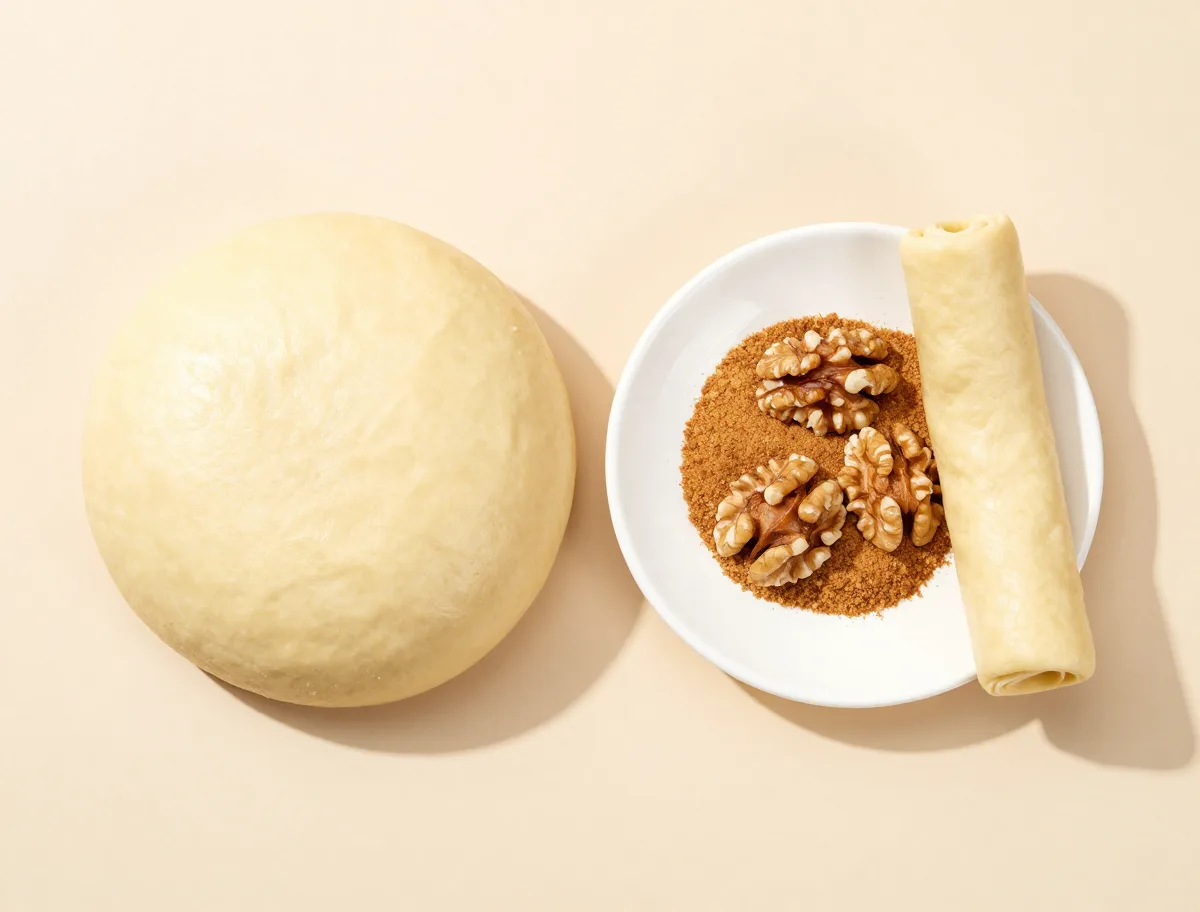
- 500 g all-purpose flour
- 60 g granulated sugar, divided
- 7 g instant yeast, 1 packet
- 7 g fine sea salt
- 180 ml whole milk, lukewarm
- 1 large egg, lightly beaten
- 60 g unsalted butter, melted and cooled
- 1 teaspoon vanilla extract
- 150 g granulated sugar, for coating
- 2 tablespoons ground cinnamon, for coating
- 75 g finely ground walnuts, for topping, optional
- A little neutral oil, for greasing the molds
How to Shape and Wrap Chimney Cake
The most important shaping goal is uniformity. A strip about 1.5 cm / 1/2 inch wide and 4 to 5 mm thick wraps cleanly and cooks before its sugar turns bitter. Wind with gentle, consistent tension so neighboring turns touch; large gaps create weak seams, while heavy overlaps produce dense, doughy ridges.
- Let resistant dough rest briefly instead of forcing it thinner; resting allows the gluten to relax.
- Tuck both ends beneath neighboring turns so the spiral has an anchor at each end.
- Roll the wrapped mold lightly on the counter to smooth ridges and help the seams adhere.
- Suspend the mold above the roasting pan rather than laying the dough directly on a flat surface.
Instructions
- Prepare the molds: Use three rigid, oven-rated metal tubes about 5 cm / 2 inches in diameter and 15 to 20 cm / 6 to 8 inches long. Lightly oil them. If using plain wooden rolling pins, they must have no plastic parts, paint, glue, or questionable finish; wrap them tightly in overlapping foil, fold the foil edges inward, and oil the foil. Set a rack in the center of the oven and preheat to 400°F / 205°C.
- Mix the dough: Whisk the flour, 40 g / 3 tablespoons of the sugar, yeast, and salt in a large bowl. Add the lukewarm milk, egg, cooled butter, and vanilla. Stir until a shaggy dough forms, then knead by hand for 8 to 10 minutes, or in a mixer with a dough hook for 6 to 7 minutes. The dough should become smooth, elastic, and slightly tacky; add flour only if it remains genuinely wet and unmanageable.
- Let the dough rise: Place the dough in a lightly oiled bowl, cover, and leave in a warm, draft-free place until visibly puffy and nearly doubled, about 60 to 75 minutes. It should spring back slowly when pressed with a fingertip rather than collapse immediately.
- Make the coating: Combine the 150 g / 3/4 cup coating sugar with the cinnamon in a shallow dish. Keep the ground walnuts in a separate dish if using them. The sugar mixture should be loose and dry, not clumped.
- Roll and cut the dough: Turn the risen dough onto a lightly floured surface and divide it into six equal pieces. Roll each piece into a rectangle about 4 to 5 mm / 1/6 inch thick. Cut each rectangle into one long strip about 1.5 cm / 1/2 inch wide. If the dough retracts, cover it and let it rest for 5 minutes before continuing.
- Wrap the cylinders: Anchor one end of a strip beneath the rim or an adjacent turn of a mold. Wind the strip around the cylinder in a steady spiral, keeping the turns close enough that their edges touch, with no large gaps and no bulky overlaps. Tuck the far end underneath the final turn. Roll the wrapped mold gently on the work surface to flatten the seams and bond the spiral, then repeat with the remaining dough and molds.
- Coat with sugar: Roll each wrapped cylinder in the cinnamon sugar, turning it until the dough is covered on all sides. Shake off loose excess; a complete, even coating is needed, but thick piles of sugar will burn before the dough cooks. Sprinkle or gently press the walnuts onto the coated dough only if using them.
- Bake with airflow: Arrange the molds across the rim of a deep roasting pan or between two sturdy oven-safe supports so the dough is suspended above the pan and the cylinders cannot roll. Leave the ends exposed for airflow. Bake for 14 to 18 minutes, rotating each cylinder a quarter turn every 4 to 5 minutes. If the sugar becomes dark brown before the dough feels firm, reduce the oven to 350°F / 175°C and continue baking until done.
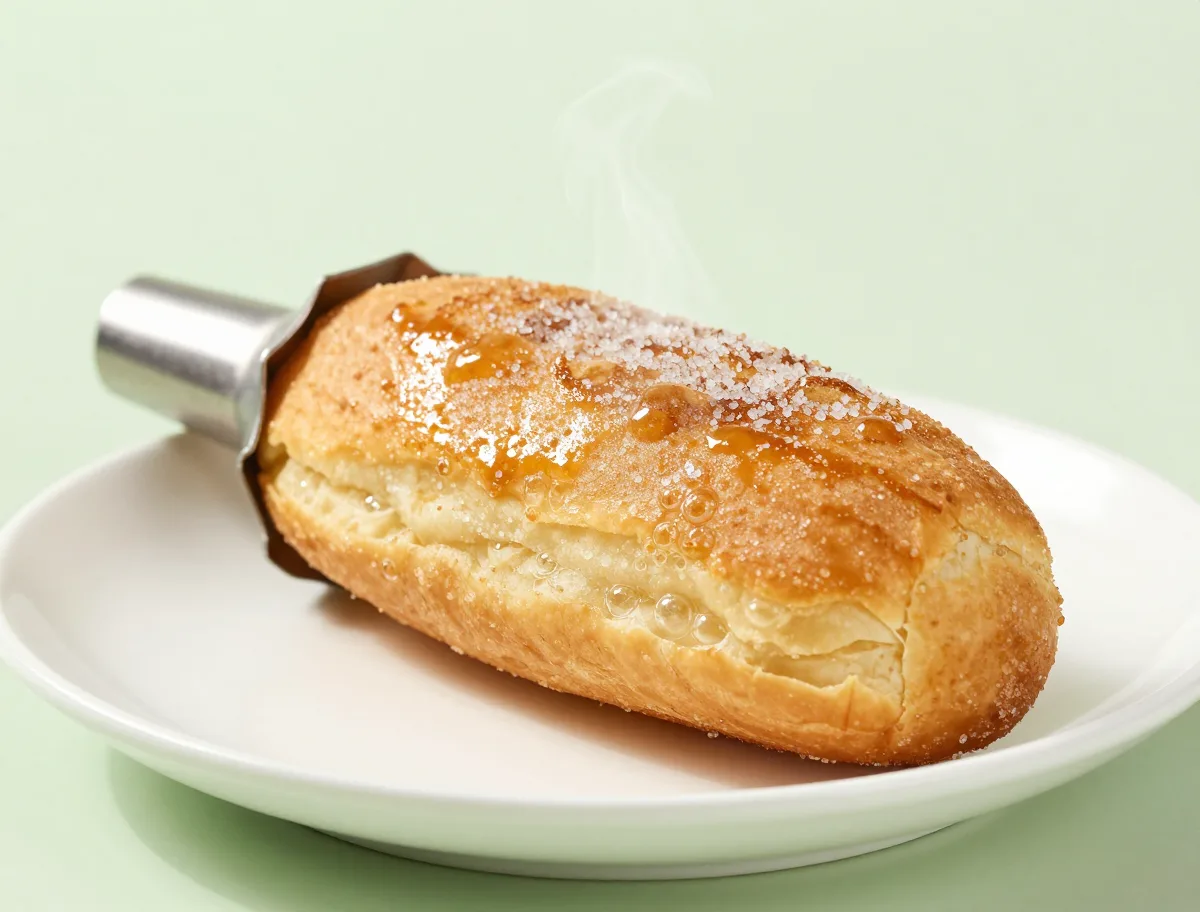
- Unmold and finish: Remove the molds with heatproof gloves and let them stand for 3 to 4 minutes, until the sugar shell has set but the pastry is still warm. Gently loosen the ends with a thin metal spatula or blunt knife and slide each cake from its mold; do not pull hard. Serve immediately, or add a little more cinnamon sugar or ground walnut while the shell remains warm.
How to Tell When Chimney Cake Is Done
Use the pastry’s color and structure rather than the clock alone. The sugar should look glossy and bubbling before it settles into a golden-amber shell. Once baked, the outside should give a crisp first bite while the wall inside remains soft and elastic. A gentle tap should sound lightly hollow, and the tube should retain its shape after unmolding.
- Pale, matte sugar usually needs more heat or a little more baking time.
- Black patches signal burnt sugar, not superior caramelization.
- A gummy band usually means the dough was too thick or overlapped too heavily.
- If the exterior colors rapidly, lower the oven temperature rather than simply baking hotter.
Doneness Cues
- The spiral is evenly joined, without open gaps or thick doubled seams.
- The sugar coating melts and bubbles, then turns golden amber rather than black.
- The pastry feels firm and crisp on the outside but not rock-hard.
- The dough is golden and fully baked at the seams, with no gummy or raw bands.
- The cake slides away as a hollow tube while still warm.
The Variables That Make or Break the Bake
Yeast expands the dough, while gluten holds that expansion in place. Because the dough continues to puff around the cylinder, loose turns can separate during baking. Thickness controls moisture: thick sections stay wet longer, while thin sections brown quickly. Rotation is especially important in an oven because heat from the rack, pan, and oven walls is uneven.
- A dry, evenly sugared surface caramelizes more reliably than a wet or sparsely coated one.
- Airflow around the cylinder prevents a compressed, damp underside.
- Moderate heat is safer than extreme heat when the dough wall is thick enough to need time to cook.
- Frequent quarter-turns distribute browning and help the sugar melt around the full circumference.
Common Chimney Cake Problems and Fixes
Most failures are geometric or temperature-related rather than mysterious. Check the dough’s elasticity, the spacing of the spiral, and the stability of the mold before changing the oven settings.
- Dough tears or springs back: It may be under-kneaded, too dry, or not rested. Cover it and rest for 5 minutes; avoid adding flour automatically.
- The spiral unwraps: The turns were loose, the ends were not tucked, or the dough overproofed after shaping. Re-anchor the ends and press the seams together before baking.
- The center is raw: The strips were too thick or overlapped. Lower the oven to 350°F / 175°C and continue only if the sugar is not already bitter.
- One side is pale: Rotate more often and make sure the mold is not touching the pan.
- Sugar burns first: The coating may be too heavy or the oven too hot. Reduce the heat; burned sugar cannot be repaired.
- The cake sticks: Grease the mold thoroughly and unmold while warm, loosening gently rather than pulling.
Chimney Cake Substitutions and Mold Options
The dough is flexible, but substitutions change its richness and color. Unsweetened plant milk and plant butter provide the closest dairy-free adaptation; water and neutral oil work, though the pastry will taste leaner and may brown differently. For the mold, an oven-rated metal tube is the safest and most predictable choice.
- Do not use plastic, cardboard, glass of unknown thermal rating, or painted or glued supports.
- A foil-covered wooden rolling pin is conditional: it must be rigid, free of unsafe finishes and plastic parts, and securely supported by its handles.
- An ordinary food can is not automatically oven-safe; use one only if its manufacturer confirms its material and lining are suitable for the oven, and remove all labels and sharp edges.
- Foil protects a safe support from food contact but does not make an unsafe support safe.
Classic Chimney Cake Toppings and Variations
Keep the pastry recognizable by preserving its raised dough, hollow spiral, and caramelized exterior. Cinnamon sugar and ground walnuts are the most traditional-associated choices. Vanilla sugar, coconut, or a little cocoa can be used as dry variations, while cream or ice cream belongs on the finished cake and will soften the crust quickly.
- For cinnamon sugar, use the coating in this recipe as the baseline rather than replacing it with cinnamon alone.
- For walnut chimney cake, press finely ground walnuts onto the sugared dough in a light, even layer.
- Vanilla sugar or unsweetened coconut can be mixed with part of the cinnamon sugar.
- Filled, heavily iced, or deep-fried versions are serving adaptations rather than the core form of kürtőskalács.
How to Serve Hungarian Chimney Cake
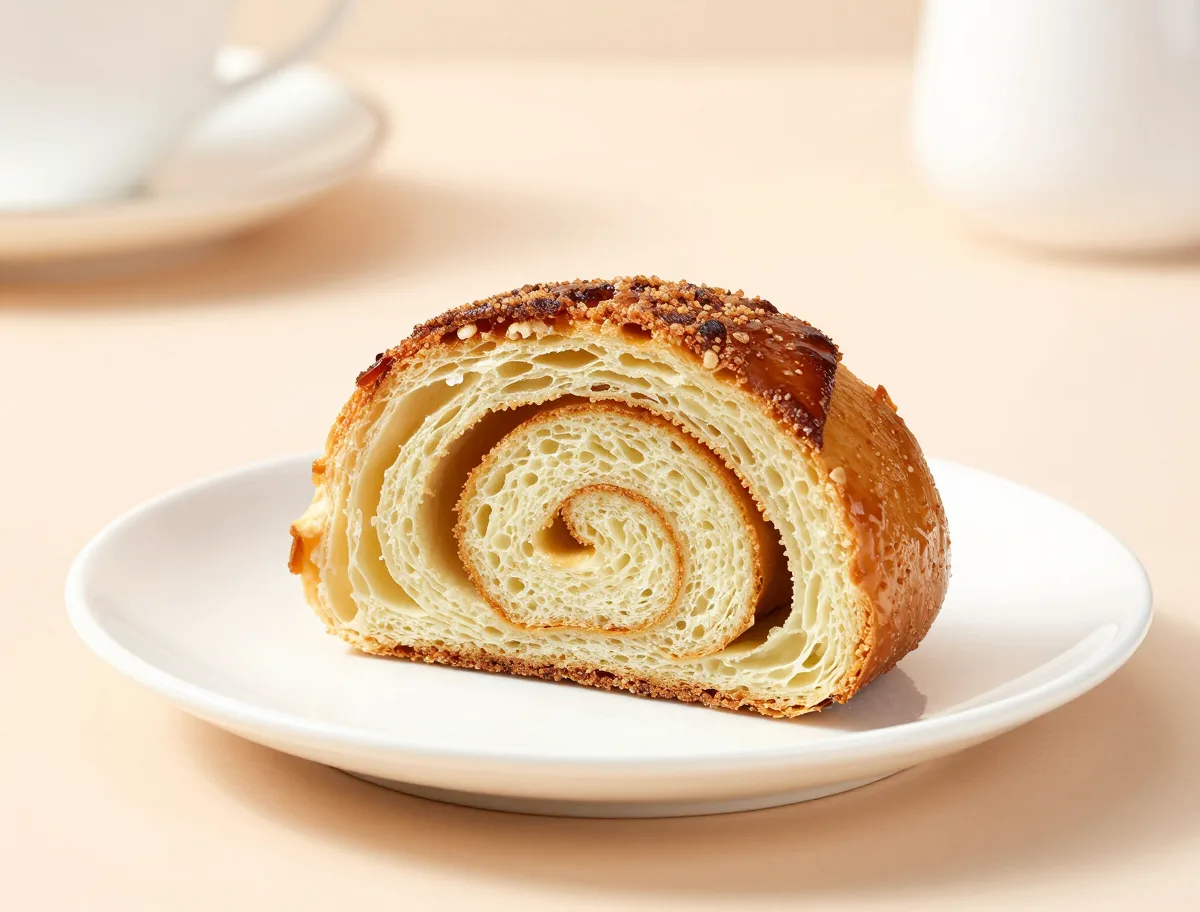
Serve the cakes warm, soon after they leave the molds, when the shell is crisp and the interior is still tender. Dry toppings adhere best while the sugar is warm. The pastry is excellent with coffee, black tea, or hot chocolate, particularly when the drink is unsweetened or only lightly sweetened.
- Serve upright or on a napkin so the hollow center remains part of the presentation.
- Add cream or ice cream immediately before eating if desired; moisture will soften the crust.
- Plain sugar, cinnamon, and walnuts let the caramelized dough remain the focus.
How to Store, Freeze, and Reheat Chimney Cake
Fresh is best because the sugar shell absorbs moisture and loses its snap as it stands. Cool the cakes completely before covering them, and protect them loosely from humidity rather than trapping steam against the crust. Refrigerated leftovers should be treated as enriched pastry: chill within two hours and use within three to four days.
- Refrigeration is safer for milk- and egg-enriched leftovers but can make the crumb firmer and the shell softer.
- Freeze fully cooled cakes in airtight wrapping for longer storage; quality will decline somewhat after thawing.
- Reheat in a dry oven or toaster oven at about 325°F / 165°C until warmed through and, where possible, to 165°F / 74°C for refrigerated leftovers.
- Avoid the microwave when crispness matters, since it tends to soften the sugar coating.
For additional guidance on safely storing and reheating leftovers, see the USDA guidance on leftovers and food safety.
Chimney Cake Recipe FAQ
These practical answers cover the equipment, shaping, baking, and finishing questions that most often arise when making kürtőskalács at home.
Is chimney cake the same as kürtőskalács?
Hungarian chimney cake is the common English name for kürtőskalács, the hollow spiral pastry made from yeast dough wrapped around a cylinder. The name can also be used loosely for unrelated filled desserts, so the spiral, hollow form distinguishes this pastry.
Is this traditionally baked in an oven?
Traditionally, kürtőskalács is cooked on a rotating spit over embers or another open heat source. This recipe is a practical oven adaptation that retains the rotating mold, spiral dough, sugar crust, and hollow shape.
Can I make chimney cake without a special mold?
Yes, but you still need a rigid, oven-safe cylinder to keep the center open. An oven-rated metal tube is preferable; a carefully prepared foil-wrapped wooden rolling pin is a conditional alternative.
Why does the mold need to rotate?
A stationary cylinder receives different amounts of heat from the rack, pan, and oven walls. Turning it regularly evens out sugar melting and browning so one side does not remain pale or burn.
How tightly should the dough be wrapped?
Wrap with steady, moderate tension. Adjacent turns should touch or overlap only minimally to close the seam. Large gaps can cause the spiral to open, while thick overlaps create raw, dense bands.
Why did my dough unwrap?
The usual causes are loose turns, unanchored ends, large gaps, or overproofing after shaping. Tuck both ends beneath neighboring turns and roll the wrapped mold gently to bond the seams before coating.
How do I know the sugar is caramelized but not burned?
Look for a glossy, bubbling coating that has turned golden amber. Dark brown or black patches indicate burning, especially if the pastry is still soft at the seams.
Why is the inside raw while the outside is dark?
The dough was likely too thick, overlapped too heavily, or baked in an oven that browns aggressively. Lower the temperature and bake longer only if the sugar is not already bitter; better uniform shaping is the long-term fix.
When should I remove the cake from the mold?
Wait about 3 to 4 minutes after baking, then loosen and slide it off while still warm. If it cools completely, the hardened sugar is more likely to stick and crack.
What should chimney cake taste and feel like?
It should have a crisp, thin caramelized exterior and a tender, lightly sweet, bread-like interior. It should remain hollow, with a visible spiral and no gummy seams.
Can I prepare the dough in advance?
You can refrigerate the covered dough after its first rise and bring it gradually back to a workable temperature before shaping. Bake as close to serving as possible because the caramelized shell loses crispness during storage.
The Hungarian Tradition Behind Kürtőskalács
Kürtőskalács is strongly associated with Hungarian and Székely Hungarian communities in Transylvania and is recognized in Hungary’s Collection of Hungarikums. Its defining traditional method is thin raised dough wound around a spit, coated with sugar, and cooked while rotating so the exterior browns and sets. Regional history includes related Central European pastries and overlapping traditions, so broad claims about a single uncontested origin should be avoided.
- The chimney-like hollow shape comes from the spit or cylindrical mold.
- Sugar, cinnamon, and ground walnuts are culturally grounded finishes.
- An oven-baked version is best described as a home adaptation, not an exact replica of charcoal roasting.
For additional cultural context, see the official Collection of Hungarikums information about chimney cake.
Safe Equipment and Handling for Chimney Cake
The greatest risks in this recipe are unstable molds, sharp foil, and molten sugar. Use only clean, rigid, oven-rated equipment, secure the cylinders so they cannot roll or fall, and handle them with heatproof gloves. Never assume that a household container is safe simply because it fits the oven.
- Do not put plastic, cardboard, painted or treated wood, glue, unverified glass, or questionable coated cans in a hot oven.
- Fold foil edges inward and inspect the wrapping for tears before adding dough.
- Keep children away from the hot sugar shell and do not touch caramelized coating with bare fingers.
- Refrigerate or freeze enriched leftovers within two hours, or within one hour in temperatures above 90°F / 32°C.
- For safely stored leftovers, use the general 165°F / 74°C reheating benchmark, while watching closely so the thin sugar shell does not scorch.