Hershey’s Black Magic Cake Recipe: Moist Chocolate Cake
Make the classic Hershey’s Black Magic Cake recipe with natural cocoa, hot coffee, buttermilk, and oil for a deeply moist, tender chocolate cake in a 9-by-13-inch pan.
What Makes This Black Magic Chocolate Cake Classic
This is the official Hershey-style Black Magic Cake: a cocoa-rich cake built with coffee, buttermilk, oil, eggs, and chemical leaveners. It bakes into a very moist, tender crumb with a slightly dense texture rather than a dry, airy sponge.
- The coffee heightens the chocolate flavor without making the cake taste primarily of coffee.
- The finished cake is soft enough for frosting but sturdy enough for a sheet cake or two-layer cake.
- The uncooked batter is notably thin and should be poured into the pan without thickening it.
Why the Coffee, Buttermilk and Oil Matter
The formula depends on balance more than on any single ingredient. Natural cocoa supplies the chocolate base, while hot coffee disperses it and adds roasted depth. Buttermilk contributes both liquid and acidity, oil keeps the crumb supple after cooling, and eggs provide the structure needed to hold the generous amount of liquid.
- Use a neutral oil such as vegetable or canola oil so the chocolate remains the dominant flavor.
- Natural cocoa is the most conservative choice with this baking-soda-led formula.
- Accurate measurements of the coffee and buttermilk are important because they determine both batter consistency and leavening.
- Sugar contributes sweetness, tenderness, and moisture retention; reducing it substantially changes the cake’s texture.
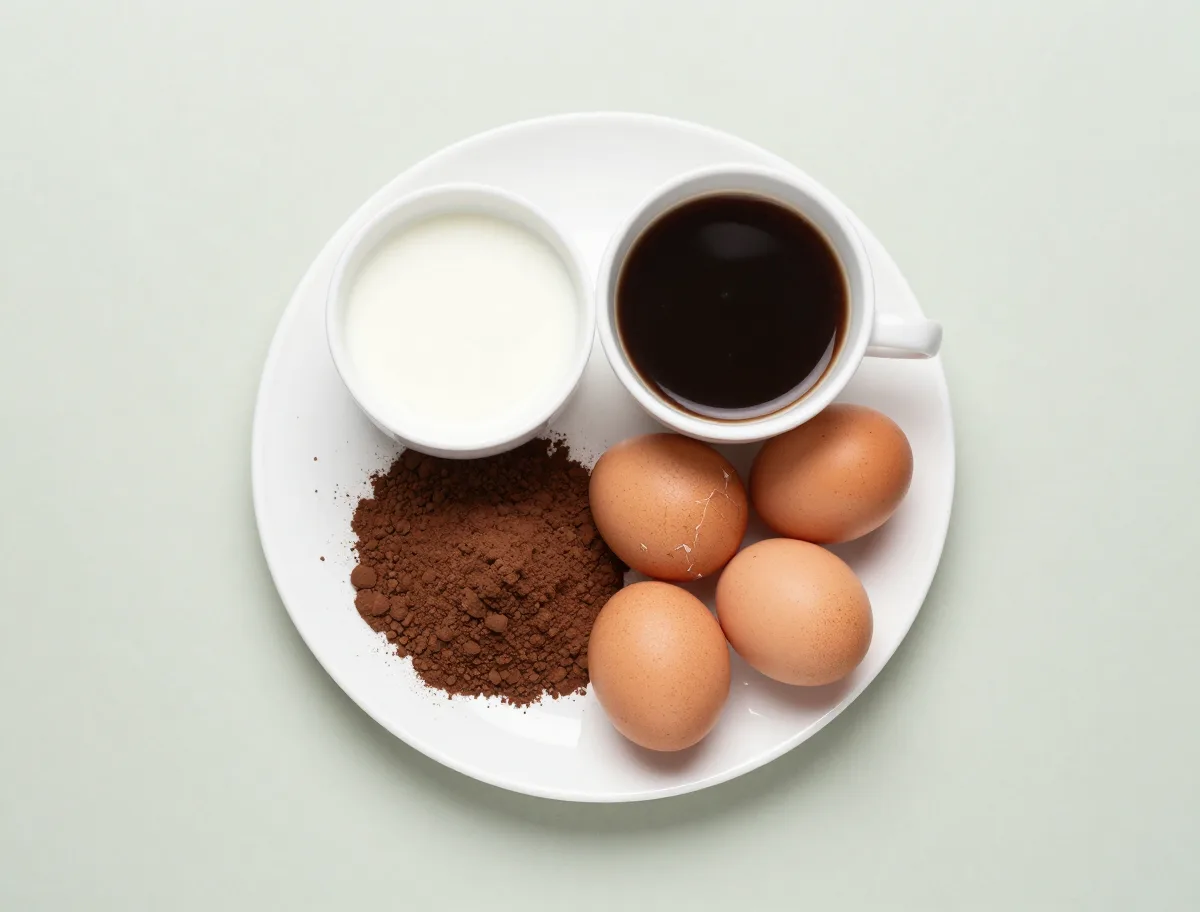
- 1 3/4 cups all-purpose flour, spooned into the measuring cup and leveled
- 3/4 cup natural unsweetened cocoa powder
- 2 cups granulated sugar
- 1 1/2 teaspoons baking soda
- 1 teaspoon baking powder
- 1 teaspoon fine salt
- 2 large eggs, at room temperature if possible
- 1 cup buttermilk
- 1 cup strong brewed black coffee, hot
- 1/2 cup neutral vegetable oil
- 2 teaspoons vanilla extract
How to Make Hershey’s Black Magic Cake Successfully
The method is simple, but the order and timing matter. Thoroughly disperse the dry ingredients before adding liquid, mix only until the batter is smooth, and get the pan into the oven promptly once the leaveners are hydrated.
- Prepare the pan thoroughly, especially if using a deep or shaped pan; this moist cake can cling.
- Whisking the dry ingredients well prevents concentrated pockets of cocoa, salt, or leavener.
- The batter should flow easily from the bowl. Resist the temptation to correct it with extra flour.
- For round layers, parchment on the pan bottoms makes turning out the cakes much safer.
- Let the cake stand in the pan briefly after baking, then cool it completely before handling or frosting.
- Prepare the pan and oven: Heat the oven to 350°F (175°C). Grease a 9-by-13-inch metal baking pan, then dust it lightly with flour or cocoa, tapping out the excess. For especially easy release, line the bottom with parchment after greasing.
- Combine the dry ingredients: In a large bowl, whisk together the flour, cocoa powder, sugar, baking soda, baking powder, and salt until evenly blended and no cocoa pockets remain.
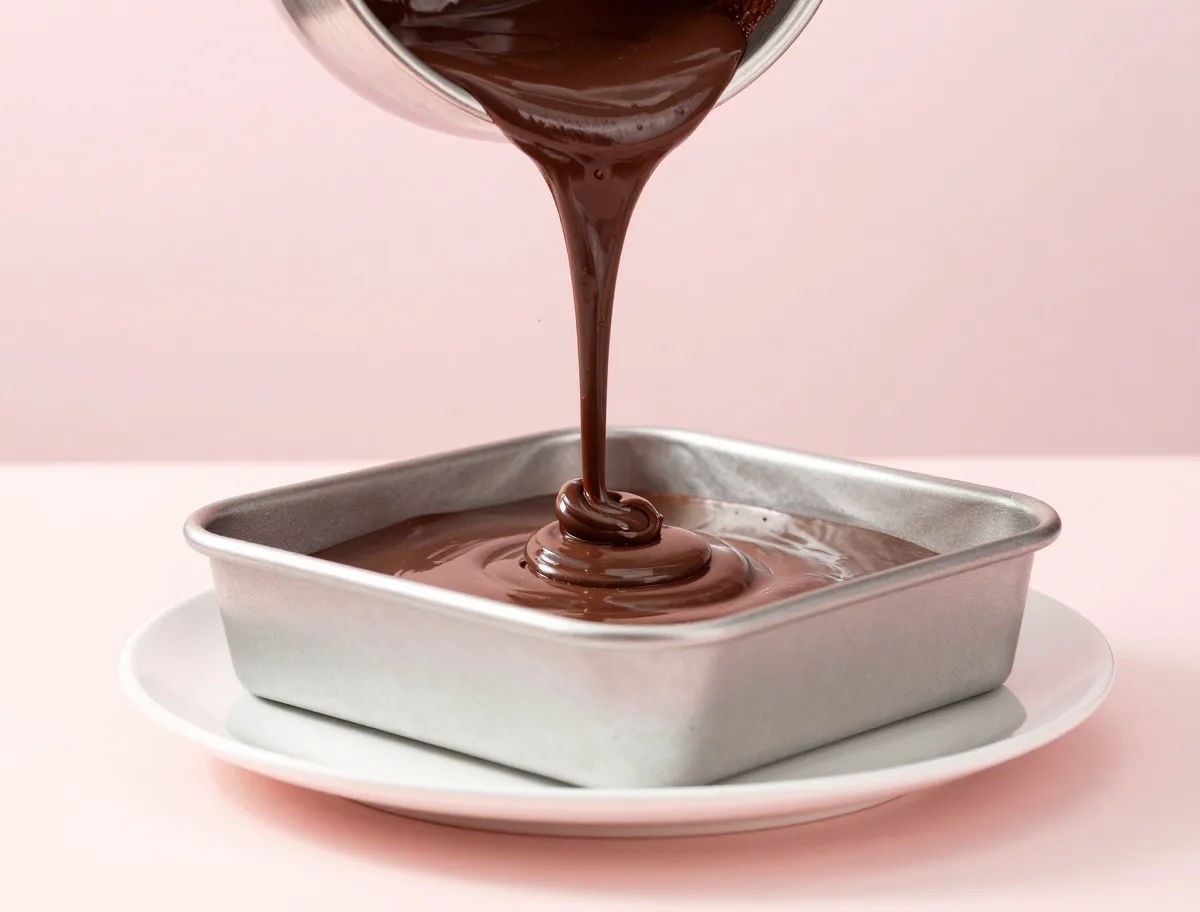
- Add the wet ingredients: Add the eggs, buttermilk, hot coffee, oil, and vanilla to the dry mixture. Beat with an electric mixer on medium speed for 2 minutes, or whisk by hand until the batter is smooth and evenly combined. The batter will be thin and pourable; do not add extra flour.
- Bake the cake: Pour the batter immediately into the prepared pan and spread it level if needed. Bake for 35 to 40 minutes, rotating the pan once near the midpoint if your oven browns unevenly. The center should look set and spring back lightly when pressed, and a wooden pick inserted in the middle should come out clean or with a few moist crumbs but no wet batter.
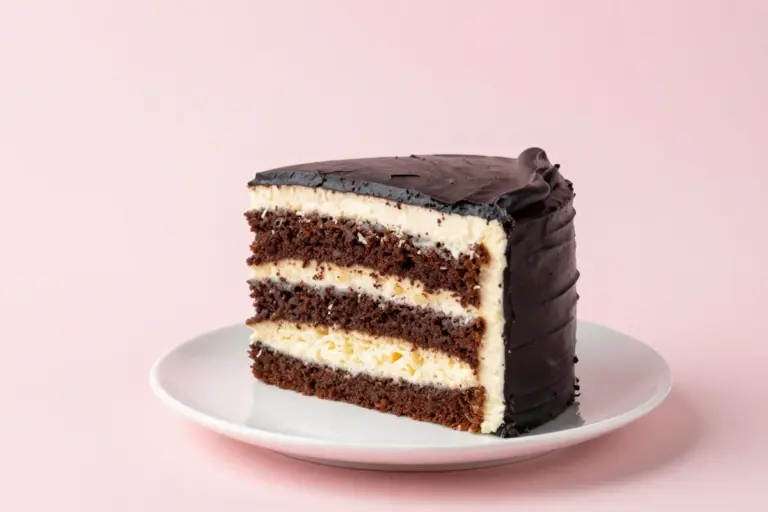
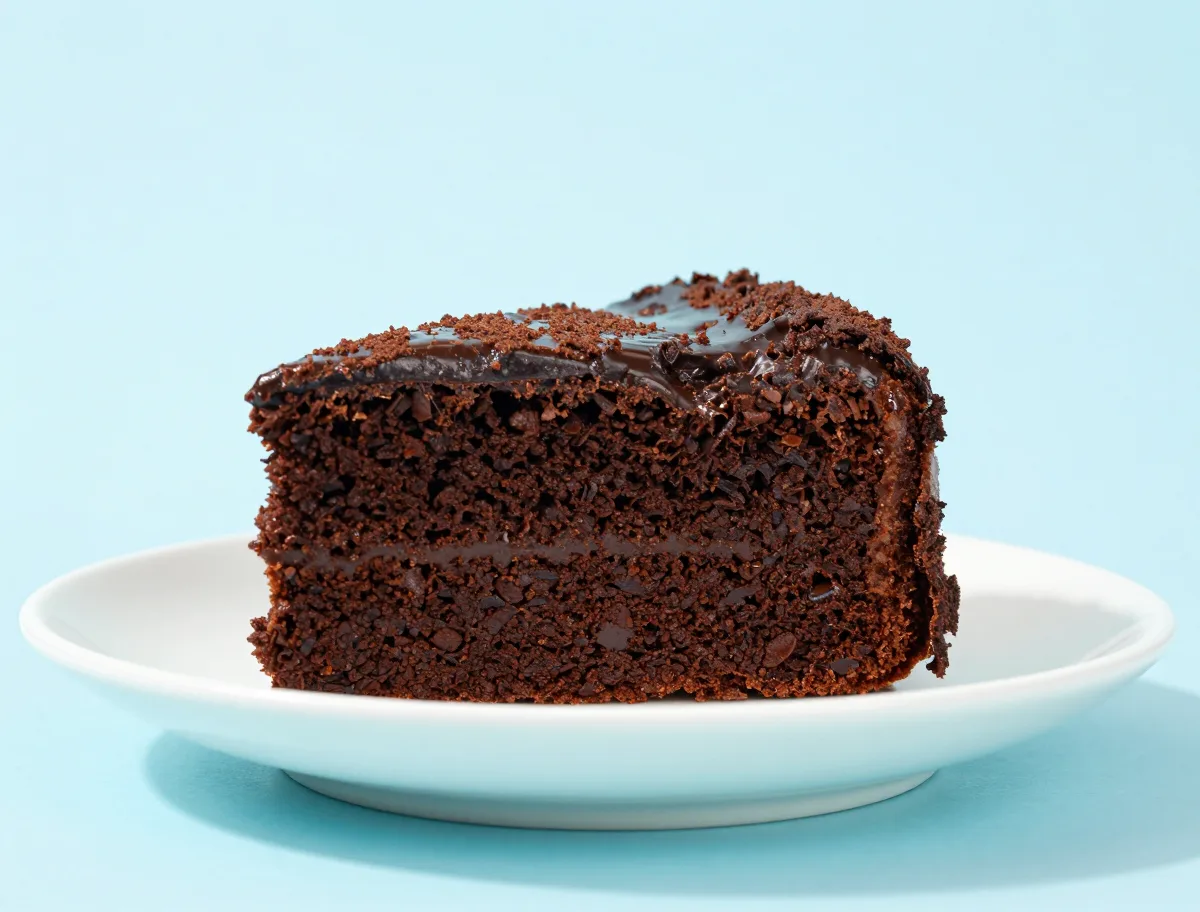
- Cool before serving: Let the cake cool in the pan for 10 minutes. Transfer it to a rack if desired and cool completely before frosting, glazing, or slicing. Serve plain or with chocolate frosting, ganache, buttercream, or cream cheese frosting.
How to Tell When the Moist Chocolate Cake Is Done
Because Black Magic Cake is designed to stay moist, the center may look softer than a conventional butter cake even when it is baked. Judge it with several cues rather than waiting for a completely dry tester, which can leave the edges overbaked.
- Look for a set surface and a center that responds with light spring-back.
- A skewer should show no liquid batter. A few damp crumbs are compatible with the intended crumb.
- If the center ripples when the pan is gently moved, continue baking and check again after a few minutes.
- Allow the cake to cool before deciding on its final texture; it gains structure as it loses heat.
- The surface is set rather than visibly liquid in the center.
- The center springs back lightly when touched.
- A tester shows no wet batter; a few moist crumbs are acceptable.
- The cake firms as it cools and should be completely cool before frosting.
The Practical Baking Science Behind the Cake
This recipe works because its acid, liquid, and leavening are coordinated. Buttermilk and natural cocoa help activate the baking soda, while baking powder provides additional lift. The hot coffee also helps the cocoa blend smoothly into the batter and reinforces the chocolate profile.
- Replacing buttermilk with plain milk without adding acid can weaken the rise and leave an alkaline flavor.
- High liquid, sugar, and oil levels explain both the pourable batter and the cake’s lasting softness.
- Hot coffee should replace, not supplement, the recipe’s liquid; adding extra coffee can leave the center underbaked.
- Long, aggressive mixing can make the crumb less tender, so stop once the batter is uniform.
Common Black Magic Cake Problems and Fixes
Most failures come from changing the formula to compensate for its unusual batter or from judging the cake by time alone. Pan depth, material, oven accuracy, and release preparation all matter.
- Thin batter: This is normal. Adding flour produces a heavier, drier cake.
- Wet or sunken center: The cake may need more time, particularly in a deep pan; also check that the liquid was measured accurately and the oven was fully preheated.
- Dry edges: Begin testing at the early end of the time range, especially with dark metal or smaller pans.
- Sticking or breakage: Grease and flour the pan carefully, use parchment for rounds, and wait about 10 minutes before turning the cake out.
- Tough crumb: Avoid compacting the flour and do not continue mixing after the batter is smooth.
- Bitter or soapy flavor: Check the baking soda measurement and avoid replacing acidic ingredients with plain milk.
Buttermilk, Coffee and Cocoa Substitutions
The most dependable substitutions preserve the recipe’s liquid volume and acidity. Hershey’s classic guidance allows either buttermilk or properly soured milk, and instant coffee is a practical alternative to brewed coffee.
- For sour milk, combine 1 tablespoon white vinegar with enough milk to make 1 cup; rest it for 5 minutes before using.
- Replace the brewed coffee with 2 teaspoons instant coffee dissolved in 1 cup boiling water.
- Hot water can replace the coffee when necessary, but the cake will have less roasted depth and a slightly less pronounced chocolate impression.
- Butter is not a neutral swap for oil; it can make the cooled cake firmer and adds a dairy note.
- Dutch-process cocoa may work as an adaptation, but it can alter the color, flavor, and leavening response. Natural cocoa is the safer choice for a faithful result.
Pan Options for This Moist Chocolate Cake
The most faithful formats are one 9-by-13-inch cake or two 9-inch rounds. The same batter can be adapted to other pans, but changing the geometry changes how quickly the center sets, so the listed times are starting points rather than guarantees.
- Two 9-inch round pans: Bake at 350°F for approximately 30 to 35 minutes.
- One 9-by-13-inch pan: Bake for approximately 35 to 40 minutes.
- A well-prepared 12-cup Bundt pan: Begin checking at approximately 50 minutes and expect roughly 50 to 55 minutes, depending on the pan.
- Standard cupcakes: Fill liners about one-half to two-thirds full and begin checking at 20 minutes; most take approximately 20 to 25 minutes.
- Use the same flavor profile and core formula when calling these Black Magic Cake variations; major changes to the cocoa, fat, sugar, or leavening create a different adaptation.
The Best Frosting for Black Magic Cake
The cake can be served plain, but its soft, cocoa-rich crumb welcomes a variety of finishes. Chocolate frosting or ganache intensifies the cocoa, while cream cheese frosting supplies a useful tangy contrast.
- Choose chocolate buttercream or ganache for the most concentrated chocolate finish.
- Use cream cheese frosting when you want contrast against the sweet, dark cake.
- A simple cocoa glaze or vanilla buttercream keeps the preparation close to the classic serving style.
- Frost only after the cake is completely cool; warm cake can melt the topping and cause layer cakes to slide.
- Serve at room temperature for the softest crumb. If refrigerated for a perishable frosting, allow the cake time to lose its chill before serving.
How to Store, Freeze and Make Black Magic Cake Ahead
The plain cake keeps well when tightly covered, and its moist crumb makes it a useful make-ahead dessert. Storage changes once the cake has a perishable frosting or filling, so treat the cake and its topping separately.
- Keep a plain, covered cake at room temperature for up to 2 to 3 days for best quality.
- Refrigerate cakes with cream cheese frosting, whipped cream, custard, fresh fruit, or other perishable fillings.
- To freeze, cool unfrosted layers completely, wrap them tightly, and freeze for up to about 2 to 3 months for best quality.
- Thaw an unfrosted cake in its wrapping at room temperature. Thaw a frosted or filled cake in the refrigerator.
- Add frosting after thawing when possible. Bring refrigerated cake toward room temperature before serving for a softer texture.
- Reheating is unnecessary; if desired, warm an individual plain slice gently rather than heating the whole cake.
For additional context on storing baked goods and perishable toppings, consult food-safety guidance from Iowa State University Extension.
Black Magic Cake Frequently Asked Questions
These answers address the details that most often cause uncertainty when making this classic coffee chocolate cake.
Is this the official Hershey’s Black Magic Cake recipe?
It follows the official Hersheyland formula and method: natural-style cocoa, coffee, buttermilk or soured milk, oil, eggs, sugar, flour, baking soda, baking powder, salt, and vanilla. It is presented here as an independently worded faithful version.
Why is the batter so thin?
The recipe contains a substantial amount of coffee and buttermilk relative to the flour and cocoa. That high-liquid balance is intentional and produces the characteristic moist, tender crumb. Do not add flour.
Will the cake taste like coffee?
Usually not. Strong coffee deepens the perception of chocolate rather than making the dessert coffee-forward. If you want to omit coffee, use an equal volume of hot water, understanding that the chocolate flavor will be less rounded.
Can I use instant coffee?
Yes. Dissolve 2 teaspoons instant coffee granules in 1 cup boiling water, then use that mixture as the recipe’s coffee.
Can I replace buttermilk with sour milk?
Yes. Put 1 tablespoon white vinegar in a measuring cup and add enough milk to make 1 cup. Let it stand for 5 minutes, then use it in place of the buttermilk. Plain milk without added acid is not an equivalent substitution.
What pan works best?
A 9-by-13-inch pan is the simplest option, while two 9-inch round pans are best for a layer cake. Both formats are baked at 350°F; the sheet cake generally takes 35 to 40 minutes and the layers about 30 to 35 minutes.
How do I know the cake is baked without drying it out?
The center should be set and lightly springy. Insert a wooden pick in the middle; it should show no wet batter. A few moist crumbs are fine, and are preferable to baking until the tester is completely dry.
When can I frost the cake?
Let it cool in the pan for about 10 minutes, then cool completely on a rack or in the pan before frosting. Frosting a warm cake can cause melting, tearing, or sliding layers.
A Note on the Hershey’s Black Magic Cake Tradition
Hersheyland is the most reliable modern authority for this recipe’s official identity, and the published formula preserves its defining combination of cocoa, coffee, acidic dairy, oil, and a thin batter. Culinary histories widely associate the recipe with a Hershey cocoa label by 1972.
- The recipe’s recognizable identity comes from its ingredient architecture and method rather than from a particular frosting.
- Earlier origin stories, including claims of a precisely documented 1930s invention, are not firmly established by the available authoritative evidence.
- Ganache, buttercream, cream cheese frosting, parchment-lined pans, and alternate pan shapes are reasonable modern serving or handling adaptations.
For the benchmark formula and traditional serving context, see the official Hersheyland Black Magic Cake recipe.