Air Fryer BBQ Chicken Wings Recipe for Crispy, Sticky Wings
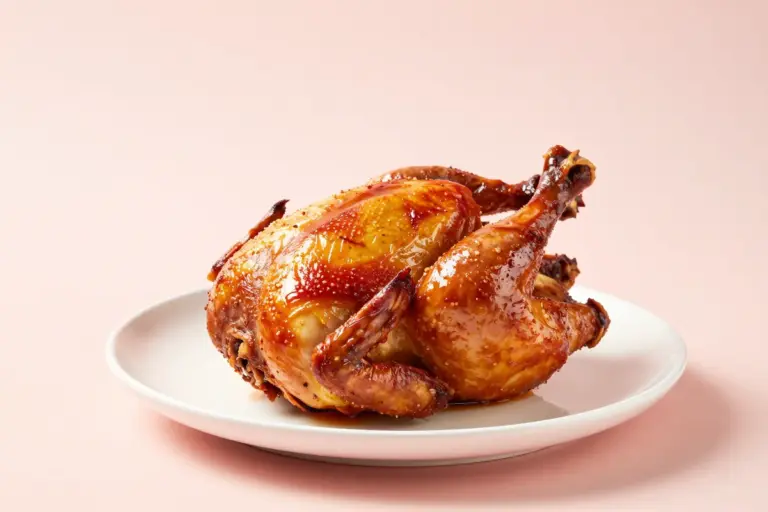
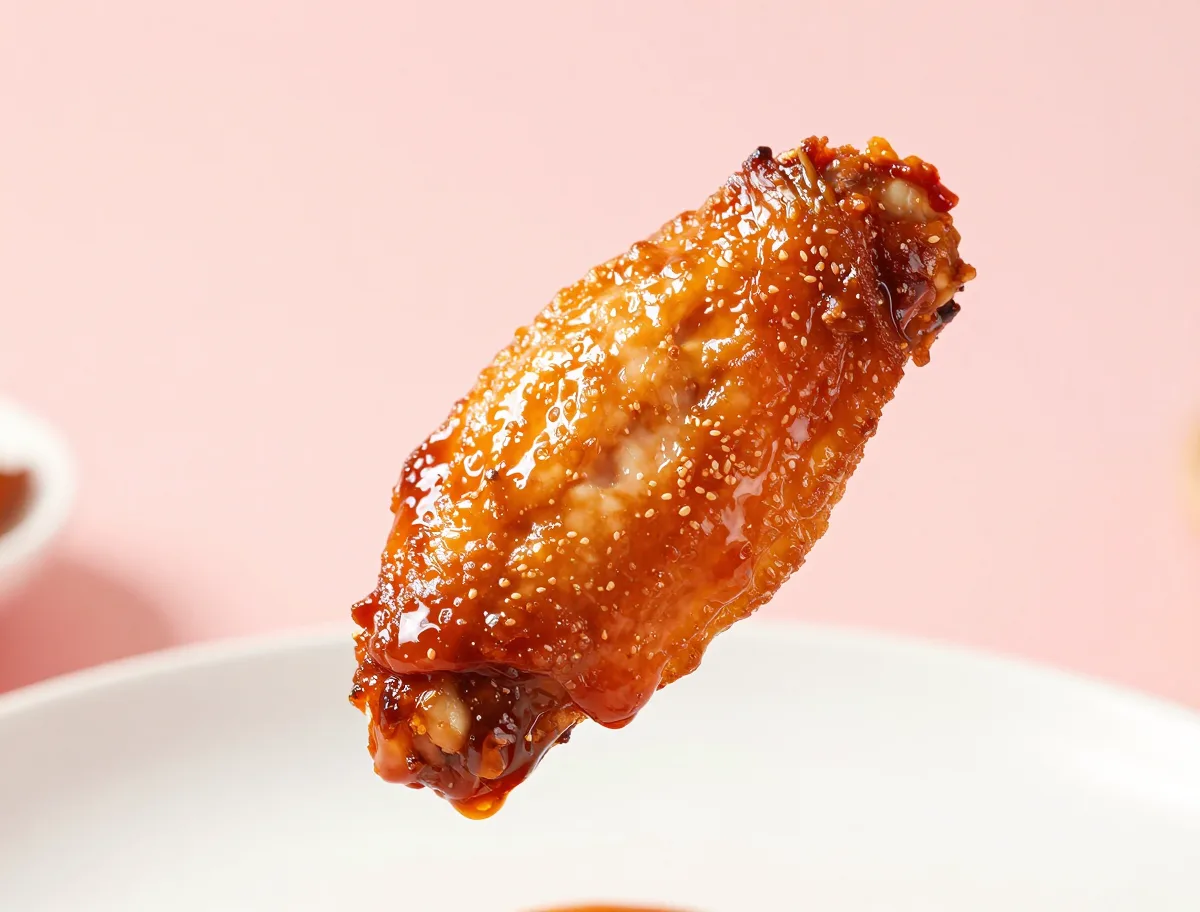
These air fryer BBQ chicken wings cook up crisp and juicy before being coated in a glossy, lightly caramelized homemade barbecue sauce.
What Makes Great Air Fryer BBQ Chicken Wings
The best air fryer BBQ chicken wings are cooked in two stages: first, the wings develop browned, rendered, crisp skin without sauce; then a thin layer of barbecue sauce is added for a glossy, sticky finish. The interior should remain juicy while the glaze clings rather than pooling.
- Crisp the wings before saucing so surface moisture can evaporate.
- Use a restrained coating of sauce to preserve the contrast between crisp skin and sticky glaze.
- Serve promptly after glazing, since barbecue sauce gradually softens the crust.
Why These Ingredients Work
Separated drumettes and flats cook more evenly than whole wings, while the dry seasoning adds flavor without introducing moisture. Baking powder helps the skin brown and blister; it should be applied as a fine dusting, not a thick crust. The homemade sauce balances tomato sweetness with vinegar, savory Worcestershire, smoke, and optional heat.
- Oil is not essential because wings release their own fat; a light spray is only for preventing sticking.
- Sweet paprika colors the dry coating, while smoked paprika gives the sauce a deeper barbecue character.
- Brown sugar helps the glaze cling and caramelize, so it belongs near the end of cooking.
Ingredients
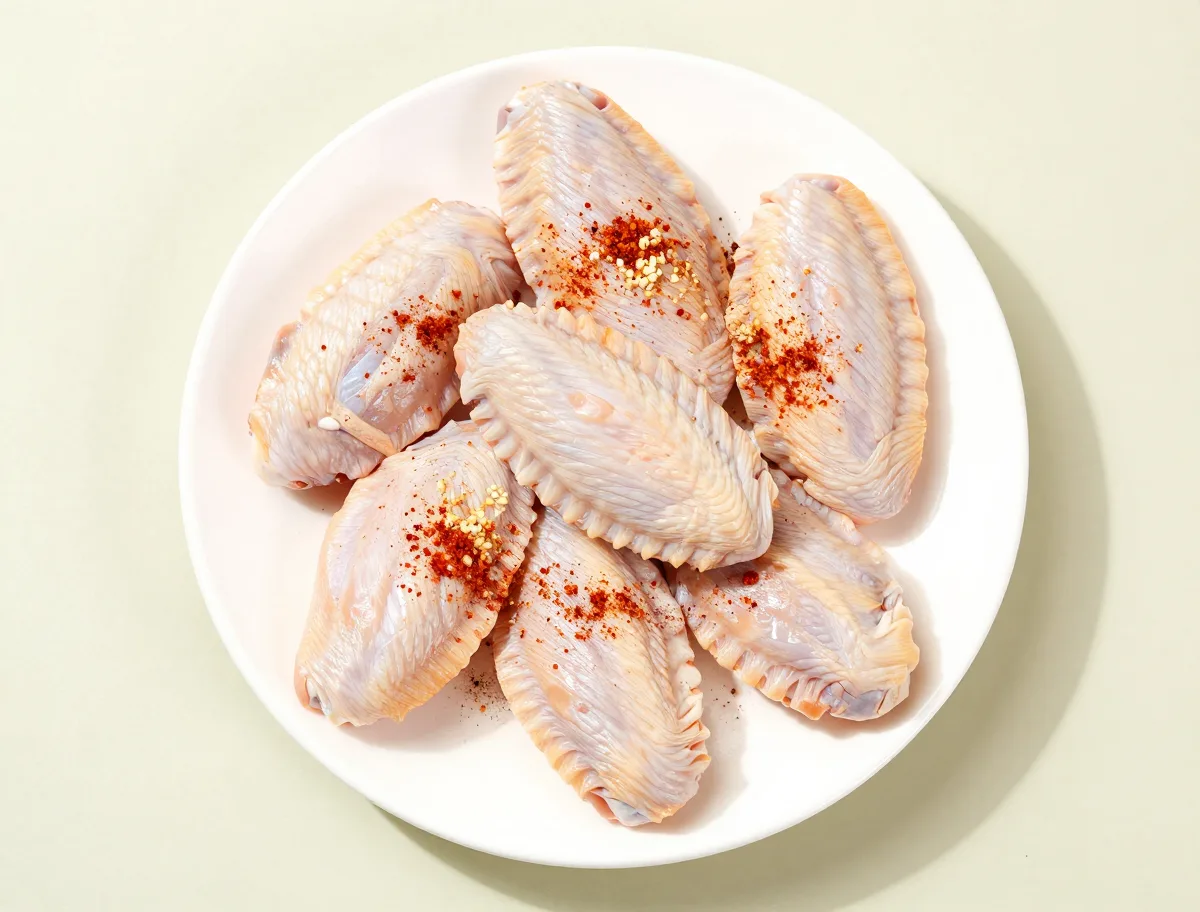
- 2 pounds chicken wings, separated into drumettes and flats, tips removed
- 1 teaspoon kosher salt
- 1 teaspoon sweet paprika
- 3/4 teaspoon garlic powder
- 1/2 teaspoon onion powder
- 1/2 teaspoon freshly ground black pepper
- 2 teaspoons aluminum-free baking powder
- As needed neutral oil spray, for the basket, if needed (optional)
- 1/2 cup ketchup
- 2 tablespoons apple cider vinegar
- 2 tablespoons light brown sugar, packed
- 1 tablespoon Worcestershire sauce
- 1/2 teaspoon smoked paprika
- 1/2 teaspoon garlic powder
- 1 teaspoon hot sauce (optional)
How to Air-Fry and Glaze the Wings
Thorough drying is the first important technique decision. Pat the raw wings dry rather than washing them, coat them evenly, and give each piece room for hot air to circulate. Cook them until crisp and safely done before adding sauce. Tossing off heat gives the crispest result; a very brief return to the air fryer creates a more set, tacky glaze.
- Preheat the appliance so the wings begin cooking in a hot environment.
- Turn or shake once during cooking to expose pale areas to the circulating heat.
- Cook in batches whenever pieces touch or overlap; stacking encourages steaming.
- Warm sauce spreads more thinly and evenly than cold, thick sauce.
Instructions
- Dry and season the wings: Pat the wings very dry with paper towels; do not rinse them. In a large bowl, combine the salt, sweet paprika, garlic powder, onion powder, black pepper, and baking powder. Add the wings and toss until every piece has a thin, even coating.
- Preheat the air fryer: Preheat the air fryer to 400°F. Lightly spray the basket only if its surface tends to stick.
- Cook the wings until crisp: Arrange the wings in one layer with space between the pieces. Cook for 22 to 28 minutes, turning or shaking the basket after 12 minutes. If the basket cannot hold the wings without overlap, cook in batches. The skin should be deeply golden and firm, and the thickest pieces must reach at least 165°F when checked in the meat away from the bone.
- Make the barbecue sauce: While the wings cook, stir the ketchup, apple cider vinegar, brown sugar, Worcestershire sauce, smoked paprika, garlic powder, and hot sauce, if using, in a small saucepan. Warm over medium-low heat for 3 to 4 minutes, stirring until smooth and just steaming; do not boil it hard.
- Glaze and finish: Transfer the cooked wings to a clean bowl and toss with about two-thirds of the warm sauce. For the crispest result, serve immediately with the remaining sauce on the side. For a stickier glaze, return the coated wings to the basket in one layer and air-fry for 1 to 2 minutes at 400°F, watching closely so the sugar does not burn. Toss with the remaining sauce only if desired.
How to Tell When the Wings Are Ready
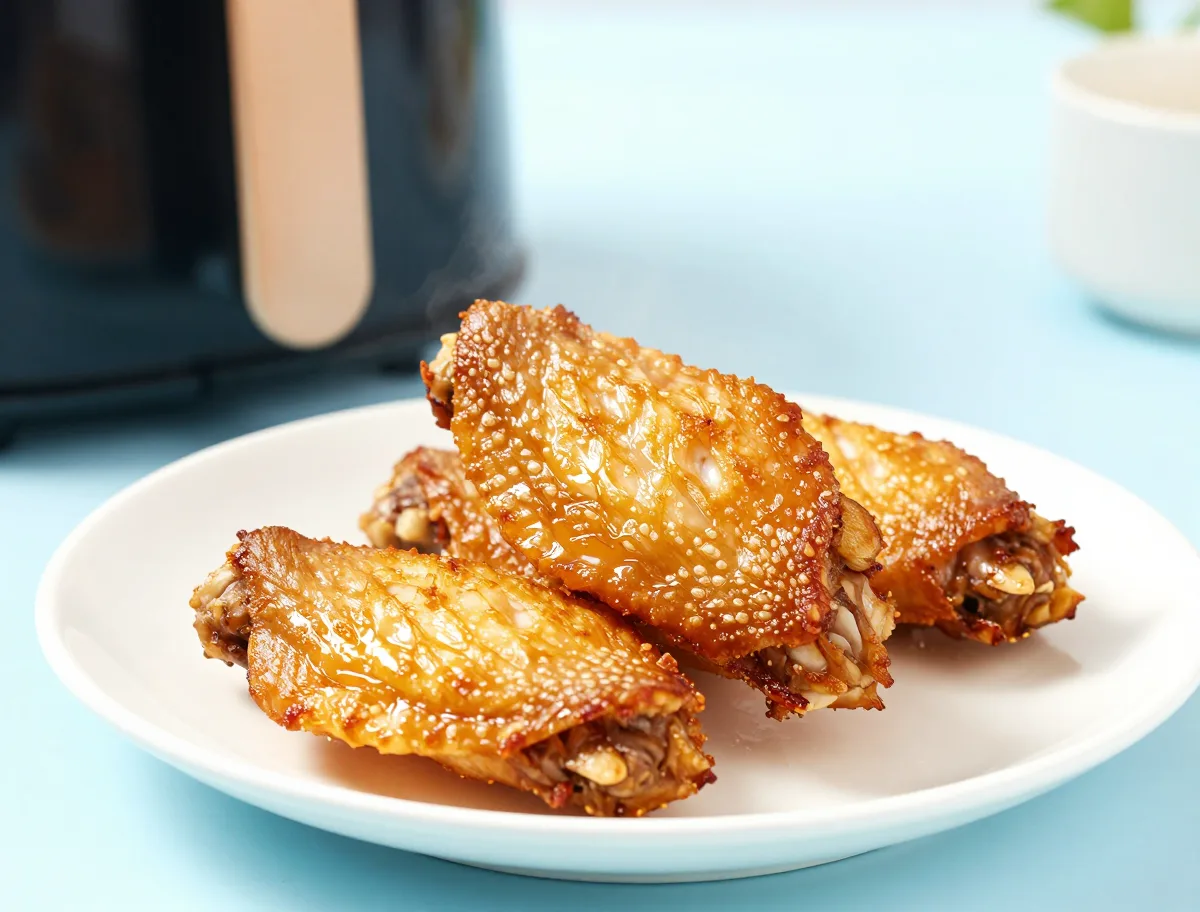
Look for deeply golden skin with small blisters and a firm surface. These are useful quality cues, but they do not establish poultry safety on their own. Check the largest drumettes with an instant-read thermometer, inserting the probe into the thickest meat without touching bone; every questionable piece should reach at least 165°F.
- Large drumettes often finish after flats, so use the thickest pieces to judge the batch.
- A properly set glaze looks shiny and tacky with light browning, not aggressively bubbling or blackened.
- If the wings are safe but not crisp enough, continue cooking them unsauced before glazing.
Doneness cues
- The skin is deeply golden, blistered, and firm rather than pale or rubbery.
- The barbecue coating is shiny and tacky with a few browned spots, never blackened.
- The thickest part of several wings reaches at least 165°F when measured away from the bone.
- The meat is opaque and juicy with no raw-looking flesh at the bone.
The Air-Fryer Variables That Control Crispness
Air fryers crisp by moving hot air over an exposed surface while moisture evaporates and skin fat renders. Any condition that traps steam—wet wings, overlapping pieces, or a crowded basket—works against that process. Barbecue sauce adds both water and sugar, which is why it should be applied only after the dry cook.
- Visible gaps between wings matter more than the appliance’s advertised basket capacity.
- Baking powder supports browning and surface blistering, but excess powder can taste chalky or bitter.
- Sugar-rich sauce darkens quickly at high heat; the final glazed stage should be short and watched closely.
- Frozen wings release meltwater as they cook and therefore need more space and often a staged method.
For additional context on air circulation, baking powder, preheating, and batch cooking, see the Serious Eats air-fryer wings technique reference.
Common Air Fryer BBQ Wing Problems and Fixes
Most disappointing wings can be traced to moisture, crowding, uneven pieces, or sauce added at the wrong time. Correct the underlying issue rather than simply increasing the temperature, since high heat can brown the outside while leaving the center undercooked or burning the glaze.
- Soggy skin: Pat the wings drier, separate them, and continue cooking without sauce until browned.
- Uneven browning: Turn the wings, rearrange hot-spot pieces, and divide the batch into smaller loads.
- Burnt sauce: Remove badly charred coating, lower the exposure time, and apply a thinner layer only after the wings are cooked.
- Pale wings: Continue the unsauced cook; check whether the basket was crowded or the appliance was fully preheated.
- Bitter or chalky skin: Too much baking powder or baking soda is likely. Baking soda is not an equal substitute.
- Undercooked centers: Use a thermometer on several thick pieces and continue cooking until each reaches 165°F.
Easy Ingredient Substitutions
The recipe is flexible as long as substitutions preserve a dry first stage and a late sauce finish. A purchased barbecue sauce can replace the homemade sauce in equal volume, although sweetness, salt, smoke, and thickness will vary by brand.
- Use wingettes alone or a mixture of flats and drumettes; allow the largest pieces to determine doneness.
- Omit baking powder for a simpler wing, or use a modest amount of cornstarch for a slightly more brittle, lightly coated surface.
- Replace brown sugar with honey or maple syrup, but apply the sauce especially late because these sweeteners can scorch quickly.
- Add more hot sauce or a pinch of cayenne for heat; balance an overly sweet sauce with a little extra vinegar.
- A neutral oil spray can be omitted when the basket is reliably nonstick.
BBQ Wing Variations
These variations keep the defining structure of the recipe intact: air-fry the wings with a dry seasoning, then finish with a controlled coating. The sauce profile can change without turning the dish into a battered or deep-fried preparation.
- Honey BBQ: Stir 1 tablespoon honey into the finished sauce and use the shortest possible glaze-setting step.
- Spicy BBQ: Add extra hot sauce, chipotle, or cayenne to the sauce, then taste before adding more salt.
- Smoky BBQ: Increase the smoked paprika slightly or choose a smoky commercial sauce rather than combining several very strong smoke ingredients.
- Dry-rub wings: Omit the sauce and add a little extra paprika, black pepper, or chile to the seasoning; this gives the crispiest finish.
- Frozen wings: Use the staged method described below rather than treating them like fresh wings.
How to Store, Freeze and Reheat BBQ Wings
Freshly sauced wings have the best texture, but leftovers can be handled safely and reheated with reasonable crispness. Cool and refrigerate cooked wings in a shallow covered container within two hours, or within one hour when the surrounding temperature is above 90°F. Keep them refrigerated at 40°F or below for 3 to 4 days.
- For make-ahead preparation, season the raw wings and refrigerate them uncovered on a rack for up to 12 hours, then cook as directed.
- Freeze cooled cooked wings in airtight packaging with as much air removed as practical; quality will decline over time.
- Reheat refrigerated wings in a single layer at 375°F for about 5 to 8 minutes, or until the center reaches 165°F.
- Add fresh sauce after reheating when possible. Microwaving is faster but usually softens the skin.
Air Fryer BBQ Chicken Wings FAQ
Use the following adjustments as a guide, but let basket spacing, wing size, browning, and internal temperature determine the final result.
Can I cook these air fryer chicken wings at 400°F?
Yes. The recipe uses 400°F for both the crisping stage and the optional brief glaze-setting stage. The wings may need less or more time depending on their size, the basket load, and the air fryer.
How long do fresh wings take in an air fryer?
Fresh separated wings commonly take about 22 to 28 minutes at 400°F, with a turn halfway through. Use the thermometer and visual cues rather than treating the time as a guarantee.
Should I put BBQ sauce on the wings before air-frying?
Not for the full cook. Sauce the wings after they have browned and reached safe doneness, then return them for only 1 to 2 minutes if you want a more firmly set glaze.
How full can the air fryer basket be?
Arrange the wings in one layer with visible gaps. The pieces may be close, but they should not overlap or form a second layer. Cook in batches when necessary.
Can I use frozen wings?
Yes, although fresh or thawed wings crisp more predictably. Cook frozen raw wings at 380°F for about 10 minutes, separate them as they loosen, drain any released liquid, then season and continue at 400°F until browned and at least 165°F inside; expect roughly 30 to 40 minutes total.
Is baking powder necessary for crispy wings?
No, but a small amount can improve browning and blistering. Omit it if preferred, and never replace it with the same amount of baking soda.
Can I toss the wings in sauce instead of brushing them?
Yes. Tossing with warm sauce is usually the fastest way to coat the pieces evenly. Use a thin layer and serve immediately for the best crispness.
Food-Safety Notes for Chicken Wings
Keep raw poultry refrigerated until needed, use a separate board and utensils, and wash hands and surfaces after handling it. Do not rinse raw chicken; patting it dry is sufficient and avoids spreading contaminated droplets. Thaw frozen wings in the refrigerator, in cold water, or in the microwave—not on the counter.
- All wings must reach a minimum internal temperature of 165°F in the thickest meat, measured away from the bone.
- Check more than one piece when the wings vary in size or the basket has hot and cool areas.
- Refrigerate leftovers within two hours, or within one hour in temperatures above 90°F.
- Reheated leftovers should also reach 165°F before serving.
For official poultry temperature and reheating guidance, consult the USDA safe cooking temperature chart.