Bajan Fish Cake Recipe: Crisp Saltfish Fritters
This fish cake recipe Bajan-style makes small, deep-fried saltfish fritters with crisp golden edges, tender herb-flecked centers, and adjustable Scotch bonnet heat.
What Makes These Bajan Fish Cakes
Bajan fish cakes are small Barbadian saltfish fritters: a seasoned flour batter folded around flakes of desalted cod and dropped directly into hot oil. They are not compact, potato-led patties. The ideal result is crisp and golden outside, tender inside, and visibly flecked with fish, herbs, and pepper.
- Salted cod provides the distinctive cured seafood flavor.
- The mixture is a thick, spoonable batter rather than a firm dough.
- Small portions give the best balance of crisp crust and cooked center.
- In Barbados, fish cakes are commonly eaten as breakfast, snack food, or in salt bread as a bread and two.
The Ingredients That Give Bajan Fish Cakes Their Character
Flour supplies the structure and fries into a delicate shell, while baking powder keeps the interior from becoming heavy. Egg helps the batter hold together, and milk gives it a tender, lightly rich crumb. The aromatic foundation comes from scallion, onion, garlic, parsley, thyme, and optional marjoram; Scotch bonnet contributes the characteristic island heat without needing to dominate the fish.
- Use boneless dried salt cod when possible; its cure is central to the flavor.
- Add liquid gradually because the moisture of the fish and vegetables varies.
- Fresh herbs give a brighter result than dried herbs.
- Neutral oil lets the saltfish, herbs, and pepper remain the focus.
- 12 ounces boneless dried salted cod, cut into large pieces
- 8 cups water, plus more as needed for desalting
- 1 3/4 cups all-purpose flour
- 2 teaspoons baking powder
- 1/2 cup scallions, finely sliced
- 1/4 cup yellow onion, very finely minced
- 2 cloves garlic, finely minced
- 1/4 cup fresh parsley, finely chopped
- 1 tablespoon fresh thyme leaves
- 1 teaspoon fresh marjoram leaves, finely chopped, optional
- 1/2 teaspoon freshly ground black pepper
- 1 small Scotch bonnet chile, seeded and minced; use less for moderate heat, optional
- 1 large egg, lightly beaten
- 3/4 cup whole milk, plus up to 2 tablespoons if needed
- 6 cups neutral frying oil, such as canola or peanut oil
- 1 whole lime, cut into wedges for serving
How to Prepare the Saltfish and Batter
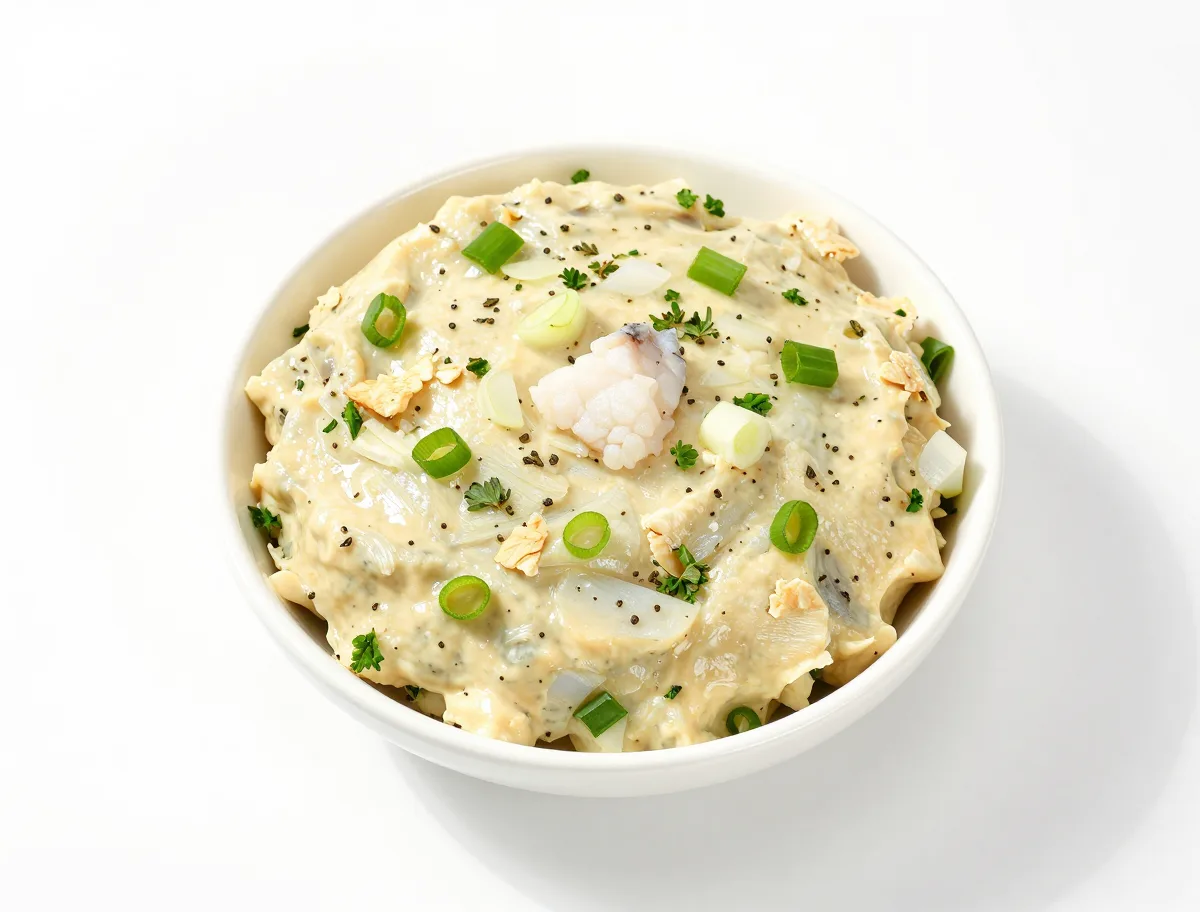
Desalting is the first important judgment point. Refrigerated soaking gives the most gradual control, while repeated simmering is useful when time is short. In either case, taste the cooled fish before seasoning the batter. It should be savory and pleasantly salty, not harsh or mouth-puckering.
- Drain the cooked fish very well; excess water can turn a cohesive batter loose.
- Flake the cod into small visible pieces rather than reducing it to a paste.
- Fold only until the fish and aromatics are distributed; prolonged mixing can make the cakes dense.
- Fry one test cake before committing to the whole batch.
- Desalt the cod: Place the salted cod in a nonreactive bowl, cover with water, and refrigerate at 40°F (4°C) for 8 hours, changing the water twice. Drain. For a faster method, place the cod in a saucepan, cover with fresh water, bring to a gentle simmer for 10 minutes, drain, and repeat once or twice more. Cool the fish, taste a flake, and continue desalting if it is aggressively salty.
- Cook and flake the fish: Transfer the desalted cod to a saucepan and cover with fresh water. Bring just to a simmer at 212°F (100°C) and cook for 8 minutes, or until the fish separates easily. Drain thoroughly, cool until easy to handle, check carefully for bones, and flake into small but distinct pieces. Pat the fish dry if it feels wet.
- Build the batter: In a large bowl, whisk the flour, baking powder, black pepper, scallions, onion, garlic, parsley, thyme, marjoram, and Scotch bonnet, if using. Stir in the egg and 3/4 cup milk. Fold in the flaked cod just until evenly distributed. The mixture should be thick and chunky: a tablespoonful should hold a mound briefly before dropping, then spread only slightly. If it is stiff and dry, add the remaining milk 1 tablespoon at a time; if loose, let it stand for 5 minutes before adding a little flour.
- Heat the oil: Pour the oil into a heavy Dutch oven or deep skillet to a depth of about 1 1/2 inches. Heat over medium to medium-high heat to 350°F (177°C). Set a wire rack over a rimmed baking sheet for draining. Keep the batter chilled if the oil needs more than a few minutes to heat.
- Fry a test cake: Using two teaspoons or a small cookie scoop, drop one tablespoon of batter into the oil. Fry for 3 to 4 minutes at 350°F (177°C), turning once or twice, until evenly deep golden. Cut it open to check that the center is hot, opaque, and cooked through. Adjust the batter or heat before frying the remaining cakes.
- Fry in batches: Drop the remaining batter into the oil in small, even portions, leaving space between the cakes. Fry for about 3 to 4 minutes per batch, turning when the underside is golden and the cakes release easily. Keep the oil between 325°F and 365°F, adjusting the burner as needed. Do not crowd the pan, and allow the oil to return to temperature between batches.
- Drain and serve: Lift the cakes out with a slotted spoon and drain on the rack. Serve hot or very warm with the lime wedges, Bajan pepper sauce, or a creamy Marie Rose-style dip.
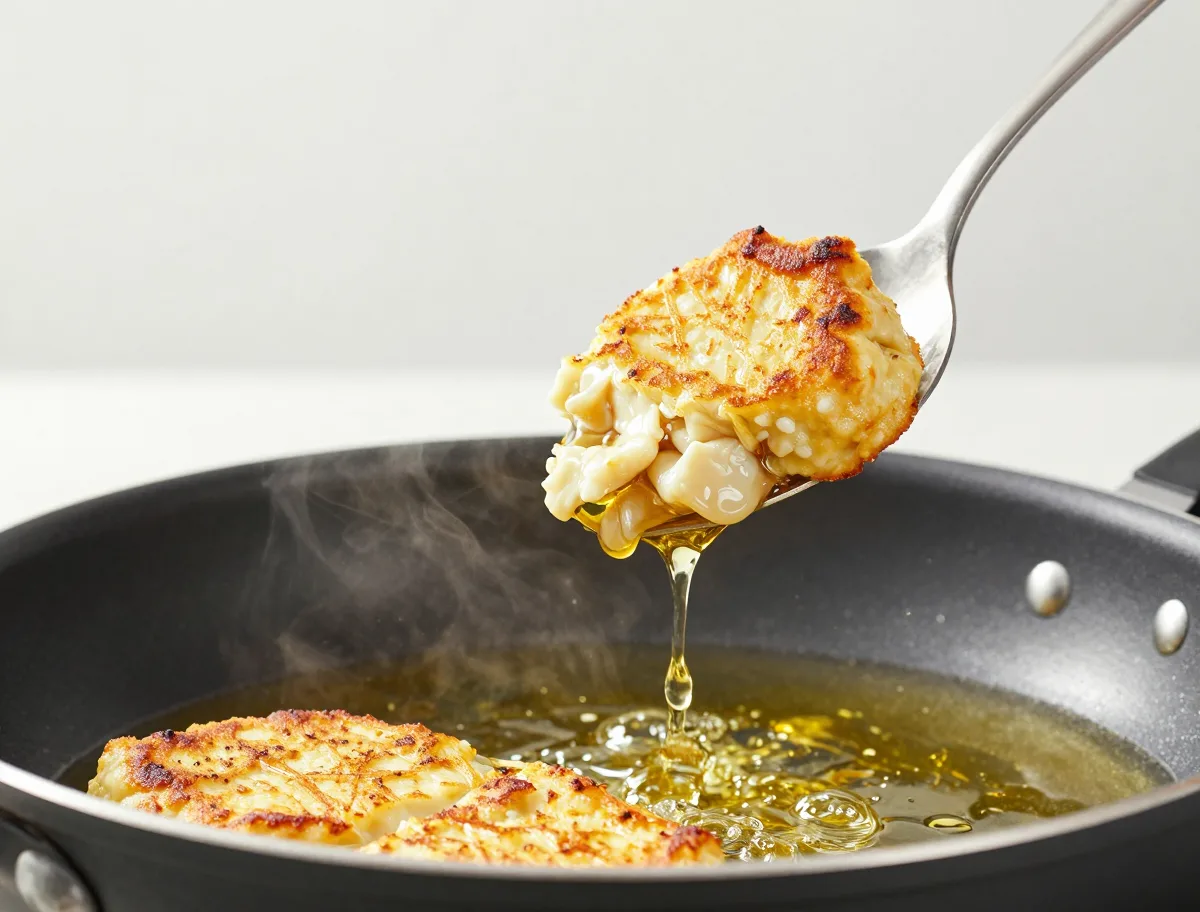
How the Batter and Finished Cakes Should Look
The batter should be thick, moist, and slightly irregular from the fish and herbs. A spoonful should drop as one cohesive portion, sit briefly on the oil, and spread only a little. If it pours, the cakes may flatten or break; if it stands rigidly, the centers can become dense.
- A properly fried cake has an evenly browned crust, not a dark outside with pale patches.
- The first cake is the best diagnostic: cut it open to inspect the center before continuing.
- The interior should be hot, opaque, and tender, with no wet floury streak.
- For a precise check, fry until the thickest cake reaches at least 145°F.
- The batter holds a brief mound on a spoon and spreads only slightly when dropped.
- The cakes are evenly deep golden and feel crisp at the surface.
- The center is hot and opaque, with tender flakes of cod rather than wet batter.
- The thickest cake should reach at least 145°F internally.
Why Oil Temperature and Portion Size Matter
At about 350°F, the batter sets quickly enough to form a crisp shell while heat moves toward the center. Adding food lowers the oil temperature, which is why an overcrowded pan produces pale, greasy cakes. Excessive heat creates the opposite problem: a browned exterior before the middle is cooked.
- Aim to keep the oil roughly between 325°F and 365°F during frying.
- Use uniform, tablespoon-sized portions so every cake cooks at a similar rate.
- Let the oil recover between batches rather than increasing the heat aggressively.
- Drain the fritters promptly on a rack so steam does not soften the crust.
Common Bajan Fish Cake Mistakes and How to Fix Them
Most problems can be traced to saltfish preparation, batter hydration, or unstable oil temperature. Make the first fritter a deliberate test: it can reveal whether the mixture needs adjustment before the full batch is in the pan.
- Too salty: Desalt the fish longer or use another water change; never try to correct heavily salted batter with extra flour alone.
- Falling apart or spreading: Drain the fish more thoroughly, rest the batter briefly, then add flour 1 tablespoon at a time.
- Dense centers: Add a small splash of milk if the batter is stiff and avoid overmixing.
- Dark outside, raw inside: Lower the oil temperature and use smaller portions rather than frying longer.
- Greasy cakes: Bring the oil back to temperature, fry fewer at once, and remove them as soon as they are cooked.
- Uneven fish distribution: Break up large clumps before folding the cod into the batter.
Salt Cod Substitutions and Practical Ingredient Swaps
Another commercially salted, dried white fish is the closest substitute because it preserves the cured flavor and similar texture. Desalt it in the same way and taste before mixing. Fresh cod, pollock, or haddock can make a workable adaptation, but the result will be less characteristically Bajan: cook the fish first, drain it exceptionally well, and add seasoning cautiously.
- Water can replace some or all of the milk for a lighter batter.
- Dried thyme or parsley may stand in for fresh, but use considerably less.
- Egg can be omitted, although the cakes will be slightly less rich and cohesive.
- Fresh fish requires added seasoning and tighter moisture control; it is not a direct equivalent to salt cod.
Ways to Adjust the Heat Without Losing the Bajan Style
Heat is flexible in Bajan fish cakes. Leave out the Scotch bonnet for a mild batch, use a small amount for moderate warmth, or serve pepper sauce separately so each person can adjust the bite. Keeping the saltfish, flour batter, fresh herbs, and pepper-led seasoning intact preserves the recognizable character of the dish.
- Marjoram may be included with thyme and parsley or left out when unavailable.
- A little Bajan pepper sauce can replace the fresh chile, though it may loosen the batter if used generously.
- Mashed potato is found in some household versions, but it makes a softer, denser cake.
- Breadcrumb coatings and strongly curried fillings move the preparation away from this batter-based style.
How to Serve Barbadian Fish Cakes
Serve the cakes hot or very warm, soon after frying, with sauces on the side so the crust stays crisp. Bajan pepper sauce supplies sharp heat, while Marie Rose-style sauce offers a cooling, creamy contrast. Lime wedges brighten the cured fish and fried batter.
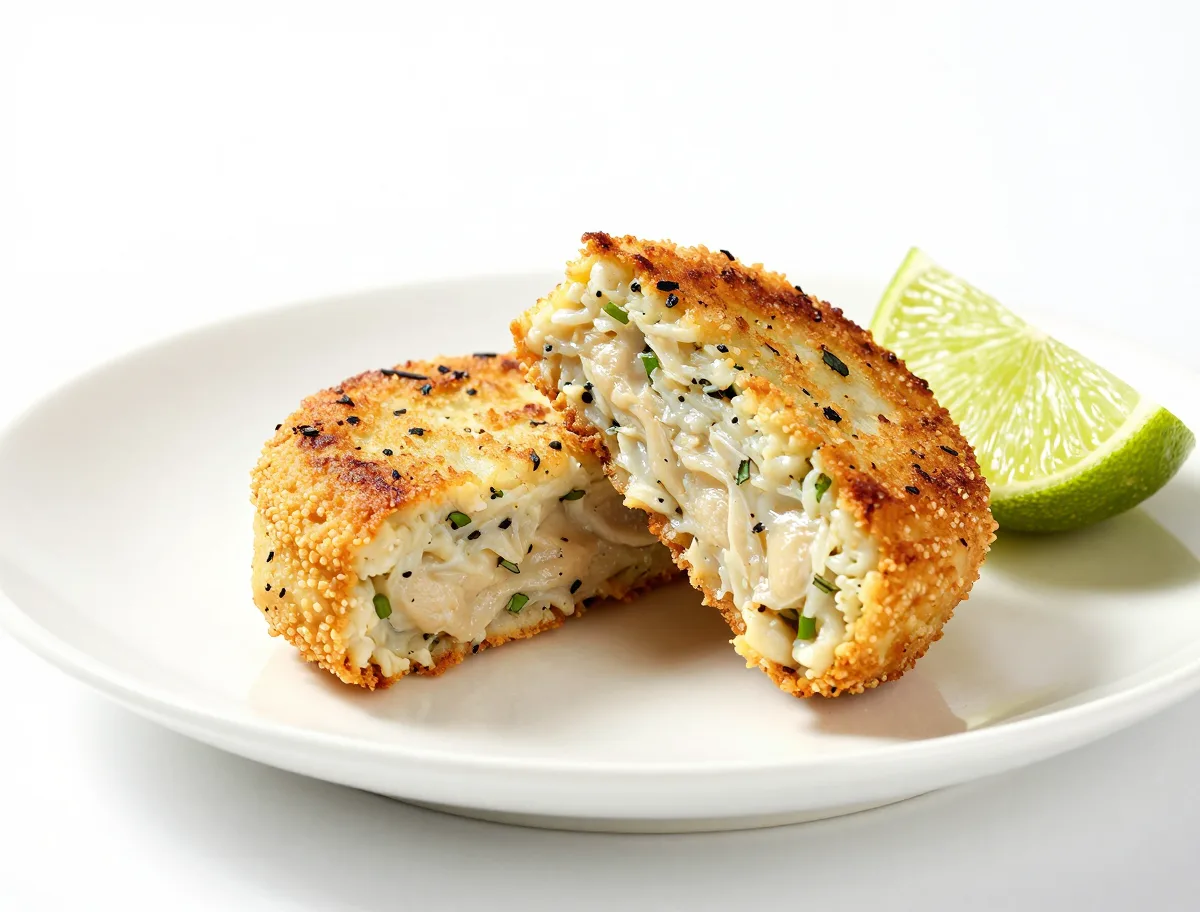
- For a Barbadian-style serving, tuck the cakes into salt bread as a bread and two.
- Sweet bakes make a traditional, contrasting accompaniment.
- For a snack platter, offer both a hot pepper condiment and a creamy dip.
- Keep sauces beside the cakes rather than spooning them over the crust.
For additional regional context on the saltfish base and serving traditions, see Barbados Local Cuisine: Fish Cakes.
How to Store, Freeze and Reheat Fish Cakes
Freshly fried cakes have the best texture, so the most useful make-ahead strategy is to prepare and chill the desalted cooked fish, then mix the batter shortly before frying. If cakes remain, cool them promptly and refrigerate them in a shallow container within two hours.
- Refrigerated cooked cakes keep for 3 to 4 days at 40°F or below.
- Freeze cooled cakes in a single layer, then transfer them to an airtight container for best quality within 1 to 2 months.
- Reheat in a 375°F oven, toaster oven, or air fryer until crisp and at least 165°F inside.
- Microwaving is safe but leaves the crust soft.
- Do not hold egg-containing batter at room temperature.
The Barbadian Tradition Behind Bajan Fish Cakes
Contemporary Barbadian food and tourism sources identify fish cakes as fried morsels made from salted cod, flour, herbs, and pepper. Their place at breakfast tables, with street vendors, and in salt-bread sandwiches is part of their Bajan identity. Related saltfish fritters appear throughout the Caribbean, so the regional connection is best described through ingredients, technique, and serving customs rather than a single claimed invention story.
- The defining Barbadian pattern is saltfish combined with a flour batter and aromatic herbs.
- Directly dropping spoonfuls into hot oil distinguishes these from many formed fish cakes.
- Household recipes vary in egg, dairy, herbs, heat, and occasional potato additions.
- The recipe remains Bajan-style when the saltfish-centered, spoon-dropped format is retained.
Food-Safety Notes for Saltfish Fritters
Salted cod is preserved but still requires normal seafood handling. Soak it in the refrigerator, use clean water and utensils, and cool boiled fish promptly. Do not taste batter containing raw egg or flour; judge seasoning from the cooked, desalted fish instead.
- Keep the refrigerator at 40°F or below and refrigerate perishable fish mixtures within two hours, or within one hour when the temperature is above 90°F.
- Freshly cooked fish should reach at least 145°F in the center.
- Refrigerated leftovers should be reheated to 165°F.
- Color alone is not a reliable safety check because the crust can brown before the center is ready.
For broader seafood cooking, refrigeration, and reheating guidance, consult the FDA safe food-handling guidance.